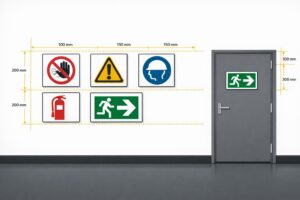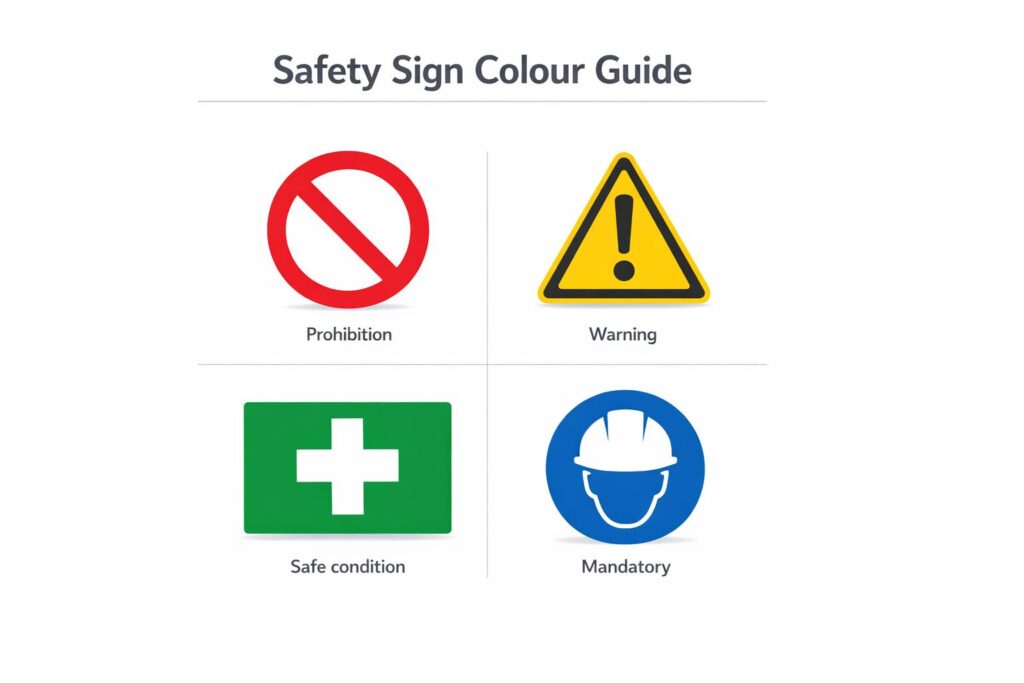
Safety Sign Colour Guide
Understanding Safety Sign Colours in Australia
Navigating workplaces or public areas in Australia means knowing what those bright safety markers are telling you. Safety signage, designed under standards like AS 1319-1994, uses specific hues to communicate critical messages fast. Red, for instance, screams prohibition—think ‘No Entry’—while yellow flags a hazard that needs your caution. These visual cues aren’t just random; they’re a universal language to keep us safe.
Why Colour Coding Matters
Imagine walking into a factory without knowing that a green sign points to an emergency exit. Colour coding in safety signage cuts through confusion, offering instant clarity even if you’re in a rush or stressed. Blue signs, often overlooked, mandate actions like wearing protective gear, ensuring everyone follows the rules. Whether you’re a worker, manager, or just passing through, recognising these signals can be a lifesaver.
Stay Informed, Stay Safe
Beyond workplaces, these indicators appear in schools, hospitals, and construction zones across the country. Brushing up on their meanings isn’t just for compliance—it’s about protecting yourself and others. Next time you see a vibrant warning marker, you’ll know exactly what to do. Keep this knowledge handy; it’s a small step with a big impact on safety.
FAQs
What do red safety signs mean in Australia?
Red signs are all about prohibition—think ‘stop’ or ‘don’t do this.’ According to AS 1319-1994, they’re used to indicate actions that are forbidden, like ‘No Entry’ or ‘Do Not Smoke.’ You’ll often see them at restricted areas or near dangerous equipment. They’re a clear signal to avoid something for your safety.
Why are yellow signs used for warnings?
Yellow grabs your attention for a reason—it’s a warning. In Australia, these signs highlight potential hazards like slippery floors or electrical risks. They’re meant to make you pause and take care before proceeding. The standard AS 1319-1994 defines yellow as the colour for caution, so you’ll spot it wherever there’s a need to stay alert.
Are safety sign colours the same worldwide?
Not quite! While many countries follow similar conventions—red for stop, green for go—there are differences in design and specific meanings. Australia adheres to AS 1319-1994, which might vary from, say, European or American standards. Our guide focuses on Aussie rules, so you’re getting info tailored to local workplaces and public spaces.
You may also be interested in
FAQs About Workplace Safety Signs in Australia
AS 1319 sign types, placement, materials and maintenance for workplace safety and WHS compliance in Australia.
Restricted Area Signs vs. No Entry Signs
Compare No Entry and Restricted Area signs in Australian workplaces — meanings, design differences and AS 1319 compliance.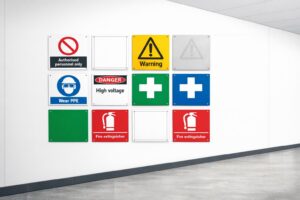
How to Spot Workplace Signage Gaps
Audit your workplace for missing, faded or non‑compliant signs under AS 1319 to reduce incidents and avoid WHS fines.
Symbol Design: Global Standards Explained
Explains ISO 7010 and ISO 3864: standard symbols, colours and sizing for clear, language‑free safety signage and AU compliance.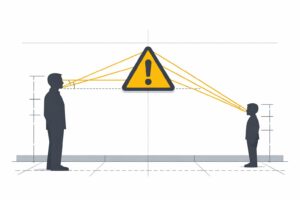
Hazard Sign Visibility Planner
Plan hazard sign placement for max visibility with our free tool. Ensure safety by finding the best spot, height, and angle—try it now!