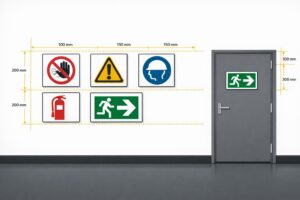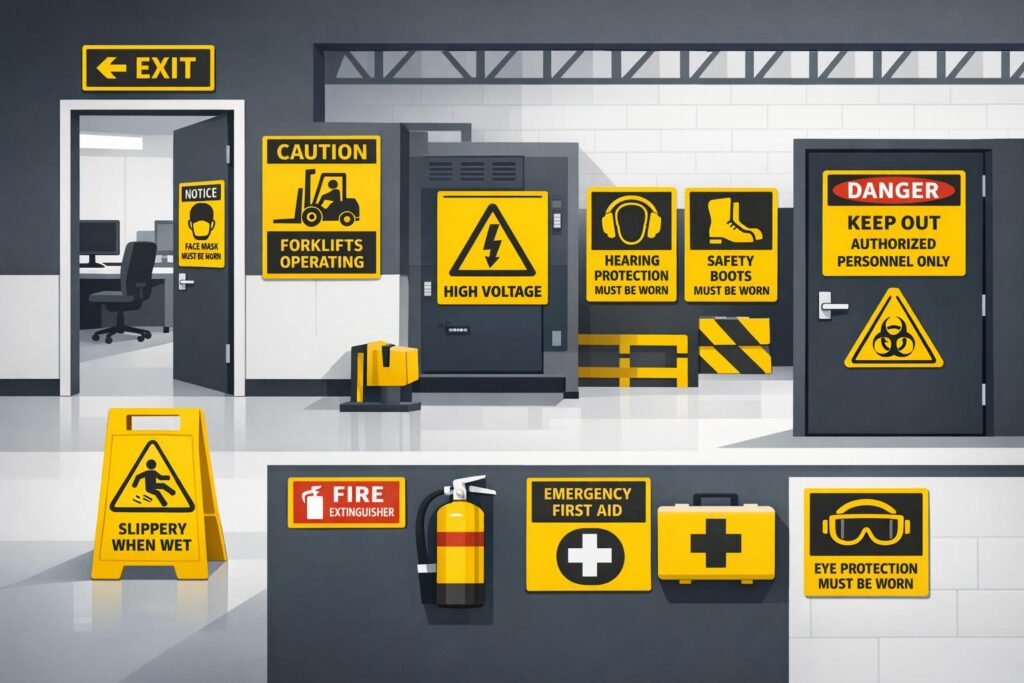
Safety Sign Compliance Guide
Ensure Workplace Safety with Our Safety Sign Compliance Guide
Keeping your workplace safe isn’t just about ticking boxes—it’s about protecting your team and avoiding costly fines. Navigating the maze of safety signage regulations can feel overwhelming, especially when standards differ by region or industry. Whether you’re in manufacturing, healthcare, or retail, understanding the right signs to display, their design specs, and where to place them is crucial.
Why Compliance Matters
Safety signs aren’t just decorations; they’re a legal requirement in most workplaces. In Australia, for instance, AS 1319 sets out clear rules for signage, while OSHA guidelines are the go-to in the USA. Failing to meet these standards can lead to accidents or penalties. But how do you know what applies to your business? That’s where a tailored workplace safety tool comes in handy. By inputting your location and sector, you can access relevant advice without wading through endless documents.
Take the First Step
Don’t leave safety to chance. Use our free resource to get a head start on meeting requirements, and always follow up with local authorities if you’ve got unique needs. A safer workplace starts with the right information—let’s make it happen.
FAQs
What safety sign standards does this tool cover?
We’ve got a wide range of standards in our database, including OSHA for the USA, AS 1319 for Australia, and other regional guidelines. If we don’t have exact data for your area, we’ll provide general advice based on global best practices and suggest checking with local regulators for specifics.
Can I trust the compliance information provided?
Absolutely, we pull from reputable sources and regularly update our database to reflect current standards. That said, regulations can vary or change, so we always recommend double-checking with local authorities or a safety consultant if you’re unsure about something specific to your site.
What if my industry isn’t listed in the options?
No worries! If your industry isn’t in the dropdown, pick the closest match or select ‘Other.’ You’ll still get useful general guidance on safety signage, along with a nudge to consult local rules for anything unique to your field. We’re here to help as much as we can!
You may also be interested in
FAQs About Workplace Safety Signs in Australia
AS 1319 sign types, placement, materials and maintenance for workplace safety and WHS compliance in Australia.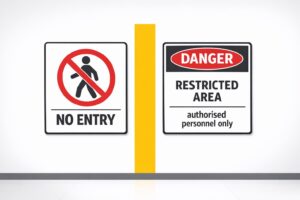
Restricted Area Signs vs. No Entry Signs
Compare No Entry and Restricted Area signs in Australian workplaces — meanings, design differences and AS 1319 compliance.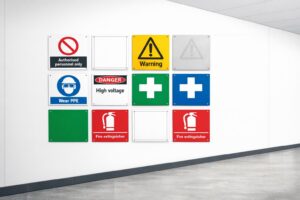
How to Spot Workplace Signage Gaps
Audit your workplace for missing, faded or non‑compliant signs under AS 1319 to reduce incidents and avoid WHS fines.
Symbol Design: Global Standards Explained
Explains ISO 7010 and ISO 3864: standard symbols, colours and sizing for clear, language‑free safety signage and AU compliance.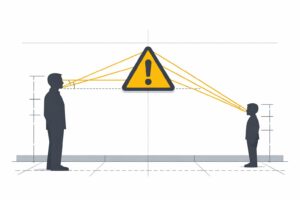
Hazard Sign Visibility Planner
Plan hazard sign placement for max visibility with our free tool. Ensure safety by finding the best spot, height, and angle—try it now!