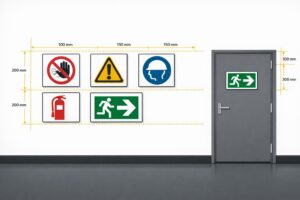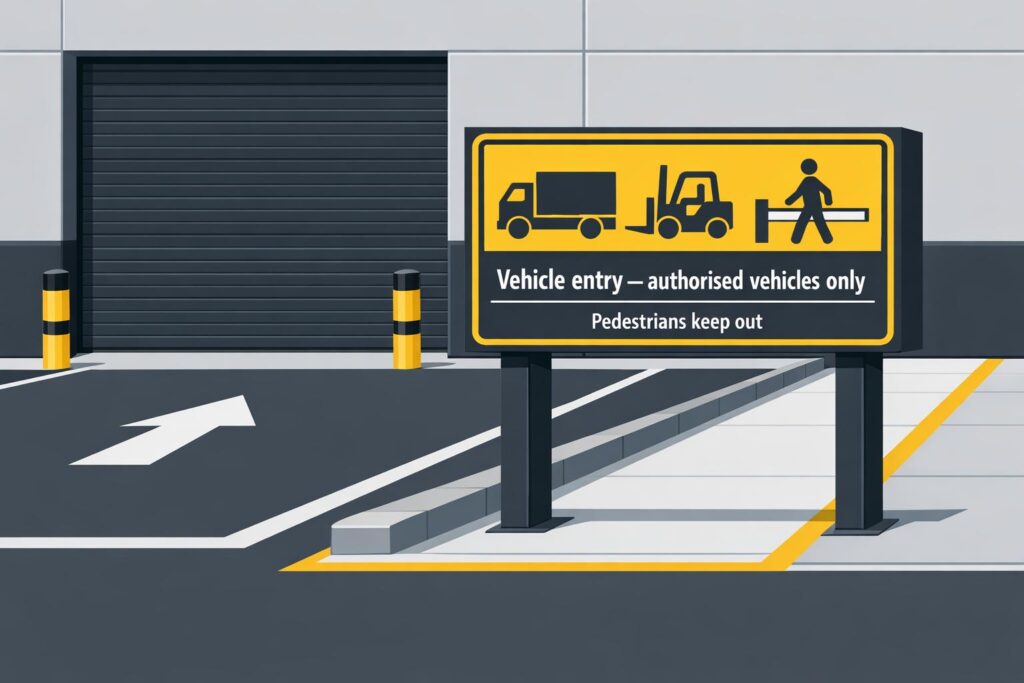
Vehicle Entry Signs for Warehouses
Vehicle entry signs are essential for maintaining safety and compliance in Australian warehouses. These signs help manage traffic flow, separate pedestrians from vehicles, and reduce the risk of accidents. They are also required under Work Health and Safety (WHS) regulations and must meet the AS 1319:1994 standards for design, visibility, and durability.
Key types of vehicle entry signs include:
- Construction Vehicles Entry Only: Restricts access to construction vehicles, reducing collision risks.
- Authorised Vehicles Only: Limits access to specific vehicles or operators.
- Pedestrian Prohibited – Forklift Operating Area: Keeps pedestrians away from forklift zones.
- Forklift and Powered Loadshifting Equipment Prohibited: Designates pedestrian-only areas.
- Designated Travel Path Indicators: Guides vehicles and pedestrians along safe routes.
- One-Way Traffic Flow Signs: Prevents congestion and head-on collisions.
- Speed Limit Signs (5–10 km/h): Enforces safe speeds in shared zones.
- Visitor Check-In Procedure Signs: Directs visitors to report for safety briefings.
- Dock Numbering Signs: Helps drivers locate loading bays efficiently.
- Beware Loadshifting Equipment Operating Signs: Alerts workers to active machinery in high-risk areas.
All signs must use durable materials like UV-resistant aluminium or polypropylene and be regularly inspected to ensure visibility and compliance. Proper placement at eye level and unobstructed locations is critical for effectiveness. Suppliers like PXP Safety offer customisable, compliant signage tailored for Australian warehouses.
These signs are a key part of traffic management and workplace safety, helping prevent accidents and ensuring smooth warehouse operations.
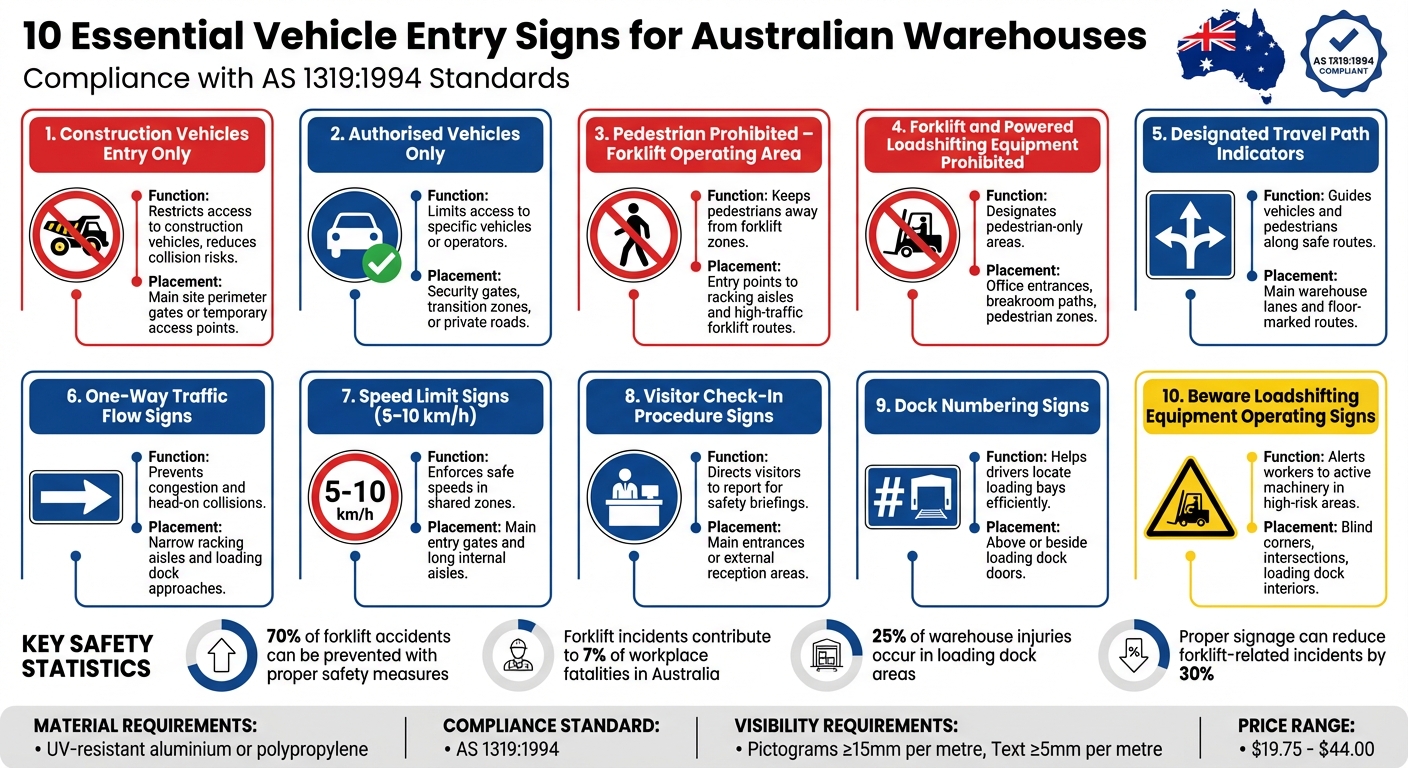
10 Essential Vehicle Entry Signs for Australian Warehouses: Functions and Placement Guide
1. Construction Vehicles Entry Only
Purpose and Function of the Sign
These signs are essential for managing access to construction sites, clearly marking entry points reserved for heavy machinery and contractor vehicles. By directing construction equipment away from forklift and delivery zones, they help reduce the risk of collisions and improve overall site safety [2].
Compliance with Australian Safety Standards (e.g., AS 1319:1994)
To ensure safety and effectiveness, these signs must comply with AS 1319:1994, which sets out the design requirements for workplace safety signs in Australia. Key features include pictograms that are at least 15 mm per metre of viewing distance and uppercase text with a minimum height of 5 mm per metre. In areas with poor lighting, these dimensions should be increased by 50% to maintain visibility [8][9][10].
"If your supplier can’t explain how their signs meet the standard, they probably don’t." – Safequip [2]
Visibility and Durability (e.g., UV Resistance, Weatherproof Materials)
Quality materials are crucial for these signs to endure harsh conditions. Commonly used options include metal, such as Colorbond, and heavy-duty Corflute, both of which are often coated to resist UV damage, chemicals, graffiti, and temperature extremes. These materials are designed to withstand the wear and tear of outdoor and industrial environments. Regular checks are vital to identify and replace signs that have faded due to sun exposure or been damaged by warehouse chemicals [2][6][7].
Relevance to Warehouse Traffic Control and Safety
Placing these signs at eye level and at all relevant access points ensures they are easily visible to drivers and workers. For maximum effectiveness, they should be mounted against a contrasting background and kept free from obstructions like stacked pallets. Proper maintenance, including regular cleaning, adequate lighting, and timely replacement of damaged signs, is essential. These measures help prevent accidents in areas where construction and warehouse operations intersect, creating a safer environment for everyone [2][10]. This targeted placement strategy also sets the stage for introducing more specialised safety signage in complex warehouse setups.
2. Authorised Vehicles Only
Purpose and Function of the Sign
These signs are crucial for maintaining safety in high-risk areas like loading docks, workshops, and chemical storage zones. By restricting access to trained and properly equipped operators, they help minimise risks. Separating pedestrians from heavy machinery is another key function, significantly reducing the likelihood of collisions [3][4][5].
Compliance with Australian Safety Standards (e.g., AS 1319:1994)
According to AS 1319:1994, these signs are classified as regulatory, making compliance mandatory. Ignoring these standards can lead to safety violations and expose businesses to liability if accidents occur [3][4]. For poorly lit areas, it’s required to increase the size of both pictograms and text by 50% to ensure they remain visible [10]. The standards also emphasise the use of durable materials and proper placement, which is explored further below.
Visibility and Durability (e.g., UV Resistance, Weatherproof Materials)
To ensure longevity and effectiveness, these signs should be constructed from materials resistant to UV fading, chemicals, and physical impacts. Mounting them at eye level on a contrasting background prevents obstructions and ensures they catch attention [2][10].
Relevance to Warehouse Traffic Control and Safety
Signs should be placed at every entry point to restricted zones, ensuring clear communication of access limitations. Regular inspections are essential to identify and replace signs that may have faded or been damaged due to sunlight or warehouse activities [2]. Proper lighting – whether natural or artificial – is also important to maintain visibility during all shifts [4]. However, care must be taken to avoid overcrowding areas with too many signs, as this can overwhelm workers and obscure critical safety messages [13].
3. Pedestrian Prohibited – Forklift Operating Area
Purpose and Function of the Sign
This sign plays a crucial role in protecting workers by clearly marking areas where pedestrians are not allowed due to the presence of forklifts. These zones, such as loading docks, racking aisles, and other high-traffic areas, often pose significant risks, and physical barriers alone may not be enough to ensure safety. The sign serves as an unmistakable reminder for workers to stay out of these areas on foot [3] [14].
Compliance with Australian Safety Standards (e.g., AS 1319:1994)
According to AS 1319:1994, this type of Prohibition Sign must feature a red circle with a diagonal slash over a black pictograph on a white background. The prescribed dimensions include symbols that are at least 15 mm per metre and uppercase text measuring at least 5 mm per metre [10]. In dimly lit areas, these dimensions should increase by 50% to ensure the sign remains easily readable [10].
"to regulate and control safety related behaviour, to warn of hazards and to provide emergency information" [10].
Given these requirements, selecting materials that can endure warehouse conditions is equally important.
Visibility and Durability (e.g., UV Resistance, Weatherproof Materials)
Using UV-resistant and weatherproof materials is critical for these signs to remain effective in challenging environments. Common materials include metal and UV-resistant polypropylene, both of which stand up well to chemicals and physical impacts [14]. Signs should be mounted on a contrasting background at eye level to maximise visibility [10] [13]. Regular inspections are essential to identify and replace signs that have faded or been damaged by sunlight or industrial wear [2].
Relevance to Warehouse Traffic Control and Safety
These signs are integral to maintaining a safe and organised warehouse environment. To ensure maximum effectiveness, place them at every entry point to forklift zones, ensuring they are not obscured by pallets, equipment, or shelving. Adequate lighting, whether natural or artificial, is also crucial for visibility during all work shifts [10].
"Signs only work if people can see and read them. Position signs at eye level, placing them where workers need information rather than where they look tidy" [2].
Regular cleaning and prompt replacement of damaged or dirty signs are necessary to maintain compliance and ensure ongoing safety.
4. Forklift and Powered Loadshifting Equipment Prohibited
Purpose and Function of the Sign
These signs are designed to establish pedestrian-only zones, safeguarding areas such as critical infrastructure, offices, break rooms, and emergency exits from collisions or damage. The term powered loadshifting equipment includes machines like forklifts, pallet jacks, and scissor lifts. The signs feature a red circle with a diagonal slash over a forklift pictogram on a white background, clearly marking areas restricted to pedestrians. Alarmingly, forklift-related incidents contribute to about 7% of workplace fatalities in Australia, even though forklifts make up less than 1% of registered vehicles [17].
Compliance with Australian Safety Standards (e.g., AS 1319:1994)
According to AS 1319:1994, prohibition signs must include a red circle with a diagonal slash over a black pictogram on a white background. The pictogram size must be at least 15 mm per metre of viewing distance, and any lowercase text should measure at least 4 mm per metre. These signs must be positioned prominently at eye level, ensuring they are visible against a contrasting background [16]. This is particularly important in areas where pedestrian safety and infrastructure protection are priorities.
"Australian Standard AS 1319 – 1994 makes it your responsibility to maintain your safety signs, ensuring maximum effectiveness. This means you must keep them clean, well illuminated and in good condition." [16]
To maintain compliance, employers should clean these signs using non-abrasive products and replace them every 12–24 months in high-traffic areas. Adhering to these standards ensures the signs remain legible and functional [26, 27].
Visibility and Durability
Manufacturers use UV-stabilised polypropylene to ensure these signs can withstand outdoor conditions for up to five years. Floor signs are built to endure up to 500 abrasion cycles, whether from foot traffic or forklifts. For proper installation of floor-mounted signs, it’s recommended to clean concrete surfaces with an industrial degreaser and apply a concrete sealer to improve adhesive bonding. To avoid confusion, it’s best not to place multiple signs too close together, as this can create visual clutter for workers [17]. These design and material standards are crucial for effective traffic management in busy work environments.
Relevance to Warehouse Traffic Control and Safety
By following best practices for sign placement, these prohibition signs significantly enhance warehouse safety, clearly marking pedestrian-only spaces. When paired with physical barriers – such as flexible polymer guardrails capable of absorbing up to 80% of impact energy – they become an essential part of traffic management. Implementing a complete safety signage programme can lower forklift-related incidents by as much as 30%. Regular quarterly audits are advisable to check for signs of wear, such as fading or peeling, and to ensure signs remain relevant to changing traffic patterns [17].
"Proper signage can make the difference between routine operations and serious incidents." – James Goodsell, SafeQuip [15]
For durable, compliant safety signage tailored to your warehouse needs, consider exploring the options available at PXP Safety.
5. Designated Travel Path Indicators
Purpose and Function of the Sign
Designated travel path indicators are essential for maintaining safety and order within a warehouse. They clearly define routes for vehicles and pedestrians, ensuring forklifts, trucks, and foot traffic are kept separate. These indicators include aisle markers, directional arrows, and zone-specific signage, helping drivers locate bays efficiently while reducing congestion and logistical mistakes. They are particularly valuable in marking exclusion zones, such as forklift-only areas near loading bays or pedestrian-only zones by entrances and amenities. These markings ensure operations run smoothly while aligning with safety and construction standards.
"The best way to protect people is to keep them physically separated from vehicles." – WorkSafe NT
Compliance with Australian Safety Standards (e.g., AS 1319:1994)
Travel path indicators must comply with Australian safety standards, such as AS 1319:1994 for safety signs and AS 1742.1 for traffic control devices. These regulations outline specific design requirements for signage. For example, mandatory indicators feature blue circles with white symbols, while warnings use yellow triangles with black symbols. To ensure visibility, symbols need to be at least 15 mm per metre of viewing distance, and text size should be 5 mm, with a 50% size increase in low-light conditions [10].
Visibility and Durability
Durability is crucial for travel path indicators to withstand the demanding conditions of warehouse environments. Reflective aluminium is often used for enhanced visibility in low-light areas, such as loading docks or during night operations. Outdoor signs are built with heavy-duty aluminium to resist UV damage and extreme temperatures [19]. For floor markers, materials like adhesive vinyl or polyester are common. Rounded corners are frequently incorporated into designs to minimise the risk of injury during installation or accidental contact.
Relevance to Warehouse Traffic Control and Safety
Clear travel path indicators significantly reduce the risk of collisions in high-traffic zones. Statistics show that around 25% of warehouse injuries occur in loading dock areas, underscoring the need for effective traffic separation [20]. These indicators complement other safety measures by ensuring clear and visible travel routes. Signs should be installed at eye level in key locations, such as intersections, bay entrances, and transition points, where immediate guidance is critical. To further enhance safety, physical markers like reflective paint or flexible polymer barriers – which can absorb up to 80% of impact energy [2] – can be used alongside signage. Regular maintenance is essential to prevent wear from UV exposure and chemicals, ensuring these indicators remain effective over time.
For durable and compliant travel path indicators tailored to Australian warehouses, PXP Safety offers customisable solutions with UV protection and outdoor-grade printing.
6. One-Way Traffic Flow Signs
Purpose and Function of the Sign
One-way traffic flow signs play a crucial role in managing vehicle movement, particularly in busy areas. They create clear, predictable patterns that help prevent congestion and minimise the risk of accidents involving heavy machinery. By clearly marking vehicle routes, these signs help drivers quickly locate the appropriate bays, improving the efficiency of overall logistics operations.
Compliance with Australian Safety Standards
In Australia, one-way traffic signs must adhere to AS 1319:1994, which sets out safety signage requirements for occupational environments. These signs typically fall under regulatory signage categories. For instance, a blue disc with a white arrow might indicate "One Way Only", while a red circle without a diagonal slash could act as a restriction sign.
To ensure visibility, the symbols on these signs should measure at least 15 mm per metre of viewing distance, while uppercase text should be at least 5 mm per metre. In poorly lit areas, these dimensions should be increased by at least 50% for better legibility [10]. Signs should also be mounted at eye level and placed against a contrasting background to remain unobstructed. This compliance ensures the signs are built to provide long-term visibility and functionality.
Visibility and Durability
Durability is essential for traffic signage, especially in demanding warehouse environments. Signs should be made from UV-resistant, weatherproof materials to endure harsh conditions. For low-light or night operations, retroreflective sheeting, as outlined in AS/NZS 1906.1, ensures the signs remain visible [1]. Regular inspections are crucial to maintain the clarity and effectiveness of these signs.
"Signs only work if people can see and read them. Position signs at eye level, placing them where workers need information rather than where they look tidy." – Safequip [2]
Relevance to Warehouse Traffic Control and Safety
When properly implemented, one-way traffic flow signs are vital for maintaining safety and efficiency in warehouse operations. They reduce the likelihood of collisions and confusion by clearly directing traffic. These signs should be strategically placed at intersections, bay entrances, and other key transition points where guidance is most needed. However, care must be taken to avoid overcrowding areas with too many signs, as this can lead to visual clutter and reduce the impact of important safety messages.
Additionally, it’s critical to ensure that traffic flow indicators are updated to reflect any changes in warehouse layouts, processes, or equipment. This adaptability helps maintain the relevance and effectiveness of the signage in dynamic environments.
PXP Safety provides customisable one-way signs tailored for Australian warehouses, featuring UV protection and outdoor-grade printing to meet compliance and durability standards.
7. Speed Limit Signs (5–10 km/h)
Purpose and Function of the Sign
Speed limit signs play a key role in creating a safe warehouse environment by working alongside directional and exclusion signage. They communicate site-specific speed limits clearly to everyone entering the facility, helping to prevent accidents. According to AS 1319-1994, these signs are classified as "limitation or restriction signs", designed to impose numerical limits on vehicle activity[11]. Their importance is heightened in high-risk areas like loading docks and forklift zones, where the risk of collisions between vehicles and pedestrians is significant.
By setting clear expectations from the outset, these signs reduce the need for additional instructions while ensuring safety standards are met.
Compliance with Australian Safety Standards
Speed limit signs in workplaces must adhere to AS 1319-1994, which outlines requirements for occupational safety signs. Specifically, the standard references AS 1742.1 (Sign No. R4-1) for the design of speed limit signage[11]. These signs are regulatory, meaning failure to comply can result in legal or procedural violations[11].
To ensure compliance, signs should follow the design and sizing guidelines outlined in these standards, allowing drivers enough time to see and respond to them effectively.
Visibility and Durability
Warehouse conditions demand highly durable and visible speed limit signs. For outdoor use, reflective aluminium with Class 2 reflective sheeting offers excellent durability and resistance to corrosion[22]. For indoor settings, self-adhesive vinyl is a reliable option, lasting up to 7 years even in outdoor environments[22].
These signs feature a red circular border on a white background with black text, aligning with AS 1319’s classification as restriction signs[10][23]. Reflective materials improve visibility, particularly in low-light conditions when illuminated by vehicle headlights. To maintain their effectiveness, signs exposed to harsh sunlight or chemicals must be regularly inspected and replaced if they fade or become damaged[2].
Relevance to Warehouse Traffic Control and Safety
The effectiveness of speed limit signs increases when they are part of a comprehensive traffic management system, including directional markers, dock numbering, and pedestrian exclusion zones. For maximum visibility, install these signs at eye level in key locations, and avoid overcrowding them with other signage[2].
PXP Safety provides UV-resistant, compliant speed limit signs designed specifically for Australian warehouse environments.
sbb-itb-9950c92
8. Visitor Check-In Procedure Signs
Purpose and Function of the Sign
Visitor check-in procedure signs are a key communication tool at warehouse entry points. They guide delivery drivers, contractors, and other visitors on the necessary steps to follow before entering operational areas. Instructions like "All Visitors Report to Office" clearly outline site-specific requirements, such as the use of personal protective equipment (PPE), speed limits, and restricted zones. By directing visitors to a central office for a briefing, these signs help minimise the risk of unauthorised access to hazardous areas like loading docks or chemical storage zones. Additionally, they play a role in managing traffic flow effectively from the moment visitors arrive, aligning entry control with broader safety protocols.
Compliance with Australian Safety Standards
According to AS 1319:1994, visitor check-in signs that outline required actions are classified as mandatory. These signs typically feature a blue circle with white text or pictograms for universal recognition. Conditions of entry signage at access points communicates essential site-specific requirements, including PPE use, speed limits, reporting protocols, and restricted zones[15]. To ensure visibility, the text must be legible at 5mm per metre, with pictograms requiring a minimum of 15mm per metre[26]. Regular audits are essential to confirm that these signs remain unobstructed and visible, reducing potential liability risks.
Visibility and Durability
For outdoor entry points facing Australia’s tough weather conditions, selecting the right materials is critical. Signs made from Colorbond or aluminium, along with UV-stable polypropylene, provide the durability needed to withstand these environments. In areas with low light, Class 2 reflective sheeting can significantly improve visibility[26]. Proper placement is also important – mount signs at eye level and ensure they are not obscured by pallets, equipment, or other obstacles.
Relevance to Warehouse Traffic Control and Safety
Positioning visitor check-in signs at the first point of entry is crucial for preventing accidental access to hazardous zones and maintaining smooth traffic flow. These signs are part of a larger safety system, which may include speed limit signs, dock numbering, and pedestrian exclusion zones. However, avoid overcrowding entry points with too much signage, as this can dilute critical messages. As with other vehicle entry signs, visitor check-in signs are essential for creating a safe and organised warehouse environment. PXP Safety provides UV-resistant, durable visitor check-in signs tailored to Australian warehouse conditions, ensuring long-term compliance and visibility.
9. Dock Numbering Signs
Purpose and Function of the Sign
Dock numbering signs play a crucial role in managing warehouse traffic and maintaining safety. These signs help delivery and shipping drivers quickly locate the correct loading bay, saving time and reducing vehicle congestion caused by idling or searching for the right dock [15][27]. Without clear numbering, confusion can lead to delays and increased risks in high-traffic areas. By directing vehicles to specific entry points, these signs minimise driver uncertainty and contribute to smoother traffic flow. When paired with directional signs, they also help establish pedestrian exclusion zones and reinforce site-specific safety protocols [15][29]. This creates a more efficient and safer logistics environment.
"Loading docks are high-traffic, high-risk areas where clear communication prevents costly mistakes and accidents. Dock numbering signs help drivers locate the correct bay quickly, reducing congestion and improving logistics flow." – James Goodsell, SafeQuip [15]
Compliance with Australian Safety Standards
Dock numbering signs in Australia must meet strict requirements set by AS 1319:1994 (Safety Signs for the Occupational Environment) and the Building Code of Australia (BCA) [15][27][29]. These standards ensure signs are readable and effective. For example, uppercase text should measure at least 5mm per metre of viewing distance, while pictograms need to be at least 15mm per metre. So, from 10 metres away, text must be at least 50mm high [21][26]. Non-compliance can lead to safety issues and operational inefficiencies [15]. Regular audits are essential to identify and replace faded or damaged signs, ensuring they remain compliant and functional.
Visibility and Durability
For maximum visibility, position dock numbers at eye level or higher, where they can be easily seen from a driver’s cabin as they approach [15]. Night-time operations require materials like Class 1 Reflective Vinyl with a honeycomb design to provide high-intensity visibility [29]. Durable materials such as aluminium or aluminium composite panels (ACP) with UV-resistant lamination are ideal for outdoor use, as they resist fading and withstand harsh weather conditions [29]. Metal and Colorbond steel signs typically last 5 to 8 years outdoors, while UV-stable polypropylene has a lifespan of 3 to 5 years [26]. For high-traffic areas, 3mm thick signs with tamper-proof graphics are recommended to resist wear and physical damage [27]. It’s also important to ensure signs are not obstructed by pallets or equipment, as hidden or faded signs can lead to non-compliance and safety risks [15].
Relevance to Warehouse Traffic Control and Safety
Dock numbering signs are an affordable and essential part of warehouse safety, with prices ranging from approximately $15.40 for basic models to over $35.00 for BCA-compliant versions [27][29]. These signs should be part of a broader traffic control system, which includes speed limits (5–10 km/h), height restrictions, and instructions like "Truck Drivers Remain with Vehicle" to enhance overall site safety [15][28]. Consistent numbering schemes and colours across all docks help create a professional, easy-to-navigate environment [27]. Companies like PXP Safety provide UV-resistant, durable dock numbering signs made from aluminium with outdoor-grade printing, ensuring compliance and long-term performance in Australian conditions. Together with other safety signage, dock numbers contribute to a well-organised and safer warehouse environment.
10. Beware Loadshifting Equipment Operating Signs
Purpose and Function of the Sign
These signs serve as a warning for forklift traffic and moving machinery, especially in high-risk areas like blind corners and intersections [30]. They act as a reminder for workers to stay alert in areas where visibility is limited, such as transition points and aisle intersections. Studies show that around 70% of forklift accidents can be avoided with proper safety measures, including the use of clear warning signs [30]. The signs also promote cautious behaviour in zones where vehicles and pedestrians share the space without physical barriers.
"Strategically placed signage is proven to prevent accidents." – Pinnacle Signage [30]
Just like other vehicle entry signs, these warnings reinforce safe practices across warehouse environments.
Compliance with Australian Safety Standards
Under AS 1319:1994, these signs are classified as "Warning signs" and must feature a yellow or orange background with black text or pictograms [11]. To comply, signs should use approved safety symbols from AS 2342, standard fonts from AS 1744, and colours specified by AS 2700 [1]. Placement is also critical – signs should be positioned at eye level, between 1.5 and 2 metres above the floor, as unclear or poorly placed signs violate WHS obligations [2]. This standardisation ensures workers receive clear guidance in areas with moving equipment risks.
Visibility and Durability
Choosing the right materials ensures signs remain effective over time. For example:
- Colorbond steel: Lasts 5 to 8 years in tough outdoor conditions.
- UV-stable polypropylene (1.4 mm thick): Handles temperatures from –40°C to 150°C, resisting cracks or fading for 3 to 5 years.
- 1.6 mm aluminium: Offers superior rigidity and corrosion resistance, ideal for high-traffic areas [26].
For maximum legibility, pictograms should be at least 15 mm high per metre of viewing distance, and uppercase text should measure at least 5 mm per metre. Reflective sheeting (Class 1 or 2) improves low-light visibility by more than 20 times [26].
Relevance to Warehouse Traffic Control and Safety
These signs should be placed near hazards like loading dock entrances and blind corners [30]. However, avoid overcrowding these areas with too many signs, as visual clutter can make critical warnings less noticeable [2]. Conducting regular audits helps identify and replace faded or damaged signs, ensuring compliance and safety.
Incorporating these signs into a broader safety plan can significantly reduce risks in busy warehouse settings. For instance, PXP Safety provides UV-resistant aluminium signs with outdoor-grade printing and a protective film, designed for long-term use in Australian conditions. When paired with physical barriers that can absorb up to 80% of impact energy from loadshifting equipment, these signs become an integral part of a robust safety system [2].
Warehouses Traffic Management & Pedestrian Safety
Sign Comparison Table
This table outlines the key details of various vehicle entry sign types, showcasing their specific roles in ensuring warehouse safety. It summarises their functions, compliance standards, and typical placements for clarity.
| Sign Type | Main Function | Relevant Standard | Typical Placement |
|---|---|---|---|
| Construction Vehicles Only | Limits access to heavy, site-specific vehicles to avoid unauthorised or public entry [31]. | AS 1319:1994 | Positioned at main site perimeter gates or temporary access points [31]. |
| Authorised Vehicles Only | Restricts entry to vehicles or personnel with proper security clearance [31][25]. | AS 1319:1994 | Found at security gates, transition zones, or private roads [2][31]. |
| Pedestrian Prohibited – Forklift Operating Area | Separates pedestrians from forklift zones to reduce "struck-by" incidents [24][4]. | AS 1319:1994 | Located at entry points to racking aisles and high-traffic forklift routes [24][2]. |
| Forklift and Powered Loadshifting Equipment Prohibited | Prevents heavy machinery from entering pedestrian-only areas [4]. | AS 1319:1994 | Typically placed at office entrances, breakroom paths, or pedestrian zones [4]. |
| Designated Travel Path Indicators | Guides vehicles along safe, designated paths to regulate traffic flow [2]. | AS 2342:1992 | Installed along main warehouse lanes and floor-marked routes [2]. |
| One-Way Traffic Flow Signs | Minimises head-on collisions and congestion in narrow spaces [2][31]. | AS 1319:1994 | Used in narrow racking aisles and loading dock approaches [2]. |
| Speed Limit Signs (5–10 km/h) | Enforces safe speeds to maintain proper stopping distances in shared zones [2]. | AS 1319:1994 | Found at main entry gates and long internal aisles [2][4]. |
| Visitor Check-In Procedure Signs | Directs visitors to report for safety inductions and registration [2][25]. | AS 1319:1994 | Placed at main entrances or external reception areas [2][25]. |
| Dock Numbering Signs | Helps drivers identify loading bays efficiently, reducing delays and congestion [2]. | AS 1319:1994 | Mounted above or beside loading dock doors, visible from a distance [2]. |
| Beware Loadshifting Equipment Operating Signs | Alerts pedestrians and drivers to active forklifts or reach trucks nearby [24][2]. | AS 1319:1994 | Positioned at blind corners, intersections, and loading dock interiors [24][18]. |
This summary shows how these signs contribute to a cohesive warehouse safety plan. Prices for entry signs start at approximately $19.75, while specialised visitor signs may cost up to $44.00. Opting for aluminium signs with UV protection ensures durability and readability, especially under Australian conditions [12][25][26].
Conclusion
Every type of sign plays a crucial role in creating a well-rounded safety system. Vehicle entry signs are particularly important in warehouses, as they help prevent collisions, manage traffic flow, and ensure adherence to Australian OH&S laws. As John Ninness from Safetysure explains:
"Proper use of signaling is necessary to keep workplace accidents to a minimum… an image says more than a thousand words" [4].
These signs deliver critical safety messages quickly and effectively, whether it’s separating pedestrian walkways from forklift zones, enforcing speed limits of 5–10 km/h, or directing delivery drivers to the right loading dock. From construction sites to visitor check-in areas, specialised signage contributes to a safer and more organised warehouse environment.
Compliance with AS 1319:1994 is a legal requirement, protecting both employees and businesses from potential hazards. These signs rely on standardised colours and symbols to ensure clear communication within diverse workforces [4]. Regular inspections are essential to identify and replace worn or damaged signs, particularly in Australia’s challenging outdoor conditions.
PXP Safety offers durable, customisable signage solutions tailored for Australian warehouses. Their signs are built with sturdy aluminium, UV-protective coatings, and outdoor-grade printing to withstand tough environments. This allows facilities to implement effective signage systems without breaking the budget [12]. Customisation options also make it possible to address specific risks unique to your site while staying compliant with Australian standards.
Choosing a reliable supplier is essential. As highlighted:
"If your supplier can’t explain how their signs meet the standard, they probably don’t" [2].
With a strong focus on compliance, durability, and flexibility, PXP Safety ensures your warehouse remains secure and efficient with high-quality vehicle entry signage.
FAQs
Which warehouse signs are legally required under WHS and AS 1319:1994?
Under WHS regulations and AS 1319:1994, warehouses are legally required to display specific signs to ensure safety and compliance. These include:
- Prohibition signs: Indicate actions that are not allowed, such as "No Smoking" areas.
- Mandatory signs: Highlight actions that must be taken, like wearing protective equipment.
- Hazard signs: Warn of potential dangers, such as slippery floors or hazardous materials.
Additionally, signs for emergency information and the location of safety facilities – like exits, fire extinguishers, and first aid stations – are essential. Adhering to these standards not only ensures compliance but also promotes a safer and more organised workplace.
How do I choose the right sign size for viewing distance and low light?
When selecting a sign size, it’s essential to follow Australian safety signage standards. Larger signs are often better for ensuring visibility over greater distances or in low-light conditions. The font and symbols should be clear and easy to read from the necessary distance. Pay attention to factors like contrast between text and background, as well as the sign’s placement to maximise its effectiveness.
For added assurance, tools like a visibility checker can help you confirm your sign meets safety requirements and complies with the relevant standards.
How often should warehouse vehicle entry signs be inspected or replaced?
Warehouse vehicle entry signs need monthly in-house inspections to ensure they are in good condition and meet safety requirements. Additionally, these signs should be replaced or professionally inspected every 12 months. Regular checks help maintain compliance with Australian standards and prioritise workplace safety.
Related Blog Posts
You may also be interested in
FAQs About Workplace Safety Signs in Australia
AS 1319 sign types, placement, materials and maintenance for workplace safety and WHS compliance in Australia.
Restricted Area Signs vs. No Entry Signs
Compare No Entry and Restricted Area signs in Australian workplaces — meanings, design differences and AS 1319 compliance.
How to Spot Workplace Signage Gaps
Audit your workplace for missing, faded or non‑compliant signs under AS 1319 to reduce incidents and avoid WHS fines.
Symbol Design: Global Standards Explained
Explains ISO 7010 and ISO 3864: standard symbols, colours and sizing for clear, language‑free safety signage and AU compliance.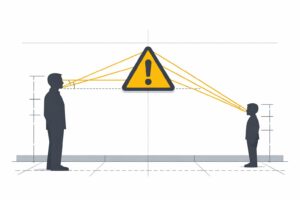
Hazard Sign Visibility Planner
Plan hazard sign placement for max visibility with our free tool. Ensure safety by finding the best spot, height, and angle—try it now!