Checklist: Safety Signs for Policy Integration
Safety signs are a legal obligation under Australian health and safety laws, ensuring workplaces effectively communicate hazards, risks, and emergency information. Compliance with AS 1319-1994, the key Australian Standard for workplace safety signage, is critical for meeting these requirements. This guide explains how to audit, update, and maintain your signage system to align with workplace policies and WHS laws.
Key points include:
- Signage Categories: Danger, warning, mandatory, prohibition, emergency, and fire signs, each with specific design rules.
- Placement Standards: Signs must be visible, mounted at 1.5–2.1m, and sized for clear readability.
- Legal Compliance: Failure to meet WHS standards can result in penalties.
- Audits and Maintenance: Regular inspections ensure signs remain effective and compliant.
Take 5 Workplace Health and Safety Signage
sbb-itb-9950c92
Australian Safety Signage Standards Explained
Six Types of Australian Workplace Safety Signs According to AS 1319-1994
AS 1319 and AS 2293 Requirements
AS 1319-1994 is the main standard that governs safety signage in Australian workplaces. It specifies the design and placement of signs to regulate hazards, provide warnings, and guide emergency responses [1][7]. On the other hand, AS 2293.1 focuses on ‘Exit’ signs used inside buildings, which are not covered by AS 1319 [6]. Together, these standards outline the detailed requirements for signage categories and measurements.
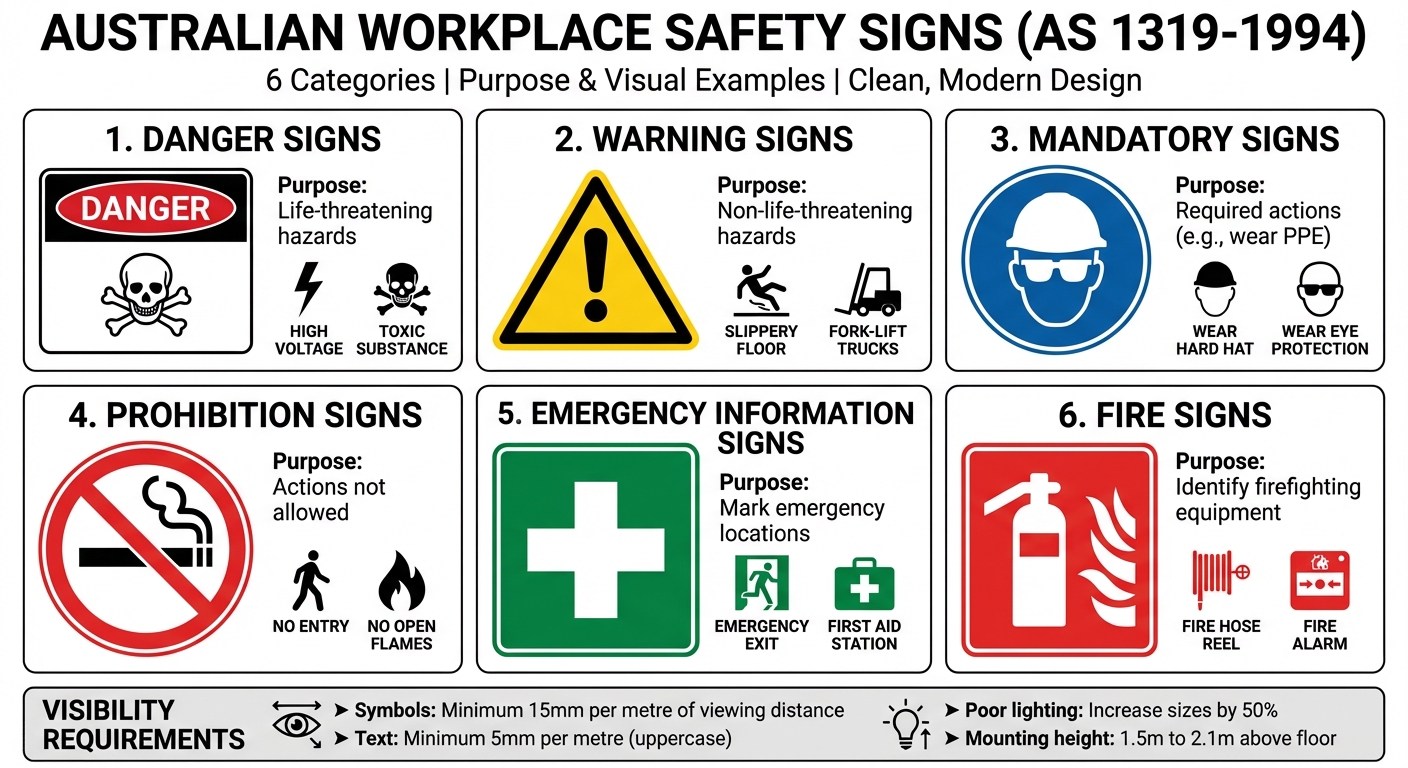
The standards classify essential safety signs into six categories, each with strict design rules:
- Danger signs: Feature "DANGER" in white letters on a red oval within a black rectangle, highlighting life-threatening hazards [5][6].
- Warning signs: Use a yellow triangle with a black symbol to indicate hazards that are not life-threatening [6][7].
- Mandatory signs: Display white symbols on blue circular backgrounds to specify required actions, such as wearing PPE [5][7].
- Prohibition signs: Show a red circle and slash over a black symbol on white to indicate actions that are not allowed [5][7].
- Emergency information signs: Use white symbols on green backgrounds to mark locations like first aid stations and emergency exits [5][6].
- Fire signs: Feature white symbols on red backgrounds to identify firefighting equipment [6][7].
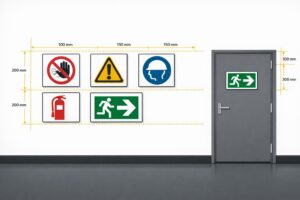
To ensure clarity, the standards also include visibility requirements. Symbols must measure at least 15mm for every metre of viewing distance, and uppercase text should be at least 5mm per metre [7]. For areas with poor lighting or other challenges, both symbol and text sizes should be increased by at least 50% [7]. Signs should be mounted between 1.5m and 2.1m high, positioned within the observer’s line of sight, and placed against contrasting backgrounds to avoid obstruction [3][7].
Legal Requirements Under Model WHS Laws
While the technical standards provide detailed guidance, legal frameworks ensure their enforcement. Although Australian Standards are generally voluntary, they become mandatory when referenced in State or Commonwealth Work Health and Safety (WHS) legislation [6]. Courts often rely on AS 1319 and AS 2293 to assess whether duty holders have fulfilled their legal responsibilities under WHS laws [6]. This makes compliance not just a matter of best practice but a legal obligation that safeguards both workers and employers from potential liabilities.
The Work Health and Safety Act holds business owners and WHS officers accountable for ensuring safety signage meets these standards [3]. Failing to maintain proper signage can lead to penalties, particularly if it contributes to preventable incidents. For context, a single-user licence for the AS 1319-1994 standard costs $160.69 AUD [1] – a small price compared to the legal and human costs of non-compliance.
Auditing Your Current Safety Signage
Reviewing your safety signage is a critical step to ensure it aligns with workplace safety policies and complies with relevant standards. This process helps confirm that your signs effectively support your documented safety procedures.
Signage Coverage Assessment Checklist
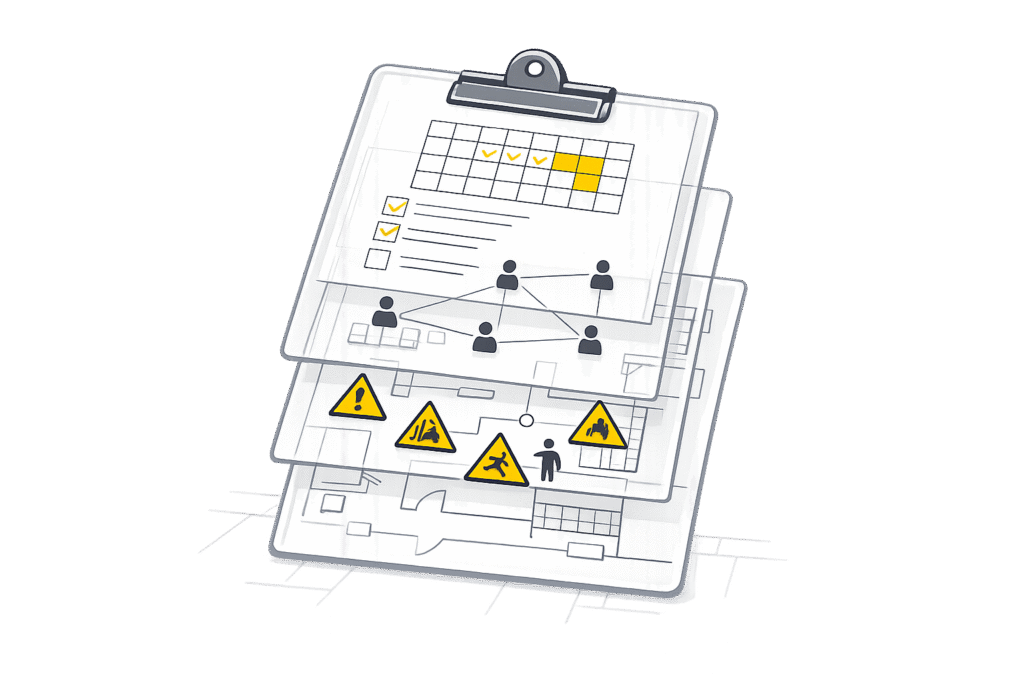
Start by mapping out all locations where safety signs are required, based on your risk management plan. Create a detailed map that highlights hazard zones, fire equipment, emergency exits, first aid stations, and areas where PPE is necessary [3].
"A workplace should be audited at least twice a year or whenever layouts, machinery, or procedures change." – K2K Signs [3]
Check that the wording, symbols, and colours on your signs meet the requirements of AS 1319. For fire extinguisher signs, ensure they are mounted 2 metres above the ground and include an additional sign indicating the types of fires they are suited for [3][9]. Document any non-compliant signage in a logbook, noting its location, the issue (e.g., "faded" or "mounted too low"), and the corrective action required [3].
Once you’ve confirmed that all necessary areas are covered, move on to evaluate the visibility and accessibility of each sign.
Checking Visibility and Accessibility
To ensure signs are easily readable, symbols should measure at least 15mm per metre of viewing distance, and uppercase text should be 5mm per metre. In areas with poor lighting, increase these sizes by at least 50% [7]. General safety signs should be positioned between 1.5m and 2.1m above the floor, ideally placed at eye level for maximum visibility [3][7].
Make sure signs are not blocked by open doors, machinery, or inventory [3][9]. They should also be mounted against contrasting backgrounds to ensure they stand out clearly [7]. For outdoor or harsh environments, use durable materials like aluminium or polypropylene to prevent fading or damage [3]. Replace any signs that are cracked, faded, or unreadable under any lighting conditions.
Finding Gaps Between Signage and Safety Policies
Compare the results of your audit with your existing safety policies to uncover mismatches and areas where compliance may be lacking.
Comparing Policies to Workplace Conditions
Take your risk register and safety policies and align them with your audit findings. Check that the types of signs in use align with what your policies require. For example, ensure Prohibition signs are in place where actions are forbidden, and Mandatory signs are positioned at entry points where specific PPE is needed [4][7].
Every identified risk should have an appropriate sign: Danger signs for hazards that could cause serious harm or death, and Warning signs for risks that are less severe but still require attention [7][10]. For each mismatch, log the details, including the policy requirement, the missing or incorrect sign, and its exact location [3].
After this, focus on reviewing common workplace areas to identify patterns of recurring discrepancies.
Common Areas to Review
Using the insights from your policy comparison, dig deeper into specific areas where gaps are often found.
- Fire safety zones: These areas may lack proper assembly point markers or may feature extinguisher signs that fail to specify which types of fires the extinguishers are suited for [9].
- Hazardous materials storage: Discrepancies often arise between the dangerous goods manifest and the warning signs displayed at chemical storage sites [4].
- Machinery and high-voltage zones: Missing warning signs or mandatory action signs, such as "out of operation" tags during maintenance, are common issues here [9].
- Warehousing and logistics areas: Points where pedestrians and vehicles interact often lack separation markers or speed limit signs outlined in the traffic management plan [4][2].
- Reception and visitor areas: If your policy requires visitors to sign in, ensure administrative signs clearly communicate this process at entry points [4][2].
Spotting these gaps is a critical step before you can update your policies and set up systems for ongoing compliance monitoring.
Adding Signage Requirements to Safety Policies
After completing your audit and gap analysis, it’s time to update your safety policies to include clear signage requirements. By addressing signage gaps and formalising these controls, you can ensure that signage becomes a core part of your safety framework. This not only helps prevent workplace injuries but also minimises the risk of WHS fines [3].
Updating Policy Documents
Signage requirements should be embedded into every risk assessment. For each hazard identified, specify the necessary sign types: Danger signs for life-threatening risks, Warning signs for non-life-threatening hazards, and Mandatory signs for actions like wearing PPE [4][7]. Policies must also confirm that all signage complies with Australian Standard AS 1319-1994, covering design, layout, and symbols [7][3].
When developing new safe operating procedures (SOPs), include a section on signage requirements. For example, an SOP for forklift operations should mandate speed limit signs at pedestrian–vehicle interaction points. Ensure the policy specifies that all signs adhere to AS 1319 standards for mounting, visibility, and material specifications [7][3].
Regular signage maintenance should also be part of your policy. Include cleaning and visibility checks in your maintenance schedules, and mandate thorough inspections at least twice a year or whenever there are changes to workplace layouts, machinery, or procedures [3]. As WorkSafe ACT advises:
"For maximum effectiveness, safety signs should be maintained in good condition, kept clean and well illuminated" [7].
These updates ensure that signage requirements are consistent across all safety policies and procedures, aligning design standards with ongoing workplace safety practices.
Assigning Signage Management Responsibilities
To maintain accountability, assign a WHS officer or facility manager to oversee all aspects of signage management. This individual should be named in your policy to clarify their responsibilities, which include maintaining written or digital records of signage audits. As K2K Signs highlights:
"Keeping written or digital records demonstrates compliance during WHS inspections" [3].
Create and regularly update a site map that marks all areas requiring safety or instructional signs. The assigned officer should ensure this map remains current and that all employees understand the purpose of each safety sign [3][7]. Additionally, replacement safety signs must come from certified suppliers and meet AS 1319 standards for colour, size, and material [3].
Setting Up Maintenance and Compliance Monitoring
Once you’ve incorporated signage requirements into your workplace policies, the next step is to establish a structured system to ensure signs remain effective over time. Factors like wear and tear, changes in the workplace, and environmental conditions can all impact signage visibility and compliance. A formal maintenance and audit schedule is essential to address these challenges and prevent safety gaps. This process builds on earlier checks, ensuring signage remains aligned with your workplace safety policies.
Creating a Maintenance Checklist
A well-rounded maintenance checklist should include six key areas:
- Physical condition: Look for signs of fading, peeling, or cracking.
- Visibility: Ensure signs are clear and not obstructed.
- Mounting: Verify that signs are securely fixed and positioned within the recommended viewing range of 1.5 m to 2.1 m. For specialised signs, like fire extinguisher markers, maintain a height of 2 m.
- Emergency signage: Test photoluminescent signs in low-light settings and confirm that exit signs are properly illuminated [3].
- Compliance: Check that symbols, colours, and wording meet AS 1319 standards [3].
- Relevance: Remove outdated or duplicate signs to minimise visual clutter [3].
Dirt and grime can seriously reduce a sign’s effectiveness, so regular cleaning should be part of your maintenance routine [8]. As MySafetyWorks highlights:
"Should any sign be removed or destroyed accidentally, the hazard or risk covered by the sign should not be left uncontrolled" [8].
Replace missing or damaged signs immediately to maintain hazard control. Keep a detailed signage logbook – whether digital or written – to document every inspection. This record will also support compliance during official WHS inspections [3].
Scheduling Regular Compliance Audits
Beyond routine maintenance, regular audits are crucial to ensure your signage system reflects any changes in the workplace. Conduct thorough signage audits at least twice a year [3]. Additionally, schedule audits immediately after significant updates to workplace layouts, machinery, or procedures [3]. During these audits, assess sign clarity under various conditions, including both daylight and low-light scenarios [3].
Maintain a site map that marks all locations requiring safety or instructional signs [3]. The WHS officer should update this map following each audit. Use audit findings to inform updates to your overall safety policies, ensuring your workplace remains compliant and safe.
Conclusion
Connecting safety signage with workplace policies is a practical step towards creating a safer and more compliant environment. As highlighted by WorkSafe ACT:
"The aim [of AS 1319-1994] is to regulate and control safety related behaviour, to warn of hazards and to provide emergency information, including fire protection information" [7].
By aligning signage with policies, businesses can foster a stronger safety culture. This approach ensures due diligence, provides a clear structure for audits, identifies gaps, and supports ongoing compliance efforts.
Start by evaluating your current signage against the AS 1319 standards. Identify any mismatches between your workplace policies and the signage on display. Address these gaps systematically and maintain a signage logbook to document compliance – this can be invaluable during WHS inspections [3]. Regular reviews and updates will keep your safety systems effective and up to date.
Taking a structured approach to integrating signage into your safety framework can lead to tangible benefits, including fewer workplace incidents, improved emergency responses, and reduced legal risks. By acting now, you can embed effective safety signage into your policies, helping to create a safer, more compliant workplace for everyone.
If you’re looking for AS 1319-compliant safety signage tailored to Australian workplaces, PXP Safety offers a wide range of customised solutions designed to support your safety framework.
FAQs
When does AS 1319 become legally mandatory under WHS laws?
Compliance with AS 1319 becomes legally mandatory under Work Health and Safety (WHS) laws when specific legislation enforces it, which can differ depending on the jurisdiction. Adhering to this standard is commonly necessary to maintain workplace safety across Australia. It’s crucial to check local regulations to confirm when compliance with AS 1319 is a legal requirement.
How do I choose the right sign size for a viewing distance?
When choosing the right sign size, think about how far away it needs to be readable. Bigger signs with larger text are crucial for longer viewing distances. For instance, a 355 mm x 255 mm sign is ideal for up to 7.5 metres, while a 510 mm x 355 mm sign is better suited for up to 12 metres. Always consider your workplace’s specific requirements and conditions when selecting the size.
What should I do immediately if a safety sign is missing or damaged?
If you notice a safety sign is missing or damaged, make sure to report it straight away to the appropriate person – this could be your supervisor, a safety officer, or the facility manager. This helps ensure the sign is repaired or replaced quickly. In the meantime, you might want to use temporary signs or barriers to maintain safety and meet compliance standards until the issue is sorted.
Related Blog Posts
You may also be interested in
FAQs About Workplace Safety Signs in Australia
AS 1319 sign types, placement, materials and maintenance for workplace safety and WHS compliance in Australia.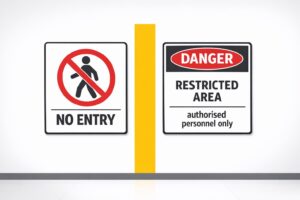
Restricted Area Signs vs. No Entry Signs
Compare No Entry and Restricted Area signs in Australian workplaces — meanings, design differences and AS 1319 compliance.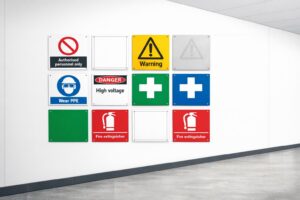
How to Spot Workplace Signage Gaps
Audit your workplace for missing, faded or non‑compliant signs under AS 1319 to reduce incidents and avoid WHS fines.
Symbol Design: Global Standards Explained
Explains ISO 7010 and ISO 3864: standard symbols, colours and sizing for clear, language‑free safety signage and AU compliance.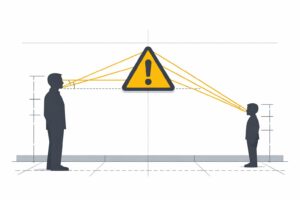
Hazard Sign Visibility Planner
Plan hazard sign placement for max visibility with our free tool. Ensure safety by finding the best spot, height, and angle—try it now!