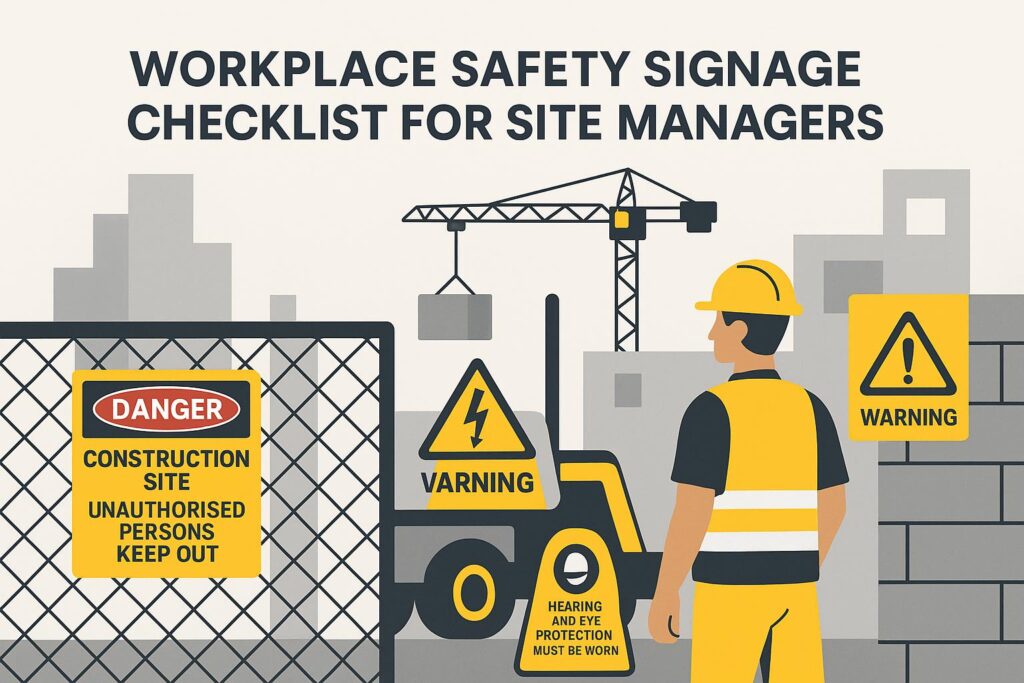
Workplace Safety Signage Checklist for Site Managers
Workplace safety signage is a legal requirement in Australia. It helps prevent injuries, save lives, and ensures compliance with the Work Health and Safety Act 2011. Poor signage can lead to workplace accidents, legal penalties, and confusion during emergencies. Site managers must follow WHS duties and the AS 1319-1994 standards for design, placement, and maintenance of signs.
Key Points:
- Legal Responsibility: Site managers must identify hazards, install appropriate signs, and maintain compliance with WHS laws.
- Types of Signs: Prohibition (red), Warning (yellow), Mandatory (blue), and Emergency (green).
- Placement & Maintenance: Signs must be visible, well-lit, and regularly inspected for damage or wear.
- Customisation: Tailor signage for site-specific hazards like chemicals, confined spaces, or electrical risks.
- Documentation: Maintain a signage register and conduct regular audits to ensure relevance and compliance.
By following these steps, you can create a safer workplace while avoiding fines and legal issues. Regular reviews and training are essential to keep signage effective and workers informed.
Safety Signage
Legal and Compliance Requirements
Site managers carry a hefty legal responsibility when it comes to workplace safety signage. Understanding your obligations under Australian law isn’t just about compliance – it’s about ensuring the safety of everyone on-site. The Work Health and Safety Act 2011 sets out a clear duty for persons conducting a business or undertaking (PCBUs) to eliminate or reduce risks to health and safety. Proper signage plays a key role in meeting this responsibility.
Confirm WHS Duties and Responsibilities
The first step is ensuring you’ve addressed all Work Health and Safety (WHS) duties tied to signage. Under model WHS regulations, site managers are required to identify hazards, assess risks, and implement control measures, which include the use of appropriate safety signs. Managing signage is an ongoing task that should be integrated into your overall safety system.
Start by reviewing your WHS policies and clearly assigning responsibilities for tasks like ordering, installing, inspecting, and replacing signs. This ensures no critical signage is overlooked or left in poor condition. Many workplaces appoint a safety officer or facilities manager to handle these duties, but the PCBU remains ultimately accountable.
Each identified hazard must have a corresponding control measure, and where signage is required, it needs to be in place and fully functional. Missing or inadequate signage can be flagged as a WHS breach during WorkSafe inspections.
Keep detailed records of your signage decisions. Document why specific signs were chosen, where they were placed, and when they were installed. This not only demonstrates that you’ve taken reasonable steps to meet your WHS obligations but also serves as evidence in case of an incident.
Verify Compliance with AS 1319-1994
Once you’ve assigned WHS duties, it’s crucial to ensure all signage complies with Australian standards. AS 1319-1994 outlines the required design and specifications for safety signs, and adherence to this standard is non-negotiable. From colour schemes to symbol design, these requirements ensure consistency across workplaces nationwide.
Safety signs fall into four main categories under AS 1319-1994:
- Prohibition signs: Red circle with a diagonal line, used to indicate actions that are not allowed.
- Warning signs: Yellow triangle with a black border, alerting to potential hazards.
- Mandatory signs: Blue circle with a white symbol, showing actions that must be taken.
- Emergency information signs: Green rectangle with a white symbol, highlighting emergency exits or equipment.
For example, a prohibition sign must use the specified Pantone 485 red – not just any shade of red that looks close enough. Symbols must also align with the standardised designs outlined in AS 1319-1994. Improvised or generic symbols, no matter how clear they seem, won’t meet compliance. A "no smoking" sign, for instance, must feature the specific cigarette symbol with the red prohibition circle and diagonal line; a handwritten notice simply won’t cut it.
Additionally, details like letter heights, border widths, and symbol sizes must strictly follow the standard. For example, letters need to be at least 25mm tall for a 4-metre viewing distance, or 65mm for a 10-metre distance. These specifications are critical because they ensure workers can quickly recognise and respond to safety information, particularly in emergencies or low-light conditions.
Beyond meeting these national standards, each site will have its own unique hazards requiring tailored signage solutions.
Identify Site-Specific Signage Requirements
Every site presents its own risks, so your signage needs to address the specific hazards present. A construction site, for example, has very different risks compared to a warehouse. Conduct a thorough walkthrough of your site, identifying areas where specialised signs are necessary.
- Hazardous chemicals: Clearly mark areas where chemicals are stored or used. Signs should include the substance name, relevant GHS pictograms, and emergency contact details. Highlight any special handling requirements.
- Confined spaces: Place "Confined Space – Entry by Permit Only" signs at all entry points. If the space contains hazards like toxic gases or low oxygen levels, additional warning signs should specify these dangers.
- Traffic management zones: Use signs to indicate speed limits, pedestrian crossings, reversing zones, and designated parking areas. Loading docks should have signs showing weight limits, clearance heights, and traffic flow directions.
- Electrical hazards: Post "Danger – High Voltage" signs near switchboards, substations, and any high-voltage equipment. Restricted access areas require clear prohibition signs, and overhead power lines must have warning signs with clearance distances for crane and elevated work platform operators.
- Height and fall hazards: Install warning signs at elevated work areas, roof access points, and any locations where workers could fall. These signs should include the height of the drop and note whether fall protection gear is required. Scaffold access points should display the scaffold’s safe working load, inspection dates, and usage restrictions.
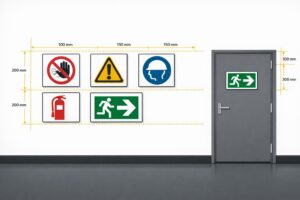
Emergency preparedness is another area where signage is critical. Assembly points must be clearly marked and visible from multiple directions. Evacuation routes need signs along all exit paths, with arrows showing the direction of travel. Emergency equipment such as first aid kits, eye wash stations, fire extinguishers, and spill kits should be identified with signs that are easy to locate, even under stress.
Matching Hazards to Sign Types
Check Language and Symbol Clarity
For hazard signs to do their job, they need to communicate risks clearly and immediately. A sign that leaves workers guessing is a sign that isn’t doing its job.
Symbols are your best bet for universal understanding. They cut through language barriers and reduce confusion. For instance, a pictogram of a person in a hard hat instantly tells workers, no matter their native language, that head protection is a must [1][5].
When text is necessary, keep it short, clear, and in plain Australian English. Something like "Danger – High Voltage" is far more effective than a long-winded technical explanation. Workers need to grasp the message at a glance.
To ensure signs are effective, follow these guidelines:
- Use symbols that are at least 15 mm per metre of viewing distance.
- For text, maintain a minimum size of 5 mm per metre.
- Test both symbols and text with a range of workers to confirm they’re easily understood.
Visibility is just as important. Signs should always be well-lit, unobstructed, and placed where they’re easy to see [2][3][4].
Finally, get feedback from workers across different departments. If anyone hesitates or misinterprets a sign, it’s a clear signal that adjustments are needed. Clear communication through signs isn’t just about compliance – it’s about keeping everyone safe.
Sign Placement, Visibility, and Maintenance
Making safety signage effective isn’t just about putting a sign on a wall. It requires careful positioning, proper lighting, and consistent upkeep to ensure workers are always aware of potential hazards.
Verify Sign Positioning and Height
Signs need to be where workers naturally look – not hidden in out-of-the-way spots or placed too high to notice. The ideal placement is at eye level and as close to the hazard as possible. When reviewing your workplace, walk through workstations, machinery areas, and benches to confirm the signs are clearly visible. If a sign isn’t easily noticeable from certain angles or distances, consider relocating it or adding extra signs to cover blind spots [6].
Check Visibility and Lighting
Visibility is critical. Start by removing anything that blocks the view of a sign, like equipment or stored materials. If an obstruction can’t be moved, relocate the sign to a better spot where it’s easy to see [3][6][7][8].
Lighting also plays a big role. Signs need to be legible at all times, whether it’s day or night. Regularly check that both natural and artificial lighting keep signs clear and easy to read [3][7][8]. In poorly lit areas, larger signs may help compensate for limited visibility [3][7][8].
To make signs stand out even more, use contrasting backgrounds. For instance, a bright sign on a dark wall can draw attention and ensure the message is noticed [3][7][8]. Additionally, follow size guidelines: symbols should be at least 15 mm per metre of viewing distance, and uppercase text should measure no less than 5 mm per metre [3][8].
Work environments change over time – new equipment, material storage, or layout modifications can block signs. Choose locations with minimal risk of future obstructions, and conduct regular checks to ensure signs remain effective [3][7].
Regular Inspections and Maintenance
Routine inspections are vital. A monthly schedule works well for most areas, but high-traffic or harsh environments may need more frequent reviews. During inspections, check for signs that are faded, cracked, peeling, or otherwise damaged. Replace any that are difficult to read or structurally compromised.
Don’t stop at the signs themselves – inspect the mounting hardware too. Make sure it’s secure and free from wear.
Keep a detailed log of inspections, including the date, location, condition of each sign, and any actions taken. This not only helps with ongoing maintenance but also provides documentation for compliance audits.
Outdoor signs are especially vulnerable to weather and UV exposure, which can cause them to fade or degrade over time. Replace these signs proactively to ensure they remain clear and effective in communicating safety information.
sbb-itb-9950c92
Material Durability and Environmental Suitability
When it comes to safety signage in Australia, durability is key. The materials you choose need to withstand the country’s diverse climate conditions while maintaining their effectiveness. After all, a sign that can’t hold up to its environment won’t do its job.
Match Materials to the Environment
The environment where the sign will be placed plays a big role in material selection. For outdoor areas, opt for sturdy aluminium signs with UV protection and outdoor-grade printing to combat the harsh Australian sun. In coastal or humid regions, marine-grade aluminium is a better choice, as it resists corrosion and stays readable. If you’re dealing with areas exposed to chemicals, look for materials designed to endure corrosive substances. Indoors, where temperature shifts or moisture might be an issue, choose materials built to handle those conditions.
Inspect Regularly and Replace When Needed
Keeping safety signs in top-notch condition requires regular checks. Watch out for signs that have faded, cracked, chipped, or have peeling coatings. Damaged signs not only lose their visibility but also compromise workplace safety. Replace any damaged signs promptly with ones that meet the latest standards [8][3]. Maintain a record of inspections and replacements to ensure issues are addressed quickly and efficiently [9].
Keep Sizes and Mounting Consistent
Consistency in sign size and mounting methods is more important than it might seem. Uniformity helps ensure that signs are easy to spot and understand, especially in high-risk areas. By standardising sizes and installation methods, you simplify maintenance and ensure all safety signs are correctly positioned and clearly visible [4].
Customisation, Documentation, and Review
Design your signage system to tackle specific hazards, maintain detailed records, and ensure everything stays up-to-date.
Specify Custom Sign Requirements
Standard safety signs cover many common risks, but every workplace has its own set of challenges. Sometimes, off-the-shelf signs just don’t cut it. For example, if your site uses unique machinery, handles specialised chemicals, or has unconventional traffic patterns, you may need custom signs tailored to these situations. Think about combining multiple warnings, using language specific to your site, or even including diagrams to clearly outline procedures.
When creating custom signs, be as specific as possible. Define the exact wording, pick colours that comply with AS 1319-1994 standards, and ensure symbols are easy to understand. If your workforce includes non-English speakers, bilingual text might be necessary. Also, make sure these signs are as durable as standard ones, using materials that can handle the environment they’re in, and mount them in a way that keeps them visible and secure. These tailored signs not only address unique risks but also support proper record-keeping and ongoing safety improvements.
Maintain a Signage Register
After setting up custom signage, it’s essential to document everything systematically. Under Work Health and Safety (WHS) Regulations, maintaining a register for hazardous chemicals and their associated signage is mandatory [10]. A digital register can be particularly useful, allowing you to log each sign’s location, type, installation date, inspection history, and replacement details [11]. Linking each sign to its related risk assessment adds another layer of accountability, showing exactly why it was installed.
This documentation isn’t just about compliance – it’s also a practical tool for managing risks and defending your workplace practices in case of claims [11]. Keep your register accessible and updated. Digital tools make this easier by letting you attach photos, track changes, and quickly generate reports. Your register should be detailed enough to answer questions like, “When was this sign last inspected?” or “What hazard assessment led to its installation?”
Schedule Routine Reviews and Training
Signage isn’t a one-and-done deal. Regular reviews and training ensure your signs stay effective as your workplace evolves. Schedule periodic audits or "health checks" to confirm that signs remain relevant, legible, and properly positioned [11][12][13].
During these reviews, inspect signs for wear and tear, fading, or damage. Check that the information is still accurate and that the signs are clearly visible to both workers and visitors. They should be positioned at eye level in high-risk areas and free from obstructions [12][13]. Record your findings with notes and photos, and outline any required actions or improvements [12]. Replace damaged signs immediately, address any gaps, remove redundant signage, and plan follow-up reviews to ensure ongoing effectiveness [12].
Training is just as important. Make sure workers understand the signage by including it in induction programs and regular safety training sessions. If there’s an incident or a significant change in the workplace, revisit your signage and update training accordingly. This continuous education reinforces the importance of safety signs and helps cultivate a strong safety culture across your site.
Conclusion
Effective workplace signage plays a crucial role in safeguarding lives and reducing legal risks. As Aaron Gray from Reflective Fabrications aptly points out:
Safety signs aren’t just a box to tick. They are critical to creating a safe work environment and avoiding the potential dangers that come with poor visibility, unclear instructions, or non-compliance [11].
The numbers speak for themselves. According to Safe Work Australia‘s 2024 data, the construction sector accounted for 23% of all workplace fatalities, while the transport, postal, and warehousing industries made up a staggering 62% [11]. Ignoring compliance can lead to severe consequences, with penalties climbing to over $3 million for corporations and up to $600,000 for individuals under the Model WHS Act [11].
These statistics underline the importance of every single sign and every inspection. This checklist ensures you cover all the critical elements of managing workplace signage effectively.
Workplaces are constantly changing – new hazards arise, equipment gets updated, and signage can wear out. Even a single oversight could result in injury, hefty fines, or legal action [2]. To stay ahead, regular audits – at least once every quarter – are essential to ensure your signs remain clean, legible, undamaged, and relevant [2][12].
FAQs
What are the legal risks for site managers if workplace safety signage doesn’t meet Australian standards?
Non-compliance with workplace safety signage requirements in Australia can have serious consequences, both legally and financially. Site managers could face hefty fines, penalties, or even stop-work orders if signage is found to be insufficient or incorrectly displayed. In extreme situations, an entire site might be shut down until the issues are resolved.
Meeting Australian standards for safety signage isn’t just about avoiding these penalties. It plays a vital role in safeguarding workers, reducing the risk of accidents, and showing a genuine commitment to maintaining a safe workplace. To stay on top of compliance and ensure a secure environment, regular inspections and timely updates to signage are essential.
What steps can site managers take to keep safety signage effective as work environments change?
To keep safety signage effective in ever-changing workplaces, it’s crucial for site managers to routinely check signs for damage or deterioration. Make sure they remain clean, easy to read, and well-lit. If any signs are damaged or no longer relevant, replace them immediately to ensure they remain visible and meet compliance standards.
Regularly review the site to spot areas where signage might need updating – this could be due to changes in the workspace layout, new equipment, or updated safety rules. It’s also important to position signs where they’re highly visible and use materials that can withstand the specific conditions of the environment. For example, outdoor sites may require weather-resistant signs.
By taking a hands-on approach and adjusting signage as needed, site managers can contribute to a safer and regulation-compliant workplace.
How can I customise safety signs to address unique hazards on my site?
When designing custom safety signs for your site, the first step is to pinpoint the specific hazards and risks present. These signs should clearly convey the necessary precautions or instructions to address these unique dangers effectively.
For hazards that are unique to your site, it’s worth creating signs that go beyond generic templates. Opt for materials that can withstand your environment – like weather-resistant options for outdoor use. Placement is equally important; ensure signs are positioned in spots where they’re easy to see and accessible to both workers and visitors.
Custom signs don’t just enhance safety – they also help meet Australian workplace safety requirements. Make it a habit to review and update your signage regularly to account for changes in site conditions or new regulations.
Related Blog Posts
You may also be interested in
FAQs About Workplace Safety Signs in Australia
AS 1319 sign types, placement, materials and maintenance for workplace safety and WHS compliance in Australia.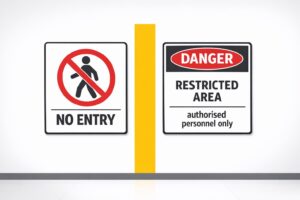
Restricted Area Signs vs. No Entry Signs
Compare No Entry and Restricted Area signs in Australian workplaces — meanings, design differences and AS 1319 compliance.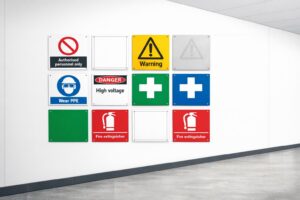
How to Spot Workplace Signage Gaps
Audit your workplace for missing, faded or non‑compliant signs under AS 1319 to reduce incidents and avoid WHS fines.
Symbol Design: Global Standards Explained
Explains ISO 7010 and ISO 3864: standard symbols, colours and sizing for clear, language‑free safety signage and AU compliance.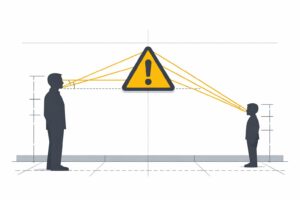
Hazard Sign Visibility Planner
Plan hazard sign placement for max visibility with our free tool. Ensure safety by finding the best spot, height, and angle—try it now!