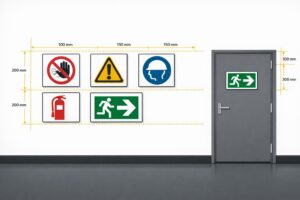
10 Essential Safety Signs Every Australian Workplace Needs
Workplace safety signs are non-negotiable in Australia. They protect workers, ensure legal compliance, and reduce risks. Under the Work Health and Safety (WHS) Regulations 2011 and AS 1319-1994, businesses must use standardised signage to warn, inform, and guide. Here’s a quick rundown of the 10 must-have safety signs:
- Prohibition Signs: Forbids actions like smoking or unauthorised entry.
- Warning Signs: Alerts to moderate hazards like slippery floors or forklift zones.
- Mandatory Signs: Indicates required actions, e.g., wearing PPE.
- Danger Signs: Highlights life-threatening risks such as high voltage.
- Emergency and First Aid Signs: Guides to exits, first aid kits, and safety equipment.
- Fire Safety Signs: Marks fire equipment and evacuation routes.
- Restriction Signs: Sets limits, e.g., speed or load capacity.
- Electrical Hazard Signs: Warns of high-voltage dangers.
- Chemical Hazard Signs: Identifies hazardous substances and storage areas.
- PPE Signs: Reminds workers to use protective gear like gloves or goggles.
Key Compliance Tips:
- Follow AS 1319-1994 for design, colour, and placement.
- Use durable, weather-resistant materials.
- Maintain visibility with regular inspections.
- Educate workers on sign meanings and actions required.
Proper signage isn’t just about meeting legal obligations – it’s about creating a safer workplace for everyone.
1. Prohibition Signs
Purpose and Functionality
Prohibition signs play a critical role in workplace safety by clearly forbidding actions that could lead to immediate risks. Their primary purpose is simple yet essential – they inform workers and visitors about behaviours that are strictly off-limits in certain areas. By doing so, they act as a key preventative measure, reducing the likelihood of accidents, injuries, or dangerous situations. These signs communicate vital safety rules instantly, eliminating the need for lengthy explanations or training, which is especially important in fast-paced, high-risk environments where quick decisions are crucial.
In addition to accident prevention, prohibition signs contribute to a safer workplace culture overall. They help ensure compliance with Work Health and Safety (WHS) regulations, lower the chances of incidents, and reinforce the importance of adhering to safety rules. When these signs are prominently displayed, they serve as constant reminders that some actions are unacceptable, no matter the circumstances or pressures.
This straightforward and consistent communication is supported by industry-standard design specifications, ensuring clarity and effectiveness.
Design Specifications (Colour, Shape, Symbols)
Under Australian Standard AS 1319-1994, prohibition signs must follow specific design guidelines to ensure they are instantly recognisable across all workplaces. These signs feature a red circle with a diagonal red slash running through it. Inside this circle is a black pictograph depicting the prohibited activity, all set against a white background. Any accompanying text is written in black, ensuring maximum readability.
The colours used in these signs must comply with section 3.5.1 of AS 1319-1994 and align with Appendix A, which references AS 2700. This ensures uniformity, so the red on one sign is identical to the red on another, maintaining a consistent visual language workers can depend on.
With this standardised design in mind, let’s look at how these signs are applied in everyday workplace settings.
Workplace Examples
One of the most commonly seen prohibition signs in Australia is the "No Smoking" sign, which features a cigarette pictograph. These signs are often displayed in offices, manufacturing plants, and construction sites. They help prevent fire risks near flammable materials and fuel storage areas while promoting healthier air quality.
Another important example is the "No Entry for Unauthorised Personnel" sign. These are used to restrict access to hazardous areas, such as electrical substations, chemical storage zones, or machinery areas, where specialised training or equipment is required for safety.
Equally critical are "Do Not Operate" signs, which are used during maintenance or repair work. These signs prevent workers from accidentally starting equipment that is being serviced, potentially avoiding severe injuries or worse. This simple precaution can turn a routine task into a safe one.
Compliance with Australian Standards (AS 1319-1994)
To meet legal requirements in Australia, prohibition signs must comply with the specifications outlined in AS 1319-1994. This compliance is not optional – it is mandated by the Work Health and Safety (WHS) Regulations 2011.
Standardisation is especially crucial in industries like construction and mining, where workers often move between sites and rely on consistent, clear signage to stay safe. Non-compliant signs can lead to confusion, reduced visibility, and even regulatory penalties if an incident occurs.
When choosing prohibition signs for your workplace, always ensure they meet AS 1319-1994 standards. This guarantees not only legal compliance but also the safety and clarity your team depends on.
2. Warning Signs
Purpose and Functionality
Warning signs serve as a middle ground between general caution and immediate danger, alerting workers and visitors to potential hazards that require vigilance. Unlike danger signs, which signal life-threatening risks, warning signs highlight moderate hazards, encouraging awareness to prevent accidents before they occur. These signs are especially important in areas with hidden risks, such as slippery floors or zones with active forklift operations. Their role is to prompt caution and ensure safety through clear and standardised messages.
Design Specifications (Colour, Shape, Symbols)
According to AS 1319-1994, warning signs are designed as yellow triangles with a black border and a black pictograph – often an exclamation mark – to signify caution. The size of text and symbols is proportional to the viewing distance, with minimum requirements of 15 mm/m for symbols, 5 mm/m for uppercase text, and 4 mm/m for lowercase text [11]. These specifications ensure that the signs are easily recognisable and readable, even from a distance.
Workplace Examples
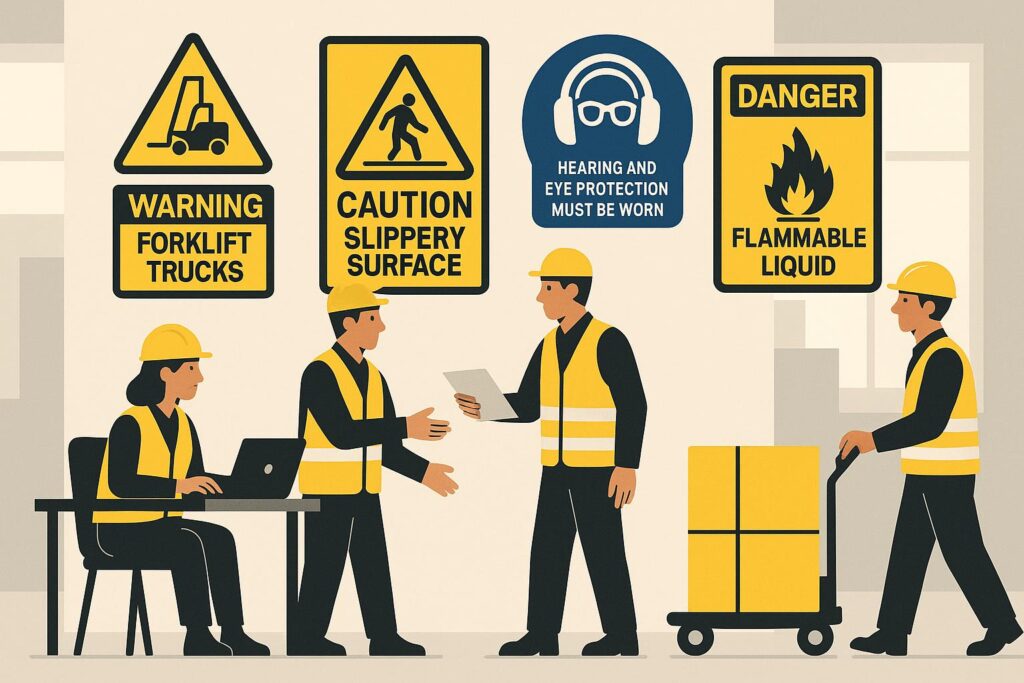
The standardised design of warning signs makes them instantly recognisable across various industries. For example, warehouses often use "FORKLIFTS HAZARD" signs to alert workers to active machinery. Other common examples include signs warning of slippery surfaces, overhead loads, or hot equipment. On construction sites, warning signs may indicate falling objects, uneven terrain, or areas with heavy machinery in operation. Manufacturing facilities might display warnings about moving parts or noisy environments where hearing protection is required. In chemical storage areas, signs alert workers to corrosive substances, irritants, or materials that demand special handling, encouraging the necessary precautions.
Compliance with Australian Standards (AS 1319-1994)
Under WHS regulations, compliance with AS 1319-1994 is mandatory [1] [8]. This standardisation ensures that warning signs across Australia communicate the same message with consistent visual impact. By adhering to the prescribed yellow triangle format with black symbols, workers can quickly understand the hazard without confusion. Employers can ensure compliance by sourcing signage that meets these specifications, promoting workplace safety and regulatory adherence.
3. Mandatory Signs
Purpose and Functionality
Mandatory signs are used to communicate essential safety practices that must be followed. By providing clear instructions, they help eliminate confusion, ensuring both legal compliance and a safer environment.
Design Specifications (Colour, Shape, Symbols)
In Australia, mandatory signs are designed in line with AS 1319-1994 standards. These signs are instantly recognisable thanks to their distinctive design – a blue circle containing a white pictogram that illustrates the required action. If text is included, it appears in black on a white background, maintaining clarity and visibility. This colour scheme ensures the signs are easy to identify and interpret at a glance.
Workplace Examples
Mandatory signs are a common sight across various industries, each tailored to specific safety needs:
- Construction sites: Workers are often required to wear hard hats, safety boots, and high-visibility clothing before entering certain areas.
- Manufacturing facilities: Signs may mandate hearing protection in noisy zones, safety glasses during grinding or cutting tasks, or respirators in areas with airborne particles or fumes.
- Warehouses: Pedestrian walkways are marked to separate workers from forklift traffic, reducing the risk of accidents.
- Healthcare, laboratories, and food processing plants: Signs might enforce hand washing protocols or the use of lab coats, gloves, face shields, hairnets, and beard covers to maintain hygiene and safety.
These examples highlight how mandatory signs play a crucial role in promoting safe practices across diverse workplaces.
Compliance with Australian Standards (AS 1319-1994)
Adhering to AS 1319-1994 ensures that mandatory signs deliver consistent and clear instructions. This uniformity helps workers quickly understand and act on safety requirements, reinforcing Workplace Health and Safety (WHS) obligations. Employers who comply with these standards not only meet legal requirements but also create a safer and more organised work environment.
4. Danger Signs
Purpose and Functionality
Danger signs play a crucial role in workplace safety by warning workers about hazards that could lead to fatal outcomes[7][1]. These signs are strictly reserved for life-threatening risks, ensuring their purpose is clear and unmistakable.
Design Specifications (Colour, Shape, Symbols)
According to AS 1319-1994, danger signs are designed to be instantly recognisable. The defining feature is the word "DANGER", displayed in white within a red oval[7][1], surrounded by a black border[1]. This striking combination of red, white, and black is intentionally chosen to draw immediate attention and communicate the severity of the hazard[10]. Below this heading, there’s a white background where additional information can be added, such as specific warnings like "HIGH VOLTAGE", written in black text. On horizontal signs, this supplementary text may appear to the right of the red oval[1].
Compliance with Australian Standards (AS 1319-1994)
Adhering to AS 1319-1994 is crucial when selecting and installing danger signs. This ensures that their design and placement remain consistent, maintaining their ability to effectively alert workers to life-threatening dangers.
5. Emergency and First Aid Signs
Purpose and Functionality
Emergency and First Aid signs are essential for guiding employees and visitors to critical medical resources and evacuation routes. These signs indicate the locations of first aid kits, medical rooms, AEDs, eyewash stations, emergency showers, and other necessary equipment, ensuring quick and easy access during emergencies.
Design Specifications (Colour, Shape, Symbols)
Under AS 1319-1994, Emergency and First Aid signs are designed with a green background and white symbols or text [1]. They are usually rectangular, framed with a white border, and often feature a white cross to signify first aid resources such as kits, rooms, or stations. For other emergency facilities, the signs use clear white pictographs or concise legends to explain their purpose. Directional signs may include white arrows alongside symbols and text to help guide people to the nearest medical or emergency resource.
Workplace Examples
In manufacturing plants, these signs are often placed near production lines where machinery-related injuries are more likely to occur. Directional signs at key junctions ensure workers can quickly find medical facilities when needed.
Construction sites, given their large and often spread-out nature, require multiple signs. These are typically located in site offices, near portable first aid facilities, or along the perimeter of the worksite to ensure accessibility. In office settings, signs are commonly used to mark wall-mounted first aid kits in locations like kitchens, break rooms, or near reception areas. Laboratories, where chemicals are frequently handled, display eyewash station signs prominently to address potential chemical exposure incidents.
Warehouses and distribution centres often combine first aid signage with emergency exit signs. These are strategically placed, even above tall storage racks, to ensure safety information is visible from a distance. Such clear and consistent signage helps maintain compliance with AS 1319-1994 and ensures that safety measures are accessible across all workplace environments.
Compliance with Australian Standards (AS 1319-1994)
Adhering to AS 1319-1994 guarantees uniformity in Emergency and First Aid signage across Australian workplaces. Standardised designs enable employees, regardless of their experience level, to recognise emergency signs instantly. When choosing safety signs, it’s critical to confirm they meet these specifications to promote a secure and well-prepared work environment.
6. Fire Safety Signs
Purpose and Functionality
Fire safety signs play a crucial role in emergencies by guiding people to fire-fighting equipment like extinguishers, hose reels, and exits. Their primary purpose is to protect lives and property by providing clear, immediate directions when every second counts [1].
Design Specifications (Colour, Shape, Symbols)
Australian Standard AS 1319-1994 specifies that fire safety signs must be rectangular with a red background and white text or symbols [1]. These signs often include straightforward pictographs to ensure clarity. For instance, a fire extinguisher sign might feature an extinguisher icon, while hose reel signs could display a coiled hose. Fire exit signs typically show a running figure alongside flames, all presented in red and white for maximum visibility.
Workplace Examples
In workplaces, fire safety signs are strategically placed to ensure accessibility. For example, in manufacturing environments, extinguisher signs are located near machinery prone to overheating. In office settings, hose reel signs are commonly found in hallways or stairwells. Retail spaces and warehouses use exit signs to clearly mark evacuation routes, ensuring safe and efficient egress during emergencies.
Compliance with Australian Standards (AS 1319-1994)
The AS 1319-1994 standard outlines the requirements for fire safety signs, ensuring they are easy to identify and meet legal obligations. This standardisation helps workers quickly locate fire protection equipment, contributing to a safer workplace through consistent and effective communication [1].
7. Restriction Signs
Purpose and Functionality
Restriction signs are a key component in managing workplace safety. They set clear numerical limits on activities and facility use, helping to establish safe operating parameters [1][3][4]. While prohibition signs completely ban certain actions, restriction signs outline specific boundaries that workers must follow to maintain safety [9]. These signs are crucial for regulating behaviour, minimising risks, and providing essential safety information. By doing so, they enhance hazard awareness, ensure compliance with regulations, reduce the likelihood of accidents, and support a safety-first workplace culture [3][4].
Design Specifications (Colour, Shape, Symbols)
Restriction signs are easily recognisable by their red circular border, similar to prohibition signs but without the diagonal red line [1][3]. The design is straightforward: a black pictogram or text is displayed inside the red circle, set against a white background, with any additional text in black [1]. Although AS 1319-1994 does not specify individual restriction signs, it does acknowledge that speed limit signs, as outlined in AS 1742.1, are frequently used in workplace settings [1][3].
Workplace Examples
Common examples of restriction signs include:
- "Speed Limit 10 km/h"
- "Maximum Load 2T"
- "Authorised Personnel Only" [9].
Compliance with Australian Standards (AS 1319-1994)
Adhering to AS 1319-1994 is a legal requirement under workplace health and safety (WHS) regulations. Non-compliance can result in hefty fines – over $3 million for corporations and up to $600,000 for individuals [9]. Beyond the financial risks, inadequate signage can increase liability in the event of workplace accidents. Ensuring that all restriction signs meet the required standards not only protects employees but also safeguards your organisation. Regularly auditing workplace signage helps maintain compliance, reinforces safety protocols, and demonstrates a strong commitment to a secure working environment. Clear operational boundaries set by these signs also lay the groundwork for using other safety signage tailored to specific hazards.
sbb-itb-9950c92
8. Electrical Hazard Signs
Purpose and Functionality
Electrical hazard signs are essential for protecting workers from severe electrical risks. Categorised as Danger Signs, they alert individuals to immediate, high-voltage hazards. These signs serve as a warning to exercise extreme caution and limit access to areas where only trained personnel should operate [1][9]. They play a crucial role in workplace safety, extending the principles of danger signs to address electricity-specific threats.
Design Specifications (Colour, Shape, Symbols)
As per AS 1319-1994, electrical hazard signs prominently display the word "DANGER" in white text within a red oval [1][9]. What sets these signs apart is the addition of a black rectangular border, which emphasises the urgency of the warning. The combination of the red oval and black rectangle ensures the sign is highly visible and unmistakable.
Workplace Examples
You’ll often see electrical hazard signs with messages like "High Voltage – Keep Out" or "Danger: High Voltage" in Australian workplaces [3]. These signs are strategically placed in areas with high-voltage electricity, such as power stations, industrial facilities, manufacturing plants, and construction sites.
Compliance with Australian Standards (AS 1319-1994)
Under AS 1319-1994, electrical hazard signs fall under the category of Danger Signs, intended to warn of life-threatening hazards [1][9]. Compliance with these standards is not optional – workplace health and safety regulations require employers to adhere to these guidelines to ensure a safe environment for their workers.
9. Chemical and Hazardous Substance Signs
Purpose and Functionality
Chemical and hazardous substance signs play a key role in protecting workers from the dangers posed by toxic, corrosive, flammable, and other harmful materials. These signs serve as a clear warning about the presence of hazardous substances in the workplace, helping employees identify storage areas, handling zones, and the necessary safety precautions. Proper labelling ensures workers are well-informed, contributing to effective hazard management.
Design Specifications (Colour, Shape, Symbols)
These signs adhere to the warning sign format outlined in AS 1319-1994. They feature a yellow background with a black triangle border, while the hazard symbol itself is displayed in black within the yellow triangle. Commonly used symbols include:
- A skull and crossbones to indicate toxic substances
- A corrosion symbol for corrosive materials
- A flame symbol for flammable substances
For transporting dangerous goods, Emergency Information Panels (EIP signs) are used. These panels include hazard codes and identification numbers, presented in a standardised format with an orange background and black text [10].
Workplace Examples
Chemical and hazardous substance signs are widely used across various industries in Australia. In the chemical and petrochemical sectors, they are found on storage tanks, pipelines, and processing areas containing dangerous materials [10]. Manufacturing and logistics facilities use these signs to mark warehouses where chemicals are stored or handled [10].
Transport companies display EIP signs on trucks and containers carrying dangerous chemicals, ensuring emergency responders are aware of the risks in case of accidents [10]. Healthcare facilities rely on these signs to mark areas with biohazards, toxic substances, or zones requiring infection control measures [3][9]. Aged care facilities use them for cleaning chemical storage and infection control procedures [3].
On construction sites, these signs highlight areas where hazardous substances like solvents or adhesives are present, often accompanied by instructions for personal protective equipment (PPE) such as gloves or goggles [3][9]. Factories also place these signs near machinery using hazardous fluids or in areas where corrosive substances are stored [10].
Compliance with Australian Standards (AS 1319-1994)
To ensure workplace safety, these signs must meet the requirements of AS 1319-1994. This standard guarantees consistency in hazard communication across industries. Facilities and vehicles handling dangerous chemicals are required to display these signs, making hazards immediately visible [10]. Employers are responsible for placing signs at all entry points to areas containing hazardous materials and on storage containers, ensuring risks are clearly communicated.
10. Personal Protective Equipment (PPE) Signs
Purpose and Functionality
PPE signs, a specific type of mandatory signage, play a crucial role in maintaining personal safety by clearly indicating the need for protective gear in hazardous areas. These signs serve as visual cues, reminding individuals to wear the appropriate equipment at entry points and within zones where risks are present. Their design ensures they are easily noticeable and immediately understood, reinforcing their importance in preventing workplace injuries [1].
Design Specifications (Colour, Shape, Symbols)
PPE signs share the standard design elements of mandatory signs, with a distinct focus on personal safety gear. They feature a blue circle, which universally signals a mandatory instruction, and include white pictograms that represent specific protective equipment like hard hats, safety goggles, gloves, or earmuffs. When text is included, it appears in black on a white background, ensuring clarity. These consistent design features make PPE signs instantly recognisable, helping workers quickly identify the required protective measures [1].
Workplace Examples
The practical application of PPE signs can be seen across numerous industries in Australia. For example, construction sites display hard hat signs at entrances and in areas with potential overhead hazards. Manufacturing facilities often place safety goggle signs near grinding or welding stations to protect workers from flying debris. In warehouses, glove signs are commonly found in loading zones where sharp or rough materials are handled. High-noise industrial settings use earmuff signs, while laboratories and healthcare facilities rely on PPE signage to indicate the need for gloves, masks, or goggles. Mining operations and agricultural sites also use these signs to highlight areas where additional protection is essential.
Compliance with Australian Standards (AS 1319-1994)
To ensure consistent and effective safety communication, PPE signs must adhere to the guidelines outlined in AS 1319-1994 [1]. This standard specifies the exact design requirements, including colours, shapes, and symbols, creating a unified system for mandatory instructions. By meeting these standards, workplaces can ensure both compliance and the safety of their employees in hazardous environments.
Safety Signs in Australia
Australian Standards for Safety Sign Design
AS 1319-1994 lays the groundwork for workplace safety signage in Australia, outlining design and usage rules to regulate behaviour, warn of hazards, and provide emergency guidance. This standard ensures a uniform approach to safety signage across industries, promoting clarity and consistency [7][1]. While following AS 1319-1994 is typically voluntary, it becomes mandatory when incorporated into State or Commonwealth legislation. Courts also consider it relevant when evaluating compliance with the Work Health and Safety Act [7].
Text Size and Symbol Requirements
To ensure readability, the standard specifies minimum dimensions for text and symbols. Symbols must measure at least 15mm per metre of viewing distance, while uppercase text should be no smaller than 5mm per metre [1]. In environments with poor lighting or limited visibility, increasing these sizes by at least 50% is recommended.
Colour Contrast and Visibility
The standard underscores the importance of clear colour contrasts to enhance visibility. Text and symbols should be simple and easy to understand [12], with contrasting colours used for backgrounds and lettering to improve clarity [1][13]. For example, a red prohibition sign placed against a red wall would lose its impact, potentially leading to missed safety warnings.
Durability and Material Standards
Safety signs must be constructed from materials that can withstand fading, damage, and wear. In areas exposed to harsh weather, chemicals, or physical impacts, durable materials are essential to maintain the signs’ effectiveness over time.
Reflectivity Requirements
Reflective materials are crucial in spaces with limited lighting or where power outages could occur. The standard outlines specific reflectivity levels to ensure signs remain visible by reflecting available light. This is especially important for emergency exit signs and markers for fire safety equipment, which need to reliably guide workers during emergencies.
Placement Guidelines
Proper placement of safety signs is key to their effectiveness. Signs should be installed near hazards and positioned to remain unobstructed, giving workers ample time to recognise and respond to potential dangers [14][1][3]. Clear and strategic placement ensures hazards are visible and warnings are heeded.
Maintenance Standards
Regular upkeep is vital to keep safety signs functional. Inspections should be scheduled to identify and address issues like dirt accumulation, physical damage, or fading colours [6][1][12]. Damaged or unreadable signs should be promptly replaced to maintain their effectiveness. Establishing a maintenance routine ensures that safety signage continues to serve its purpose over time.
Summary of the 10 Essential Safety Signs
The table below summarises the main types of safety signs, their purposes, and key considerations under AS 1319-1994:
| Sign Type | Primary Purpose | Key AS 1319-1994 Considerations | Common Applications |
|---|---|---|---|
| Prohibition Signs | Prevent specific actions | Positioned at entry points; ensure visibility | No smoking areas, restricted zones, pedestrian exclusion areas |
| Warning Signs | Alert to potential hazards | Adjust size for distance; contrast with surroundings | Slippery surfaces, overhead loads, confined spaces |
| Mandatory Signs | Indicate required actions | Positioned in compliance zones; maintain legibility | General compliance instructions, authorised personnel areas |
| Danger Signs | Highlight immediate serious threats | High visibility placement; reflective materials recommended | High voltage areas, structural instability, toxic atmospheres |
| Emergency and First Aid Signs | Guide to safety resources | Require reflectivity; ensure clear sightlines | First aid stations, emergency assembly points, safety equipment |
| Fire Safety Signs | Identify fire equipment and exits | Reflective materials required; regular checks | Fire extinguishers, hoses, blankets, alarm points |
| Restriction Signs | Limit access or activities | Durable in high-traffic areas; clear text sizing | Weight limits, height restrictions, authorised access only |
| Electrical Hazard Signs | Warn of electrical dangers | Place before hazard zones; use weather-resistant materials | Switchboards, power lines, electrical equipment |
| Chemical and Hazardous Substance Signs | Identify dangerous materials | Use chemical-resistant materials; multiple placements | Storage areas, handling zones, transport containers |
| PPE Signs | Indicate required protective gear | Positioned at entry points; size appropriate for distance | Hard hat zones, eye protection areas, hearing protection zones |
This table serves as a quick reference to help employers choose and implement the right signage for specific workplace hazards, ensuring compliance with placement, maintenance, and visibility standards.
How to Install and Maintain Safety Signs
Installing safety signs is just the start – keeping them effective requires ongoing care and attention. Proper placement, regular checks, and adjustments ensure your workplace remains safe and compliant over time. Treat signage as an active part of your safety strategy, not a one-off task.
Choosing the Right Signs for Your Workplace
Every workplace has unique risks, so it’s essential to assess each area and select signs that address specific hazards. For example, a manufacturing facility will need different signs compared to an office space.
Environmental factors also play a big role. Outdoor signs should be made from weather-resistant materials, while those in chemical storage areas must withstand corrosive substances. In spaces with poor lighting or limited visibility, consider increasing the size of signs by at least 50% above standard recommendations[3][1].
Placing Signs for Maximum Visibility
Where you place a sign can make all the difference. Signs should ideally be mounted at eye level to grab attention. They should also be positioned in areas where risks are most likely. For example, electrical hazard signs should be visible before workers enter zones with exposed wiring.
Using a contrasting background can help signs stand out, ensuring they aren’t lost among surrounding objects. Additionally, distance matters. In well-lit areas, symbols should measure at least 15 mm per metre of viewing distance, and uppercase text should be no smaller than 5 mm per metre. For instance, a sign meant to be read from 10 metres away should have symbols about 150 mm in size and text around 50 mm high[3][1].
Setting Up a Maintenance Routine
Safety signs can wear out over time due to sunlight, weather, cleaning chemicals, or general wear and tear. Regular maintenance keeps them effective and easy to read.
Create a checklist to inspect signs for faded colours, damage, dirt, or obstructions. Replace any signs that are no longer clear or intact. Remember, statutory signs must be durable enough to handle environmental conditions while remaining legible[15].
Regular Safety Sign Audits
Conducting audits ensures that your signs stay effective and compliant. Employers are legally responsible for maintaining a safe environment, which includes keeping signage up to standard. During audits, check that all signs comply with AS 1319-1994 or AS1319:2004, as well as any relevant state or territory laws. Document your findings and take corrective action as needed[3].
Educating Employees About Signs
Workers need to understand what each sign means and how to respond. Include signage education in onboarding and ongoing safety training. Use clear examples to explain the purpose of each sign. When new signs are introduced or updated, communicate these changes during team meetings or toolbox talks.
Updating Signs as Conditions Change
Workplace hazards and conditions can evolve, so your signage should too. If you add new machinery, change workflows, or modify facility layouts, reassess your signage needs. Stay on top of legislative updates to ensure your signs remain compliant and relevant[15][16].
Partnering with Professional Signage Providers
While routine maintenance can often be handled internally, working with professional signage providers can ensure compliance and quality. Experts can recommend materials suited to your environment and create custom signs for unique hazards. High-quality signs with UV coatings and outdoor-grade printing are designed to withstand harsh conditions while staying clear and readable.
Managing Signage Effectively
Implement a centralised system to track all safety signs in your workplace. Record details like location, type, installation date, and maintenance history. This system helps with scheduling inspections, planning replacements, and demonstrating compliance during audits. Assign specific individuals or teams to manage signage and make it a regular part of your overall safety processes.
Conclusion
Safety signs play a vital role in safeguarding workers and ensuring compliance with Australian workplace laws. Under the Work Health and Safety Act 2011 (Cth) and its regulations, employers are legally required to provide a safe working environment, and effective safety signage is a key part of meeting this obligation [17] [3]. Together, these legal requirements and practical measures support the development of a strong safety culture.
Following the guidelines set out in Australian Standard AS 1319-1994 establishes a universal visual system that helps prevent accidents and saves lives [1] [3] [5]. Properly placed and maintained safety signs enhance awareness of hazards and promote preventative actions, reducing the risk of workplace injuries, illnesses, and accidents [3].
The stakes for non-compliance go far beyond safety concerns. Failing to meet signage standards can result in hefty fines and legal penalties [17] [3] [18]. As noted by the team at BCMSigns.com.au:
A simple oversight, a missing sign, or an outdated warning can lead to severe consequences from injuries to substantial fines [2].
Regular maintenance is just as important as installation. WorkSafe ACT highlights the importance of upkeep:
Maintain signs in clear, clean, and illuminated condition [1].
This means conducting routine checks, promptly replacing damaged or faded signs, and updating signage to reflect any changes in workplace conditions. These efforts ensure that safety signs remain effective and continue to protect workers over time.
FAQs
What are the legal risks for Australian businesses if they don’t follow AS 1319-1994 safety sign standards?
Failing to meet the AS 1319-1994 safety sign standards can put Australian businesses in a risky legal position. These standards are directly tied to both State and Commonwealth laws, and courts may evaluate compliance with them when assessing whether an employer has fulfilled their duties under the Work Health and Safety Act.
Neglecting these standards could lead to hefty fines, legal challenges, or heightened liability if a workplace incident occurs. Adhering to proper signage guidelines not only keeps businesses aligned with the law but also plays a key role in creating a safer workplace for employees and visitors alike.
What steps can businesses take to keep safety signs visible and effective in all conditions?
To ensure safety signs remain effective and easy to spot, businesses should routinely check and maintain them. Make sure they’re clean, free from damage, and simple to read. Placement is key – signs should be in well-lit areas and positioned at eye level for maximum visibility.
In dimly lit spaces or places where visibility is an issue, larger signs or those made with reflective materials can help improve clarity. For signs exposed to tough weather conditions, opt for durable materials that resist fading and wear over time.
How can employers educate workers about the purpose and actions required for workplace safety signs?
Employers can help workers understand safety signs by taking the time to explain their meanings, purposes, and the actions they should take when encountering them. It’s important to ensure these signs are relevant to the workplace, properly positioned, well-maintained, and easy to spot.
Practical methods like training sessions, toolbox talks, and visual demonstrations are great for introducing employees to the different types of safety signs and why they matter. Creating an environment where workers feel comfortable asking questions about the signs and their role in workplace safety can also make a big difference.
By aligning these efforts with the Australian Standard AS1319-1994, businesses can ensure workers not only recognise the role of safety signs in preventing hazards but also understand how they support compliance with national safety laws.
Related Blog Posts
You may also be interested in
FAQs About Workplace Safety Signs in Australia
AS 1319 sign types, placement, materials and maintenance for workplace safety and WHS compliance in Australia.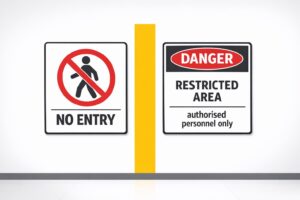
Restricted Area Signs vs. No Entry Signs
Compare No Entry and Restricted Area signs in Australian workplaces — meanings, design differences and AS 1319 compliance.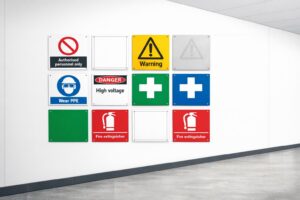
How to Spot Workplace Signage Gaps
Audit your workplace for missing, faded or non‑compliant signs under AS 1319 to reduce incidents and avoid WHS fines.
Symbol Design: Global Standards Explained
Explains ISO 7010 and ISO 3864: standard symbols, colours and sizing for clear, language‑free safety signage and AU compliance.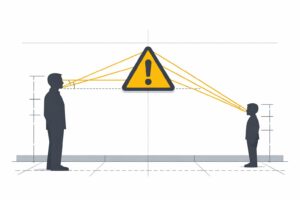
Hazard Sign Visibility Planner
Plan hazard sign placement for max visibility with our free tool. Ensure safety by finding the best spot, height, and angle—try it now!