Aluminium vs Plastic Safety Signs: Which Lasts Longer?
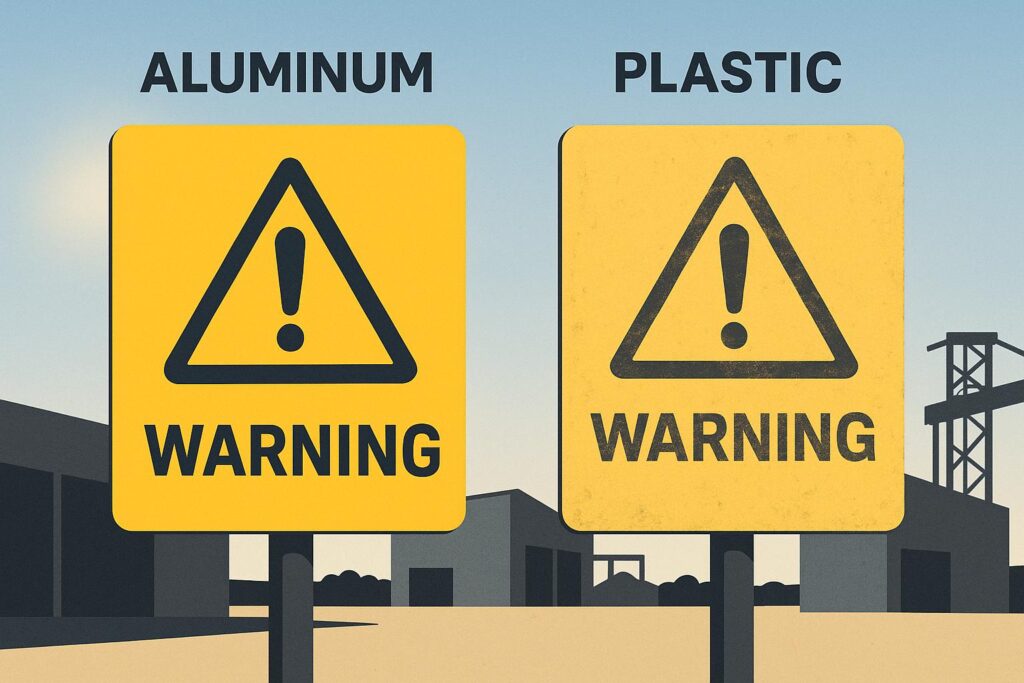
When choosing safety signs for Australian workplaces, the material you select – aluminium or plastic – can make a big difference in durability and cost over time. Aluminium signs are highly durable, handling harsh outdoor conditions like UV exposure, extreme temperatures, and coastal salt spray. They last longer but cost more upfront. Plastic signs, on the other hand, are cheaper and lightweight, making them suitable for indoor or temporary use, though they degrade faster outdoors. Here’s a quick breakdown:
- Aluminium: Long-lasting, rust-resistant, and ideal for tough environments like outdoor industrial sites or coastal areas. Higher initial cost but lower replacement frequency.
- Plastic: Affordable and easy to install, best for indoor or short-term use. Less durable under harsh weather and UV exposure.
Quick Comparison
| Factor | Aluminium Signs | Plastic Signs |
|---|---|---|
| Lifespan | Long-term, handles tough conditions | Shorter, 1–5 years depending on type |
| UV Resistance | Excellent with protective coatings | Moderate, varies by plastic type |
| Weather Resistance | Withstands harsh weather | Prone to warping and fading |
| Cost | Higher upfront, long-term savings | Lower upfront, frequent replacements |
| Best Use | Outdoor, industrial, coastal areas | Indoor, temporary, or budget setups |
For outdoor settings, aluminium offers better value over time. For indoor or temporary needs, plastic is a budget-friendly option. Choose based on your environment and long-term goals.
What Is The Best Outdoor Signage Material? – Graphic Design Nerd

Factors That Affect Sign Durability
Understanding what causes safety signs to deteriorate is key to selecting the right materials for Australian workplaces. Conditions vary widely across the country, from coastal areas to inland industrial zones, and these environmental challenges can significantly impact a sign’s lifespan.
UV Exposure and Climate
Australia’s high levels of ultraviolet (UV) radiation, especially during summer, can take a serious toll on safety signs. Prolonged UV exposure fades colours and makes materials brittle over time. Signs facing north are particularly vulnerable, as they absorb more UV radiation throughout the day.
Temperature swings between hot days and cool nights also stress materials, causing them to expand and contract. Coastal areas with heat and humidity add another layer of difficulty, while cooler, wetter regions present their own set of challenges.
Weather extremes further complicate things. In northern Australia, cyclones bring strong winds and heavy rain, which can damage signs. Meanwhile, central areas often deal with dust and airborne particles that erode protective coatings and printed graphics over time.
Moisture and Corrosion
Moisture is another major factor, particularly in regions where humidity or salt exposure is common. Coastal workplaces face unique risks due to salt-laden air, which can corrode certain materials when combined with moisture. Industrial facilities near the coast are especially prone to this issue.
In tropical areas, high humidity keeps surfaces damp for longer periods, allowing moisture to seep into compromised coatings. Temperature changes can lead to condensation, especially in places like cold storage warehouses or climate-controlled manufacturing facilities. This repeated wetting and drying cycle can weaken materials over time. Heavy seasonal rains in some parts of Australia further test a sign’s ability to repel water and remain securely installed.
Chemical Exposure and Physical Damage
In industrial settings, exposure to chemicals and physical impacts can shorten the lifespan of signs. Manufacturing plants, laboratories, farms, and mining sites often deal with substances like solvents, fuels, and oils, which can degrade coatings and obscure important information.
Daily operations also take their toll. Signs may be scratched, bumped, or even struck by equipment, damaging surfaces and edges. Cleaning methods, especially abrasive ones, can wear down protective layers. Installation methods matter too – adhesive-mounted signs may peel in extreme conditions, and drilled mounting points can turn into weak spots where cracks develop.
Aluminium Safety Signs: Durability and Lifespan
Aluminium safety signs are designed to hold up under Australia’s tough workplace conditions, providing dependable performance across various settings. By understanding their features, it’s clear why they are a go-to choice for demanding environments.
Material Structure and Protective Coatings
Made from lightweight yet strong sheet metal, aluminium signs naturally resist rust. When anodised and coated with a UV-protective film, they retain their vibrant printed graphics even under the harsh Australian sun. Solvent-based outdoor printing ensures the ink adheres securely, allowing the signs to endure exposure to rain, cleaning chemicals, and frequent handling. This sturdy design ensures they perform well in Australia’s diverse and often extreme climates.
Performance in Australian Environments
In coastal regions, salt spray often accelerates corrosion in many materials, but aluminium signs with proper coatings stand up to these conditions. Their UV protection ensures readability over time, even in areas with intense sunlight. Aluminium remains stable through large temperature shifts, making it ideal for outdoor use. In high-impact environments like mining sites, manufacturing facilities, and construction areas, these signs resist daily wear and tear, keeping their edges smooth and their surfaces intact. While aluminium generally handles common industrial chemicals well, extra protective measures are advisable in areas with extreme chemical exposure. The durability of these signs not only ensures safety but also offers long-term cost benefits, making them a smart choice for challenging workplaces.
Initial Cost vs Long-Term Value
While aluminium signs may have a higher upfront price, their long lifespan significantly reduces the need for frequent replacements and maintenance. Clear, compliant signage helps workplaces avoid the risks associated with faded or damaged signs, ensuring safety standards are consistently upheld. For facilities in harsh environments – whether near the coast, in outdoor industrial areas, or in locations with extreme weather – investing in aluminium signage is often the most cost-effective and practical solution over time.
sbb-itb-9950c92
Plastic Safety Signs: Durability and Lifespan
After examining aluminium options, let’s shift focus to plastic safety signs and how they perform in Australian settings. Plastic signs are a budget-friendly option, particularly for short-term or less demanding applications. Here, we’ll break down their material types, environmental performance, and cost advantages.
Common Plastic Sign Materials
In Australia, the most widely used plastics for safety signs are PVC, corflute, and polypropylene.
- PVC: A rigid, waterproof plastic that resists scratches, making it ideal for indoor use or sheltered outdoor areas.
- Corflute: Lightweight yet reasonably strong due to its fluted design. This material is a favourite for temporary signage at construction sites or events.
- Polypropylene: Known for its UV stability, this plastic handles Australia’s harsh sunlight better than others, making it suitable for outdoor use.
These materials are typically found in warehouses, retail spaces, office buildings, and short-term projects, offering flexibility and easy installation.
Performance in Australian Environments
Under Australia’s challenging outdoor conditions, plastic safety signs generally last between 1–2 years, though durability varies by material. For example:
- Corflute: Offers a 1-year outdoor warranty and up to 5 years indoors[4].
- Polypropylene: Performs better outdoors, with a lifespan of 3–5 years[1][2][5].
While aluminium is known for its long-term reliability, plastic signs are more about affordability and convenience. However, Australia’s intense UV rays and fluctuating temperatures can speed up plastic degradation, leading to issues like fading, warping, and brittleness. In high-impact areas, these signs are also more prone to physical damage, such as cracking or chipping.
That said, plastic signs last longer in controlled environments like indoor facilities or shaded areas where they’re shielded from direct sunlight. Their flexibility also makes them a practical choice for curved surfaces where rigid materials might not work.
Lower Cost and Practical Benefits
One of the biggest draws of plastic signs is their affordability. For instance, a 36″×24″ (915 mm × 610 mm) PVC sign costs about $54, compared to $81 for its aluminium counterpart[3]. This makes plastic signs an attractive option for businesses on tight budgets or those needing large quantities of signage.
Another advantage is their ease of handling. A single person can carry and install multiple plastic signs using simple tools like adhesives, cable ties, or brackets. This makes them especially useful for temporary setups, such as construction zones, promotional displays, or seasonal safety notices that require frequent repositioning.
However, it’s important to weigh these savings against the need for more frequent replacements. Over time, the cumulative cost of replacing plastic signs can surpass the initial savings, particularly when factoring in the labour involved. Businesses should consider both upfront costs and long-term maintenance when planning their signage strategy.
Aluminium vs Plastic: Direct Comparison
A closer look at these materials reveals how they perform under Australian conditions.
Durability Comparison Table
Here’s how aluminium and plastic signs stack up in terms of durability:
| Factor | Aluminium Signs | Plastic Signs |
|---|---|---|
| Lifespan | Built for long-term outdoor use, offering extended operational life | Tend to have a shorter lifespan when exposed to outdoor conditions |
| UV Resistance | Excellent, especially with UV protective coatings | Moderate; some types like polypropylene perform better but can degrade faster |
| Weather Resistance | Handles extreme temperatures and harsh weather with ease | Can warp or degrade under prolonged exposure to severe weather |
| Corrosion Resistance | Highly resistant, particularly with anodised or powder-coated finishes | Depends on the type of plastic; may degrade when exposed to specific chemicals |
| Physical Damage Resistance | Durable and impact-resistant (may dent but remains functional) | More susceptible to cracking, chipping, or breaking upon impact |
| Cost | Higher initial cost | Lower upfront cost, though frequent replacements can increase total expenses over time |
This comparison shows the trade-off clearly: aluminium signs excel in durability and longevity, while plastic signs are more affordable upfront and easier to install. Your decision will depend on your specific needs and budget.
Beyond these durability aspects, factors like maintenance and compliance also play a critical role in material selection.
Compliance and Waste Reduction
Aluminium signs maintain compliance over time due to their durability and sustained legibility, reducing the need for frequent replacements. This not only minimises operational downtime but also cuts down on waste. Additionally, aluminium is recyclable, making it a more environmentally friendly option. Plastic signs, on the other hand, may require more frequent replacements due to wear and tear, leading to increased waste and potential compliance risks.
Choosing the Right Material for Your Workplace
Here’s how to decide which material suits your workplace best:
- Outdoor Industrial Sites: Locations like manufacturing plants, mining operations, and construction yards expose signs to intense UV rays, temperature extremes, dust, and physical impacts. Aluminium signs with UV protective coatings are ideal here, as they endure these harsh conditions and reduce replacement frequency.
- Coastal Areas: Facilities near the coast face the added challenge of salt spray, which accelerates corrosion. Anodised or powder-coated aluminium signs resist this type of damage far better than plastic alternatives.
- Indoor Facilities: Plastic signs work well indoors, especially in warehouses, offices, retail spaces, and healthcare environments. However, in high-traffic areas or places prone to impacts, aluminium’s added durability may be the better choice.
- Temporary Installations: For short-term projects like construction sites, event venues, or seasonal operations, plastic signs offer lightweight convenience and are easy to install. Their shorter lifespan is less of a concern here, and their lower cost can make them the more practical option.
When choosing between aluminium and plastic signs, think about the total cost of ownership. While plastic signs may seem cheaper initially, aluminium signs could save you money in the long run by reducing maintenance and replacement costs.
Conclusion
Deciding between aluminium and plastic safety signs comes down to assessing your workplace environment and long-term needs. Factors like how often signs need replacing, compliance risks, and their environmental impact all play a role. Aluminium signs are built tough, standing up to Australia’s harsh conditions. They’re ideal for areas with intense UV exposure, extreme temperatures, salt spray, or physical wear and tear, as they stay legible and compliant for longer. On the other hand, plastic signs are a cost-effective option for indoor use or short-term needs but tend to wear out faster when exposed to outdoor elements.
From a cost perspective, aluminium signs often prove to be the smarter investment for outdoor industrial sites, mining areas, construction zones, and coastal settings. Their durability and ability to handle Australia’s demanding climate mean fewer replacements and consistent performance over the years.
For workplaces dealing with challenging conditions, aluminium safety signs are a dependable long-term choice. With features like robust aluminium bases, solvent-based outdoor printing, and UV protective coatings, these signs are built to last. Picking the right material ensures your safety signs remain visible, compliant, and effective in keeping your workplace safe. Make the choice that best suits your environment to guarantee safety and long-term value.
FAQs
How do I choose between aluminium and plastic safety signs for my workplace?
When deciding between aluminium and plastic safety signs, it’s essential to consider your workplace’s specific requirements and the conditions the signs will encounter.
Aluminium signs are known for their durability. They resist rust, handle harsh weather with ease, and are built for long-term outdoor use. Plus, they’re less likely to warp or fade, making them a reliable option for environments that demand longevity.
On the flip side, plastic signs, such as those made from PVC, offer a lightweight and cost-effective alternative. They’re versatile and work well in both indoor settings and outdoor areas with moderate exposure to weather.
If your signs will face extreme weather, frequent wear, or exposure to chemicals, aluminium is likely the better option. For indoor spaces or temporary use, plastic signs provide a practical and budget-conscious solution. Weighing factors like location, budget, and the expected lifespan of the signs will guide you to the best choice for your workplace.
How does Australia’s climate affect the durability of aluminium and plastic safety signs?
Australia’s varied and often unforgiving climate plays a big role in how long safety signs can last. Aluminium signs stand up well to the country’s weather extremes. They can handle everything from harsh sunlight to heavy rain and even the salt-laden air along the coast. Plus, they don’t rust or fade easily, which means they can keep looking good for years, even in tough outdoor conditions.
In contrast, plastic signs don’t fare as well in Australia’s environment. Long-term exposure to UV rays can make them fade or turn brittle, and extreme heat might cause them to warp. While they can work fine indoors or for short-term purposes, they’re not the best option for outdoor use where the elements are more demanding.
Are aluminium signs more cost-effective than plastic signs in the long run?
When it comes to signage, aluminium can be a smarter long-term investment thanks to its impressive durability and ability to handle tough conditions. While the initial cost might be higher compared to plastic signs, aluminium holds up much better against Australia’s harsh weather. Whether it’s intense sun, heavy rain, or strong winds, aluminium is far less likely to crack, fade, or warp.
Because of this resilience, aluminium signs often need fewer replacements and require minimal maintenance, which can save businesses money over time. For workplaces or industries that demand signage capable of withstanding challenging environments, aluminium often proves to be the more reliable and cost-effective option.
Related Blog Posts
You may also be interested in
FAQs About Workplace Safety Signs in Australia
AS 1319 sign types, placement, materials and maintenance for workplace safety and WHS compliance in Australia.
Restricted Area Signs vs. No Entry Signs
Compare No Entry and Restricted Area signs in Australian workplaces — meanings, design differences and AS 1319 compliance.
How to Spot Workplace Signage Gaps
Audit your workplace for missing, faded or non‑compliant signs under AS 1319 to reduce incidents and avoid WHS fines.
Symbol Design: Global Standards Explained
Explains ISO 7010 and ISO 3864: standard symbols, colours and sizing for clear, language‑free safety signage and AU compliance.
Hazard Sign Visibility Planner
Plan hazard sign placement for max visibility with our free tool. Ensure safety by finding the best spot, height, and angle—try it now!