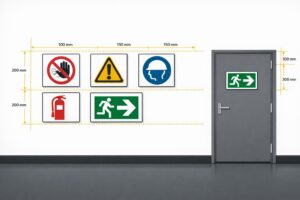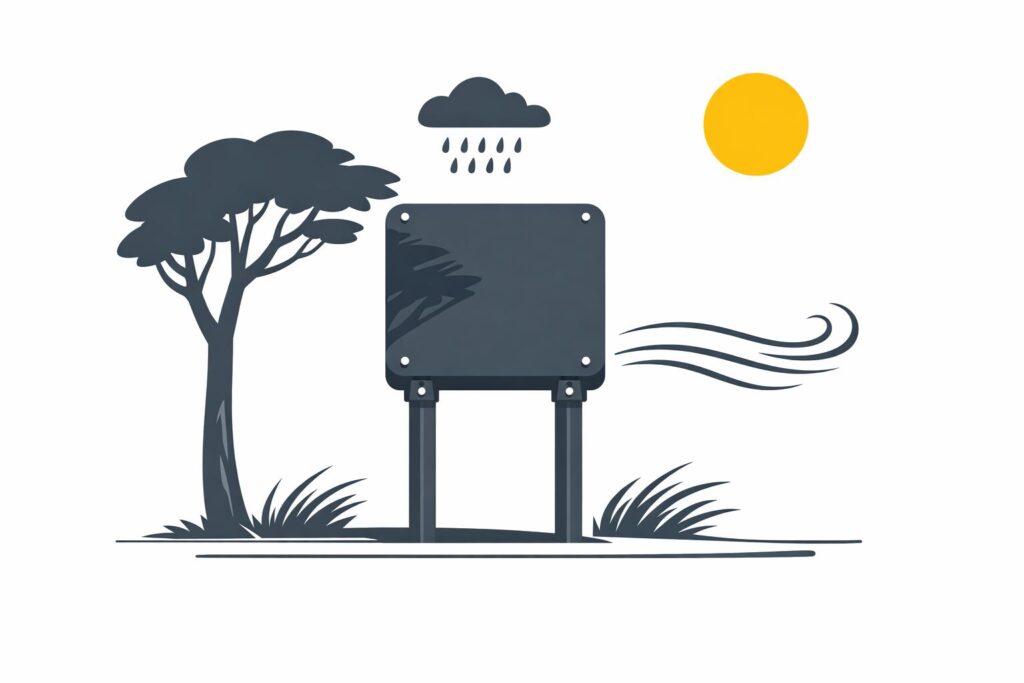
Heat, Rain, and Wind: Sign Placement Tips
Australia’s tough weather – extreme heat, heavy rain, and strong winds – can severely impact safety signs. UV exposure fades colours like red and yellow, cutting their lifespan in half or worse in high UV regions. Rain causes rust, warping, and mould, especially in coastal or humid zones. Winds, reaching up to 260 km/h in cyclonic areas, can damage or dislodge signs, creating safety risks.
To ensure durability:
- Choose materials wisely: Aluminium resists rust and UV damage, while stainless steel and UV-stabilised polycarbonate handle moisture and impacts.
- Install strategically: Vertical placement lasts longer in the sun, while shaded or sheltered locations reduce weather damage.
- Secure against wind: Use strong mounting systems, deeper posts, and perforated designs to reduce pressure.
- Maintain regularly: Clean signs quarterly and inspect after storms to address issues early.
Using high-quality materials and smart placement helps essential safety signs stay compliant with Australian safety standards like AS 1319-1994.
How Heat Affects Safety Signs
Australia’s intense heat and UV radiation take a toll on safety signage, causing both colour fading and structural damage. UV rays break down the pigments and materials used in signs, leading to dull colours and weakened durability. Let’s explore how UV exposure impacts colours and structural components, followed by the effects of heat-induced warping.
UV Damage and Colour Fading
Bright colours like red, orange, and yellow are the first to fade under UV exposure, while darker shades such as black, dark blue, and brown tend to hold up better over time[4][3]. Digital prints without UV-protective lamination are especially vulnerable. These prints often show visible fading within 12 to 18 months due to their thinner ink layers compared to paint or vinyl[6].
"In Australia’s harsh UV conditions, choosing the right materials isn’t just about aesthetics – it’s about protecting your brand investment for years to come." – James Wilson, Spectrum Sign Solutions[4]
Using high-quality materials can make a huge difference. UV-resistant acrylic, for example, can resist yellowing and maintain clarity for 5 to 10 years of outdoor exposure[4]. Proper lamination extends the lifespan of signage even further, often exceeding 10 years[1]. Products like PXP Safety‘s aluminium signs with UV protective film are specifically engineered to endure Australia’s harsh conditions, providing outdoor-grade durability.
Heat-Induced Warping
Beyond UV damage, heat can physically distort signage. Extreme temperatures impact less durable materials, causing warping, curling, or shrinking. Vinyl signage, for instance, experiences a "memory effect" where calendered vinyl contracts over time, leading to edge peeling. This happens because the material, originally stretched during manufacturing, tries to revert to its original shape as heat depletes its plasticisers[7].
Plastic signs also struggle with high temperatures. Heat breaks down polymer chains, making the material brittle and prone to cracking[4]. Lower-quality plastics may even develop a scorched or burnt appearance, turning brown over time[7].
Aluminium signs avoid these issues entirely. Unlike plastic, aluminium retains its shape and strength regardless of temperature fluctuations. To further protect against stress cracks, use floating mounting points that allow for 3–5 mm of thermal movement per metre.
Placement Tips for Hot Areas
Where you place your signage can dramatically impact its longevity. Vertical installations are better than horizontal ones, as horizontal signs face direct sunlight throughout the day and fade much faster[1]. If vertical placement isn’t an option, orient the sign to face north or south instead of east or west to minimise daily UV exposure[1].
Shaded areas offer the best protection, but for signs that must be in direct sunlight, mounting at an eye level of 1,500 mm helps reduce heat exposure from ground reflections. Regular maintenance is also essential – clean signs quarterly with pH-neutral cleaners to remove contaminants, and promptly clean off bird droppings, as their acidity can damage surfaces[4][5].
sbb-itb-9950c92
Protecting Signs from Rain
Rain and moisture bring their own set of challenges for outdoor safety signage. Water exposure can lead to corrosion, reduced readability, and structural damage, all of which can compromise safety. In wet seasons or areas with high humidity, like coastal regions, it’s crucial to take steps to protect signs and ensure they remain effective. Just as heat and wind require specific solutions, so does moisture. Let’s dive into some strategies to keep signs in top condition.
Waterproof Materials and Printing
For wet climates, materials like aluminium and stainless steel are ideal due to their resistance to water. Aluminium signs, for instance, can last 7 to 10 years in outdoor conditions, while stainless steel offers even better protection against corrosion [3][11].
Synthetic polymer-based substrates are another excellent option. These materials naturally resist moisture, avoiding issues like warping or ink bleeding that can plague paper-based signs [10]. They also eliminate the need for lamination, which can fail when moisture causes the layers to peel.
"Using inherently waterproof substrates is more reliable than attempting to seal paper afterward." – TerraSlate [10]
Edges and seams are particularly vulnerable to water damage. Applying silicone, acrylic, or polyurethane sealants to these areas can block moisture effectively [9][12]. For corrugated plastic signs, adding plastic or metal edge caps can prevent water from seeping into the internal fluting [11].
PXP Safety’s aluminium signs, equipped with outdoor-grade printing and a UV protective film, are specifically designed for Australia’s wet conditions. This combination creates a sealed surface that keeps moisture out.
Preventing Corrosion
Metal signs need proper surface preparation to avoid rust. Start by cleaning the surface to remove any existing corrosion, then apply a rust inhibitor. Follow this with a coat of waterproof enamel or metal-specific paint to provide long-term protection [9].
Mounting hardware also plays a role in preventing rust. Use stainless steel or galvanised screws and anchors to ensure attachment points remain secure and corrosion-free [12].
Regular inspections are essential. Check signs every two to three weeks, and especially after heavy rain or storms, to catch early signs of rust, mould, or peeling. Addressing these issues promptly can save on costly replacements and help maintain compliance with safety standards [11].
Flood-Prone Area Considerations
In flood-prone areas, additional precautions are necessary. Signs should be elevated well above potential flood levels to prevent prolonged water exposure. Anchoring the bases securely to concrete and angling the sign surface for water run-off can help minimise damage [11][12][13].
Avoid placing signs in low-lying areas where water tends to pool, as constant exposure to moisture can accelerate wear and tear. Proper drainage and thoughtful placement are key to extending the lifespan of signs in these challenging environments.
Wind-Induced Risks and Secure Installation
Strong winds can be a serious hazard for safety signage. Large, flat panels act like sails, putting intense pressure on mounting brackets, posts, and foundations. This "sail effect" is particularly risky in open areas or at height, where higher wind speeds amplify the stress. Detached signs can become dangerous projectiles, potentially injuring pedestrians or obstructing drivers on the road [14][16].
The science behind wind pressure highlights the challenge. As wind speed doubles, pressure increases fourfold – so 80 mph winds create 16 psf, while 100 mph winds generate 25 psf [14][15]. In Australia, wind speeds range from 155 km/h in inland areas to as high as 260 km/h in cyclonic coastal regions. These forces can cause vibrations, deflections, and structural fatigue, leading to cracked panels or loosened hardware [2].
Wind-Resistant Mounting Solutions
To combat these forces, sturdy mounting systems are essential. For direct burial installations, ensure the post is buried to a depth of at least one-third of its above-ground height to counteract wind leverage [14]. Concrete pads with anchor bolts and a double nut moment joint (a levelling nut and washer beneath a lock nut) provide added stability [17].
Choosing the right materials is also critical. Aluminium posts are lightweight and naturally resistant to corrosion, making them ideal for coastal areas, though they may need to be larger for comparable strength. Steel posts, with their superior strength-to-weight ratio, are available in various profiles but require hot-dip galvanising to resist weathering [14]. Round posts distribute strength evenly, while square posts offer greater resistance along their flat sides and can often handle the same load with a smaller profile [14].
For portable signs, stabilisation depends on the surface. Sandbags weighing 15–20 kg are effective for temporary setups [16], while rubber base plates (10–20 kg) provide a secure grip on hard surfaces [16]. On softer ground, ground anchors 30–45 cm long, inserted at an angle, offer excellent wind resistance [16].
"The strongest sign is only as good as its weakest component. Don’t let inadequate posts or foundations be the weak link in your sign installations." – Sign Industry Knowledge Base [14]
Design modifications can also help. Perforated panels allow air to pass through, reducing wind pressure significantly [16]. Keeping signs closer to the ground or adding ballast to the base lowers the centre of gravity, improving stability [16].
PXP Safety’s aluminium signs, equipped with durable mounting bases, are built to handle Australia’s diverse wind conditions, from coastal storms to inland gusts.
Preventing Vibration Wear
Even with solid mounting, vibrations caused by wind can weaken signs over time. Continuous movement can loosen connections and hardware, stressing the structure [17].
To address this, use high-strength bolts with direct-tension indication (DTI) devices to ensure secure, fully tensioned connections [17]. Avoid mechanical expansion or screw anchors, which can fail under constant vibration, and opt for chemical anchors designed for fatigue resistance [17].
Spring-loaded sign holders provide another solution. These allow the sign to flex with wind gusts, reducing stress on the frame and preventing tipping [16]. After severe weather, it’s essential to inspect and retighten fixings, checking for cracks or rust [16][17]. Permanent structures in high-traffic areas, especially in New South Wales, fall under "fatigue category I" and require designs that meet infinite fatigue life standards [17].
Sheltered Placement Options
Strategic placement can reduce wind exposure while maintaining visibility. Signs positioned behind natural windbreaks – such as walls, fences, buildings, or dense hedges – are shielded from direct wind impact but remain easy to see [16].
Terrain also plays a role. Open plains and urban wind tunnels can amplify wind forces, so these factors should guide placement decisions [14]. For large portable signs in windy areas, weatherproof guy lines can distribute wind pressure across multiple anchor points, preventing tipping [16]. This method is especially useful during Australia’s stormy seasons.
Combining smart placement with robust mounting ensures signs remain functional and resilient. The key is balancing durability with performance so that safety signage can withstand Australia’s challenging environmental conditions throughout its lifespan.
Choosing the Right Materials for Australian Weather
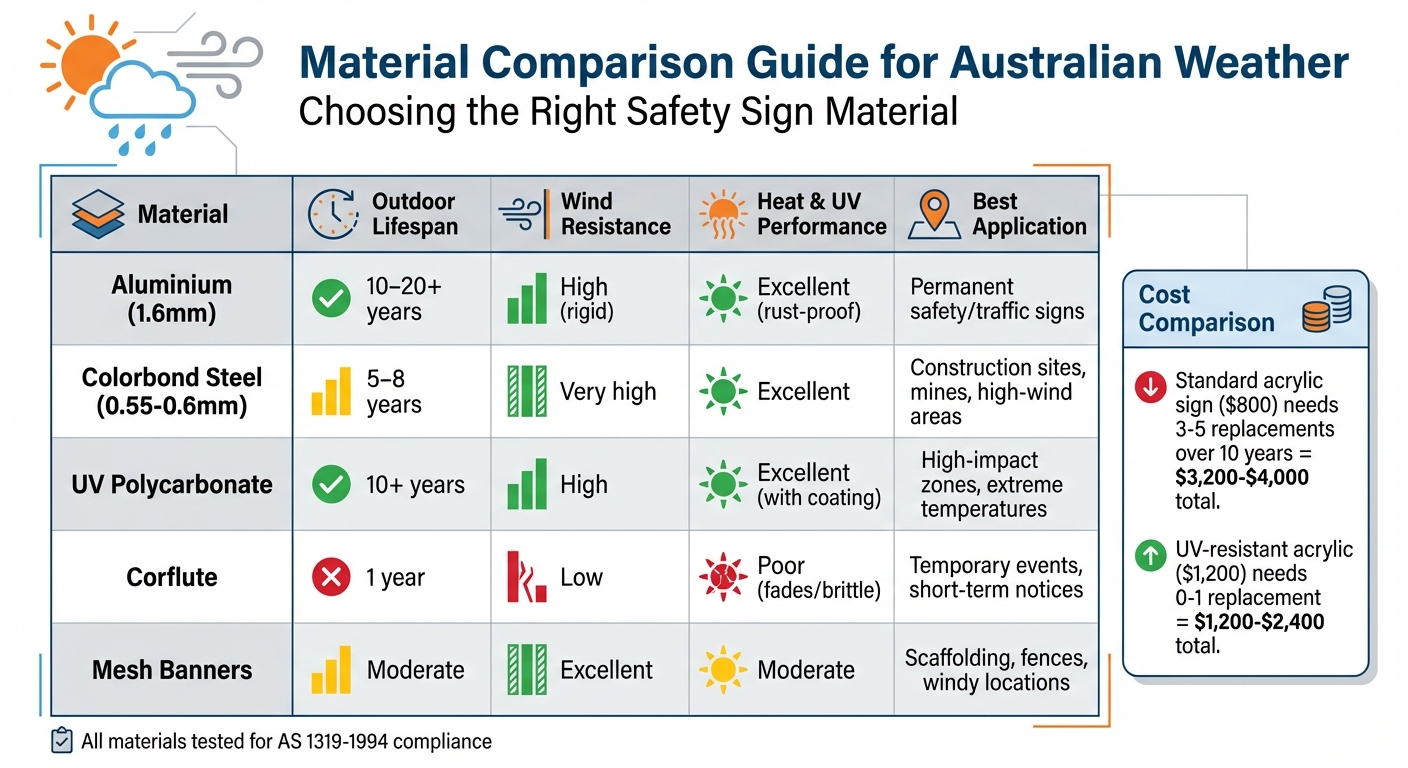
Safety Sign Material Comparison for Australian Weather Conditions
Picking the right materials is essential to ensure signs remain visible and compliant despite Australia’s tough climate. The wrong choice can lead to faded warnings, frequent replacements, and even safety hazards.
Aluminium (1.6mm thick) stands out as the top choice for permanent outdoor signs. Its durability and minimal upkeep make it perfect for long-term use. In areas prone to strong winds, Colorbond steel (0.55mm–0.6mm) offers exceptional strength. Its Zincalume core prevents corrosion, making it a reliable option for construction sites and mining operations [8].
For locations exposed to hail or vandalism, UV-stabilised polycarbonate is a smart pick due to its superior impact resistance, which suits high-impact zones and extreme temperatures [4][19]. On the other hand, mesh banners work well in windy conditions like scaffolding, as their small perforations let air flow through without causing damage [18]. For temporary use, Corflute (polypropylene) is a cost-effective option, though it typically lasts only a year outdoors before fading and becoming brittle [8][18].
Choosing the right material also saves money over time. For instance, a standard acrylic sign costing $800 may need to be replaced 3–5 times over a decade, totalling $3,200–$4,000. In contrast, a UV-resistant acrylic sign costing $1,200 might only need 0–1 replacement over the same period, costing $1,200–$2,400 [4]. PXP Safety’s aluminium signs, designed with UV-protective film and outdoor-grade printing, are built to endure Australia’s extreme weather while meeting AS 1319-1994 compliance standards.
Material Comparison Table
| Material | Outdoor Lifespan | Wind Resistance | Heat & UV | Best Application |
|---|---|---|---|---|
| Aluminium (1.6mm) | 10–20+ years | High (rigid) | Excellent (rust-proof) | Permanent safety/traffic signs |
| Colorbond Steel | 5–8 years | Very high | Excellent | Construction sites, mines, high-wind areas |
| UV Polycarbonate | 10+ years | High | Excellent (with coating) | High-impact zones, extreme temperatures |
| Corflute | 1 year | Low | Poor (fades/brittle) | Temporary events, short-term notices |
| Mesh banners | Moderate | Excellent | Moderate | Scaffolding, fences, windy locations |
This table highlights how selecting the right material can directly address the challenges posed by Australia’s demanding conditions.
Conclusion
Safety signage in Australia faces tough challenges from heat, rain, and wind, making durability and reliability non-negotiable. The difference between a sign that barely lasts and one that stays compliant for a decade comes down to three factors: material choice, smart placement, and regular maintenance.
Using UV-resistant materials like aluminium or polycarbonate is a crucial starting point. Yet, even the sturdiest materials can fail without proper placement. For example, coastal areas demand 316-grade stainless steel fasteners to resist salt corrosion effectively[19].
"The true test of quality wayfinding isn’t just clarity on day one – it’s maintaining that same visibility and professionalism after years of harsh Australian sun exposure."
- David Harrison, Landmark Urban Design[19]
Maintenance plays a critical role. Monthly cleaning and routine inspections can add 2–3 years to a sign’s lifespan[5]. This approach not only ensures compliance with AS 1319‑1994 but also helps avoid the higher costs of replacing signs prematurely.
PXP Safety’s aluminium signs, featuring UV-protective film and outdoor-grade printing, are designed to withstand Australia’s harsh conditions while keeping workplaces safe. By combining quality materials, thoughtful installation, and consistent care, safety signage transforms from a recurring cost into a long-term investment.
FAQs
How do I choose the best sign material for my local weather?
To choose the right sign material for Australia’s climate, consider options that can handle the country’s tough weather conditions. Aluminium is an excellent choice because it offers durability, resists UV rays, and doesn’t corrode easily. It performs well under intense sunlight, heavy rain, and strong winds.
For areas with frequent rain, vinyl and acrylic are also worth considering as they are resistant to water damage. Additionally, using UV-resistant inks and laminates can help prevent fading caused by Australia’s intense heat and high levels of UV exposure.
Where should I place a sign to reduce UV fading and heat damage?
To protect signs from UV fading and heat damage, position them in shaded spots or beneath protective structures such as shade sails, trees, or purpose-built covers. This reduces their exposure to harsh sunlight and excessive heat, helping to maintain their appearance and longevity.
How can I stop outdoor signs coming loose in strong winds?
To keep outdoor signs firmly in place during strong winds, it’s crucial to ensure they’re installed securely with the right fastenings and supports. Take into account the wind loads in your area, choose appropriately sized posts, and adhere to relevant stability standards. Using reinforced mounting techniques, weather-resistant materials, and robust designs can also make a big difference in maintaining their security. Additionally, basing your installation on wind region maps can improve both the stability and safety of your signage.
Related Blog Posts
You may also be interested in
FAQs About Workplace Safety Signs in Australia
AS 1319 sign types, placement, materials and maintenance for workplace safety and WHS compliance in Australia.
Restricted Area Signs vs. No Entry Signs
Compare No Entry and Restricted Area signs in Australian workplaces — meanings, design differences and AS 1319 compliance.
How to Spot Workplace Signage Gaps
Audit your workplace for missing, faded or non‑compliant signs under AS 1319 to reduce incidents and avoid WHS fines.
Symbol Design: Global Standards Explained
Explains ISO 7010 and ISO 3864: standard symbols, colours and sizing for clear, language‑free safety signage and AU compliance.
Hazard Sign Visibility Planner
Plan hazard sign placement for max visibility with our free tool. Ensure safety by finding the best spot, height, and angle—try it now!