Pedestrian Safety in Logistics: Ultimate Guide
Pedestrian safety in logistics is a serious concern, especially in high-risk environments like warehouses and transport hubs. In Australia, vehicle-related accidents account for 42% of worker fatalities, with 12% involving pedestrians struck by vehicles or objects. These incidents not only result in tragic losses but also disrupt operations and lead to hefty penalties for non-compliance with Work Health and Safety (WHS) laws.
Key solutions include:
- Physical separation: Barriers, designated zones, and exclusion areas.
- Essential safety signs: Compliant with AS 1742.10:2024 standards, using durable materials and clear messaging.
- Traffic management: Speed controls, visibility aids, and regular reviews of Traffic Management Plans (TMPs).
- Australian WHS regulations: Strict penalties for breaches, with fines up to $11.8M for corporations.
Improving safety requires a structured approach: identify hazards, assess risks, implement controls, and ensure regular updates to safety measures. This guide explains how to create safer logistics environments, reduce risks, and comply with Australian laws effectively.
Safety Award for Mobile Equipment Pedestrian-detection Technology (EPAS and Hit Not)
sbb-itb-9950c92
Australian WHS Regulations for Pedestrian Safety
Australian WHS Penalties for Pedestrian Safety Non-Compliance 2025
In Australia, businesses are legally required to safeguard pedestrians from vehicle-related hazards. Since 2011, the Model WHS Act and Regulations have outlined clear duties for logistics operators to ensure safety in workplaces [4] [5]. These laws form the foundation for the measures detailed below.
Requirements for Separating Pedestrians and Vehicles
Under the Model WHS Act, Persons Conducting a Business or Undertaking (PCBUs) are obligated to protect the health and safety of workers and visitors as far as is reasonably practicable [5]. This includes managing risks associated with powered mobile plants, such as forklifts and delivery vehicles, which are prevalent in logistics settings. The regulations require a structured approach: identifying hazards, assessing risks, implementing controls, and regularly reviewing their effectiveness.
"The best way to protect people is to keep them physically separated from vehicles." – NT WorkSafe [3]
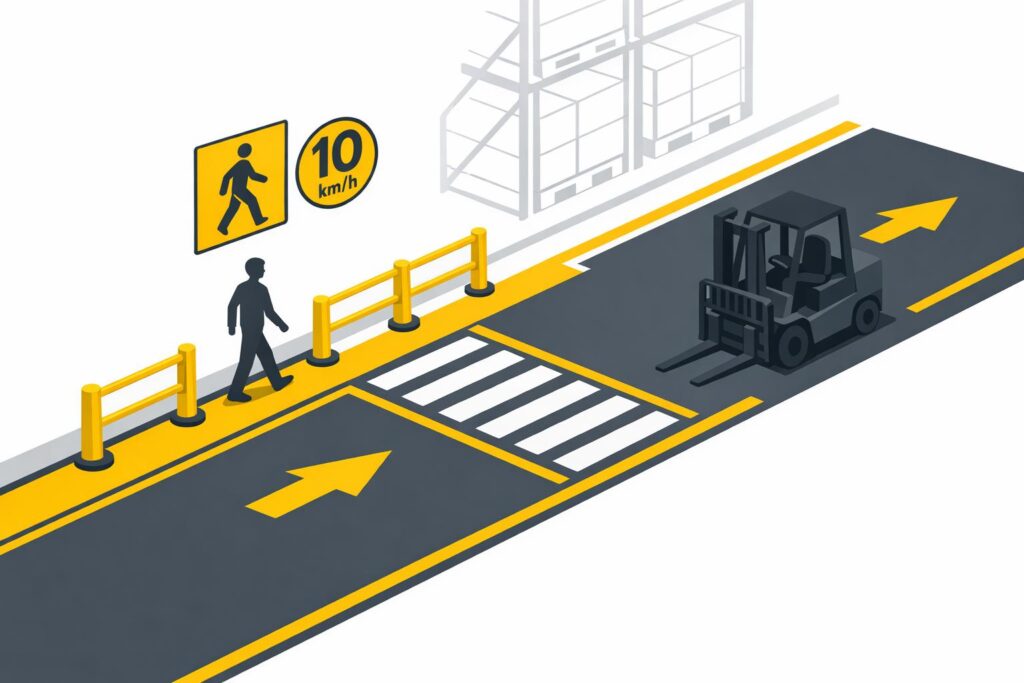
Physical separation remains the most effective safety measure. This can involve installing concrete barriers, permanent fencing, or safety railings to create pedestrian-only walkways that vehicles cannot access. In situations where complete separation isn’t possible, PCBUs should establish exclusion zones. For example, forklift-only areas can be designated in loading zones, while pedestrian-only spaces can be allocated around tea rooms or entrances. Additional measures like reflective markings, bollards, and clear signage help define vehicle routes and pedestrian crossings. Speed limits and visibility aids, such as reversing cameras and rotating lights, further minimise risks.
Safe Work Australia provides the national policy framework, while state and territory regulators – such as SafeWork NSW, WorkSafe Victoria, and NT WorkSafe – enforce compliance. Breaches of these safety laws can result in severe penalties to ensure adherence.
Penalties for Non-Compliance
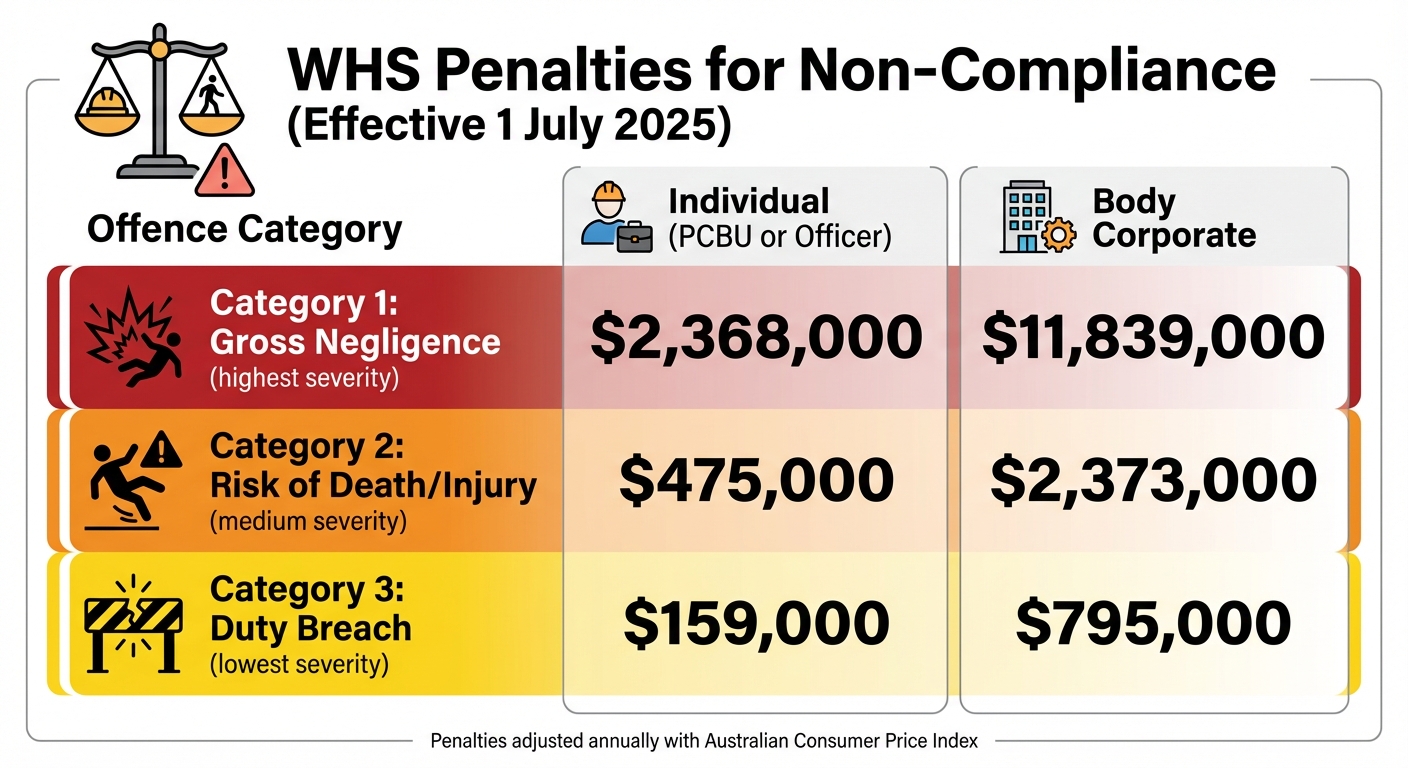
Failing to implement required safety measures can lead to hefty financial and legal consequences. As of 1 July 2025, offences are categorised into three tiers based on the level of risk and negligence involved [6] [7].
| Offence Category | Individual (PCBU or Officer) | Body Corporate |
|---|---|---|
| Category 1 (Gross Negligence) | $2,368,000 | $11,839,000 |
| Category 2 (Risk of Death/Injury) | $475,000 | $2,373,000 |
| Category 3 (Duty Breach) | $159,000 | $795,000 |
For example, a Category 1 offence, such as knowingly allowing pedestrians and forklifts to operate in the same area without proper separation, can result in fines of up to $11,839,000 for a body corporate and $2,368,000 for individuals acting as PCBUs or officers [6]. Category 2 offences, involving exposure to serious risks without reckless conduct, carry maximum fines of $2,373,000 for companies. Even a Category 3 breach – failing to meet basic safety duties – can incur penalties of up to $795,000 for a body corporate [6].
Beyond monetary fines, courts can impose additional measures like adverse publicity orders, requiring businesses to publicly disclose their offences. Restoration orders may also be issued to address hazards, and mandatory WHS training programs might be enforced [7]. Regulators have the authority to issue prohibition notices to stop unsafe activities immediately. Failure to comply with these notices can lead to court injunctions or further regulatory actions, including cost recovery. Importantly, penalty amounts are adjusted annually in line with the Australian Consumer Price Index, ensuring they remain a strong deterrent [6].
Safety Signage for Pedestrian Zones
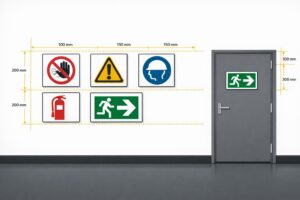
Strict WHS regulations emphasise the importance of effective signage as a critical layer of safety in logistics environments. These signs work alongside physical controls like barriers and line markings to minimise risks.
Safety signage plays a crucial role in guiding pedestrian movement and alerting vehicle operators to potential hazards. Together with barriers and line markings, it creates a multi-layered system to prevent collisions. For example, in 2024, Frucor Beverages partnered with SafeQuip at their Eastern Creek facility in NSW to install safety signage, line markings, and physical barriers, successfully separating mobile machinery from foot traffic [1].
Required Pedestrian Safety Signs
Australian logistics facilities must adhere to AS 1742.10:2024 standards [8]. Different types of signs serve specific purposes in managing pedestrian safety:
- Prohibition signs: Messages like "Pedestrians Prohibited" or "No Entry" restrict access to forklift-only zones and loading docks.
- Warning signs: Alerts such as "Beware of Forklifts" warn pedestrians about mobile machinery and related hazards.
- Regulatory signs: These enforce rules like speed limits – usually 5 km/h or 10 km/h in high-traffic zones – and display instructions such as "Stop" or "Give Way."
- Informational signs: These guide safe navigation through facilities by marking walkways, pedestrian crossings, and assembly points.
To maximise effectiveness, signs should be placed at eye level in well-lit areas and kept clear of obstructions like stacked pallets or equipment [9]. Reflective materials are essential for visibility during night shifts or in areas with poor lighting, particularly at blind corners and vehicle entry points [3]. Additional measures, such as pavement markings, delineators, and traffic islands, further reinforce traffic flow and define safe zones [9].
The materials used for signage must also be durable enough to withstand the challenging conditions of logistics environments.
Durable and Custom Signage Options
In logistics settings, safety signs face constant exposure to heavy machinery, weather, and UV radiation. Aluminium signs with UV-protective coatings are ideal for maintaining visibility and resisting wear over time. Durable signage ensures compliance with WHS regulations while upholding pedestrian safety.
PXP Safety provides a wide range of standard and custom safety signs made from tough aluminium with solvent outdoor printing for added durability. Their offerings include prohibition, warning, regulatory, and informational signs that align with Australian standards. Customisation options allow businesses to address specific site needs, such as unique hazard warnings or multilingual instructions.
For businesses aiming to meet national compliance, a single-user licence for AS 1742.10:2024 is available for $177.61 AUD (GST inclusive), offering detailed technical specifications [8]. Additionally, Safe Work Australia’s "Traffic Hazards Checklist" can help identify gaps in existing signage [10]. Standardising symbols and colours – such as yellow for warnings and red and white for prohibitions – ensures that signs are easily understood by workers and visitors alike.
Traffic Management Strategies
Effective traffic management goes beyond just using safety signs – it combines physical barriers, speed control measures, and improved visibility to create a safer environment for pedestrians in logistics settings. This multi-layered approach significantly reduces the risks of accidents.
Physical Barriers and Designated Zones
Relying solely on painted lines isn’t enough to prevent collisions. Instead, using physical barriers like guardrails, bollards, and steel fencing creates clear boundaries, keeping vehicles confined to designated areas and protecting pedestrians. As Steve Wiggins, Director of Verge Safety Barriers, puts it:
"Creating safer work environments should not just be your workplace motto – but a way of life" [11].
Workplaces should implement three types of zones:
- Pedestrian-only zones with physical barriers to separate foot traffic.
- Exclusion zones for areas with active machinery, such as loading docks or forklift operations.
- Controlled shared zones with low-speed limits and clearly marked crossings.
Additionally, one-way traffic routes, separate entry and exit points, and interlocked gates can prevent vehicles and pedestrians from occupying the same space at the same time [2]. For high-traffic sites, forming a consultative committee with safety representatives and operators can help regularly assess and improve traffic management practices [11].
These measures work best when paired with strict speed controls and visibility enhancements.
Speed Controls and Visibility Measures
Reducing speed is critical to minimising the severity of collisions. Physical speed humps in parking areas and loading zones encourage drivers to slow down, while mechanical speed limiters on forklifts ensure they don’t exceed safe speeds [1].
High-visibility clothing for all workers and visitors is a must in operational areas. Adequate lighting along traffic routes, loading bays, and intersections ensures better visibility, particularly during low-light conditions.
To address blind spots, install convex or dome mirrors at corners and junctions. Mobile equipment should also feature warning systems like flashing lights, rotating beacons, and reversing alarms to alert pedestrians of vehicle movements.
Additional measures, such as vision panels on pedestrian doors leading into vehicle zones, can help prevent unexpected "step-out" incidents. In loading docks, designated driver safe zones ensure truck drivers remain visible to forklift operators during operations.
Regular audits, particularly after near misses or incidents, are essential for evaluating the effectiveness of these controls and making necessary adjustments [2].
Summary and Key Takeaways
Pedestrian safety in logistics is a legal requirement under Australian WHS regulations and plays a crucial role in reducing the risk of serious injuries and fatalities. Given the high frequency of such incidents in warehouse settings [1], relying solely on outdated measures like painted lines is insufficient.
The best safety strategies integrate physical barriers, Australian Standards-compliant signage, and strong traffic management controls. A detailed Traffic Management Plan (TMP) should map out vehicle and pedestrian movements, outline control measures, and undergo regular reviews – especially after near misses or incidents [11][13].
Engaging workers and coordinating with other duty holders are essential under WHS laws to identify risks and implement practical measures [12]. For sites with heavy traffic, creating a consultative committee involving safety representatives and operators can help distribute responsibilities and improve safety outcomes [11]. This highlights the importance of using PXP Safety-endorsed signage and sturdy physical barriers. To put these insights into action, consider the following steps.
Recommended Actions
Take these immediate measures to improve safety on-site:
- Conduct a site audit: Identify collision risks and compare the current layout against operational diagrams. Implement the three-zone system to clearly separate pedestrian and vehicle paths. Ensure all measures comply with Australian WHS regulations to avoid penalties.
- Install compliant signage: Use durable safety signs made from materials like aluminium composite panels with UV-protective laminates. These are designed to withstand tough warehouse conditions. PXP Safety offers a wide range of Australian-compliant signage, with customisation options to suit specific hazards. Their signs are built with outdoor-grade printing and sturdy aluminium for long-lasting visibility.
- Enforce speed controls: Equip forklifts with mechanical speed limiters, place speed humps in parking areas, and mandate high-visibility clothing for all workers and visitors.
- Update your TMP regularly: Keep your Traffic Management Plan up-to-date to maintain compliance with WHS standards and protect your workforce effectively.
FAQs
What should be in a Traffic Management Plan (TMP)?
A Traffic Management Plan (TMP) is a crucial document for ensuring the safe movement of both pedestrians and vehicles within workplaces or construction sites. It should clearly outline the objectives, conduct thorough risk assessments, and detail control measures aimed at reducing potential hazards.
Essential components of a TMP include site layouts that define designated pathways, traffic routes, and the placement of safety features such as barriers and signage. It must also cover processes for identifying hazards, implementing risk management strategies, and maintaining ongoing communication with stakeholders. This collaboration is key to ensuring the plan remains compliant with regulations and effective in practice.
How do I choose the right pedestrian safety signs for my site?
To choose the most effective pedestrian safety signs, start by pinpointing hazards and high-risk areas, such as pedestrian crossings or busy walkways. Make sure the signs meet relevant standards, like AS 1742.10, and are designed to be both visible and long-lasting. Consider the layout of your site to ensure the signs are placed where they’ll have the most impact. If your location has unique requirements, custom signage can be a practical solution. Always prioritise compliance with local regulations and focus on strategic placement to maximise safety.
How often should pedestrian and vehicle controls be reviewed?
Pedestrian and vehicle controls need regular reviews to ensure they stay effective and safe. It’s especially important to revisit these measures after incidents, changes to layouts, or when new hazards come to light. According to Safe Work Australia, a solid risk management process involves four key steps: identifying hazards, assessing risks, implementing controls, and reviewing them on a regular basis. Keeping Traffic Management Plans updated is a practical way to maintain safety for both pedestrians and vehicle operators.
Related Blog Posts
You may also be interested in
FAQs About Workplace Safety Signs in Australia
AS 1319 sign types, placement, materials and maintenance for workplace safety and WHS compliance in Australia.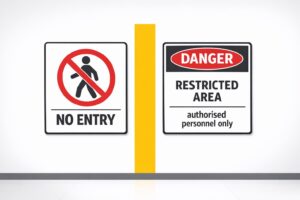
Restricted Area Signs vs. No Entry Signs
Compare No Entry and Restricted Area signs in Australian workplaces — meanings, design differences and AS 1319 compliance.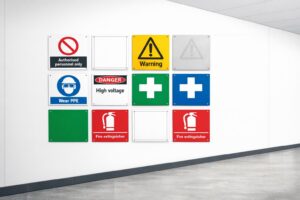
How to Spot Workplace Signage Gaps
Audit your workplace for missing, faded or non‑compliant signs under AS 1319 to reduce incidents and avoid WHS fines.
Symbol Design: Global Standards Explained
Explains ISO 7010 and ISO 3864: standard symbols, colours and sizing for clear, language‑free safety signage and AU compliance.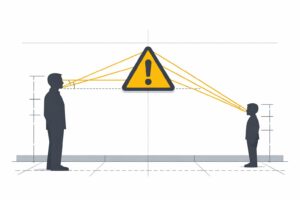
Hazard Sign Visibility Planner
Plan hazard sign placement for max visibility with our free tool. Ensure safety by finding the best spot, height, and angle—try it now!