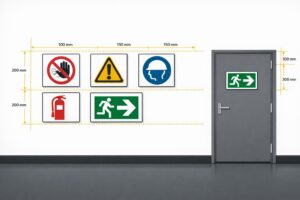
Common Problems with Exit Signs and How to Fix Them
Exit signs are critical for safety during emergencies, but they often face issues like dim lighting, battery failures, physical damage, and poor placement. These problems can compromise visibility and compliance with Australian safety standards. Here’s how to address them:
- Dim or Flickering Lights: Clean lenses, check wiring, and replace faulty LED drivers. Ensure brightness meets AS 2293 standards.
- Battery Failures: Use the "test button" for regular checks. Replace batteries if they fail a 90-minute test.
- Physical Damage: Inspect for cracks, corrosion, or yellowing. Replace damaged units promptly.
- Charger Malfunctions: Test charger circuits during six-monthly inspections.
- Poor Placement: Reassess sign visibility after renovations or changes to the space.
Routine maintenance, including six-monthly discharge tests and detailed record-keeping, is essential to ensure compliance and safety. Investing in durable, compliant exit signs can reduce long-term costs and risks.
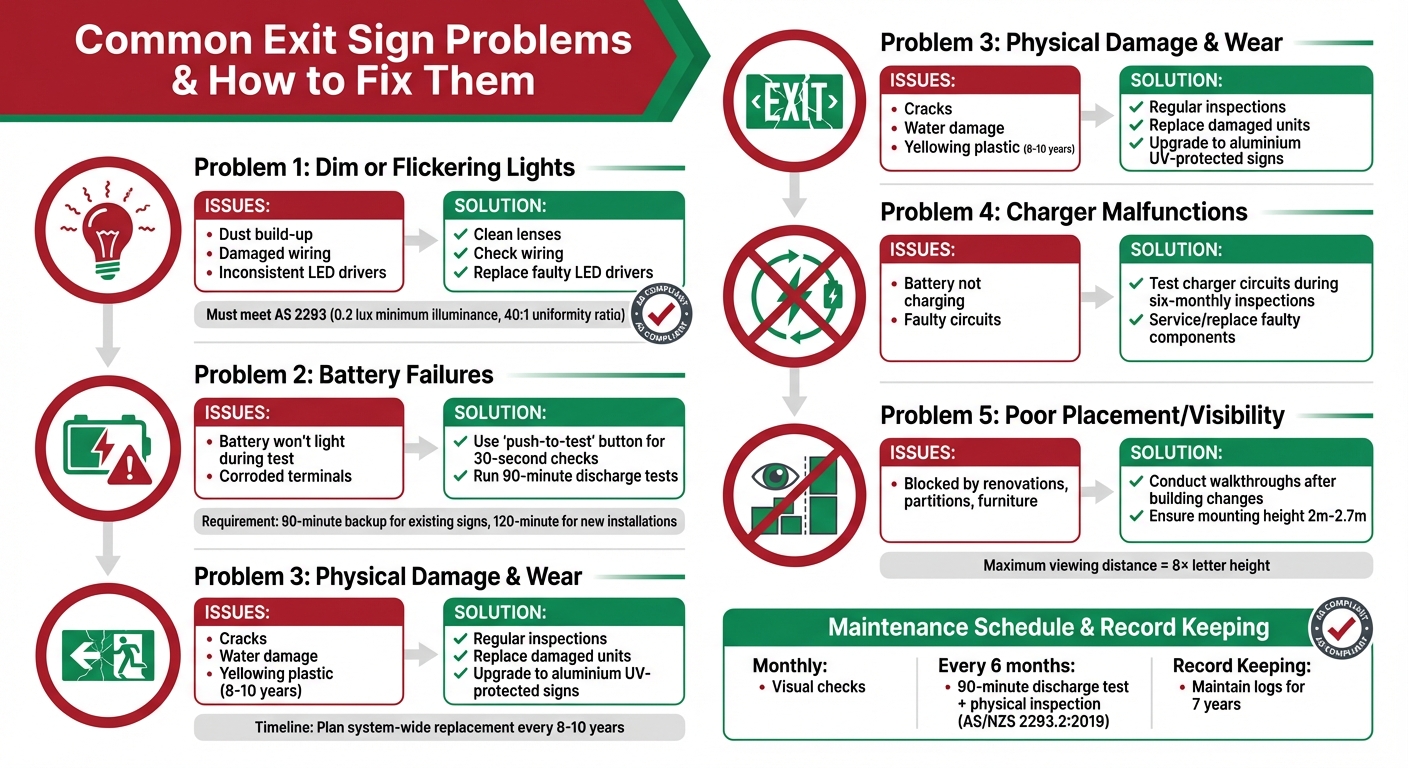
Exit Sign Maintenance Checklist: 5 Common Problems and Solutions
Troubleshooting commercial LED exit signs that fail prematurely for the root cause
sbb-itb-9950c92
Common Exit Sign Problems
Exit signs are crucial for safety, but they can encounter issues that make them unreliable in emergencies. Being aware of these problems allows building managers to address failures promptly, ensuring the signs function properly when needed. Here’s a closer look at some common issues.
Dim or Flickering Lights
Dust build-up on lenses and housings can reduce the brightness of exit signs, making them harder to see. Electrical problems like damaged or disconnected wiring or power supply issues can also cause irregular operation [4].
Another factor is the use of LED drivers from different batches, which can lead to inconsistent light output across a facility [1]. This inconsistency may cause signs to fail compliance with Australian Standard AS 2293, which requires a minimum illuminance of 0.2 lux along the escape route’s centreline, with a uniformity ratio no greater than 40:1 [1]. Licensed electricians should use photometers during inspections to ensure light levels meet these requirements [4].
Battery Failures
Battery issues are a common cause of exit sign failures. The easiest way to check for a failing battery is by using the "push-to-test" button, which temporarily cuts AC power and forces the sign to run on battery. If the sign doesn’t light up or dims significantly during a 30-second or 90-minute test, the battery likely needs replacement [6].
Modern exit signs often include self-diagnostic LEDs to signal problems. A steady green light usually indicates normal operation, while red light patterns – whether steady, double-blink, or triple-blink – point to battery or charger issues [6]. Additionally, physical checks may reveal loose or corroded terminals that disrupt power supply [4].
Exit signs in use must provide battery backup for at least 90 minutes to meet safety standards. New installations, however, require a 120-minute backup to account for future battery wear [5][7].
"Skipping routine maintenance on exit and emergency lighting isn’t just risky – it’s downright dangerous. If a system malfunctions, it might fail when it’s most needed, plunging people into darkness."
Physical Damage and Wear
Exit signs can suffer from wear and tear due to environmental exposure. Accidental impacts, water damage, and high humidity can degrade both the casings and internal components. Even without visible damage, plastic housings can yellow over time – usually within 8–10 years – reducing light transmission and making pictograms harder to read [1].
Corrosion at battery terminals is another issue that can disrupt power and charging [4]. Regular cleaning during inspections can help maintain proper operation. Building managers should plan for a system-wide replacement every 8–10 years, as plastic housing deterioration often requires replacement before the light source itself fails [1].
Charger Malfunctions
Faulty chargers can prevent batteries from delivering the required 90-minute backup power. Self-diagnostic LEDs can detect these issues early and alert users [6].
However, charger malfunctions may go unnoticed until a scheduled discharge test reveals that the battery isn’t charging correctly. This is why six-monthly testing is crucial to identify and resolve problems before an emergency occurs [1].
Poor Visibility from Incorrect Placement
Even well-functioning exit signs can fail to serve their purpose if they’re not visible. Renovations like new partitions, suspended ceilings, or added storage can block sightlines to exit signs that were previously unobstructed [1]. Additionally, visual distractions such as animated displays or RGB lighting can make it harder for people to locate the signs during an emergency.
After any building changes, walkthroughs should be conducted to ensure exit signs are clearly visible from all points along the escape routes. Proper placement is key to effective evacuation guidance. This is especially true when managing essential safety signs across a facility.
How to Fix Common Exit Sign Problems
Once you’ve spotted issues with your exit signs, acting quickly is essential to ensure they stay dependable in emergencies. Let’s go through how to tackle some of the most common problems.
Inspect and Replace Bulbs or LEDs
Start by cleaning the lenses and housings, and make sure any loose wiring is securely connected using proper connectors [9]. If you find stubborn grime on contacts, a cotton swab dipped in vinegar or rubbing alcohol can do the trick [9].
Flickering lights often point to faulty LED drivers, which regulate electrical current and protect the unit from overheating [9]. If multiple signs are flickering at once, the root cause might be the power supply or central battery system. In such cases, it’s best to call a licensed electrician to inspect the wiring [4]. For ongoing issues with fluorescent tubes, upgrading to integrated LED batten or panel lights can help. These lights are designed to smooth out the 50Hz electricity supply, reducing high-frequency flicker [8].
Test and Replace Batteries
Use the "test button" to run a 30-second check, and schedule a 90-minute discharge test twice a year. Clean the battery terminals during these checks and make sure to log the results for a seven-year record-keeping period [1][5].
Opt for exit signs with clip-in battery cartridges when replacing units. These make future maintenance quicker and easier, helping you stay compliant while ensuring safe evacuation procedures.
Repair or Replace Damaged Units
If your exit sign still isn’t performing well after cleaning and battery checks, inspect it for physical damage. Look for cracks, water damage, or discoloured plastic housings. Damaged housings should be replaced promptly to avoid more expensive repairs down the line [1]. Switching to aluminium-based, UV-protected signs is a smart choice, especially for Australia’s tough weather conditions. PXP Safety offers a range of durable exit signs that meet Australian safety standards.
Troubleshoot and Service Chargers
As part of your six-monthly inspections, test the charger circuits and relays. If any components are faulty, have them serviced or replaced by a licensed electrician. This helps maintain compliance and ensures the signs are ready to guide people to safety during emergencies.
Reposition and Test Placement Compliance
After addressing any component issues, check if the signs are still properly placed, especially in spaces that have been modified. Ensure the mounting height is between 2 m and 2.7 m, and confirm that sightlines to the signs are clear [1]. The maximum viewing distance should be calculated as eight times the letter height of the pictogram [1].
If renovations have altered wall positions or surface reflectance, don’t rely on old spacing templates. As Fire Factory explains:
"Once walls move or surface reflectance changes, an old plan can breach the 0.2 lux rule. Re-run the photometry" [1].
Also, check that new furniture, partitions, or equipment aren’t blocking the signs. Avoid visual distractions like animated displays or RGB lighting, which could make the signs harder to see in an emergency.
Preventative Maintenance for Exit Signs
Fixing issues as they arise is crucial, but staying ahead of problems is even better. A well-planned maintenance routine ensures your exit signs are always ready for emergencies and helps you steer clear of potential legal troubles. This proactive mindset works hand-in-hand with the repair strategies discussed earlier.
Set Up a 6-Month Testing Routine
According to Australian Standard AS/NZS 2293.2:2019, exit signs must undergo physical testing every six months, even if equipped with modern Wi-Fi capabilities [10]. This involves a 90-minute discharge test and a visual inspection to check for lamp flicker, corrosion, or obstructions. Document all findings [10][11]. Keeping detailed records in your maintenance logbook is essential for proving compliance.
Keep Detailed Maintenance Records
Thorough record-keeping is key to spotting potential problems early. Your logbook should list equipment locations, identification tags, test results, and any defects noted during inspections [10]. These records should be retained for at least seven years to show ongoing compliance [1]. Additionally, tracking baseline data from the original installation can help you monitor whether your system’s performance is declining over time [2][10].
Choose Long-Lasting, Compliant Signs
Investing in high-quality exit signs upfront can save you both time and money in the long run. Aluminium-based signs with UV protection are ideal for outdoor or challenging environments. PXP Safety offers a variety of aluminium exit signs with outdoor-grade printing and UV protection. These signs meet Australian safety standards and can be customised to suit your workplace requirements, reducing the need for frequent replacements and ensuring continued compliance.
Conclusion
Exit signs play a crucial role in saving lives during emergencies. As Pascal Harb from WP Electrical aptly says:
"Exit and emergency lighting isn’t just ticking a box – it’s literally a life-saver" [4].
However, issues like dim lighting, battery malfunctions, improper placement, and physical wear can jeopardise both safety and compliance [3].
The key to avoiding these problems lies in regular upkeep. Monthly visual checks, six-monthly discharge tests, and maintaining detailed logbooks are all vital steps to ensure your exit signs are ready when needed. These practices not only safeguard lives but also ensure adherence to regulations.
Choosing durable, compliant products further strengthens these preventative efforts. For example, PXP Safety’s aluminium exit signs, equipped with UV protection and outdoor-grade printing, combine durability with reliability. This not only enhances workplace safety but also helps cut down on maintenance and replacement costs in the long run.
FAQs
How do I know if the battery in my exit sign needs to be replaced?
If your exit sign’s light seems dim, flickers, or doesn’t pass standard tests like the 30-second monthly test or the 90-minute annual illumination test, it might be time to replace the battery. Batteries typically last between 2–4 years, so if yours no longer holds a charge within this timeframe, a replacement is likely needed.
Regular testing and maintenance are essential to keep your exit signs functioning properly and meeting safety standards. Addressing these issues quickly helps ensure your emergency exit signs remain dependable when needed most.
What are the Australian standards for exit sign brightness?
In Australia, exit signs are required to meet the AS/NZS 2293.1 standard, as outlined in the National Construction Code (NCC). This standard specifies that exit signs must maintain a luminance level between 8 cd/m² and 15 cd/m², ensuring they are easily visible during emergencies.
Regular maintenance and testing play a crucial role in keeping these signs compliant and effective, helping guide people to safety during evacuations.
How often do exit signs need to be inspected and tested in Australia?
In Australia, exit signs must undergo regular visual inspections and testing to ensure they are both functional and compliant. According to Australian Standard AS 2293, a 30-second battery-backed illumination test should be carried out every 30 days. Additionally, a full 90-minute illumination test is required once a year.
Keeping up with these checks not only ensures compliance with safety standards but also helps spot issues like dim lighting or malfunctioning signs before they pose a risk. It’s essential to document these tests thoroughly to maintain accurate records for workplace safety audits.
Related Blog Posts
You may also be interested in
FAQs About Workplace Safety Signs in Australia
AS 1319 sign types, placement, materials and maintenance for workplace safety and WHS compliance in Australia.
Restricted Area Signs vs. No Entry Signs
Compare No Entry and Restricted Area signs in Australian workplaces — meanings, design differences and AS 1319 compliance.
How to Spot Workplace Signage Gaps
Audit your workplace for missing, faded or non‑compliant signs under AS 1319 to reduce incidents and avoid WHS fines.
Symbol Design: Global Standards Explained
Explains ISO 7010 and ISO 3864: standard symbols, colours and sizing for clear, language‑free safety signage and AU compliance.
Hazard Sign Visibility Planner
Plan hazard sign placement for max visibility with our free tool. Ensure safety by finding the best spot, height, and angle—try it now!