How to Create a Safety Sign Inspection Plan
Safety signs are critical for workplace safety and compliance with Australian laws, such as the Work Health and Safety (WHS) Act. Regular inspections ensure signs remain visible, legible, and up to standard. Here’s a quick guide:
- Why Inspect? Faded or missing signs increase risks and can lead to legal penalties.
- Inspection Frequency: Conduct audits twice a year or after workplace changes. High-risk areas may need daily or weekly checks.
- Key Checks: Look at condition (fading, damage), placement (1.5–2.1 m high), and visibility (unobstructed, readable in all lighting).
- Create a Plan: Map out sign locations, prioritise high-risk zones, and use a checklist for inspections.
- Documentation: Keep detailed records of findings and corrective actions to meet compliance standards.
Regular updates to your inspection plan are necessary to address changes in workplace layouts, regulations, or wear and tear. This ensures safety signs continue to protect workers and meet Australian Standard AS 1319.
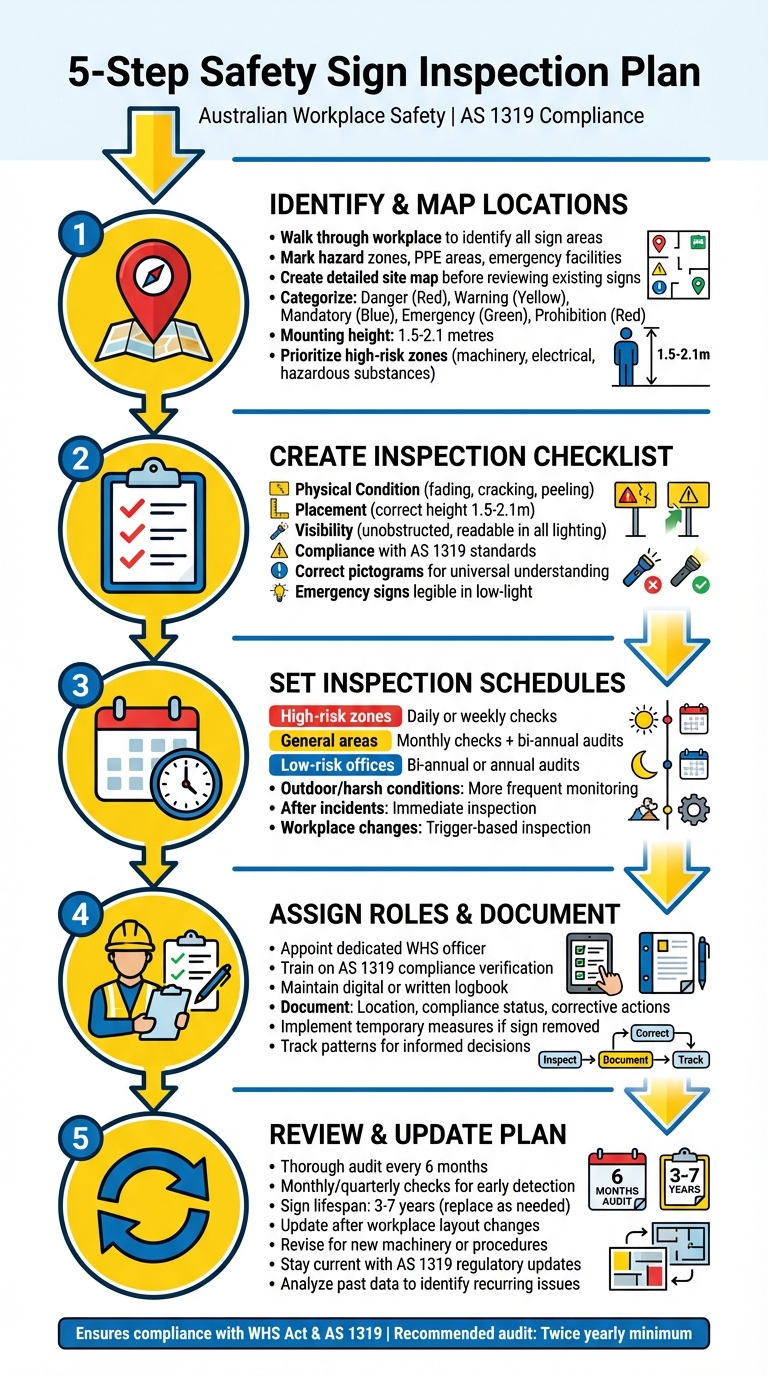
5-Step Safety Sign Inspection Plan for Australian Workplaces
Step 1: Identify and Map All Safety Sign Locations
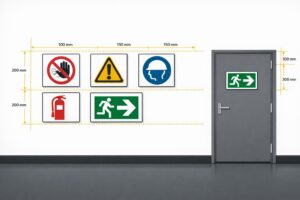
Start by walking through your workplace to identify all areas that require safety signs. These include hazard zones, areas where personal protective equipment (PPE) is mandatory, emergency facilities, and traffic control routes. Look out for specific hazards needing danger signs, like areas storing flammable substances or high-voltage equipment. Identify zones where PPE like hard hats or safety glasses must be worn, as these require mandatory signage. Don’t forget to mark emergency facilities such as fire extinguishers, first-aid stations, and evacuation routes [4].
Pay attention to traffic control areas, including forklift pathways, pedestrian crossings, and zones with speed limits. Additionally, pinpoint prohibition zones, such as no-smoking areas or restricted access locations [4].
Creating a Site Map
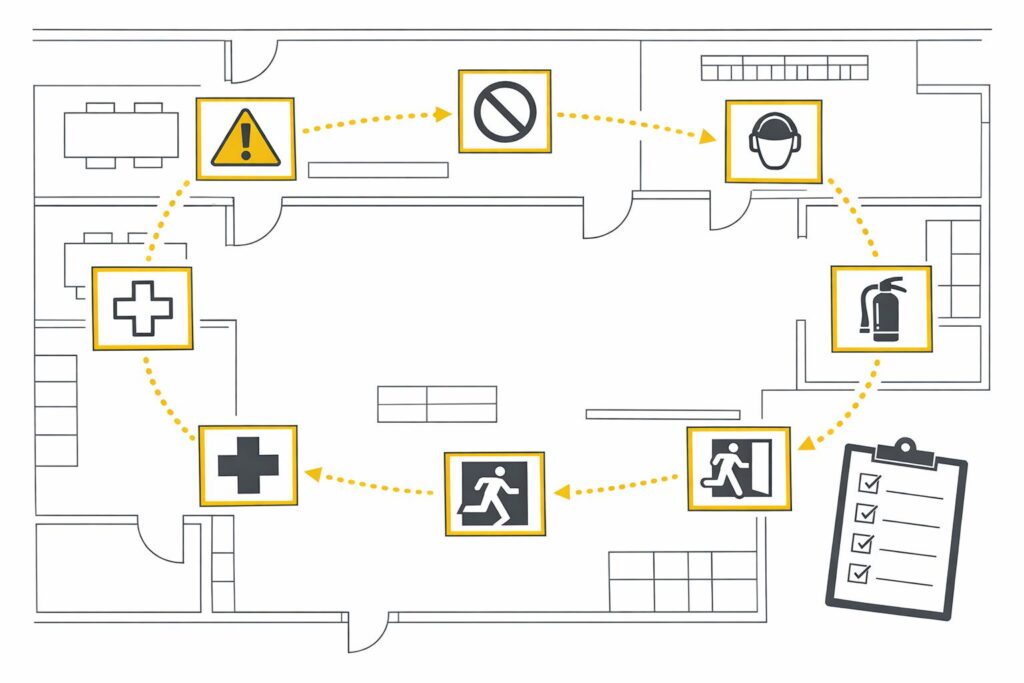
A detailed site map serves as a crucial reference. Mark where signs should be placed based on hazard assessments before reviewing existing signage – this helps avoid missing critical safety gaps [1]. Categorise signs into types like danger, warning, mandatory, emergency, and prohibition signs [1][4].
Consider special requirements, such as the need for photoluminescent signs in areas where visibility is essential during power outages. Ensure signage is visible in both daylight and low-light conditions, and check that mounting heights adhere to the standard range of 1.5 to 2.1 metres [1]. Use the map for regular audits to quickly identify signs that may have been moved, damaged, or obstructed [1][5]. Update it immediately after structural changes, machinery relocations, or operational adjustments to maintain its accuracy [1].
Focusing on High-Risk Areas
Give priority to high-risk zones, such as those with machinery, electrical points, or hazardous substances, to minimise immediate dangers. Emergency and fire safety locations, including fire extinguishers and evacuation routes, should also be top priorities due to their importance during emergencies. Additionally, areas where vehicles and pedestrians interact, like loading docks or forklift routes, require urgent attention to reduce collision risks [1].
Tailor your mapping process to your specific industry. For example, construction sites should emphasise heavy machinery hazards and fall protection zones, while retail spaces need to focus on emergency exits and managing customer traffic. Restricted access zones and no-smoking areas also need thorough documentation to ensure security and compliance with prohibition requirements [4].
These high-risk areas will form the foundation of your inspection checklist in the next step.
Step 2: Create an Inspection Checklist
Once you’ve mapped out the locations of your safety signs, the next step is to build a checklist. This should cover three key areas: physical condition, placement, and visibility. Start by evaluating the condition of each sign – look for signs of fading, cracking, or peeling. Placement is another critical factor; ensure signs are mounted at the correct height (between 1.5 and 2.1 metres). Lastly, check visibility to confirm that nothing obstructs the line of sight. Your checklist should include all types of workplace signs: danger signs, prohibition signs, mandatory PPE signs, warning signs, emergency information signs (fire and first aid), and traffic signs [1][4].
It’s also essential to verify that the correct pictograms are used, ensuring universal understanding, particularly in workplaces with employees who speak different languages [5]. Emergency and exit signs should remain legible even in low-light conditions, and photoluminescent materials must be functional in areas prone to power outages [1].
What to Check During Inspections
When inspecting signs, focus on their legibility and condition, as these are common compliance issues [1]. Look for damage such as cracks, bent edges, corrosion, or dirt that could obscure the message. Also, confirm that no new obstructions – like machinery, stock, or structural changes – have appeared since the last inspection [1].
Outdoor signs or those in harsh environments require extra attention. Check for weather-related wear and tear, as exposure to the elements can cause rapid deterioration. Signs made from durable materials like aluminium or polypropylene with UV protection are far more resistant to fading than standard options [1]. For emergency signage, test visibility under different lighting conditions to ensure they are effective during both day and night operations.
"Should any sign be removed or destroyed accidentally, the hazard or risk covered by the sign should not be left uncontrolled." – My Safety Works [5]
Make sure to document your findings thoroughly. A detailed record will support compliance efforts and help guide corrective actions.
Meeting Australian Safety Standards
After completing the physical inspection, check that all signs comply with AS 1319, the Australian standard for safety signage. Verify that colours and symbols are accurate – yellow and black triangles for warnings, red and white circles for prohibitions – and ensure the graphics match the current AS 1319 requirements. Using outdated symbols is a common compliance issue during inspections [1][4].
For workplaces with accessibility needs, confirm that Braille or tactile signs are installed as required by law [1]. If your workplace frequently replaces signs, consider sourcing from suppliers who specialise in durable, compliant signage. For example, PXP Safety offers signs made with robust aluminium, UV protection, and outdoor-grade printing, all designed to meet Australian conditions and AS 1319 standards. They also provide custom signage options to address specific workplace hazards.
Keep a detailed log of all findings, noting any non-compliance issues and the corrective actions taken. This documentation not only demonstrates your commitment to meeting WHS requirements but also serves as a valuable resource during official inspections [1].
Step 3: Set Inspection Schedules and Procedures
Having a clear inspection schedule is key to maintaining workplace safety and ensuring compliance. The frequency of inspections should align with the risk level of your workplace and the conditions your signs face. For example, high-risk sites might need daily or weekly visual checks, while corporate offices can often get by with bi-annual audits [1]. Regular checks are essential to spot any deterioration early [2].
"A workplace should be audited at least twice a year or whenever layouts, machinery, or procedures change." – K2K Signs [1]
It makes sense to combine safety sign checks with your existing workplace safety inspections rather than treating them as a separate task [2]. For instance, during your monthly safety walkthrough, include a quick check of high-traffic areas and hazard zones. Then, conduct a thorough compliance audit every six months to ensure all signage adheres to AS 1319 standards and remains legible under different lighting conditions [1]. These scheduled checks should work alongside reviews prompted by incidents, forming a solid inspection plan.
How Often to Inspect Safety Signs
The frequency of sign inspections should align with the risk level of each area. High-risk zones – like those with heavy machinery, chemical storage, or vehicle traffic – need daily or weekly visual checks to ensure hazard warnings and PPE requirements are clear. General areas, such as warehouses or retail spaces, benefit from monthly checks and bi-annual audits focusing on traffic control and first aid signage. Low-risk environments, such as corporate offices, typically require bi-annual or annual audits to check emergency exits and evacuation diagrams [1][3].
Environmental factors also play a big role in determining how often you should inspect. Outdoor signs or those in harsh conditions – exposed to UV rays, rain, or high humidity – deteriorate faster and need more frequent monitoring [2]. For workplaces in high-UV regions like Queensland, inspections for outdoor signage should happen more often. Creating a site map to highlight high-risk areas can help you prioritise them during inspections [1]. This approach ensures all areas, from routine to high-risk, are properly covered.
Inspecting Signs After Incidents
Scheduled audits are important, but incidents demand immediate attention to keep safety compliance on track. After any workplace incident, near miss, or major operational change, conduct a signage audit right away [1]. This helps identify if missing or faded signage played a role in the event and prevents future legal issues under the Work Health and Safety Act. Also, check for sign desensitisation – where workers become so used to a sign that it no longer effectively communicates the hazard.
Trigger-based inspections are just as critical when new machinery is installed, the workplace layout changes, or safety procedures are updated [3]. Document any corrective actions taken to show due diligence during official WHS inspections and to spot trends that might require updates to your inspection plan [1]. This proactive approach ensures your signage remains effective and compliant.
sbb-itb-9950c92
Step 4: Assign Roles and Document Findings
Once inspection schedules are set, it’s time to assign clear roles to ensure consistent compliance and thorough documentation. Under the Work Health and Safety Act and Safe Work Australia standards, business owners and WHS officers are responsible for ensuring workplace safety signage meets legal requirements. To avoid any oversight, appoint a dedicated officer to oversee the audit process and maintain accurate records [1].
Proper documentation plays a key role in compliance and managing risks. Keeping written or digital records not only demonstrates compliance during WHS inspections but also reinforces your broader risk management plan. These records should detail the location of each sign, its compliance status, and any corrective actions needed. Digital logbooks are particularly handy – they’re easy to search, safe from physical damage, and make it simpler to prove compliance to regulators [1].
Who Should Conduct Inspections
Assign a single officer to manage the signage logbook and oversee the audit cycle [1]. This person should be trained to verify compliance with AS 1319 standards and ensure that emergency and exit signage remains visible in both daylight and low-light conditions [1]. If a sign is removed or damaged during an inspection, temporary measures should be implemented immediately until a replacement is installed [5]. Comprehensive documentation of findings ensures accountability and enables swift corrective actions.
Logging Issues and Corrective Actions
Maintaining a detailed log is essential for tracking compliance and addressing issues effectively. Use a table to document key details such as the sign category (e.g., Warning, Mandatory, Fire & Emergency), compliance status (Y/N), location, and any required actions for remediation [1]. This approach ensures that non-compliant, faded, or damaged signs are not only identified but also promptly addressed.
Regular documentation can also help identify patterns, such as recurring problems in specific areas. For instance, signs in outdoor locations with high UV exposure may fade more quickly, or machinery might frequently obstruct signage in certain zones [2]. By noting these issues in the log, you can make informed decisions about future purchases, such as opting for more durable materials in problem areas [2].
"Keeping written or digital records demonstrates compliance during WHS inspections" [1].
| Category | Audit Question | Compliant (Y/N) | Action Required |
|---|---|---|---|
| Warning Signs | Are hazard areas marked with yellow/black triangles? | ||
| Mandatory Signs | Are PPE instructions (e.g., helmets) visible? | ||
| Fire & Emergency | Are fire exits and extinguishers clearly marked? | ||
| Maintenance | Are signs clean, undamaged, and reflective? |
Step 5: Review and Update Your Inspection Plan
Once you’ve mapped out your safety sign locations, created a checklist, and scheduled inspections, it’s important to keep your plan up to date. Regular reviews ensure your plan stays aligned with Australian safety standards. A safety sign inspection plan isn’t something you set and forget. Without regular updates, you risk issues like faded signs, changes in the workplace layout, or outdated symbols that no longer comply with AS 1319 requirements [2]. Most safety signs last between 3 and 7 years, depending on environmental conditions, so your plan needs to account for this natural wear and tear [2].
To stay ahead, conduct a thorough signage audit every six months. Complement this with monthly or quarterly checks to catch smaller issues early and maintain compliance with Work Health and Safety (WHS) regulations [1][2]. This layered approach not only prevents minor problems from escalating but also ensures you meet the requirements of the Work Health and Safety Act. As Phoenix Graphics advises:
"Safety signage should be checked regularly – ideally as part of your monthly/quarterly workplace inspections" [2].
Using Past Inspection Data
Your inspection logbook is more than just a compliance tool – it’s a valuable resource for improving your safety processes. Analysing past records can highlight recurring issues, such as signs frequently being blocked by machinery in specific areas [1]. Use this data to adjust inspection schedules or even the materials used for certain signs. For instance, if signs in high-traffic or sun-exposed areas tend to wear out quickly, consider switching to more durable options like aluminium or polypropylene [1].
Digital records make it easier to spot trends. For example, if you notice "signage clutter" – too many signs in one area creating confusion – consider removing outdated or redundant signs to improve clarity [1]. Similarly, if certain signs are deteriorating faster than expected, it might be time to increase inspections in those zones or invest in more robust materials [1]. These insights can guide not only your material choices but also broader adjustments to your inspection plan.
Updating the Plan for Workplace Changes
Workplace changes – such as new layouts, machinery, or procedures – should prompt immediate updates to your inspection plan [1]. New equipment might introduce hazards that require additional signage, like mandatory PPE notices, while layout changes could affect the visibility of existing exit signs [1][6]. Dimitri Hari, Operations Manager at Pyrmont Seafoods, highlights the importance of proactive updates:
"Staff notice what you do. When you show a commitment to safety and make positive changes they know you are genuine" [6].
Start by revising your site map to include any new areas where safety signs are now needed. Engage with your team to identify any issues they’ve observed in the updated setup [1][6]. Remove duplicate or outdated signs that might confuse workers, and ensure new placements are effective in both daylight and low-light conditions [1]. Additionally, stay on top of regulatory updates – if AS 1319 changes, your plan must reflect any new requirements for symbols, colours, or wording [1][3].
Conclusion
An effective inspection plan is essential for maintaining workplace safety and meeting compliance requirements. A well-structured safety sign inspection plan isn’t just about ticking boxes – it’s about committing to the ongoing safety of your team and adhering to Australian Standard AS 1319 and the Work Health and Safety Act. By mapping out sign locations, creating detailed checklists, scheduling regular inspections, assigning responsibilities, and consistently reviewing your plan, you’ll minimise risks, avoid fines, and reduce preventable injuries.
When selecting safety signs, it’s important to choose materials that can withstand Australia’s tough environmental conditions. Companies like PXP Safety provide signs with durable aluminium bases, UV-protective coatings, and outdoor-grade printing, offering a lifespan of 3–7 years [2].
Workplace changes, such as new equipment or layout adjustments, require immediate updates to your inspection plan. As noted by K2K Signs:
"A signage audit keeps your site legally compliant and ensures all safety messages remain visible and relevant" [1].
Regular audits and unplanned spot checks ensure you’re always prepared for formal inspections and help maintain a safe environment for your workers.
Your inspection logbook, covered earlier, is a vital tool for tracking and improving safety measures. By analysing patterns in sign wear and identifying high-risk areas, you can adjust your inspection frequency and materials to address specific needs. This approach turns routine checks into opportunities for meaningful safety improvements, reinforcing a strong safety culture across your workplace.
FAQs
What records should I keep for safety sign inspections?
You should maintain thorough records of inspection dates, the condition of signs (such as fading, damage, or weathering), any maintenance or replacements carried out, and compliance checks. As noted in PXP Safety‘s resources, keeping accurate documentation not only ensures that safety standards are upheld but also provides evidence of compliance during audits. Detailed logs of findings and corrective actions play a crucial role in maintaining ongoing workplace safety.
How do I decide which areas need daily vs six-monthly sign checks?
Deciding how often to inspect depends largely on the hazards present and the conditions of the workplace. High-risk areas or environments with frequent changes, such as construction sites, should ideally undergo daily checks to confirm that signs are intact and clearly visible. On the other hand, lower-risk or more stable areas can usually stick to a six-monthly inspection schedule, as long as hazards and layouts remain consistent. It’s essential to tailor inspection routines to the specific risks, environmental conditions, and legal requirements of the workplace, with a focus on areas where hazards are more dynamic or recent changes have occurred.
When should I replace a sign instead of cleaning or relocating it?
Safety signs should be replaced if they become faded, cracked, peeling, warped, or difficult to read. These flaws can make the signs less visible and compromise compliance with safety standards. Conducting regular inspections – whether quarterly or twice a year – can help spot signs that need replacing due to wear and tear, exposure to the elements, or changes in regulations. Clear and compliant signage plays a key role in maintaining workplace safety.
Related Blog Posts
You may also be interested in
FAQs About Workplace Safety Signs in Australia
AS 1319 sign types, placement, materials and maintenance for workplace safety and WHS compliance in Australia.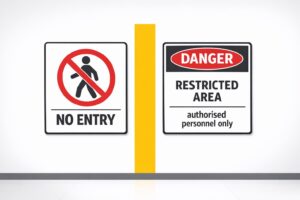
Restricted Area Signs vs. No Entry Signs
Compare No Entry and Restricted Area signs in Australian workplaces — meanings, design differences and AS 1319 compliance.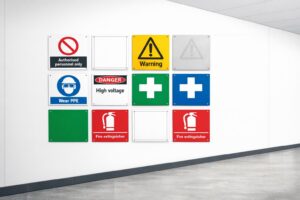
How to Spot Workplace Signage Gaps
Audit your workplace for missing, faded or non‑compliant signs under AS 1319 to reduce incidents and avoid WHS fines.
Symbol Design: Global Standards Explained
Explains ISO 7010 and ISO 3864: standard symbols, colours and sizing for clear, language‑free safety signage and AU compliance.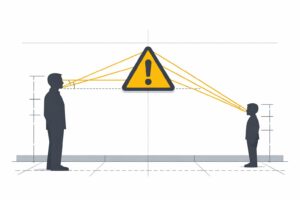
Hazard Sign Visibility Planner
Plan hazard sign placement for max visibility with our free tool. Ensure safety by finding the best spot, height, and angle—try it now!