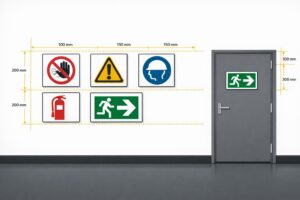
10 Safety Signs for Medical Waste Disposal
Improper medical waste disposal poses serious risks to healthcare workers, waste handlers, and the public. In Australia, strict regulations like the Environment Protection Act 2017, Australian Dangerous Goods Code, and AS/NZS standards require clear safety signage to prevent hazards. This article outlines the 10 essential safety signs essential for managing medical waste safely and legally.
Key Points:
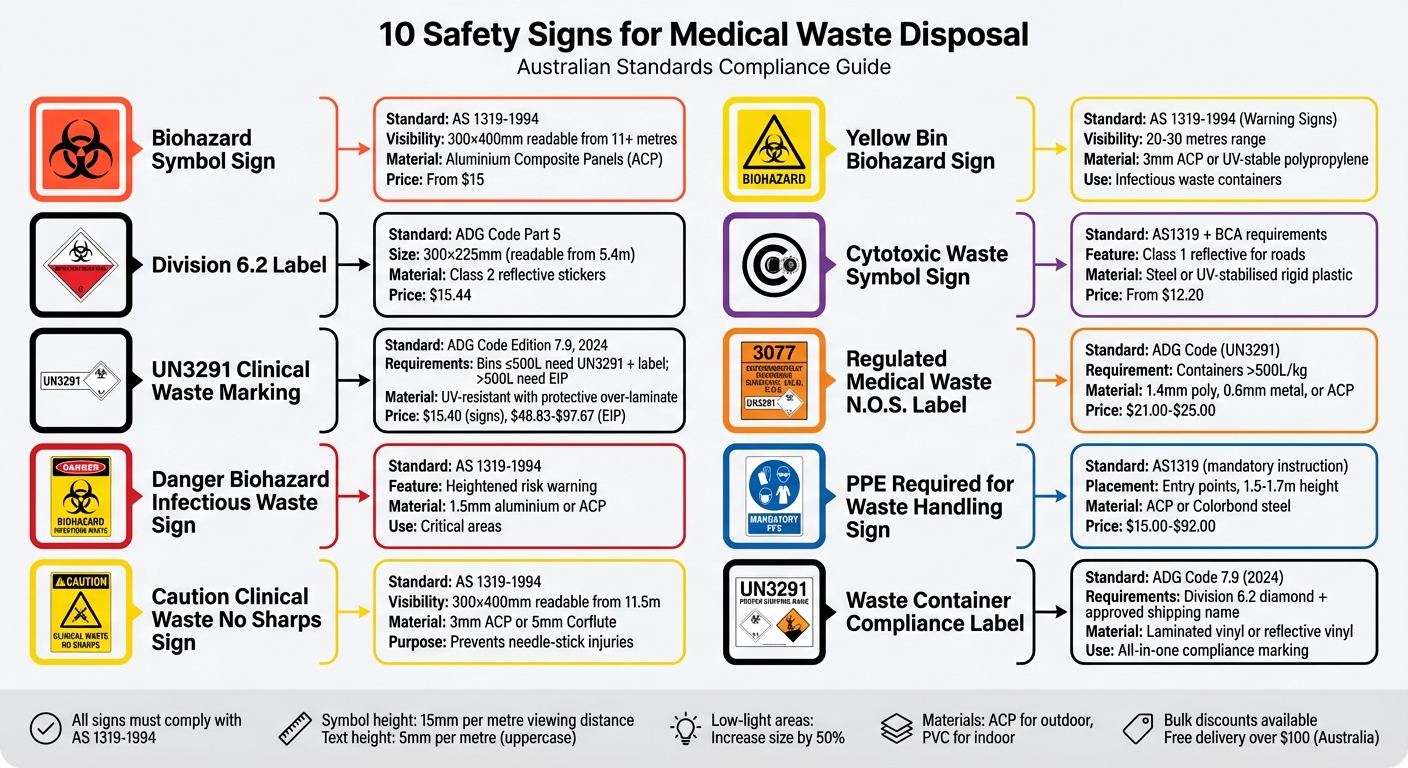
- Biohazard Symbol Sign: Alerts to biological risks; must meet AS 1319-1994 standards for design and visibility.
- Division 6.2 Label: Identifies infectious substances per the ADG Code and ensures proper transport and storage.
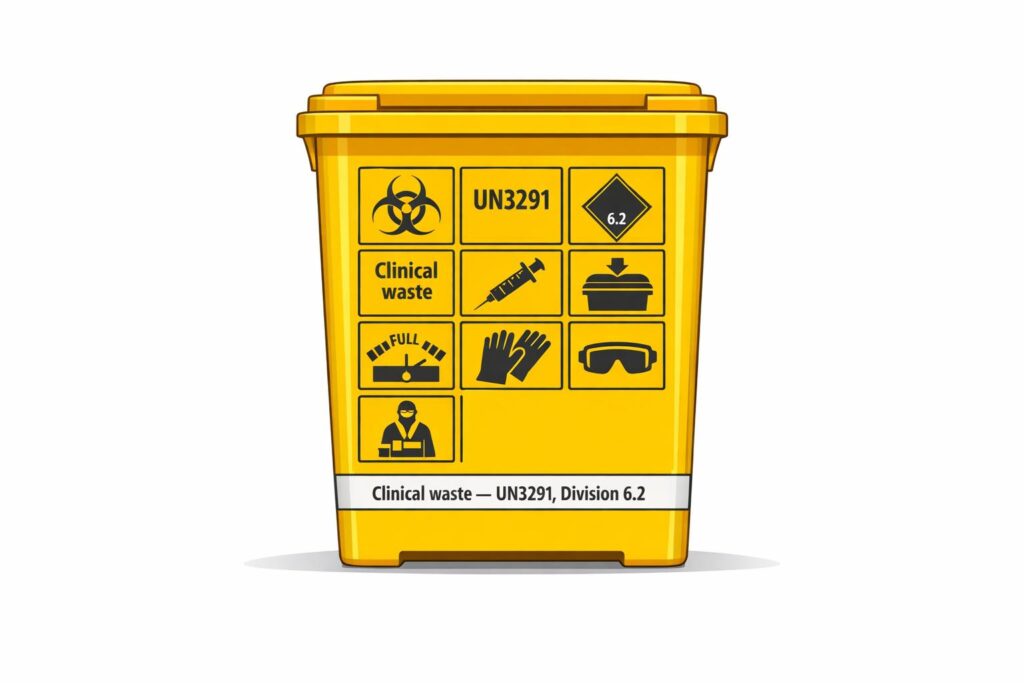
- UN3291 Clinical Waste Marking: Used for infectious substances (Category B); mandatory for bins and transport.
- Danger Biohazard Infectious Waste Sign: Warns of heightened risks in critical areas.
- Caution Clinical Waste No Sharps Sign: Prevents sharps from being disposed of in incorrect bins.
- Yellow Bin Biohazard Sign: Marks containers for infectious waste.
- Cytotoxic Waste Symbol Sign: Indicates hazardous cytotoxic materials requiring PPE.
- Regulated Medical Waste N.O.S. Label: Ensures compliance during transport of unspecified clinical waste.
- PPE Required for Waste Handling Sign: Reminds workers to wear protective gear.
- Waste Container Compliance Label: Combines critical details like UN numbers and hazard symbols.
These signs must comply with Australian standards, be durable, and maintain visibility even in harsh conditions. Materials like aluminium composite panels and reflective vinyl ensure longevity and effectiveness. Prices start from $15, with customisation options available for unique needs.
10 Essential Safety Signs for Medical Waste Disposal in Australia
How to Differentiate Medical Waste Containers | Daniels Health Color Guide
sbb-itb-9950c92
1. Biohazard Symbol Sign
The biohazard symbol sign stands out as one of the most recognisable warnings in medical waste management. Designed in 1966 by Charles Baldwin of Dow Chemicals, it was intentionally made to be memorable yet non-intuitive. This design ensures that only trained personnel, equipped with the necessary knowledge, can respond appropriately to its meaning [5].
Compliance with Australian Standards (ADG Code, AS/NZS Regulations)
In Australia, biohazard signs must adhere to AS 1319-1994, which outlines the requirements for safety sign design, classification, and visibility in workplaces [3]. According to this standard, the sign’s size should ensure visibility based on distance: 15 mm of symbol height should be legible from 1 metre away. For instance, a 300×400 mm sign can be seen from over 11 metres, while a smaller 60×80 mm sign is effective from about 2 metres [3].
These regulations ensure that biohazard signs remain effective tools for hazard communication, especially in critical environments.
Clear and Visible Hazard Communication
The use of high-contrast colours makes biohazard signs instantly recognisable. Typically, the symbol is black, set against a fluorescent orange‐red or yellow background, ensuring visibility even in low lighting or peripheral vision [3] [5]. For areas with dim lighting, enlarging the sign by 50% can maintain its effectiveness [3].
"When it comes to biological hazards, clear communication isn’t just important – it’s potentially life-saving." – Pinnacle Signage [5]
To enhance their functionality, these signs often include additional details such as the specific agent (e.g., E. coli), the relevant Biosafety Level (BSL), and emergency contact information. These components help first responders select the correct protective measures and follow established safety protocols [5].
While visibility is crucial, the durability of these signs is equally important, especially in clinical and transport settings.
Durability for Medical and Transport Environments
In medical facilities, signs must withstand frequent cleaning and exposure to harsh chemicals. Aluminium Composite Panels (ACP) are a reliable choice for permanent outdoor or industrial use, thanks to their resistance to UV rays and chemicals [3] [5]. For indoor settings, laminated PVC offers a cost-effective alternative that resists peeling and fading [1].
For transport or areas with low light, reflective vinyl with over-lamination ensures signs remain readable and durable around the clock [1] [3]. Placement is also key – signs should be mounted at eye level against a contrasting background. Any signs that become faded, damaged, or illegible must be replaced promptly [3] [5].
2. Division 6.2 Label
Division 6.2 labels are diamond-shaped signs used to identify infectious substances. These labels are a legal requirement under the Australian Dangerous Goods (ADG) Code (Edition 7.9, 2024) for the transport and storage of infectious medical waste. They act as a clear warning system for emergency responders, waste handlers, and the public, highlighting the biological risks associated with the materials being handled [7].
Compliance with Australian Standards
These labels must comply with Australian regulations, including the ADG Code Part 5 for transportation and AS 1216 for design standards. Packaging must display essential details like the correct UN number (e.g., UN 3291), the shipping name, and the hazard class symbol (Model No. 6.2). Additionally, safety signage must meet AS 1319-1994 standards, which specify that uppercase lettering should be at least 5 mm tall for every metre of viewing distance. Labels must be prominently displayed at building entrances, in storage areas for dangerous goods, and on transport vehicles [6][7][8]. These measures ensure not only compliance but also effective visibility.
Clear and Visible Hazard Communication
The diamond shape of these labels ensures instant recognition. To maximise readability, a 300×225 mm sign can be read from a distance of up to 5.4 metres in good lighting conditions. For poorly lit areas, the size of the text and symbols should be increased by at least 50% to maintain clarity [6][7].
Durability for Medical and Transport Environments
Durability is just as important as visibility. For permanent outdoor use, Aluminium Composite Panels offer excellent resistance to weather conditions. Class 2 reflective stickers are ideal for ensuring visibility in low-light environments. Additionally, lamination provides extra protection against weathering and wear, ensuring the labels remain legible and securely attached throughout their use in the transport chain. Hazchem Division 6 Infectious Waste signs are priced at approximately $15.44 (including tax) [6][7][8].
3. UN3291 Clinical Waste Marking
The UN3291 mark is used to identify Division 6.2 infectious substances (Category B) – clinical waste that is not otherwise specified (N.O.S.). This marking helps alert workers, emergency responders, and the public to minimise risks of spills and exposure during handling and transport [4]. The term "N.O.S." refers to a mix of medical materials from healthcare facilities that don’t fit into a more specific classification but still require special handling [11]. These guidelines ensure clinical waste is properly marked and managed according to strict Australian standards.
Compliance with Australian Standards
The ADG Code (Edition 7.9, 2024) requires all clinical waste transported under UN3291 to display the UN number alongside one of these approved shipping names: "CLINICAL WASTE, UNSPECIFIED, N.O.S.", "(BIO) MEDICAL WASTE, N.O.S.", or "REGULATED MEDICAL WASTE, N.O.S." [4]. For bins with a capacity of up to 500 L, both the Division 6.2 diamond hazard label and the UN3291 marking are mandatory. For larger containers (over 500 L or 500 kg), Emergency Information Panels (EIPs) must include the UN number, shipping name, and Hazchem codes [4][9]. Additionally, signage must align with AS1319 standards for workplace safety [11].
| Requirement | Bins ≤ 500 L | Bins > 500 L |
|---|---|---|
| Marking | UN3291 + Proper Shipping Name | Emergency Information Panel (EIP) |
| Labelling | Division 6.2 Infectious Substance Label | Placarding required on vehicle |
| Manufacturer Info | Name and address of consignor/agent | Name and address of consignor/agent |
| Standard | ADG Code Chapters 5.2 & 5.3 | ADG Code Chapters 5.2 & 5.3 |
Durability for Medical and Transport Environments
UN3291 markings must endure the challenging conditions found in medical settings and during transport. To prevent fading or damage, high-quality markings are made with UV and weatherproof protective over-laminates [10][11]. For environments exposed to high temperatures, materials like 0.6 mm steel, 1.4 mm UV-stabilised poly, or Aluminium Composite Panels (ACPs) offer strong resistance to wear and tear [9][10][11]. For vehicles operating on public roads, Class 1 reflective materials ensure visibility even in low-light conditions [11]. Clinical waste signs typically cost around $15.40, while larger Hazchem or Emergency Information Panels range from $48.83 to $97.67 [10][11].
4. Danger Biohazard Infectious Waste Sign
The Danger Biohazard Infectious Waste Sign serves as a critical warning in places like healthcare facilities, laboratories, and waste storage areas where infectious materials are handled. Its purpose is to alert workers and visitors to the presence of hazardous biological agents, reducing the risk of accidental exposure and ensuring that proper safety measures are followed. Unlike standard biohazard signs, the "Danger" label signals a heightened level of risk, demanding immediate attention and increased caution.
Compliance with Australian Standards
These signs must adhere to AS 1319-1994, the key Australian Standard for safety signage in workplaces. This standard specifies the required design, colours, and symbols for hazard communication [3]. Signs that meet these standards typically feature a yellow background with black symbols and text, often in a triangular format to ensure universal recognition of hazards [3]. Depending on the type of facility and waste-handling procedures, additional regulations may also apply [12][13].
Clear and Visible Hazard Communication
Beyond compliance, the design of these signs prioritises visibility to ensure quick recognition of the danger. The "Danger" designation requires signs to be easily readable from appropriate distances [3]. In low-light environments, the size of symbols and text must increase by 50% to maintain their effectiveness [3]. Placement is also critical – signs should be mounted at eye level, against contrasting backgrounds, and free of obstructions [3]. For areas like medical storage rooms with limited lighting, Class 2 reflective film ensures the sign remains visible even in difficult conditions [14][3].
Durability for Medical and Transport Environments
In areas with heavy foot traffic or frequent cleaning, these signs need to be made from durable materials to maintain their effectiveness. Options like 1.5 mm aluminium or ACP are ideal for outdoor or transport use, as they resist warping and fading [14][3]. For indoor clinical spaces, foamed PVC is a reliable choice due to its resistance to moisture and cleaning chemicals [14]. Additionally, lamination can offer extra protection, extending the lifespan of the sign in environments with regular chemical exposure [3].
5. Caution Clinical Waste No Sharps Sign
A critical aspect of managing clinical waste is preventing sharps from being disposed of in the wrong bins. That’s where the Caution Clinical Waste No Sharps Sign plays a vital role. These signs are specifically designed to reduce the risk of needle-stick injuries by clearly marking containers that are not intended for sharps, such as needles, scalpels, or broken glass. This ensures healthcare workers only deposit appropriate waste, improving safety and compliance.
Compliance with Australian Standards
In Australia, these signs must adhere to AS 1319-1994, which outlines the design and colour standards for workplace safety signage. Typically, they feature a bright yellow background with black text or symbols for maximum visibility. Many also include a triangular warning symbol for universal recognition. To ensure readability, symbols must be at least 15 mm per metre, while uppercase text should measure 5 mm per metre. For example, a 300 × 400 mm sign is legible from a distance of around 11.5 metres [3].
Specificity to Prevent Hazards
The "No Sharps" label provides a level of clarity that generic clinical waste signs don’t offer. By explicitly stating that sharps are prohibited, these signs help minimise the risk of accidental injuries and exposure to bloodborne pathogens. In busy healthcare environments, this tailored messaging ensures safety protocols are followed more consistently [2].
Built for Tough Conditions
Given the demanding conditions in medical and transport environments, these signs need to be durable. For permanent setups, 3 mm Aluminium Composite Panel is a reliable choice due to its strength and easy-to-clean surface. For temporary use, 5 mm Corflute or heavy-duty vinyl stickers with tuff matt lamination are cost-effective options. UV-resistant digital printing ensures the message remains visible, even under prolonged exposure to sunlight [2].
This targeted warning sign works in tandem with other clinical waste signage to form a robust hazard communication system.
6. Yellow Bin Biohazard Sign
The Yellow Bin Biohazard Sign is a well-known marker in medical waste management. It identifies containers and areas where infectious materials, such as bacteria, viruses, and contaminated waste, are present [1].
Compliance with Australian Standards
In Australia, these signs adhere to AS 1319-1994, where they are classified as "Warning Signs." These signs alert individuals to conditions that could cause harm or injury, although they are not usually life-threatening. The standard specifies a yellow background with a bold black triangle containing the biohazard symbol, accompanied by black text. For visibility, symbols need to be at least 15 mm per metre of viewing distance. Uppercase text must measure at least 5 mm per metre in well-lit conditions, increasing by 50% in dimly lit areas [3].
Clear and Visible Hazard Communication
Designed for optimal visibility, these signs typically have a visibility range of 20 to 30 metres. For instance, a standard 300 × 400 mm sign is readable up to 14.2 metres in well-lit environments [3].
Durability for Medical and Transport Environments
Durability is key for signs used in hospitals and waste transport facilities. For permanent outdoor use, 3 mm Aluminium Composite Panel (ACP) provides excellent rigidity and weather resistance. UV-stable 1.5 mm polypropylene is another option, offering resistance to fading and brittleness when exposed to outdoor conditions. Over-lamination adds protection against graffiti and chemical spills, while Class 1 Reflective material, which features a honeycomb pattern, improves visibility at night or in low-light environments [3] [15].
7. Cytotoxic Waste Symbol Sign
The Cytotoxic Waste Symbol Sign indicates the presence of hazardous cytotoxic materials. These are often found in hospitals, laboratories, and research centres, particularly in areas where chemotherapy drugs are handled. The sign also emphasises the need for personal protective equipment (PPE) such as gloves and masks to avoid direct exposure [16].
Compliance with Australian Standards
These signs adhere to AS1319 standards and, when used on public roads, include Class 1 reflective honeycomb material to ensure visibility around the clock. They also meet the statutory signage requirements outlined in the Building Code of Australia (BCA) [10] [16]. These specific design features make them suitable for a wide range of conditions and ensure compliance with safety regulations.
Built for Medical and Transport Settings
Cytotoxic waste signs are crafted with durability in mind. They feature a UV- and weatherproof over-laminate, printed using eco-solvent inks on premium gloss vinyl to ensure the text and symbols remain clear over time. For areas exposed to high temperatures, metal signs made of steel are preferred, while UV-stabilised rigid plastic is designed to resist sun damage. For use on transport vehicles, a flexible magnetic backing (0.9 mm thick) provides secure attachment and weather resistance [16].
Tailored Options for Specific Needs
Different materials suit different settings. For curved surfaces, self-adhesive vinyl works best, while rigid plastic is ideal for walls or posts. In high-temperature environments, metal substrates are recommended, and rigid signs often come with pre-drilled mounting holes for easy installation. Cytotoxic Waste Hazchem Signs are available starting from approximately $12.20 [16].
8. Regulated Medical Waste N.O.S. Label
The Regulated Medical Waste N.O.S. Label plays a key role as an Emergency Information Panel, offering clear instructions during transport. The term "N.O.S." stands for "Not Otherwise Specified" [4][9]. This label is vital for identifying Division 6.2 dangerous goods (Infectious Substances) classified under the UN3291 designation.
Expanding on the UN3291 marking mentioned earlier, this label is specifically designed to improve emergency response during transportation.
Compliance with Australian Standards
Under the Australian Dangerous Goods (ADG) Code, three proper shipping names are allowed for these labels: "REGULATED MEDICAL WASTE, N.O.S.", "CLINICAL WASTE, UNSPECIFIED, N.O.S.", or "(BIO) MEDICAL WASTE, N.O.S."
For containers holding more than 500 litres or 500 kilograms, Emergency Information Panels are required as per ADG7 [4][9]. Placarding becomes mandatory when the total load reaches 250 kg or litres or more [9]. Additionally, these labels must comply with AS 1319 standards, which specify that "Danger" signs must feature white text on a red oval set against a black background to indicate life-threatening hazards [17].
Built for Medical and Transport Environments
These labels are crafted to endure the demands of both medical and transport settings. Materials include heavy-duty options such as 1.4 mm poly, 0.6 mm metal, 0.85 mm magnet, and aluminium composite panels [6][9]. High-quality UV digital printing ensures that graphics remain clear even in harsh lighting conditions, and optional lamination offers extra protection against weather and chemicals. Pre-drilled corner holes make it easy to securely attach the labels to bins or vehicles [9]. The ADG Code also requires that all markings withstand the rigours of manual and mechanical handling, as well as shocks and load impacts during transport [4].
Clinical Waste Unspecified N.O.S. signs are available at prices ranging from $21.00 to $25.00 [9]. This durable design ensures the labels integrate seamlessly with other compliance measures in clinical waste management.
9. PPE Required for Waste Handling Sign
PPE Required for Waste Handling signs are crucial reminders for workers to wear mandated protective gear before entering hazardous areas. These signs play a key role in ensuring safety by providing clear, pre-entry alerts at critical points, helping personnel comply with safety protocols in waste handling environments [18].
Compliance with Australian Standards
Australian Standard AS1319 specifies that PPE signs must display a white symbol on a blue disc background [18]. The word "MUST" is often included to emphasise the mandatory nature of the instruction. Under workplace health and safety (WHS) laws, PCBUs (Persons Conducting a Business or Undertaking) are required to install appropriate signage. Failing to comply can lead to improvement notices, fines, or even legal action. For high-risk waste handling, such as tasks involving crystalline silica, additional dangerous goods ID signs may be required. For instance, regulations like the Silica Worker Register (effective October 2025) may mandate specific respirators, such as a minimum P2 grade [18].
Clear and Visible Hazard Communication
Visibility and legibility are vital for effective hazard communication. Symbols on PPE signs should measure at least 15 mm per metre of viewing distance, while uppercase text should be no smaller than 5 mm per metre. In low-light conditions, these sizes should increase by 50% [3] [18]. Signs should be placed at all entry points to waste handling areas, ideally at eye level – between 1.5 and 1.7 metres from the ground [18]. In locations where vehicle headlights might illuminate the signs, using Class 2 reflective stickers or reflective metal ensures visibility [18] [3]. These measures ensure PPE signs are easy to spot and align with broader hazard communication efforts.
Durability for Medical and Transport Environments
Durable materials are essential to maintain the clarity of PPE signs, especially in challenging environments. Signs should resist UV exposure, moisture, and chemicals, and withstand frequent cleaning [1] [2]. For long-term outdoor or high-traffic indoor use, Aluminium Composite Panel (ACP) is a reliable choice [2]. UV-resistant digital printing with over-lamination, such as "tuff matt laminate", helps prevent fading and allows for cleaning with chemicals [1] [2]. For harsher outdoor conditions, Colorbond steel is recommended, while polypropylene is better suited for indoor medical facilities due to its chemical resistance. Prices for standard safety signs typically range from $15.00 to $92.00, depending on size and material [3].
10. Waste Container Compliance Label
This label is the last step in ensuring safety when handling medical waste. Waste Container Compliance Labels combine critical details like UN numbers, shipping names, hazard symbols, and consignor information into a single marking. These labels are designed to meet Australian regulatory standards and ensure all necessary information is clearly displayed.
Compliance with Australian Standards
The labelling requirements for clinical waste in Australia are outlined in the Australian Dangerous Goods (ADG) Code, version 7.9 (2024) [7]. For clinical waste classified as UN3291, the ADG Code specifies that containers must display the Division 6.2 diamond-shaped hazard symbol. Additionally, they must include one of the approved shipping names: "CLINICAL WASTE, UNSPECIFIED, N.O.S.", "(BIO) MEDICAL WASTE, N.O.S.", or "REGULATED MEDICAL WASTE, N.O.S.". Only labels with full UN3291 markings meet the required standards.
For bins larger than 500 litres, Emergency Information Panels (EIPs) are mandatory. Key regulations governing these requirements include the Dangerous Goods (Road and Rail) Transport Act 2008, the Dangerous Goods (Road and Rail) Transport Regulation 2014, and the Biohazard Waste Industry (BWI) Code of Practice.
Durability for Medical and Transport Environments
Given the challenges of manual handling and transport, these labels must be built to last. Materials like laminated vinyl, aluminium composite, or UV-stable substrates are ideal as they resist wear from cleaning, handling, and transit. For added visibility in high-traffic areas or during nighttime transport, reflective vinyl (Class 1 or Class 2) is recommended. These durable labels can also be customised to include instructions specific to the type of waste being handled.
Specificity for Waste Type or Handling Instructions
Certain waste types, such as cytotoxic waste (UN2810) and sharps containers (per P62A), require specialised labels. When bins are returned after cleaning and disinfection, they must retain their markings only if clearly tagged as "clean" or if this status is documented in the relevant transport paperwork. This ensures clarity and compliance throughout the waste handling process.
Where to Get Compliant Medical Waste Signs
After understanding the safety requirements, the next step is finding the right signs to ensure compliance and maintain a safe working environment.
Getting compliant signs isn’t just about ticking boxes – it’s about safeguarding your team, meeting legal obligations, and keeping your facility operating smoothly. In Australia, medical waste signs must comply with AS 1319-1994, which outlines the design and classification standards for workplace safety signs. This ensures signs feature universally recognised symbols, such as black hazard icons on yellow triangular backgrounds, making warnings instantly clear.
Durability is key. Signs made from materials like aluminium or aluminium composite panels (ACP) with UV-protective lamination stand up to harsh weather, chemicals, and even vandalism. For areas with limited lighting or night-time operations, reflective vinyl (Class 1 or 2) ensures the signs remain visible when it matters most.
If you’re looking for compliant options, PXP Safety offers medical waste signs that meet all Australian standards. Their range includes cost-effective PVC signs for indoor use and long-lasting aluminium composite panels for outdoor settings. Prices for standard biohazard medical waste signs start at $15.40, while sharps receptacle signs range from $15.00 to $92.00, depending on size and material. Plus, they offer bulk discounts and free delivery for orders over $100 across Australia.
Customisation is also an option. If your facility has unique requirements – like specific UN numbers, tailored waste handling instructions, or non-standard dimensions – PXP Safety can produce custom signs while ensuring they remain fully compliant with AS 1319-1994. This is especially helpful for facilities managing specialised waste like cytotoxic materials.
To ensure visibility, Australian standards specify that symbols should be 15 mm high per metre of viewing distance. For example, a 300 x 400 mm sign is readable from up to 11.46 metres. In poorly lit areas, increasing the sign’s size by at least 50% is recommended.
Choosing the right supplier for compliant medical waste signs demonstrates your facility’s dedication to safety and meeting regulatory standards. With the right signage, you can create a safer and more efficient environment for everyone.
Conclusion
Medical waste signage plays a key role in ensuring safety and compliance within healthcare facilities. These signs not only safeguard your team but also help meet legal requirements and minimise the risk of injuries.
Clear and effective signage is essential for communicating hazards. It alerts staff, patients, and visitors to the presence of dangerous materials, encouraging proper handling and caution. When paired with standardised symbols outlined in AS 1319-1994, these signs establish a consistent safety language across Australian healthcare settings. This standardisation eliminates confusion, ensuring risks are clearly communicated and understood throughout the facility.
Adhering to regulatory requirements also shields your organisation from improvement notices, fines, or legal action. As WorkSafe ACT emphasises:
"For maximum effectiveness, safety signs should be maintained in good condition, kept clean and well illuminated" [19].
The durability of signage is equally important. Materials such as aluminium or UV-resistant vinyl ensure that signs can endure challenging conditions while remaining a cost-effective solution.
FAQs
Which medical waste signs are legally required in Australia?
Medical facilities in Australia are required to display Biohazard Medical Waste Signs to mark areas containing potentially infectious or contaminated waste. These signs must adhere to strict Australian standards, ensuring they are both highly visible and durable. This helps maintain safety and compliance within healthcare environments.
What’s the difference between the biohazard symbol, Division 6.2 and UN3291?
The biohazard symbol, Division 6.2, and UN3291 are interconnected terms used in handling biological hazards. The biohazard symbol acts as a universal warning for dangers posed by infectious substances. Division 6.2 refers to the hazard classification that includes infectious substances and regulated medical waste. Meanwhile, UN3291 is the specific UN code assigned to medical waste under Division 6.2, ensuring that such waste is properly marked with the biohazard symbol for safe transport and handling.
How do I choose the right sign size and material for my site?
When choosing the correct sign size, follow the guideline from Australian Standard AS1319-1994, which suggests that symbols should be at least 15 mm per metre of viewing distance. This ensures the sign remains clear and easy to read from the intended distance.
As for materials, opt for sturdy, weather-resistant options such as aluminium with UV protection. These materials are ideal for outdoor use, as they can handle harsh conditions while maintaining their integrity. Always prioritise compliance with Australian standards and consider the specific requirements of your site to ensure both safety and durability.
Related Blog Posts
You may also be interested in
FAQs About Workplace Safety Signs in Australia
AS 1319 sign types, placement, materials and maintenance for workplace safety and WHS compliance in Australia.
Restricted Area Signs vs. No Entry Signs
Compare No Entry and Restricted Area signs in Australian workplaces — meanings, design differences and AS 1319 compliance.
How to Spot Workplace Signage Gaps
Audit your workplace for missing, faded or non‑compliant signs under AS 1319 to reduce incidents and avoid WHS fines.
Symbol Design: Global Standards Explained
Explains ISO 7010 and ISO 3864: standard symbols, colours and sizing for clear, language‑free safety signage and AU compliance.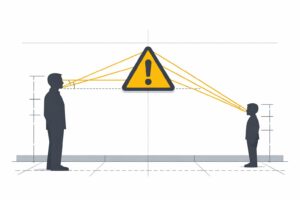
Hazard Sign Visibility Planner
Plan hazard sign placement for max visibility with our free tool. Ensure safety by finding the best spot, height, and angle—try it now!