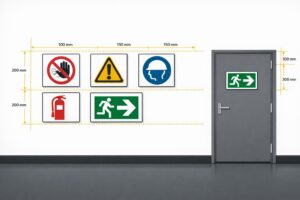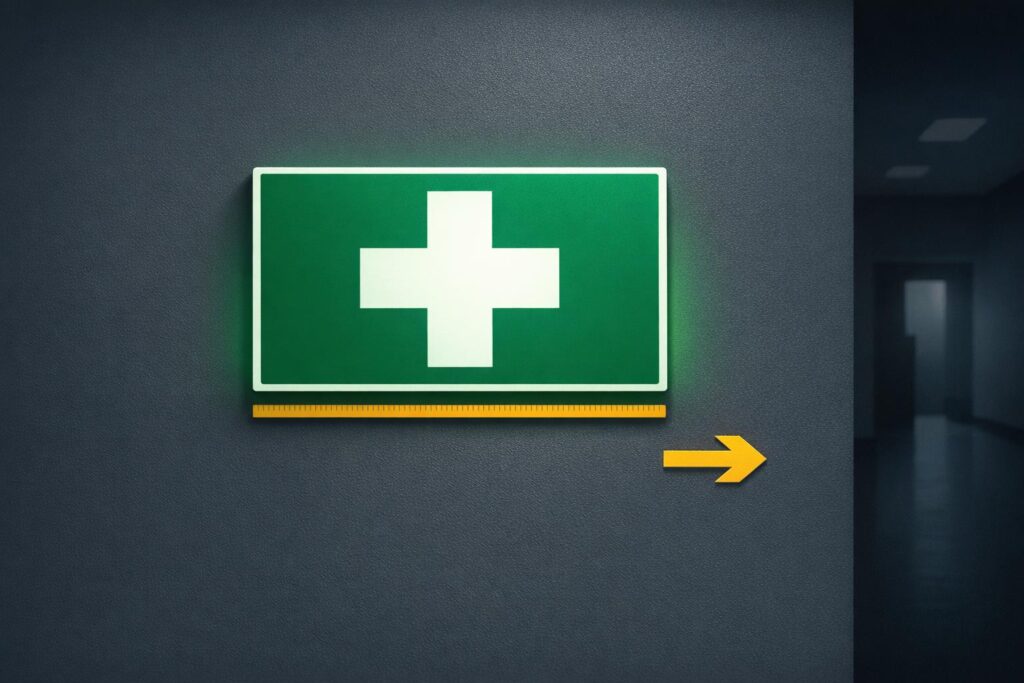
First Aid Signage Colour Standards Explained
When seconds count in an emergency, essential safety signs ensures lifesaving equipment is easy to locate. In Australia, workplace safety rules under the Work Health and Safety Act 2011 and AS 1319-1994 require green-and-white signs to clearly mark first aid kits, AEDs, and other emergency facilities. These signs use white symbols on a green background for quick recognition, even under stress.
Key points include:
- Green and white colours signal safety and emergency aid.
- Signs must comply with AS 1319-1994, including proper dimensions, height (2.0–2.5 m), and materials.
- Photoluminescent options ensure visibility in low light or power outages.
- Regular checks are vital to replace damaged or faded signs.
Non-compliance risks fines and delays in emergency response. Signs start from $3.12 AUD, making compliance affordable and essential for workplace safety.
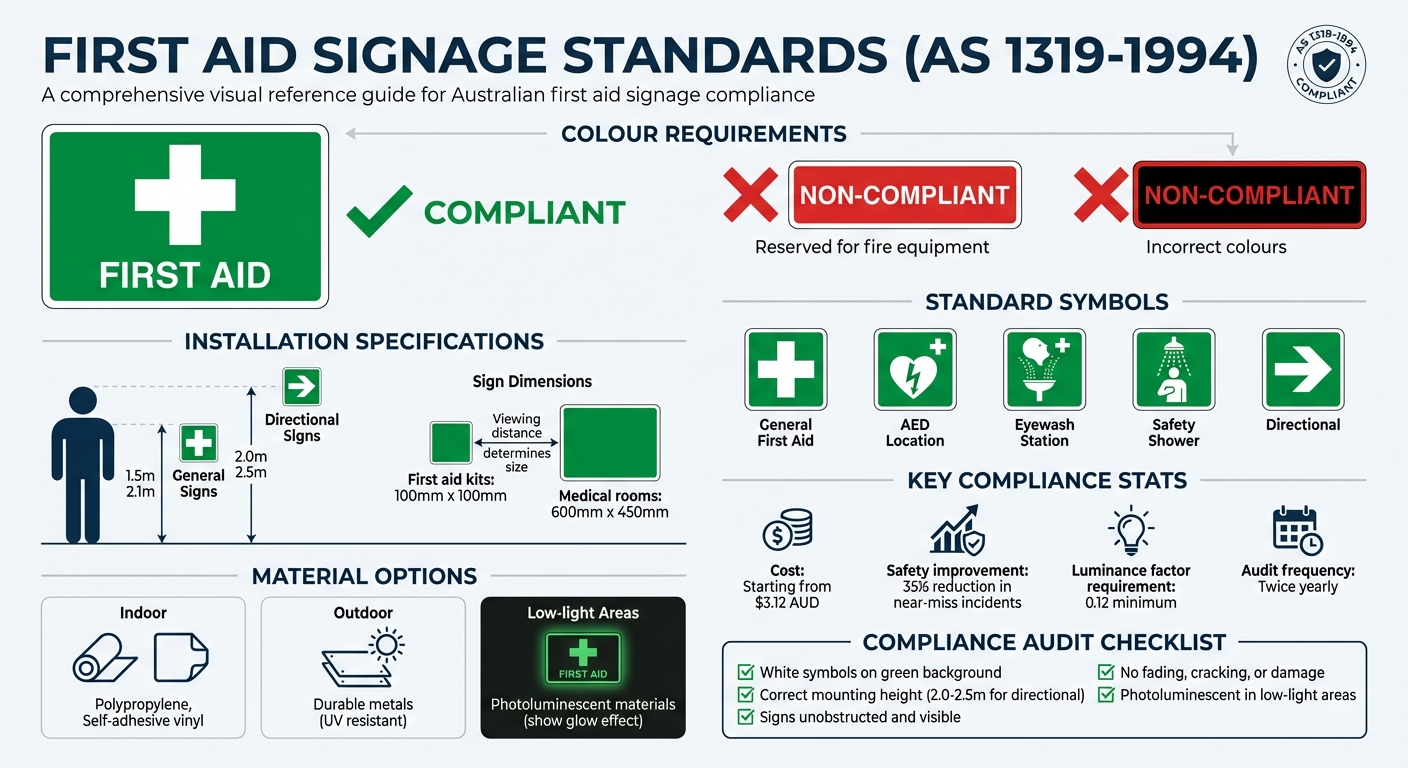
Australian First Aid Sign Standards Quick Reference Guide AS 1319-1994
Colour Requirements for First Aid Signs
Green Background with White Symbol
According to Australian Standard AS 1319-1994, emergency information signs must feature a white symbol or text on a green rectangular or square background [3]. The most familiar example is the white cross on a green background, used to indicate first aid kits, medical rooms, or emergency equipment. If the sign is placed on a green surface, a white border should be added to ensure it stands out clearly [3]. These specifications create uniformity across workplaces and ensure the signs are easily recognisable.
Unlike danger signs, which use red, yellow, and black, or mandatory signs with blue backgrounds, first aid signs use green and white to guide people to assistance rather than warn of hazards.
Why These Colours Are Used
The choice of green and white is deliberate and aligns with AS 1319-1994 guidelines. Green is widely associated with safety, permission, and the concept of "go", making it a logical choice for directing people during an emergency [5]. Research suggests that green signals evoke quicker responses under stress compared to red warnings [2].
"The green colour signals safety and emergency assistance, while the white provides clear contrast for maximum visibility." – Pinnacle Signage [4]
The white symbols ensure the signs remain legible from a distance and under various lighting conditions. AS 1319 also specifies the exact shade of green to maintain visibility across different workplace settings [2].
For areas that may experience power failures or have low lighting, photoluminescent materials are a smart option. These materials absorb ambient light and glow in the dark, ensuring that first aid signs remain visible when they’re needed most [4][5].
With these colour requirements in mind, the next section will focus on how to properly install first aid signs to meet compliance standards.
sbb-itb-9950c92
Requirements for Compliant First Aid Signs
Standard First Aid Symbols
In Australia’s workplaces, the white cross on a green background (ISO 7010 E003) is the go-to symbol for first aid, ensuring it’s easily recognised across diverse environments. Beyond this universal design, some equipment has specific symbols to enhance clarity:
- AED signs: A heart with a lightning bolt, as recommended by the 2008 International Liaison Committee on Resuscitation, makes these lifesaving devices easy to spot during cardiac emergencies.
- Eyewash stations: Depict a person using an eyewash facility.
- Safety showers: Feature a person under a shower head.
To guide people effectively, white arrows are used on directional signs to point towards first aid facilities or equipment [1]. According to AS 1319-1994, these signs should be mounted at a height of 2.0 to 2.5 metres above the floor for maximum visibility [1]. The size of the sign matters too – larger signs are necessary for greater viewing distances. For instance, a sign meant to be seen from 20 metres must be significantly bigger than one intended for just 5 metres. Common dimensions include 100mm x 100mm for first aid kits and 600mm x 450mm for medical rooms [4].
Selecting the right materials is just as important as the design to ensure these signs remain effective.
Materials and Durability Standards
The materials used for first aid signs directly impact their longevity and compliance. For outdoor or industrial settings, durable metals are a must, as they resist UV damage, cracking, and corrosion – key factors in Australia’s harsh conditions. In indoor, climate-controlled spaces like offices, polypropylene or self-adhesive vinyl offers an affordable yet durable option. For areas with low light, photoluminescent materials are essential, as they absorb ambient light and glow in the dark, ensuring visibility during emergencies [4].
"Dealing with suppliers who miss deadlines or deliver products that aren’t fit for harsh Australian conditions is not just a frustration, it’s a compliance risk." – Pinnacle Signage [4]
Regular inspections are crucial to ensure signs remain legible and undamaged. Under AS 1319-1994, illegible signs pose a compliance risk and should be replaced promptly [1]. Fortunately, compliant first aid signs are affordable, with basic options starting from $3.12 to $3.48 [1], making replacements easy and cost-effective.
The Critical First Aid Symbol Everyone Should Recognize
How to Install First Aid Signs in Your Workplace
Getting the installation of first aid signs right is just as important as choosing the correct colours and materials. Proper placement ensures the signs are effective when they’re needed most.
Where to Place First Aid Signs
First aid signs should be installed in areas that are easy to spot and frequently accessed, such as entrances, exits, and near essential equipment like first aid kits, AEDs, eyewash stations, and emergency showers [1][6]. According to AS 1319-1994, the recommended mounting height for these signs is between 2.0 and 2.5 metres above the floor. This height ensures visibility for everyone, even those unfamiliar with the workplace layout [1].
In larger workplaces, it’s smart to include directional signs with arrows at critical points like corridors, stairwells, and intersections to guide people to the nearest first aid facilities [1].
"The Australian Standard AS 1319-1994 recommends that directional signs be placed at a height of 2.0 to 2.5 metres above the floor level for optimal visibility." – The First Aid Shop AU [1]
Before finalising installation, check to ensure signs are visible and not hidden by shelves, machinery, or other obstructions. In poorly lit areas or places prone to power outages, consider using photoluminescent materials so the signs remain visible in the dark [1][6]. Regular checks are essential to identify and replace signs that may have become faded, damaged, or blocked, ensuring ongoing compliance [1].
Once the signs are properly placed, the next step is to find a reliable supplier for compliant and durable signage.
Selecting a Signage Supplier
A trustworthy supplier is key to ensuring your signs meet AS 1319-1994 standards and can endure their environment. Look for suppliers who provide signs with the correct green background and white symbols [6][7]. For example, PXP Safety (https://pxpsafety.com.au) offers Australian-made first aid signs crafted from durable aluminium with UV protection and outdoor-grade printing – perfect for handling Australia’s tough weather conditions.
The choice of materials should align with your workplace environment. For outdoor or industrial areas, weather-resistant options like aluminium or heavy-duty poly are ideal, as they resist cracking, fading, and corrosion over time [6]. For indoor spaces, where conditions are more controlled, cost-effective materials like self-adhesive vinyl or corflute can work well. It’s also helpful to choose a supplier that offers a variety of mounting options, such as pre-drilled holes, magnetic fixtures, or self-adhesive backings, to suit different surfaces [6][7].
If your workplace layout changes or equipment is relocated, update your signage immediately to reflect the new setup [1]. Suppliers offering flexible mounting options can make these updates smoother, helping you maintain compliance while keeping your workplace safe.
Common Errors and How to Fix Them
Following proper installation guidelines is crucial, but avoiding common mistakes with first aid signage is just as important. Missteps can lead to delays in emergency responses and may even result in breaches of WHS regulations. Let’s take a closer look at frequent errors and how to correct them.
Incorrect Colours or Symbols
One frequent issue is the use of incorrect colours, such as red and white or black and red backgrounds, instead of the required green and white. This is problematic because red is reserved for fire equipment and prohibition signs[3].
"Emergency information signs shall comprise a white symbol or worded legend, or both, on a green rectangular sign with white enclosure." – AS 1319 – 1994 Safety signs for the occupational environment[3]
Using non-standard symbols is another mistake that can cause confusion during emergencies. To fix this, replace any non-compliant signage with products that adhere to Australian standards. The green-and-white design isn’t just about compliance – it also creates a psychological association with safety, making it easier for people to locate first aid facilities in high-pressure situations[2].
Beyond design errors, the placement of signs plays a key role in their effectiveness.
Poor Sign Placement
Even the best-designed signs won’t help if they’re not visible. Common placement errors include hiding signs behind machinery, shelving, or doors; installing them at inappropriate heights; or placing them in poorly lit areas[1][4].
"A clearly visible first aid safety sign can mean the difference between a quick response and a delayed one that puts someone’s health at risk." – Pinnacle Signage[4]
To fix placement issues, conduct a thorough inspection of your workplace. Ensure signs are unobstructed and easy to spot. For areas prone to power outages, consider using photoluminescent materials so signs remain visible even in the dark. Regular audits are also essential to identify and replace signs that are faded, damaged, or obscured, ensuring your workplace stays compliant and safe.
Meeting Australian WHS Regulations
First aid signage isn’t just a legal box to tick – it plays a crucial role in keeping workers safe. In Australia, the Work Health and Safety Act 2011 and AS 1319-1994 outline the requirements, while the First Aid in the Workplace Code of Practice offers practical guidance. Although not legally binding, the Code can be used in court to show what a reasonable safety response looks like. This makes it essential to ensure your signs’ green and white design meets these standards and supports effective emergency responses.
"A code [of practice] may be admitted into evidence in any prosecution for breach of work health and safety duties, and a court may have regard to the Code when considering what is known about a risk and what constitutes a reasonable response to that risk."
– M. Eburn, Australian Emergency Law [3]
If your signage doesn’t meet the recognised standards during an incident, it could be used as evidence of failing to take reasonable safety measures. To avoid this, make it a habit to review your signage regularly and ensure it stays compliant.
Compliance Audit Checklist
To maintain compliance, you should audit your signage twice a year or whenever there’s a change in workplace layout or procedures [8]. Here’s what to check during your audit:
- Colour Accuracy: Signs must feature white symbols on a green background.
- Standard Symbols: A white cross is the recognised symbol for first aid.
- Correct Mounting Heights: General signs should be 1.5–2.1 metres above the floor, while directional signs should be mounted between 2.0–2.5 metres.
- Visibility: Ensure signs are readable in both well-lit and low-light conditions.
- Physical Condition: Look for signs of wear like fading, cracking, or peeling.
Assign a WHS officer to oversee these audits and document each inspection. This can be critical if you ever need to demonstrate compliance during legal proceedings [1][8].
For green safety signs to meet AS 1319 standards, they must have a luminance factor of at least 0.12, with specific chromaticity coordinates outlined in the standard [2]. Reputable suppliers can guarantee their products meet these technical requirements.
Consequences of Non-Compliance
Skipping regular audits can lead to serious consequences. If a workplace accident occurs, non-compliant signage can be used as evidence of failing to manage safety risks [3][8]. This could result in hefty penalties under the Work Health and Safety Act.
Beyond the legal risks, poorly maintained or missing signs can delay emergency responses, putting workers’ health and wellbeing at risk. Research shows that workplaces with proper visual management systems, including compliant signage, experience a 35% reduction in near-miss incidents in industrial settings [2]. So, keeping your signage up to standard isn’t just about avoiding fines – it’s about creating a safer workplace for everyone.
Conclusion
Getting first aid signage right takes careful attention to detail. In Australia, the standard is white symbols on a green background. This colour combination is easy to spot, even in high-pressure emergencies, and has been relied upon in workplaces nationwide for its effectiveness [2].
As First Aid Specialist Andy Panes puts it:
"Implementing clear, visible, and well-maintained first aid signage, along with comprehensive employee training, demonstrates a commitment to workplace safety and can save lives in critical situations" [1].
These standards do more than meet legal requirements – they improve response times during emergencies. To ensure compliance, make sure your signs use the correct green and white colour scheme, are mounted at a height of 2.0–2.5 m, and are regularly checked for damage [1]. It’s also essential to keep signs unobstructed and in good condition to maximise visibility when seconds count.
With signs starting at just $3.12 [1], there’s no excuse to cut corners. Whether you’re setting up a new workspace or updating your current signage, prioritising proper first aid signage protects both your employees and your business from avoidable risks.
For reliable and compliant options tailored to Australian workplaces, PXP Safety offers durable, high-quality signage designed with workplace safety in mind.
FAQs
What shade of green is AS 1319 compliant?
Emergency information signs, including those for first aid, must adhere to the AS 1319 standard. This standard specifies a particular shade of green for these signs, ensuring they are easily recognisable and effective in communicating critical information. The design includes a green background with white text or symbols, striking a balance between visibility and compliance.
Do I need photoluminescent first aid signs in my workplace?
First aid signs in Australia must adhere to strict standards: they are required to be green with white symbols or text. These signs also need to follow specific rules regarding size and placement to ensure they are easily visible.
Although photoluminescent (glow-in-the-dark) signs are not explicitly mandated, they are a common choice to maintain visibility during power outages or emergencies. If your workplace has areas with low lighting or requires additional safety measures, these signs could be a wise option. Always refer to the relevant Australian Standards to ensure compliance with specific requirements.
How do I choose the right sign size for the viewing distance?
When it comes to choosing the size of a sign, viewing distance is key. Signs meant for longer distances should be larger to ensure they’re easy to spot, while smaller signs are better suited for close-up visibility. It’s important to match the sign size to your workplace layout so that both text and symbols are clear and easy to read from the distances they’re intended for.
Related Blog Posts
You may also be interested in
FAQs About Workplace Safety Signs in Australia
AS 1319 sign types, placement, materials and maintenance for workplace safety and WHS compliance in Australia.
Restricted Area Signs vs. No Entry Signs
Compare No Entry and Restricted Area signs in Australian workplaces — meanings, design differences and AS 1319 compliance.
How to Spot Workplace Signage Gaps
Audit your workplace for missing, faded or non‑compliant signs under AS 1319 to reduce incidents and avoid WHS fines.
Symbol Design: Global Standards Explained
Explains ISO 7010 and ISO 3864: standard symbols, colours and sizing for clear, language‑free safety signage and AU compliance.
Hazard Sign Visibility Planner
Plan hazard sign placement for max visibility with our free tool. Ensure safety by finding the best spot, height, and angle—try it now!