How to Choose Process Safety Signs for Factories
Choosing the right process safety signs is essential for maintaining a safe workplace in factories. These signs help prevent accidents, guide workers, and ensure compliance with Australian standards (AS 1319-1994). Here’s what you need to know:
- Types of Signs: Prohibition (red), Mandatory (blue), Warning (yellow), Emergency (green), and Fire (red).
- Compliance: Signs must meet AS 1319-1994 standards for design, colour, and durability.
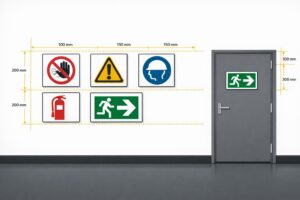
- Placement: Install signs at eye level (1.5–2.1 metres) in visible locations, away from obstructions.
- Materials: Aluminium is ideal for long-term use, while rigid plastics suit areas with moisture or chemicals.
- Maintenance: Inspect signs quarterly to ensure they remain visible, legible, and undamaged.
5 Types of Safety Signs Every Employee Must Know!
sbb-itb-9950c92
Australian Safety Sign Standards (AS 1319-1994)
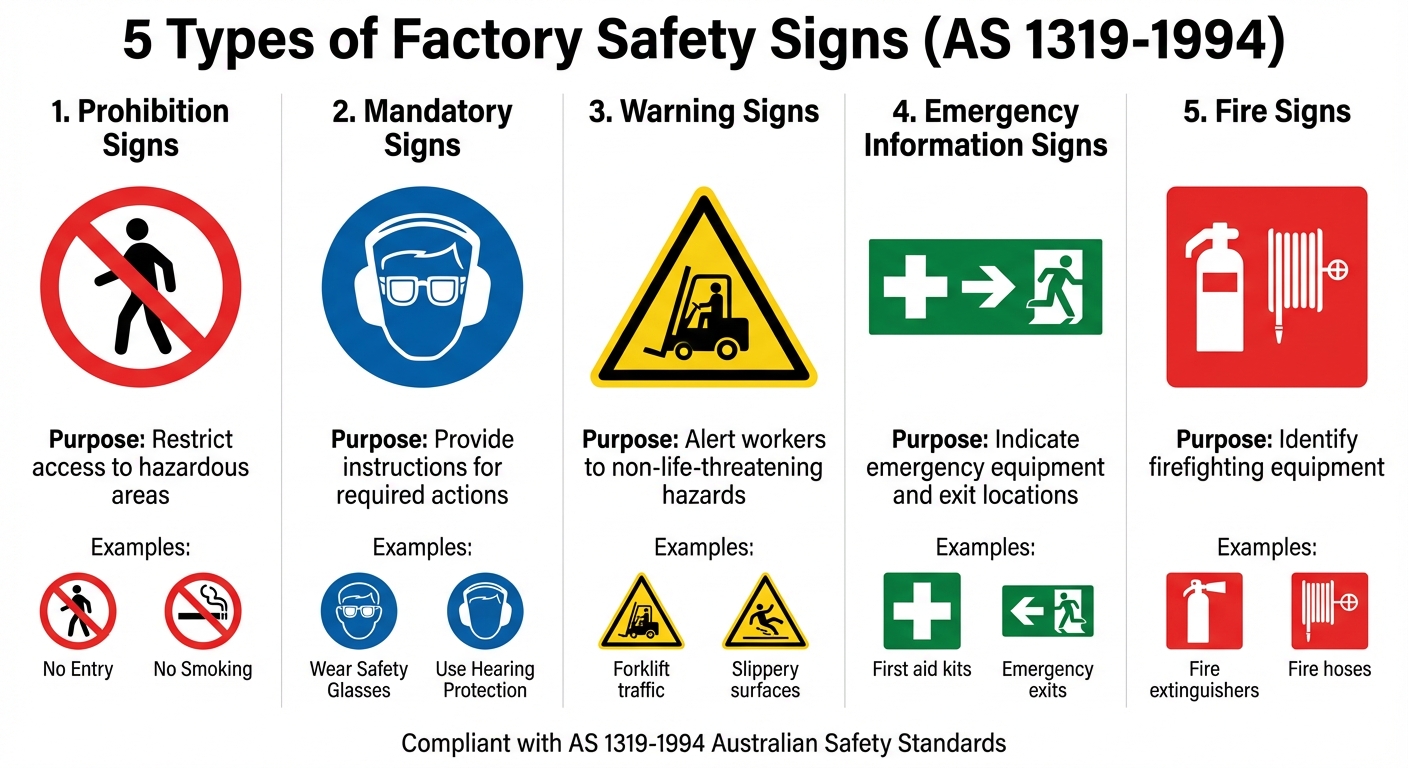
5 Types of Factory Safety Signs Under AS 1319-1994 Standards
The AS 1319-1994 standard governs the design and use of safety signs in Australian workplaces. Published in 1994, it remains the go-to guideline for workplace safety signage [1]. Its purpose is to ensure safety signs are designed to regulate behaviours, warn of hazards, and communicate emergency procedures effectively in occupational settings [1].
For factory managers, adhering to AS 1319-1994 is a legal requirement. This standard ensures every sign – from its colour scheme to its symbols – is crafted for quick hazard recognition. Such consistency is especially vital in manufacturing settings, where swift decisions can prevent accidents. AS 1319-1994 also integrates other standards, including AS 2700 for colour specifications, AS 1744 for lettering, and AS 2342 for symbols [1]. Together, these standards create a cohesive framework for safety communication, categorised as follows.
Safety Sign Categories
AS 1319-1994 divides safety signs into five categories, each designed for specific safety purposes:
- Prohibition signs: These use a red circle with a diagonal crossbar over a black symbol on a white background. Examples include "No Entry" or "No Smoking" signs, which restrict access to hazardous areas.
- Mandatory signs: Featuring a blue circle with white symbols, these signs provide instructions such as "Wear Safety Glasses" or "Use Hearing Protection" near noisy machinery.
- Warning signs: Designed to alert workers to non-life-threatening hazards, these signs have a yellow background with a black triangle. They are often used in areas with forklift traffic or slippery surfaces.
- Emergency information signs: Using a green background with white symbols, these signs indicate the locations of items like first aid kits, emergency exits, or assembly points.
- Fire signs: These have a red background with white symbols and are used to identify fire extinguishers, hoses, and other firefighting equipment.
Compliance Requirements
Meeting AS 1319-1994 standards involves more than just selecting the right sign type. Factories must ensure their signs adhere to specific design and material requirements. This includes:
- Using the exact colour tones specified in AS 2700.
- Following the lettering standards outlined in AS 1744 for optimal readability.
- Incorporating symbols as defined by AS 2342 [1].
For areas with low lighting, signs should include retroreflective materials in line with AS/NZS 1906.1 to ensure visibility [1].
Proper installation is equally important. Signs should be mounted at approximately 1,500 mm (eye level) to maximise visibility. Correct installation not only meets legal obligations but also enhances the overall effectiveness of hazard communication. Non-compliance with AS 1319-1994 can result in penalties, including fines or even business closure, and most importantly, it compromises worker safety.
Conducting a Factory Hazard Assessment
To ensure workplace safety, start by thoroughly inspecting your facility to document and categorise potential hazards. Hazards should be sorted by severity to determine the appropriate signage:
- Immediate hazards (e.g., high voltage equipment or confined spaces) that could cause death or serious injury require danger signs in red, black, and white.
- Potential hazards (e.g., explosive materials or energised equipment) that might lead to serious harm should use warning signs in orange and black.
- Minor to moderate risks (e.g., tripping hazards or forklift traffic zones) call for caution signs in yellow and black [2].
Identifying Potential Hazards
Focus your evaluation on critical areas such as machinery, electrical systems, and chemical storage. Key risks to watch for include:
- Forklift traffic
- Wet or slippery floors
- High voltage zones
- Confined spaces
- Areas requiring specific personal protective equipment (PPE) [2][3]
Additionally, assess for hazardous materials (HAZMAT) and biological risks. These could include toxic agents, carcinogens, corrosives, explosives, or compressed gases, all of which require appropriate chemical safety signs or biohazard labels [3].
Confined spaces, which are large enough for workers to enter but have restricted access and inherent dangers, should be reviewed carefully. Refer to standards like OSHA 29 CFR 1910.145 and ANSI Z535 to ensure your assessment aligns with recognised safety guidelines [2][3].
Once hazards are identified, the next step is to determine where to place signage for maximum effectiveness.
Mapping Sign Locations
Determine optimal locations for safety signs based on the hazards you’ve identified. Consider the minimum safe viewing distance to ensure workers have enough time to notice and respond [4]. For example, signs should be visible from at least 1.5 metres and remain in place during work activities [3].
Key placement tips include:
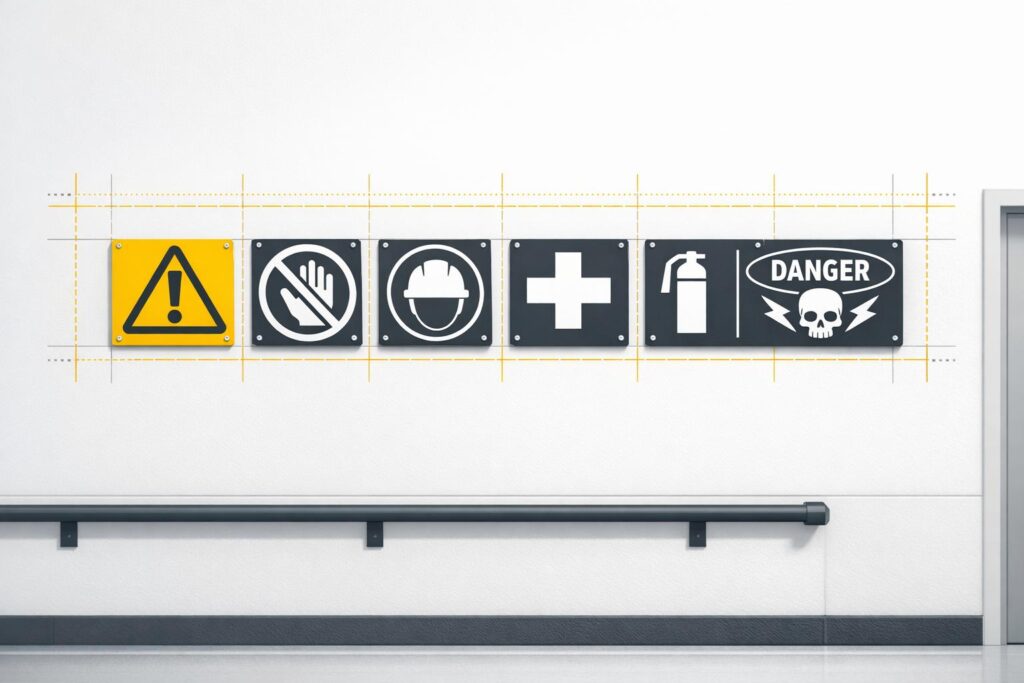
- Position signs at eye level near hazards, at restricted area entrances, and along evacuation routes.
- Avoid placing signs on movable objects or in spots where they might be blocked by equipment or structures.
- Use photoluminescent or retroreflective materials in poorly lit areas to maintain visibility.
- Group related signs (e.g., Hazchem, GHS, PPE requirements) together to deliver a clear, cohesive safety message without overwhelming workers.
For reference, here’s a guide to safe viewing distances and recommended letter heights:
| Minimum Safe Viewing Distance | Min. Letter Height (Good Conditions) | Min. Letter Height (Bad Conditions) |
|---|---|---|
| 1.2 m | 4.1 mm | 8.4 mm |
| 3 m | 10.2 mm | 21.1 mm |
| 6 m | 20.3 mm | 42.7 mm |
| 12 m | 40.6 mm | 85.3 mm |
| 30 m | 101.6 mm | 213.4 mm |
Selecting Durable Safety Signs
Factories need safety signs that can withstand tough environments while remaining readable. Picking the right materials is key to ensuring signs stay effective, safeguard workers, and meet essential Australian safety sign standards. Once hazards are assessed, choosing durable materials and custom features ensures compliance over the long term.
Material Options
All materials must comply with AS 1319-1994 to meet durability and regulatory requirements.
Aluminium is the best choice for permanent signs. According to Safety Signs Australia, "aluminium signs can last for decades without cracking or fading in the sun" [5]. These signs, typically 1.6 mm thick, come with a 7-year warranty, or 10 years for reflective versions with HIP coating [5].
Colorbond steel works well in construction zones. At around 0.55 mm thick, it features a Zincalume core and a pre-painted finish designed to withstand harsh outdoor conditions. Like aluminium, it usually includes a 7-year warranty against fading [5].
In areas prone to oil, chemicals, or moisture, industrial-grade rigid plastics and PVC perform well, especially in washdown environments [6].
For temporary needs, materials like Corflute and PVC Foamboard are suitable. However, these only provide a 1-year fading warranty outdoors, making them less suitable for permanent factory use [5].
Customisation for Specific Needs
Customising signs to suit factory conditions can improve safety and longevity. Features like rounded corners reduce handling injuries, while pre-drilled holes allow secure installation in areas with high vibration [6].
Environmental conditions should guide customisation. Heat-resistant materials are ideal near furnaces, while freezer-grade options maintain visibility and durability in cold storage areas [7]. For outdoor signs or areas with direct sunlight, UV-protective inks help minimise fading [5][6].
Custom text and symbols must adhere to AS 1319-1994 colour standards. For example:
- Danger signs: Red, black, and white
- Warning signs: Orange and black
- Caution signs: Yellow and black [3][8]
Text should be clear and readable from at least 1.5 metres away [3]. For rough or oily surfaces, use signs with strong adhesion to prevent peeling [7]. In high-impact areas or near heavy machinery, materials like stainless steel or brass offer extra durability [7].
Installation and Maintenance
Once you’ve chosen durable signs, the next step is ensuring they’re installed correctly and maintained regularly to keep them effective and compliant. Proper installation and upkeep play a big role in maintaining their visibility and functionality over time.
Correct Installation Practices
For maximum visibility, mount signs at eye level – between 1.5 and 2.1 metres. This simple step can boost visibility by as much as 50% [10].
"Proper planning and site assessment are crucial for ensuring the safest approach to sign installation." – True Install [9]
It’s important to match your mounting method to the surface type. For instance, use grommets or zip ties to secure signs to fences or mesh surfaces [2][12]. In outdoor or bright environments, matte finishes are a smart choice as they minimise glare, making signs easier to read from a distance. Also, avoid cluttering too many signs together, as this can reduce the effectiveness of individual warnings [2][12].
Regular Inspections and Updates
Installing signs correctly is just the start – routine inspections are essential to ensure they remain effective. Aim to inspect your signage at least quarterly, checking for wear, fading, or damage [11]. In harsher environments – like those exposed to chemicals, extreme temperatures, or direct sunlight – more frequent inspections are a good idea. Look out for signs of peeling, rust, faded colours, or text that’s become unreadable, as these can lead to non-compliance issues [12].
When changes occur – such as factory layout adjustments, new machinery, or updated regulations – replace or update signs promptly. For example, evacuation diagrams should reflect accurate ‘YOU ARE HERE’ positions and remain mounted at a height of 1.2 to 1.6 metres. Keeping signs current not only ensures compliance but also supports workplace safety. Missing or outdated signage can lead to accidents or even regulatory fines, so staying proactive with updates is crucial to align with your operations and safety protocols.
Why Choose PXP Safety for Your Factory’s Safety Signs
Compliance and Quality Assurance
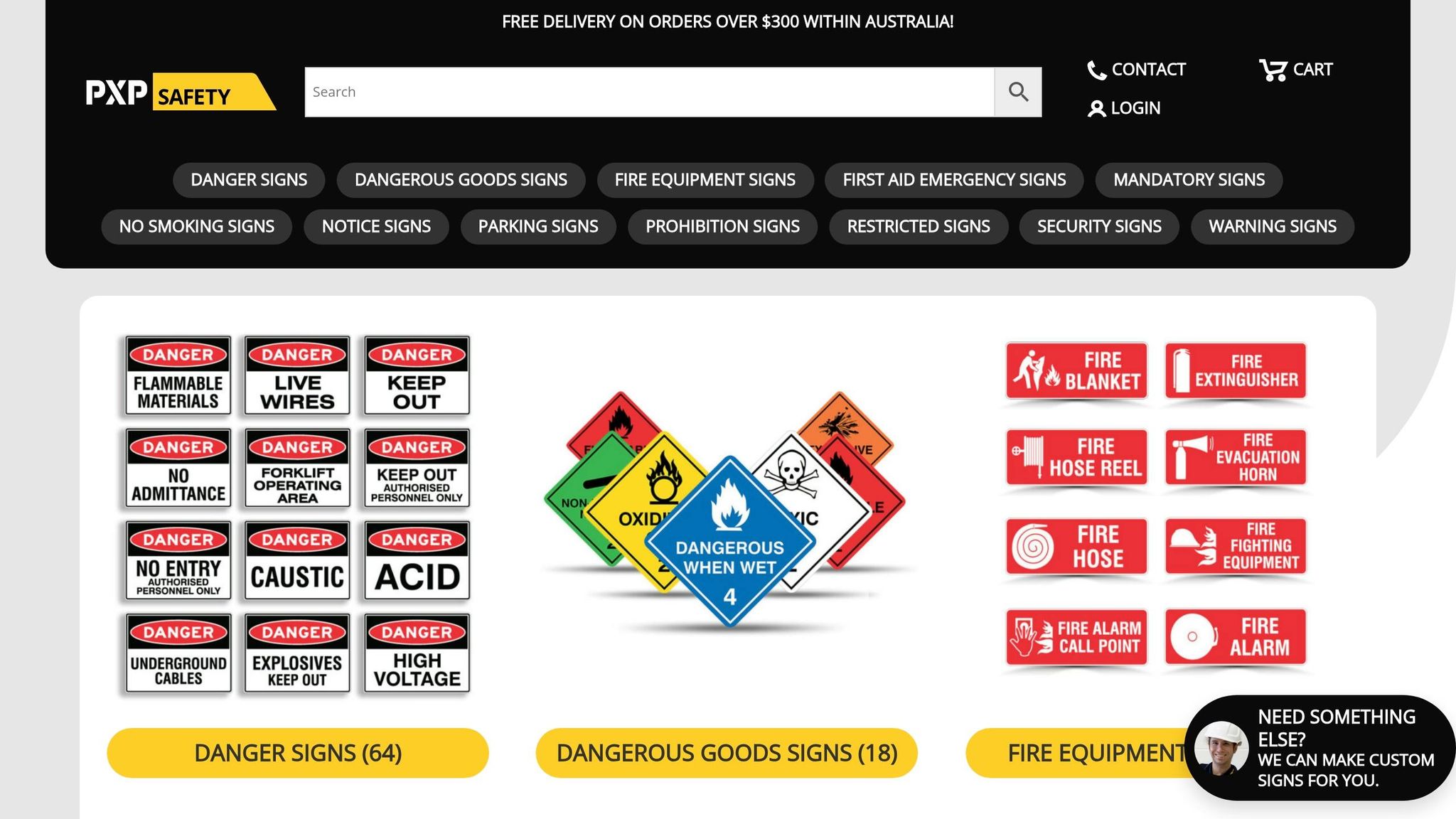
PXP Safety ensures its products align with AS 1319-1994 standards, covering the six key categories: Prohibition, Mandatory, Restriction, Danger, Warning, and Emergency Information [13][15]. These signs use the prescribed symbols and colours, such as red ovals for Danger and blue discs for Mandatory, to maintain consistency and clarity [13][15].
Each sign is made from durable aluminium and printed with UV-protected outdoor-grade materials, ensuring they withstand harsh conditions [14][15]. While AS 1319 doesn’t mandate specific materials, it does require signs to be fit for purpose, and PXP Safety’s construction meets this benchmark. Visibility is also prioritised, with symbols sized at least 15 mm per metre of viewing distance and text at 5 mm per metre [15].
Beyond meeting compliance, PXP Safety offers tailored solutions to address the specific safety needs of your workplace.
Custom Sign Solutions
Every factory has unique hazards, and PXP Safety specialises in creating signs that address those specific risks [2]. Whether it’s warnings for machinery, alerts for chemical hazards, or even niche requirements like drone-free zones, their customised options ensure your signage is both functional and compliant. You can choose from a variety of sizes – ranging from small equipment tags to large-scale signs – and customise messages, symbols, and colours to suit your operational needs.
By combining strict adherence to standards with customisation, PXP Safety simplifies the process of sourcing all your required safety signage.
Available Sign Types
PXP Safety provides a comprehensive range of signs, including danger, fire equipment, first aid emergency, mandatory, prohibition, warning, and parking signs. This extensive selection allows you to source everything you need from one supplier, ensuring consistency across your facility and streamlining the procurement process.
Conclusion
Keeping your factory’s safety signage compliant and long-lasting is essential for creating a safe working environment.
Start by understanding AS 1319-1994, which lays out the standards for signal words, colours, and symbols that workers can quickly and easily recognise. Pair this with a detailed hazard assessment to identify exactly where signage is needed and what risks it must address.
For durability, opt for aluminium signs with UV protection and outdoor-grade printing. These materials hold up well against Australia’s tough manufacturing conditions, including chemical exposure and extreme temperatures. Durable signage prevents fading or damage that could compromise safety and compliance.
Placement and maintenance are just as important as the materials themselves. Signs should be installed at eye level, in well-lit areas, and away from movable objects to ensure visibility. Regular inspections help you catch wear and tear early, so your signage remains effective and compliant over time.
When safety signs are properly placed, maintained, and of high quality, they offer more than just compliance. They provide clear hazard communication, which enhances worker safety, demonstrates legal responsibility, and boosts operational efficiency. The result? Fewer workplace accidents, reduced claims, and lower penalties – all achieved through effective hazard communication and ongoing care.
FAQs
Which safety signs are legally required in my factory?
In Australia, factories are required to display certain safety signs to comply with regulations and maintain workplace safety. These signs, governed by Australian Standard AS 1319-1994, include:
- Emergency exit signs: Clearly mark evacuation routes.
- Fire safety signs: Show the location of fire extinguishers, hoses, and alarms.
- Hazard warning signs: Alert workers to potential dangers, such as slippery floors or high-voltage areas.
- Mandatory signs: Indicate actions that must be taken, like wearing protective gear.
- Prohibition signs: Highlight restricted actions, such as "No Smoking" zones.
These signs play a crucial role in minimising risks by warning of hazards, guiding evacuations, and pointing out safety equipment locations, all while ensuring compliance with legal requirements.
How do I choose the right sign size for the viewing distance?
When choosing the right sign size for a particular viewing distance, it’s important to ensure the sign is both visible and easy to read from that distance. According to Australian Standards, such as AS1319-1994, the size should not only comply with safety regulations but also be readable without strain. Assess the typical viewing distances and refer to visibility guidelines to confirm the sign successfully conveys its message to everyone who needs to see it.
What’s the best sign material for chemicals, heat, or washdown areas?
When dealing with areas exposed to chemicals, heat, or frequent washdowns, it’s crucial to choose materials that can handle these tough conditions. Aluminium and PVC are excellent choices, especially when paired with UV-stable ink, as they can endure moisture, chemical exposure, and abrasion without deteriorating. In washdown zones, signs specifically designed to withstand high-pressure cleaning and elevated temperatures are best. These specialised signs ensure durability and maintain their appearance, resisting peeling or fading even under intense conditions.
Related Blog Posts
You may also be interested in
FAQs About Workplace Safety Signs in Australia
AS 1319 sign types, placement, materials and maintenance for workplace safety and WHS compliance in Australia.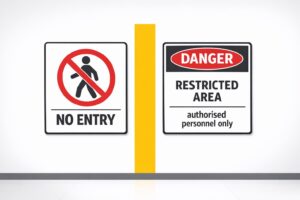
Restricted Area Signs vs. No Entry Signs
Compare No Entry and Restricted Area signs in Australian workplaces — meanings, design differences and AS 1319 compliance.
How to Spot Workplace Signage Gaps
Audit your workplace for missing, faded or non‑compliant signs under AS 1319 to reduce incidents and avoid WHS fines.
Symbol Design: Global Standards Explained
Explains ISO 7010 and ISO 3864: standard symbols, colours and sizing for clear, language‑free safety signage and AU compliance.
Hazard Sign Visibility Planner
Plan hazard sign placement for max visibility with our free tool. Ensure safety by finding the best spot, height, and angle—try it now!