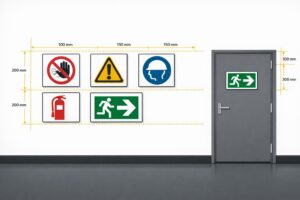
How Digital Platforms Improve Safety Sign Training
Digital platforms are transforming safety sign training in Australian workplaces, making it more engaging, efficient, and compliant with Work Health and Safety (WHS) laws. Traditional methods like printed manuals and essential safety signs often fail to capture workers’ attention, leading to reduced safety awareness. Digital tools solve this by offering interactive, mobile-friendly content, real-time updates, and automated compliance tracking.
Key Advantages of Digital Safety Training:
- Engagement: Short videos, gamified modules, and quizzes help workers retain safety knowledge better than static materials.
- Compliance: Instant updates ensure alignment with WHS regulations, reducing manual record-keeping burdens.
- Cost Efficiency: Saves money on printing and instructor travel while reducing waste.
- Inclusivity: Multi-language support ensures accessibility for Australia’s diverse workforce.
For example, Fishbowl, a hospitality business, achieved over 90% on-time training completion by using “TikTok-style” digital content. Similarly, AGnVET used digital tools to shift focus from hazard identification to fostering continuous safety improvements.
Switching to digital platforms involves assessing current practices, selecting appropriate tools, and training both workers and supervisors. Features like QR codes, automated reminders, and mobile accessibility simplify the process and improve safety outcomes. Digital platforms not only meet compliance requirements but also create a safer, more engaged workplace.
eSafety Training System Overview
sbb-itb-9950c92
Why Switch to Digital Safety Sign Training?
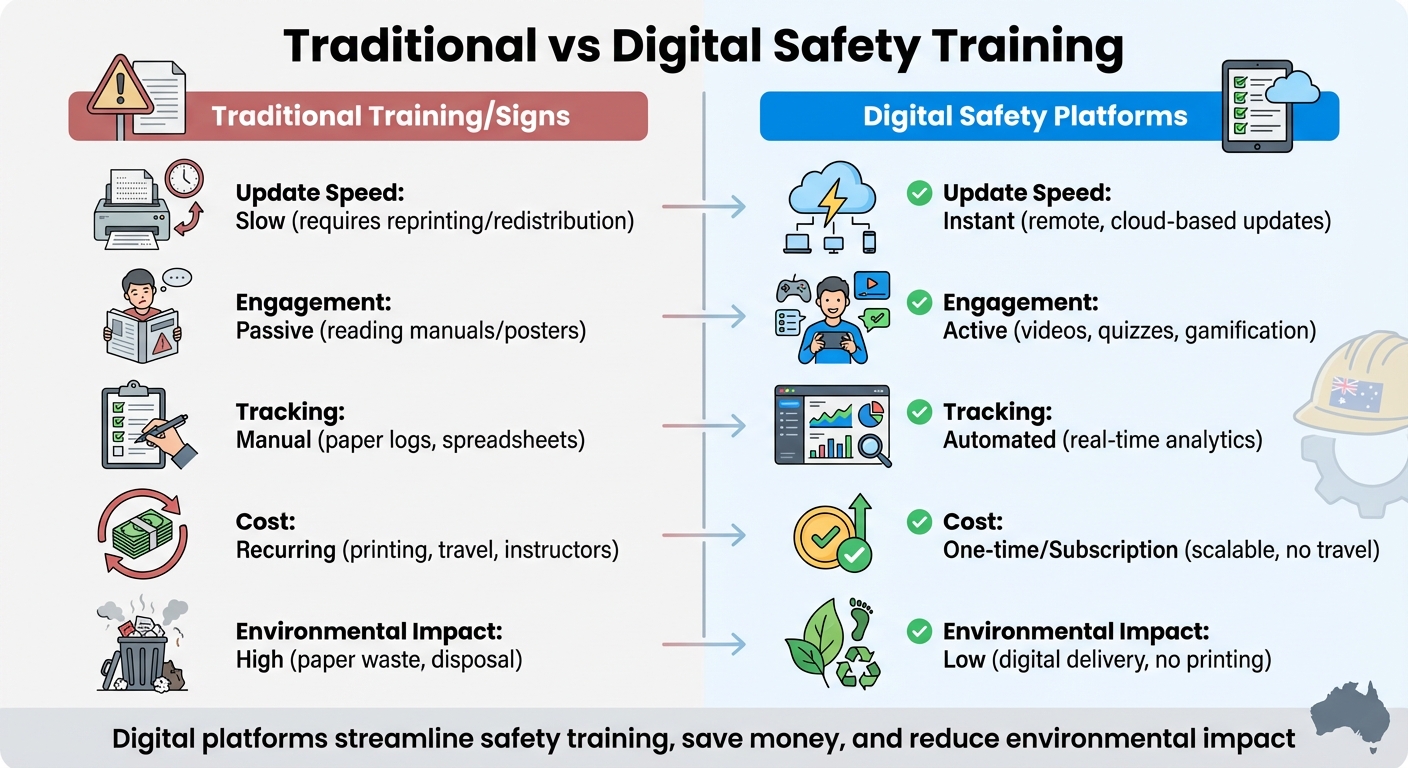
Traditional vs Digital Safety Training Comparison
Across Australian workplaces, digital platforms are replacing printed manuals and static posters. Why? Because they are proving to be far more effective in helping workers learn, retain, and apply safety information. By addressing the limitations of traditional methods, digital tools enhance engagement and ensure safety protocols stick.
Better Engagement and Information Retention
Digital platforms transform learning from passive reading into an active experience. Instead of flipping through manuals, workers interact with quizzes, watch video demonstrations, and even engage with gamified content. This hands-on approach helps embed safety knowledge more effectively than simply reading text.
Take AGnVET, a major agricultural services provider in Australia, as an example. By adopting digital safety technology, they shifted their focus from simply identifying hazards to fostering a culture of ongoing improvement. Rebecca De Pinto, Head of People and Culture, shared:
We chose SafetyCulture to make sure we are not only addressing hazards as they are identified, but also fully investing in safety training, equipment, and technology to drive continuous improvement [9].
When workers see real-life scenarios and potential outcomes through videos, the lessons resonate much more than static bullet points. Digital platforms also incorporate spaced repetition, which reinforces key safety protocols over time, ensuring they stay fresh in workers’ minds [5].
Quick Updates for New Regulations and Workplace Changes
In industries where safety regulations evolve quickly, digital platforms offer a game-changing advantage. They allow updates to be rolled out instantly across all locations, eliminating the time and expense of reprinting and redistributing outdated materials.
Savvy Signs captures this benefit perfectly:
Digital signage allows businesses to update messages instantly, ensuring that employees always have access to the latest safety information without the need for reprinting and reinstallation [1].
This capability is vital for compliance. Under Australia’s model WHS laws, businesses are required to provide workers with up-to-date safety information [4]. With digital systems, any regulatory changes can be reflected on screens, mobile devices, and training modules within minutes, not weeks.
Additionally, these platforms can cater to Australia’s diverse workforce. With the ability to switch between languages instantly, workers who speak English as a second language can access safety instructions in their preferred language [1][3]. This ensures clarity, compliance, and inclusivity, while also saving time and money.
Lower Costs and Reduced Environmental Impact
Switching to digital safety platforms is not just efficient; it’s also economical. Unlike traditional systems, there’s no need for ongoing printing, instructor travel, or disposal of outdated materials [1][8].
For instance, most online health and safety courses take less than an hour to complete while delivering the same level of detail as in-person sessions [8]. This means workers spend less time away from their roles, and businesses save on venue and instructor costs.
The environmental benefits are equally compelling. By eliminating paper-based materials and printed manuals, businesses reduce waste and align with sustainability goals. Digital platforms allow for indefinite updates using the same hardware, making them a far more cost-effective and eco-friendly option than replacing static signs repeatedly.
Here’s a quick comparison of traditional methods versus digital platforms:
| Feature | Traditional Training/Signs | Digital Safety Platforms |
|---|---|---|
| Update Speed | Slow (requires reprinting/redistribution) | Instant (remote, cloud-based updates) |
| Engagement | Passive (reading manuals/posters) | Active (videos, quizzes, gamification) |
| Tracking | Manual (paper logs, spreadsheets) | Automated (real-time analytics) |
| Cost | Recurring (printing, travel, instructors) | One-time/Subscription (scalable, no travel) |
| Environmental Impact | High (paper waste, disposal) | Low (digital delivery, no printing) |
Digital platforms streamline safety training, save money, and reduce environmental impact – all while keeping workers informed and engaged.
How to Set Up Digital Safety Training in Your Workplace
Switching to digital safety training doesn’t have to be overwhelming. With a step-by-step approach, Australian businesses can move from outdated methods to dynamic, interactive platforms that improve compliance and worker safety.
Step 1: Assess Your Current Safety Communication
Start by evaluating what’s already in place. Review recent OHS and wellbeing records to ensure the right training has reached the right people, focusing on actual workplace risks. Make sure existing materials reflect the latest updates to company policies and procedures [4].
Talk to your staff and Health and Safety Representatives (HSRs) to identify any overlooked hazards. Ask workers how they prefer to receive safety information – whether through videos, images, online modules, or in-person sessions [4]. This feedback can help uncover accessibility gaps, especially for workers who speak English as a second language [3].
Observe how employees currently interact with safety signs and materials to establish a baseline for improvement [4]. WorkSafe Victoria highlights the benefits of effective training:
Investing in effective employee training will increase skills, knowledge, productivity, morale and help reduce workplace incidents [4].
With this groundwork in place, you’ll be better positioned to choose digital tools that meet your workplace’s specific needs.
Step 2: Choose the Right Digital Tools
When selecting a digital platform, focus on features that align with your workplace requirements. Mobile-friendly platforms are essential for on-the-go training, especially in industries like construction or manufacturing [5][9]. Look for tools that can convert existing materials like PPTs and PDFs into digital courses, complete with voice narration and automatic translation [5][11].
QR codes can be a game-changer for Australian workplaces. Placing QR codes on safety signs or equipment allows workers to instantly access Safe Work Method Statements (SWMS) or site-specific induction materials. The right platform should also automate refresher training, track licence expiration dates (e.g., White Cards), and store completion certificates in an easily searchable format [5][9][6].
For example, Thermosash Group successfully managed over 1,100 assets using a digital safety platform, achieving a 100% training completion rate. Graham Berry, Group General Manager HSEQ Assurance, shared:
It’s not like we have to drag people into the platform. Our team is motivated to use SafetyCulture because it’s easy, and they’re seeing the benefits of doing so [11].
Choose platforms offering short, engaging modules that fit seamlessly into the workday. Features like gamification (leaderboards, achievements), quizzes, and discussion forums can boost engagement and retention [5][9]. To meet WHS requirements, ensure the platform supports automatic translation or visual aids like diagrams for workers with limited English proficiency [5][3].
Step 3: Train Staff and Supervisors
After selecting your digital tools, focus on training your workforce, including supervisors. Under Australian model WHS laws, a PCBU is responsible for providing necessary safety training and supervision [3][12]. Supervisors should understand their OHS responsibilities, model safe practices, and clearly communicate the importance of safety to their teams [4].
Digital induction checklists are a great way to ensure that basics like emergency exits, first aid stations, and hazard reporting are covered for every new hire [4][7]. QR codes can be placed on safety signs or equipment for instant access to relevant training modules on the job [5]. Set up recurring courses with automatic reminders for certification renewals, ensuring no qualifications lapse [5][9].
Combine digital training with in-person competency checks to confirm that workers can apply their knowledge in real-world situations [5][10]. Keep digital records of all training sessions, as this is a legal requirement for high-risk tasks such as asbestos removal or high-risk construction work [4][3].
Make training accessible and easy to understand. Consider language barriers, literacy levels, and the use of visual aids like diagrams to ensure clarity for all workers [3][12]. By blending digital tools with practical assessments, Australian workplaces can ensure their teams are not just completing training but are genuinely prepared to work safely.
How Australian Workplaces Use Digital Signage
Industries across Australia, including construction, manufacturing, and warehousing, are stepping away from static safety signs and moving toward digital platforms that provide real-time updates and boost worker engagement. These digital solutions are transforming worksites with features like interactive navigation and instant compliance notifications.
Interactive Site Maps
Touch-screen digital maps are changing how supervisors share site-specific details during pre-start meetings. Instead of relying on printed plans that quickly become outdated, supervisors can use interactive displays to show workers where different trades are operating, highlight active permit zones, and flag any changes such as construction closures or rerouted traffic paths [13][2]. CV Media & Signage highlights the benefits:
Utilising touch screen technology, interactive mapping would allow supervisors on site to deliver their pre-start information with visual cues and then have ongoing access to that information throughout the day [2].
For large or multi-level worksites, 360-degree views make navigating complex floor layouts easier. Additionally, QR codes on digital kiosks allow workers to transfer maps directly to their phones, ensuring they have access to updated site details throughout the day [13]. In emergencies, these systems can instantly switch to display evacuation routes and muster points [15]. Placing digital kiosks in high-traffic areas and near hazardous equipment adds another layer of safety, especially with multilingual support that ensures workers from diverse backgrounds can access critical safety information in their preferred language [14].
These interactive maps pave the way for digital platforms to further enhance workplace safety by delivering real-time health and safety updates.
Health and Safety Messages
Digital signage takes safety communication to the next level by presenting essential health and safety messages in engaging formats. Rotating content – such as static images, animations, and videos – helps maintain workers’ attention and ensures safety remains a top priority [2].
For example, digital screens can show video demonstrations of mandatory tasks like proper PPE use, pre-start stretching exercises, and hydration reminders [2]. Bright LED displays ensure visibility in low-light industrial settings, while motion sensors can trigger critical alerts when workers approach dangerous zones [1]. Linking safety reminders to "safe to home" messaging can create an emotional connection, reinforcing the importance of following procedures [2]. Tinnox emphasises this growing trend:
Digital signage is emerging as a key tool for delivering real-time safety messages, alerts, and instructions in industrial environments [14].
Cloud-based systems make it easy for safety managers to update compliance messages across multiple sites from a single location, while maintaining an audit trail of what was displayed for regulatory purposes [16]. This centralised approach ensures consistent messaging and simplifies safety audits.
Compliance Tracking and Record Keeping
Digital signage also streamlines compliance and record-keeping tasks, reducing administrative burdens. QR codes, already used for interactive mapping, play a crucial role in compliance functions. These codes can link to electronic asset registers, tracking the safety status and maintenance records of tools, machinery, and vehicles [6].
Platforms can automatically monitor the validity of licences and insurances, sending reminders for renewal deadlines to avoid lapses. Safe Work Method Statements (SWMS) can also be created, reviewed, and approved on-site using mobile devices, then displayed on digital signage for immediate access by workers [6]. Gregg Forsberg from L Squared highlights this advantage:
By using digital signage, you ensure updated protocols are always on display for your team. Plus, you can digitize audit trails for easier organization and retrieval, helping you stay on top of workplace safety compliance [17].
Interactive kiosks allow employees to access detailed safety procedures, training materials, or even report safety concerns anonymously, with all interactions logged digitally [17][18]. By integrating these tools with digital displays, Australian workplaces can create a transparent and efficient safety strategy, aligning with Safe Work Australia guidelines and state-specific regulations.
How to Measure Digital Safety Training Results
Measuring the effectiveness of your digital safety training is essential. It helps pinpoint what’s working, identifies areas needing improvement, and ensures your investment is helping reduce workplace incidents. Tracking the right data can guide adjustments and improve overall safety outcomes.
Track Performance Metrics
Start by monitoring key metrics like completion rates, attendance, and pass/fail scores. Pair these with safety-related outcomes such as reductions in accidents and near-misses [19][21]. Comparing pre- and post-training assessments is another way to measure immediate learning gains [19][20]. As SafetyCulture explains:
Training evaluation is the systematic process of analysing training programs to ensure that it is delivered effectively and efficiently [20].
Digital platforms simplify this process with built-in reporting and analytics tools that automatically gather and organise data across your workforce [19]. These insights can directly inform adjustments to your training approach, ensuring it remains effective.
Collect Employee Feedback and Run Assessments
While metrics provide quantitative data, direct feedback from employees adds valuable qualitative insights. Use digital surveys, interviews, and focus groups to understand how workers perceive the training and its impact [20][19]. Many effective compliance training programs use short, 15-minute modules to boost engagement and retention [22].
Follow up with quick post-training assessments to reinforce key concepts and confirm understanding [19]. Observing employees a few weeks or months after training can reveal whether new practices have become ingrained habits [4]. As Safety Australia Group notes:
Employee feedback on technology use is crucial. Workers, who are directly engaged with these tools, offer invaluable insights into their effectiveness and areas for improvement [24].
This feedback is vital for refining and improving training content, ensuring it stays relevant and impactful.
Update Content on a Regular Schedule
Keeping your digital training materials up-to-date is non-negotiable. Plan an annual review of your programs, incorporating employee feedback and staying informed about emerging trends to maintain relevance [23]. Any changes to workplace policies, procedures, or safety regulations should be reflected in your training materials immediately [4][12].
Schedule refresher sessions promptly after regulatory updates to ensure compliance. Safe Work Australia underscores the importance of this approach:
Training is an ongoing process and should be regularly monitored and evaluated [3].
Regular site walk-throughs and checking safety signs can also help verify that digital training aligns with on-the-ground operations [12]. Keeping detailed records of completed training and certification expiry dates allows you to automate reminders and ensure everyone stays up-to-date [21][25].
Conclusion
Digital platforms provide a dynamic and efficient way to deliver safety training that’s both engaging and accessible. Unlike static signs that require costly reprinting, digital platforms let you update safety messages instantly whenever regulations change. With features such as automated audit trails and centralised management, these tools make it easier to track training completion and maintain consistency across multiple locations.
Take Graphite Energy as an example – they successfully passed their ISO 45001 audit using digital compliance records[26]. This highlights how digital methods not only meet regulatory requirements but also grab attention more effectively than traditional posters, ensuring every worker receives vital safety information.
Implementing digital safety tools is straightforward. Start with a risk assessment to pinpoint where digital signage can make the most impact. Then, choose a cloud-based platform that aligns with your budget and specific needs. Many platforms offer free options for smaller teams, while more comprehensive solutions start at around $70 per month.
Digital tools don’t replace traditional safety measures – they enhance them. By integrating QR codes that link physical signs to detailed training modules, offering content in multiple languages for diverse teams, and automating refresher training, you can ensure your workforce always has access to up-to-date and clear safety information.
Take a moment to review your current safety communication strategies. Where could digital tools increase engagement and efficiency? This technology is already proving its worth in Australian workplaces. When paired with PXP Safety’s compliant signage, it creates a robust and comprehensive approach to workplace safety. By adopting digital training, Australian businesses can achieve both regulatory compliance and improved safety outcomes.
FAQs
How do digital platforms help workplaces comply with WHS regulations?
Digital platforms make it easier for businesses to stay on top of WHS regulations by incorporating the latest Australian legislation directly into their systems. This means that safety signs, inductions, and risk-control documents are always created using up-to-date, compliant templates. They also offer a fully searchable audit trail, which helps workplaces meet reporting obligations set by Safe Work Australia.
With cloud-based systems, users are automatically notified of legislative updates and alerted when signs or procedures need revisions. These platforms can also connect safety signage with other tools, such as induction records and licence checks, creating a more streamlined approach. Mobile apps add another layer of convenience, allowing workers to upload inspections and photos on the go, while automated reminders help teams stay on top of renewals and any regulatory updates.
By swapping out old-fashioned paper signs for digital ones that can be updated instantly, these platforms ensure workplaces are always aligned with the latest WHS requirements. This approach not only reduces risks but also helps maintain a safer, more compliant work environment.
What are the cost advantages of using digital platforms for safety training?
Switching to digital platforms for safety training offers a practical way to cut ongoing expenses. By moving away from printed materials, you can avoid the constant costs of reprinting and replacing physical resources. A one-time investment in digital tools allows updates to be made remotely, saving both time and money while reducing reliance on paper.
Digital solutions also simplify compliance management. They help ensure your workplace consistently meets safety standards without the repeated costs tied to traditional methods.
How do digital safety tools support a diverse workforce?
Digital safety tools are designed to support employees from various backgrounds by addressing differences in language, literacy, and accessibility. For instance, they can present safety messages in multiple languages, incorporate universal pictograms, and include features like high-contrast text or audible prompts to assist workers with visual or hearing impairments. These features ensure that critical safety information is clear and accessible to everyone.
Another advantage of these tools is their flexibility in delivering information. Workers can access safety updates through screens, tablets, or smartphones, while content formats such as videos, animations, or step-by-step guides cater to different learning preferences. Updates can be rolled out instantly and synchronised across devices, ensuring both on-site and remote workers stay informed about the latest safety protocols.
In Australian workplaces, PXP Safety takes this a step further by integrating these features into their durable aluminium signage. Their customisable, multilingual designs comply with Safe Work Australia standards, combining real-time updates with inclusive design to create safer and more accessible environments for all employees.
Related Blog Posts
You may also be interested in
FAQs About Workplace Safety Signs in Australia
AS 1319 sign types, placement, materials and maintenance for workplace safety and WHS compliance in Australia.
Restricted Area Signs vs. No Entry Signs
Compare No Entry and Restricted Area signs in Australian workplaces — meanings, design differences and AS 1319 compliance.
How to Spot Workplace Signage Gaps
Audit your workplace for missing, faded or non‑compliant signs under AS 1319 to reduce incidents and avoid WHS fines.
Symbol Design: Global Standards Explained
Explains ISO 7010 and ISO 3864: standard symbols, colours and sizing for clear, language‑free safety signage and AU compliance.
Hazard Sign Visibility Planner
Plan hazard sign placement for max visibility with our free tool. Ensure safety by finding the best spot, height, and angle—try it now!