Workplace Inspection: Spot Missing Safety Signs
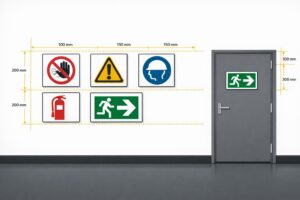
Missing safety signs in workplaces can lead to accidents, injuries, and legal penalties. Regular inspections are essential to ensure compliance with Australian safety standards, particularly AS 1319-1994, which governs the design and placement of safety signage. These signs warn of hazards, provide emergency information, and guide workers on required actions. Non-compliance can result in fines up to $23,100 for companies in NSW.
Here’s what you need to know:
- Inspect signs at least twice a year or after workplace changes.
- Focus on high-risk areas like fire exits, hazardous zones, and machinery.
- Ensure signs are visible, undamaged, and meet size and placement standards.
- Involve staff in monitoring and reporting issues.
- Use durable materials for outdoor signs to withstand Australia’s harsh conditions.
Address missing or damaged signs immediately, prioritising high-risk hazards like fire exits and chemical zones. Regular maintenance, clear reporting processes, and investing in quality signage will improve workplace safety and compliance.
Inspecting your workplace 101
Safety Signage Requirements in Australia
7 Types of Australian Safety Signs and Their Requirements
Workplace safety signage in Australia is governed by strict standards to ensure compliance and protect workers. The key standard is AS 1319-1994, which outlines the design and usage of safety signs across various work environments, from warehouses to construction sites and offices [5][6]. This standard ensures that colours, symbols, and messages are uniform and easily understood, making workplaces safer and more efficient. Below, we’ll break down the different types of safety signs and their legal requirements.
The Work Health and Safety (WHS) Act also plays a significant role, requiring businesses to display clear hazard and mandatory signs [1]. This legislation has contributed to a reduction in work-related injuries and illnesses, saving an estimated $28.6 billion annually [7]. However, the statistics underline the ongoing need for proper signage: in 2025, there were 167 preliminary work-related fatalities, and 146,700 serious workers’ compensation claims were recorded in 2023-24 [7]. These numbers highlight how critical compliant and visible signage is to workplace safety.
Types of Safety Signs
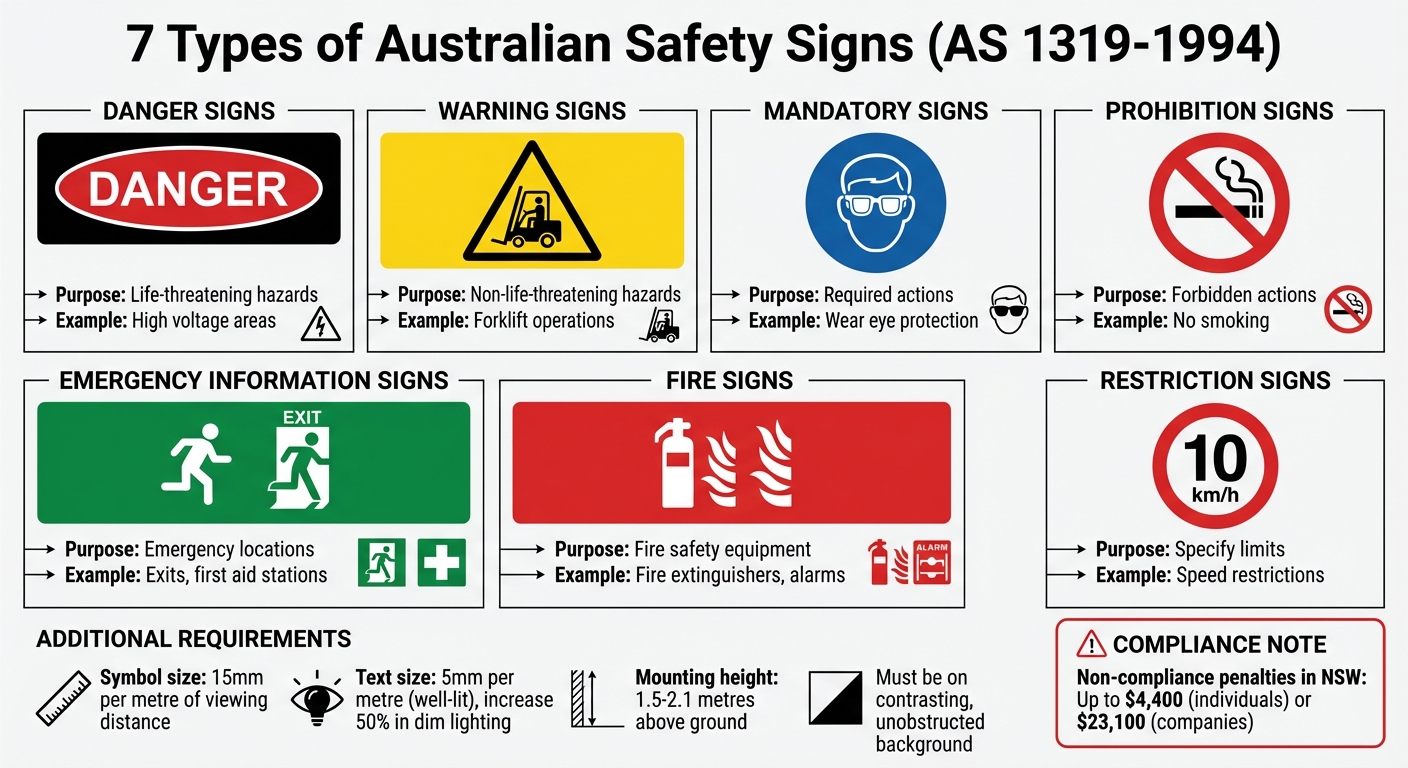
In Australia, safety signs are divided into seven main categories, each serving a specific purpose:
- Danger signs: These feature white text on a red oval set within a black rectangle. They warn of life-threatening hazards, such as high voltage areas [6].
- Warning signs: Using a black triangle on a yellow background, these alert workers to non-life-threatening hazards like forklift operations [6].
- Mandatory signs: These display white pictographs inside blue circles, instructing workers on required actions, such as wearing eye protection [6].
- Prohibition signs: These feature a red circle with a diagonal slash to indicate forbidden actions, such as no smoking [6].
- Emergency information signs: With white text or icons on a green background, these mark exits, first aid stations, and safety equipment locations [6].
- Fire signs: These use white text or pictographs on a red background to identify fire extinguishers and alarms [6].
- Restriction signs: These display a red circle without a slash to specify limits, such as speed restrictions [6].
Each category is designed to communicate essential safety information at a glance, helping to minimise risks in the workplace.
Legal Requirements and Compliance
Meeting the design standards of AS 1319-1994 is just one part of compliance. Signs must also be installed correctly and remain highly visible. This is a legal obligation, enforced by state and territory regulators such as WorkSafe ACT and SafeWork NSW [7][1].
To ensure visibility, symbols on signs must measure 15mm per metre of viewing distance, while uppercase text should be at least 5mm per metre in well-lit conditions [6]. In dim lighting, these dimensions need to increase by 50% [6]. Signs should be mounted between 1.5 and 2.1 metres above ground level on a contrasting and unobstructed background [6][1].
Non-compliance can lead to significant penalties. For instance, in New South Wales, failing to meet WHS signage requirements on construction sites can result in fines of up to $4,400 for individuals or $23,100 for companies [8]. Beyond avoiding fines, proper signage reflects a commitment to workplace safety and reduces the risk of legal breaches under the WHS Act [1]. Inspectors rely on these standards to identify missing or non-compliant signs, making adherence essential for any business.
How to Inspect Your Workplace for Missing Safety Signs
Inspecting your workplace for missing safety signs is crucial to maintaining a safe environment. A thorough inspection involves three main steps: planning your inspection, examining high-risk areas, and documenting your findings to ensure proper follow-up actions.
Planning Your Inspection
Start by reviewing your previous inspection report to confirm that any previously identified issues have been resolved. Create a detailed site map that highlights all the locations where safety signs should be present. This map will serve as a guide during your inspection, making it easier to identify any gaps.
Inspections should be carried out at least twice a year or whenever there are changes to the workplace layout, machinery, or procedures [1]. Ideally, your inspection team should include a supervisor and a worker, with additional input from health and safety representatives (HSRs) or WHS practitioners. Tailor your inspection checklist to address the specific hazards present in your workplace. During the walk-through, observe how tasks are performed and engage with workers to identify any missing signs or safety concerns they may have.
Once your plan is in place, focus on high-risk zones where missing safety signs could have the most severe consequences.
Checking High-Risk Areas
High-risk areas require extra attention, as missing signs here can significantly increase the likelihood of accidents. Concentrate on zones such as fire exits, electrical panels, areas with hazardous materials, machinery zones, and traffic routes. Ensure that all signs in these areas are clearly visible, unobstructed, and compliant with AS 1319 standards.
Check that signs are mounted at an appropriate height – between 1.5 and 2.1 metres – and inspect them for issues like fading, physical damage, or obstructions (e.g., stacked boxes). In poorly lit areas, confirm that the signs are reflective or made from photoluminescent materials to ensure they remain visible during power outages.
Make a note of any problems immediately so they can be addressed without delay.
Documenting Your Findings
Use a standardised checklist to record your findings. For each issue, specify the location, describe the problem (e.g., faded text, obstructed view, or incorrect symbols), and outline the corrective action needed. Including photos as visual evidence can be helpful for clarity and follow-up.
Organise your documentation by sign type, such as:
- Warning signs (yellow/black triangles)
- Mandatory signs (e.g., PPE requirements)
- Prohibition signs (red circle/slash)
- Emergency signs (e.g., fire exits, extinguishers)
For missing or damaged signs, note the likely cause, such as environmental exposure or accidental damage, to help prevent similar issues in the future. Share your findings with workers and ensure health and safety representatives or safety committees have access to the reports. Address any serious hazards or missing critical safety signs immediately, as this is not only a safety priority but also a legal requirement.
Checking the Condition of Existing Signs
Regularly inspecting existing signs is crucial to ensure they remain clear and effective. Faded, damaged, or obstructed signs can pose serious safety risks.
What to Look for When Assessing Signs
When evaluating signs, start by checking their legibility. Replace any that have faded print or colours that no longer align with the AS 1319 standards. Signs showing physical damage – such as cracks, peeling, or structural issues – should be replaced immediately. This is especially true for materials like corflute or polypropylene, which are more prone to wear and tear [1][10].
Obstructions are another common problem. A sign hidden behind machinery, stacked boxes, or workplace clutter is as good as invisible, no matter its condition [1][2]. Ensure signs are clearly visible and mounted at the appropriate height: 1.5–2.1 metres for most signs, and 2 metres for fire extinguisher signage [1][10].
Also, check for outdated information. Signs that reference old symbols, retired machinery, or obsolete procedures should be removed or updated [1]. In poorly lit areas, ensure signs are made from photoluminescent or reflective materials to maintain visibility during power outages or night shifts [1]. These routine assessments provide a foundation for understanding how environmental factors can further degrade signs over time.
How Environment Affects Sign Quality
Environmental conditions significantly influence how quickly signs deteriorate. Outdoor signs, especially in Australia’s harsh UV climate, are particularly vulnerable. Prolonged sun exposure fades colours and can make materials brittle [1]. In industrial settings, exposure to chemicals can cause corrosion, while high-traffic areas can lead to accelerated wear [1][11].
Winter weather also poses challenges. Snow and ice may obscure outdoor signs, while overgrown vegetation can block visibility entirely if not managed [11]. For workplaces with outdoor signage or those in extreme environments, inspections should happen more frequently than the typical twice-yearly checks [1]. Opting for durable materials, such as aluminium paired with UV-resistant inks, can extend the lifespan of signs. However, even the most resilient materials will eventually require replacement in challenging conditions [1]. Being mindful of environmental impacts helps ensure timely maintenance and replacement.
sbb-itb-9950c92
Fixing Missing and Damaged Sign Issues
Different types of sign issues demand varying levels of urgency.
Ranking Issues by Risk Level
Serious hazards must be addressed immediately – this is a legal requirement [2]. Once issues are identified, take action based on the level of risk. For instance, missing signs in high-risk areas such as high-voltage zones, fire exits, or chemical storage locations demand immediate attention. As per Comcare, "If you identify an immediate danger during a workplace inspection, immediately inform management. Depending on the level of risk, work may need to stop until the risk is eliminated or adequate controls are implemented" [3].
For hazards that aren’t immediate, use a risk management strategy to prioritise. Fire and emergency signage, along with warnings for dangers like overhead hazards or hazardous chemicals, should be at the top of your list. Signs indicating mandatory PPE requirements fall into the medium-to-high priority range, while general information signs – like office directions – can be addressed later [1].
| Sign Category | Priority Level | Examples of Signs |
|---|---|---|
| Fire & Emergency | High | Fire exits, extinguishers, assembly points |
| Warning/Danger | High | High voltage, chemicals, overhead hazards |
| Mandatory | Medium/High | PPE requirements (eye protection, helmets) |
| Prohibition | Medium | No Smoking, Restricted Access |
| First Aid | Medium | First aid station location, AED |
| Traffic Control | Medium | Speed limits, pedestrian zones |
| General Info | Low | Office directions, accessibility/Braille |
Document every issue and assign responsibility for resolving each one. For signs that require custom orders or can’t be replaced immediately, ensure regular follow-ups until the installation is completed [2].
Once priorities are set, the next step is finding compliant replacement signage.
Sourcing Replacement and Custom Signs
Replacement signage must meet Australian Standard AS 1319, which specifies requirements for colours, symbols, and sizing [1][12]. When choosing new signs, consider the environment where they’ll be installed. For outdoor settings exposed to Australia’s intense sunlight, weather-resistant aluminium is a durable choice. For high-traffic indoor areas, polypropylene is a practical option. In locations with low lighting, photoluminescent materials ensure visibility during power outages [1].
While standard signs meet most workplace needs, some situations may call for custom solutions. Custom signs must still follow AS 1319 guidelines for headers and colour schemes [12]. PXP Safety (https://pxpsafety.com.au) provides both standard and custom safety signage designed for Australian conditions. Their products feature durable aluminium bases, UV-protective film, and outdoor-grade printing. Their custom services allow businesses to address unique site hazards while staying compliant with safety standards.
When installing replacement signage, ensure proper mounting and that the signs are clearly visible and unobstructed [1]. Taking swift and thorough action to address safety signage not only safeguards employees but also contributes to smoother operations.
Keeping Signs in Good Condition Between Inspections
Safety signs, with a typical lifespan of 3–7 years, can fade or suffer damage from exposure to the elements. This not only increases safety risks but can also lead to non-compliance with regulations [14][1]. Regular maintenance between formal bi-annual inspections is crucial to avoid these issues.
Setting Up Regular Check Schedules
To maintain signage effectively, establish a clear schedule for inspections. This could include:
- Daily pre-shift checks: Performed by operators to catch immediate issues.
- Weekly checklist inspections: Overseen by supervisors and health and safety representatives.
- Monthly walk-throughs: Conducted by departmental managers to ensure broader oversight [13].
Additionally, conduct event-driven inspections after significant workplace changes, such as new machinery installations, layout modifications, or near-miss incidents [1][2]. When issues arise, investigate whether they stem from environmental wear or accidental damage to prevent similar problems in the future [2][4]. Assign a dedicated officer to log signage issues and ensure bi-annual audits are consistently scheduled [1].
These routine checks are most effective when paired with active monitoring by staff members.
Getting Staff Involved in Sign Monitoring
Staff involvement plays a key role in maintaining signage. Workers are often the first to notice signs that are damaged or missing. Encourage them to inspect signs during pre-shift routines and report any concerns immediately, rather than waiting for formal inspections [13].
To support this, establish clear hazard reporting processes and communicate them during toolbox talks, production meetings, or team discussions [9]. When employees see their reports lead to quick corrective actions, they’re more likely to stay engaged in monitoring efforts. This collaborative approach ensures that signage remains in top condition, enhancing both safety and compliance.
Conclusion
Taking a structured approach is key when dealing with missing safety signs. Start by creating a detailed site map and conducting a comprehensive walk-through to check for signs that are damaged, obstructed, or illegible. Record the exact locations and specific issues to streamline the process of making corrections [1]. Make sure to invest in replacements that are durable and designed to withstand harsh weather conditions [1].
Pay particular attention to high-risk areas, such as high-voltage zones and emergency exits, as these require immediate action [9]. Involve your staff in the monitoring process – they’re often the first to notice problems and can provide helpful feedback during inspections [2][9].
For workplaces in Australia, providers like PXP Safety offer aluminium safety signs with UV-resistant, outdoor-grade printing to handle tough environments. By combining regular audits with active staff participation, you can ensure your workplace stays both safe and compliant.
FAQs
What are the consequences of not complying with safety signage standards in Australia?
Non-compliance with safety signage standards in Australia carries hefty penalties. Since June 2022, on-the-spot fines have been raised to $2,000. For breaches causing serious harm, the maximum fines will climb to $50,000 by June 2024. These measures are designed to push workplaces to prioritise safety and adhere to regulations, ensuring the well-being of both workers and visitors.
How often should workplace safety signs be checked and maintained?
Workplace safety signs need to be checked every three months to make sure they remain clear, intact, and meet Australian Standards. These routine inspections are key to spotting problems like fading, physical damage, or missing signs that could put workplace safety at risk.
When carrying out inspections, pay close attention to high-traffic zones, outdoor areas exposed to tough weather conditions, and spots where equipment is used regularly. If any signs are damaged or no longer effective, replace or fix them immediately to uphold a safe and compliant work environment.
What are the best materials for outdoor safety signs in Australia’s tough climate?
When it comes to outdoor safety signs that can handle Australia’s tough climate, it’s crucial to opt for sturdy, weatherproof materials. Materials like aluminium composite panels (ACM) and premium outdoor-grade vinyl are excellent choices. These are specifically designed to endure extreme sunlight, heavy rain, high humidity, and other challenging weather conditions, ensuring they stay effective and visible for the long haul.
It’s also important to look for features such as UV protection and fade-resistant printing. These additions help maintain the sign’s clarity and ensure it remains compliant with safety standards over time.
Related Blog Posts
You may also be interested in
FAQs About Workplace Safety Signs in Australia
AS 1319 sign types, placement, materials and maintenance for workplace safety and WHS compliance in Australia.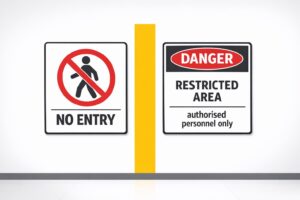
Restricted Area Signs vs. No Entry Signs
Compare No Entry and Restricted Area signs in Australian workplaces — meanings, design differences and AS 1319 compliance.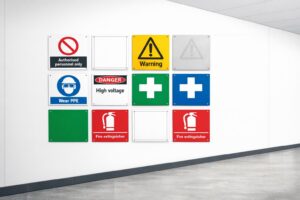
How to Spot Workplace Signage Gaps
Audit your workplace for missing, faded or non‑compliant signs under AS 1319 to reduce incidents and avoid WHS fines.
Symbol Design: Global Standards Explained
Explains ISO 7010 and ISO 3864: standard symbols, colours and sizing for clear, language‑free safety signage and AU compliance.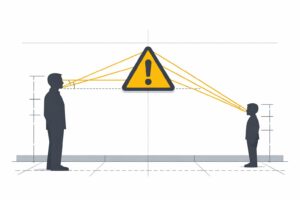
Hazard Sign Visibility Planner
Plan hazard sign placement for max visibility with our free tool. Ensure safety by finding the best spot, height, and angle—try it now!