AS 1319 Compliance: Safety Signage Audits
Failing to comply with AS 1319-1994 can cost businesses over $100,000 in fines. This Australian Standard regulates workplace safety signage, ensuring clear communication of hazards, mandatory actions, and emergency information. Regular audits are essential to maintain compliance and protect workers.
Here’s what you need to know:
- AS 1319 divides safety signs into five categories: Prohibition, Mandatory, Warning, Danger, and Emergency Information.
- Design rules include specific colours, shapes, and symbols to ensure quick recognition, even under pressure.
- Non-compliance risks include legal penalties, stop-work orders, and invalidated insurance claims.
- Conduct audits twice a year to check for faded, blocked, or outdated signs and ensure placement adheres to standards.
- Proper signage can reduce head injuries by 60% and near-miss incidents by 35%.
To stay compliant, inspect your site, verify sign types and visibility, assess condition, and replace non-compliant signage. Regular reviews and staff training are also critical. Don’t risk safety or penalties – keep your workplace signage up to standard.
Safety Signage
AS 1319 Requirements Explained
AS 1319 Safety Sign Categories: Colours, Shapes and Symbols Guide
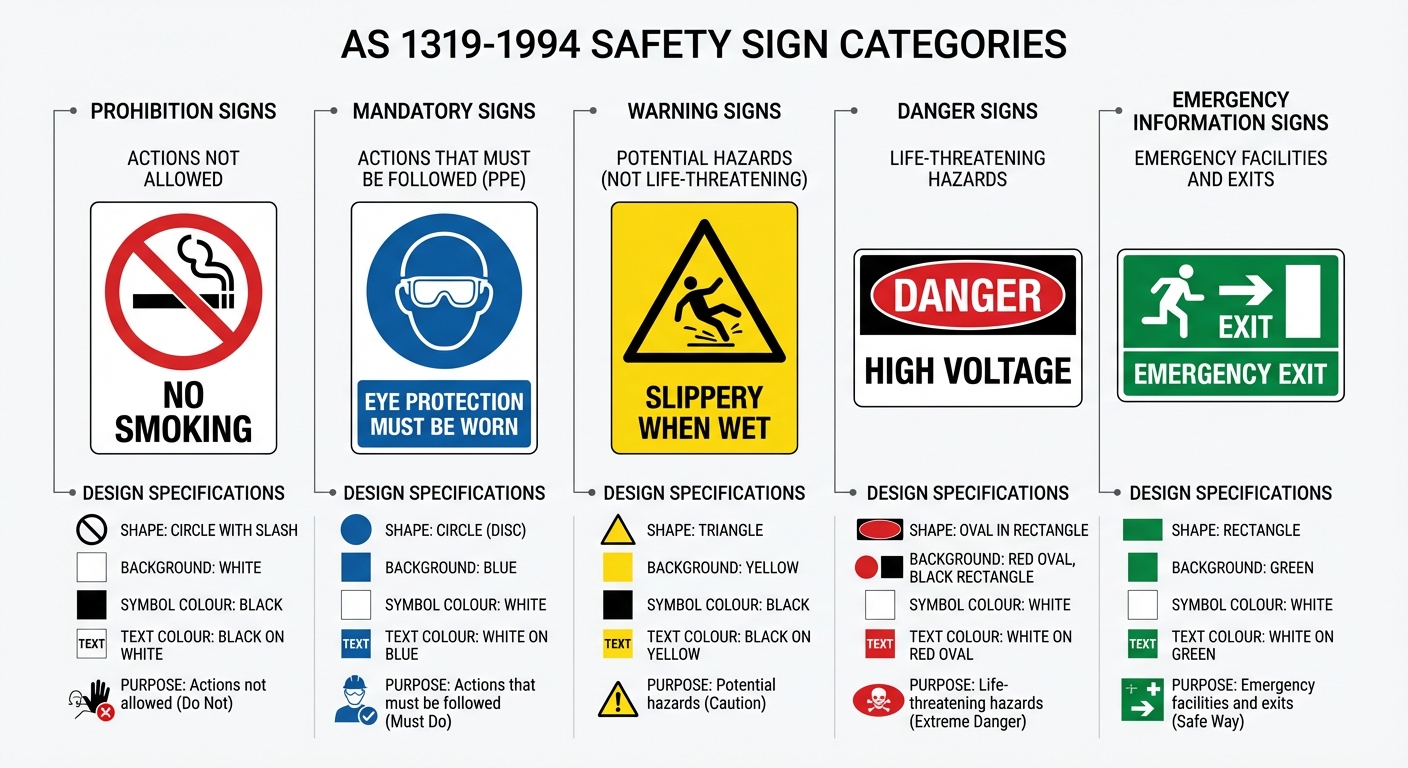
AS 1319-1994 divides safety signs into five key categories, each with specific design rules to ensure they are instantly recognisable. These rules include defined colour schemes, shapes, and symbols, making signs easy to understand, even for those with limited literacy or language barriers. Below is a breakdown of the sign categories outlined by AS 1319 and their specific purposes.
The 5 Sign Categories and Their Roles
Prohibition Signs indicate actions that are not allowed in certain areas. These signs use a red circle with a diagonal slash over a black symbol on a white background. Examples include No Smoking and No Entry signs.
Mandatory Signs are used to communicate actions that must be followed, often related to personal protective equipment (PPE). They feature a blue circle with a white symbol and typically include the word "MUST" in the text, such as Eye Protection Must Be Worn.
Warning Signs (also known as Caution signs) are designed to alert workers to potential hazards that, while not life-threatening, still require attention. They consist of a yellow background with a black triangle and symbol or text. Common examples include Slippery When Wet or signs indicating active machinery like forklifts.
Danger Signs are reserved for situations where the risk is likely to be life-threatening.
"AS 1319 specifies that these signs are to be used where conditions are likely to be life threatening." – Australian Safety Signs
These signs feature the word "DANGER" in white letters on a red oval, set inside a black rectangle. They are often used in high-voltage areas or confined spaces.
Emergency Information Signs help workers locate or navigate to emergency facilities such as exits, first aid stations, or fire safety equipment. These signs use a green rectangle with white symbols or text.
Colours, Shapes, and Symbols for Compliance
Each sign category adheres to strict design rules that cannot be modified. The colour combinations are especially important, allowing workers to quickly identify a sign’s purpose even before reading any text.
| Sign Category | Shape & Colour Scheme | Symbol Colour | Text Colour |
|---|---|---|---|
| Prohibition | Red circle with diagonal slash on white | Black | Black on white |
| Mandatory | Blue circle (disc) | White | White on blue |
| Warning | Yellow triangle with black border | Black | Black on yellow |
| Danger | Red oval inside black rectangle | White | White on red oval |
| Emergency | Green rectangle | White | White on green |
How to Conduct a Safety Signage Audit
Conducting a safety signage audit ensures compliance with AS 1319 standards. Under the Work Health and Safety (WHS) Act, business owners and WHS officers are legally obligated to maintain compliant signage. Non-compliance can lead to penalties under this legislation [1]. Common reasons for failing compliance include faded signage, obstructed visibility (such as signs blocked by stacked materials), or outdated symbols that no longer match AS 1319 requirements [1]. It’s recommended that worksites undergo audits at least twice a year or whenever there are changes in site layouts, machinery, or operational procedures [1]. A systematic approach is key to identifying and verifying compliance for every safety sign.
Step 1: Identify Hazards and List Existing Signs
Start by creating a detailed site map to identify areas where safety or instructional signs are needed, based on risk assessments [1]. Walk through the workplace, noting all potential hazards – such as high-voltage equipment or slippery surfaces – and document every safety sign currently installed. This inventory not only highlights potential risks but also helps ensure each sign aligns with AS 1319 standards. Use a table to log details like the location, type (e.g., prohibition, mandatory, warning, danger, or emergency), and the hazard addressed by each sign [1].
Step 2: Verify Sign Types, Colours, and Locations
Compare each sign against AS 1319 design standards. For example:
- Prohibition signs: Red circle with a diagonal slash on a white background.
- Mandatory signs: Blue circles.
- Warning signs: Black triangle on a yellow background.
- Danger signs: White text on a red oval within a black rectangle.
- Emergency signs: Green backgrounds.
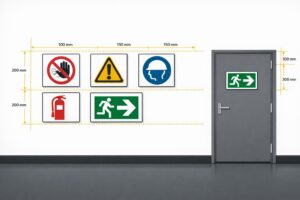
Ensure signs are mounted between 1500 mm and 2100 mm above the ground [1][3]. Signs should also be placed against a contrasting background to ensure visibility [2].
Step 3: Check Sign Size, Readability, and Visibility
Evaluate the viewing distance for each sign to ensure readability. Symbols should be at least 15 mm per metre of viewing distance, and uppercase text should be at least 5 mm per metre [2]. In low-light or hard-to-see conditions, increase symbol and text sizes by at least 50%. Additionally, confirm signs are not blocked by materials, machinery, or vehicles from any approach angle [2].
| Viewing Distance | Min. Symbol Height (Good Light) | Min. Uppercase Text Height (Good Light) | Poor Lighting Requirements |
|---|---|---|---|
| 10 Metres | 150 mm | 50 mm | 225 mm / 75 mm |
| 15 Metres | 225 mm | 75 mm | 338 mm / 113 mm |
| 20 Metres | 300 mm | 100 mm | 450 mm / 150 mm |
Step 4: Assess Sign Condition and Material Quality
Inspect each sign for issues like faded print, UV damage, cracking, peeling, or impact damage that could obscure safety messages. Dirt or grime can also reduce visibility, so signs should be cleaned regularly to remain effective [2]. Confirm that materials are suitable for the environment: aluminium for outdoor use, polypropylene for indoor use, and corflute for temporary signage. Test readability under various lighting conditions; in low-light areas, consider photoluminescent materials [1]. Ensure all signs are securely mounted and not loose or posing hazards.
"For maximum effectiveness, safety signs should be maintained in good condition, kept clean and well illuminated." – WorkSafe ACT [2]
Compile any issues you find and plan corrective measures accordingly.
Step 5: Record Findings and Create an Action Plan
Document non-compliant signs, noting the location, type of issue, and required corrective action [1]. Remove duplicate or outdated signs to avoid clutter, as this can confuse workers and diminish the impact of critical safety messages [1][3]. Use the data from earlier steps to prioritise fixes, starting with danger signs in high-risk areas, followed by warning and mandatory signs. Assign responsibility to a WHS officer to update the audit log and schedule biannual reviews. If a sign features outdated symbols that don’t meet AS 1319, replace it with a compliant version rather than attempting repairs.
sbb-itb-9950c92
Maintaining Compliance After Your Audit
An audit is just the beginning; keeping up with compliance requires ongoing effort as your workplace changes. A regular maintenance plan ensures signage remains visible, accurate, and effective, preventing compliance risks like faded signs or outdated symbols.
Schedule Regular Audits
Plan to review your signage every six months and after any workplace modifications. Assign a WHS officer to document these reviews and keep detailed digital records for future WHS inspections. Along with these audits, make sure your team understands the purpose of each sign to maintain a safe and compliant environment.
Train Staff on Safety Sign Usage
Educating employees about safety signs is critical. They should be familiar with the six AS 1319 categories:
- Prohibition signs: Red circle with a slash
- Mandatory signs: Blue circle
- Danger signs: Red oval within a black rectangle
- Warning signs: Black triangle on a yellow background
- Emergency signs: Green background
- Fire signs: Red background
It’s particularly important that staff understand the distinction between "Danger" signs, which highlight life-threatening hazards, and "Warning" signs, which signal less severe risks.
"AS1319… stress[es] that the type of safety sign used should be suitable for the intended application, and that employees should be informed of their purpose." – WorkSafe ACT [2]
Refresher training sessions should be held whenever there are changes to workplace layouts or new equipment is introduced. Use these sessions to update employees on the locations and meanings of signs. Also, encourage workers to report signs that are faded, blocked, or poorly illuminated.
Source Compliant Signs from PXP Safety
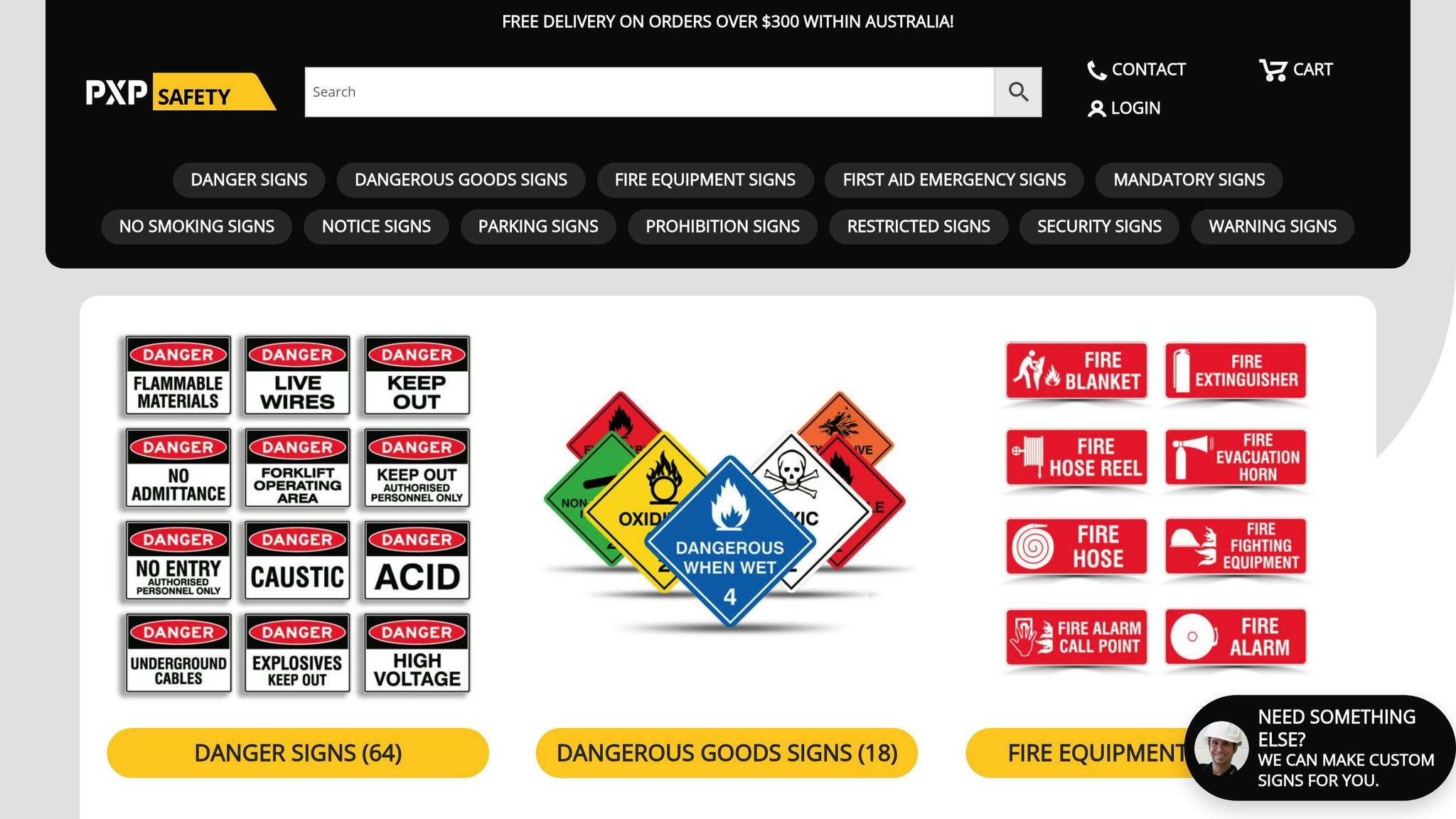
Once your audits and training are sorted, address any non-compliant signage. Replace outdated or non-compliant signs with options that meet AS 1319 standards. PXP Safety offers a range of durable aluminium signs with UV protection and outdoor-grade printing, covering all six categories. They also provide custom solutions for site-specific hazards, ensuring compliance with AS 1319 guidelines for colours, fonts, and symbols.
Conclusion
Conducting a thorough safety signage audit helps safeguard workers from avoidable injuries. Start by mapping your site, checking each sign for damage or fading, ensuring compliance with AS 1319, confirming proper placement and visibility, and carefully documenting your findings. These steps lay the groundwork for maintaining workplace safety and meeting WHS requirements.
However, compliance doesn’t stop there. Commit to six-monthly reviews, provide ongoing staff training, and promptly replace any outdated or non-compliant signage.
When replacing non-compliant signs, opt for materials that last. For example, PXP Safety offers aluminium signs with UV protection and outdoor-grade printing, designed to endure Australia’s tough climate. They cover all five sign categories and can create customised solutions to address specific hazards while adhering to regulations.
FAQs
What are the consequences of not complying with AS 1319-1994 safety signage standards?
Non-compliance with AS 1319-1994, the Australian standard for workplace safety signage, can result in severe legal and financial consequences. Businesses that fail to use appropriate or compliant signage may face fines, penalties, or even legal action if this oversight leads to safety risks or incidents in the workplace.
But the impact goes beyond legal issues. Ignoring these standards puts the safety of employees and visitors at risk, increasing the likelihood of injuries, disruptions to operations, and potential harm to the organisation’s reputation. Meeting these requirements isn’t just about avoiding penalties – it’s a key part of creating a safe, reliable, and efficient working environment.
How often should safety signage audits be carried out to ensure AS 1319 compliance?
Regular safety signage audits are essential for staying compliant with AS 1319 standards. While conducting these audits annually is a solid starting point, workplaces with higher risks or frequent changes may need to check their signage more often.
When performing an audit, focus on a few key factors: visibility, legibility, and physical condition. Signs should be correctly placed, undamaged, and capable of clearly delivering their safety message. These regular reviews also provide an opportunity to update signage in response to new workplace hazards or regulation changes.
What design features are required for safety signs to comply with AS 1319 in Australia?
To align with AS 1319 standards, safety signs in Australia must incorporate key design features to ensure they are effective and easily understood. These features include:
- Symbols and pictograms: Whenever possible, internationally recognised symbols should be used. This ensures the message is communicated clearly and is easily understood by a diverse audience.
- Legible text: The text, or legend, must be easy to read. This includes using appropriate font sizes and styles to maintain visibility, even from a distance.
- Colour and shape coding: Specific colours and shapes are essential. For example, red is used to signal danger, while green indicates safety. Similarly, shapes like circles and triangles help categorise the type of message.
- Durability: Materials used for the signs must endure environmental factors like UV exposure and weather conditions. This ensures the signs remain visible and compliant over time.
By incorporating these elements, workplaces can promote safety effectively while adhering to Australian standards.
Related Blog Posts
You may also be interested in
FAQs About Workplace Safety Signs in Australia
AS 1319 sign types, placement, materials and maintenance for workplace safety and WHS compliance in Australia.
Restricted Area Signs vs. No Entry Signs
Compare No Entry and Restricted Area signs in Australian workplaces — meanings, design differences and AS 1319 compliance.
How to Spot Workplace Signage Gaps
Audit your workplace for missing, faded or non‑compliant signs under AS 1319 to reduce incidents and avoid WHS fines.
Symbol Design: Global Standards Explained
Explains ISO 7010 and ISO 3864: standard symbols, colours and sizing for clear, language‑free safety signage and AU compliance.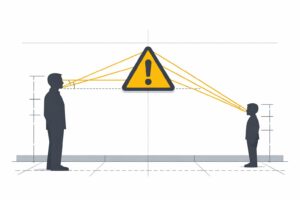
Hazard Sign Visibility Planner
Plan hazard sign placement for max visibility with our free tool. Ensure safety by finding the best spot, height, and angle—try it now!