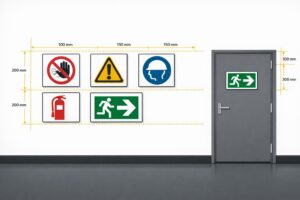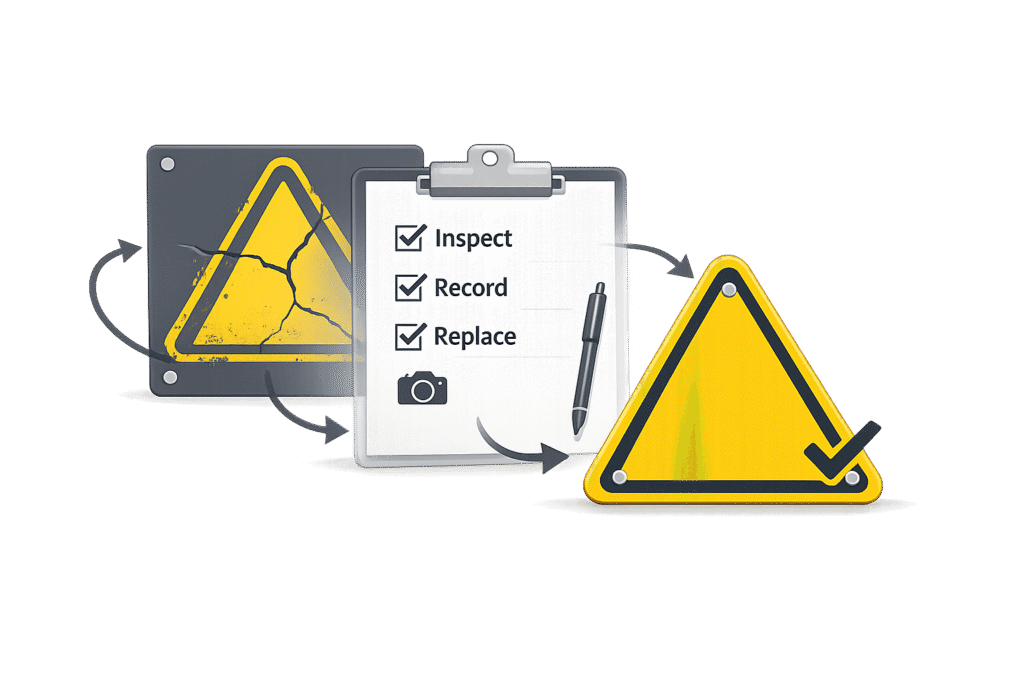
Checklist for Reporting Damaged Safety Signs
Safety signs are critical for workplace safety, serving as constant reminders of hazards like high voltage or slippery floors. Damaged or faded signs lose their effectiveness, increasing accident risks and exposing businesses to potential legal and financial penalties under Australian WHS laws. Regular inspections and timely reporting of damaged signs are not just good practice – they’re a legal requirement.
Key points to address:
- Legal obligations: Adhere to the WHS Act and AS 1319-1994 standards for safety signage.
- Inspection essentials: Use tools like a checklist, site map, and measuring tape; focus on high-risk areas and conduct inspections during low activity periods.
- Common issues: Fading, peeling, incorrect placement, or obstructed signs.
- Action steps: Document damage, report promptly to relevant personnel, and replace or repair signs using compliant materials.
Maintaining essential safety signs ensures compliance, reduces risks, and supports a safer workplace. Always document inspections and repairs to meet WHS requirements.
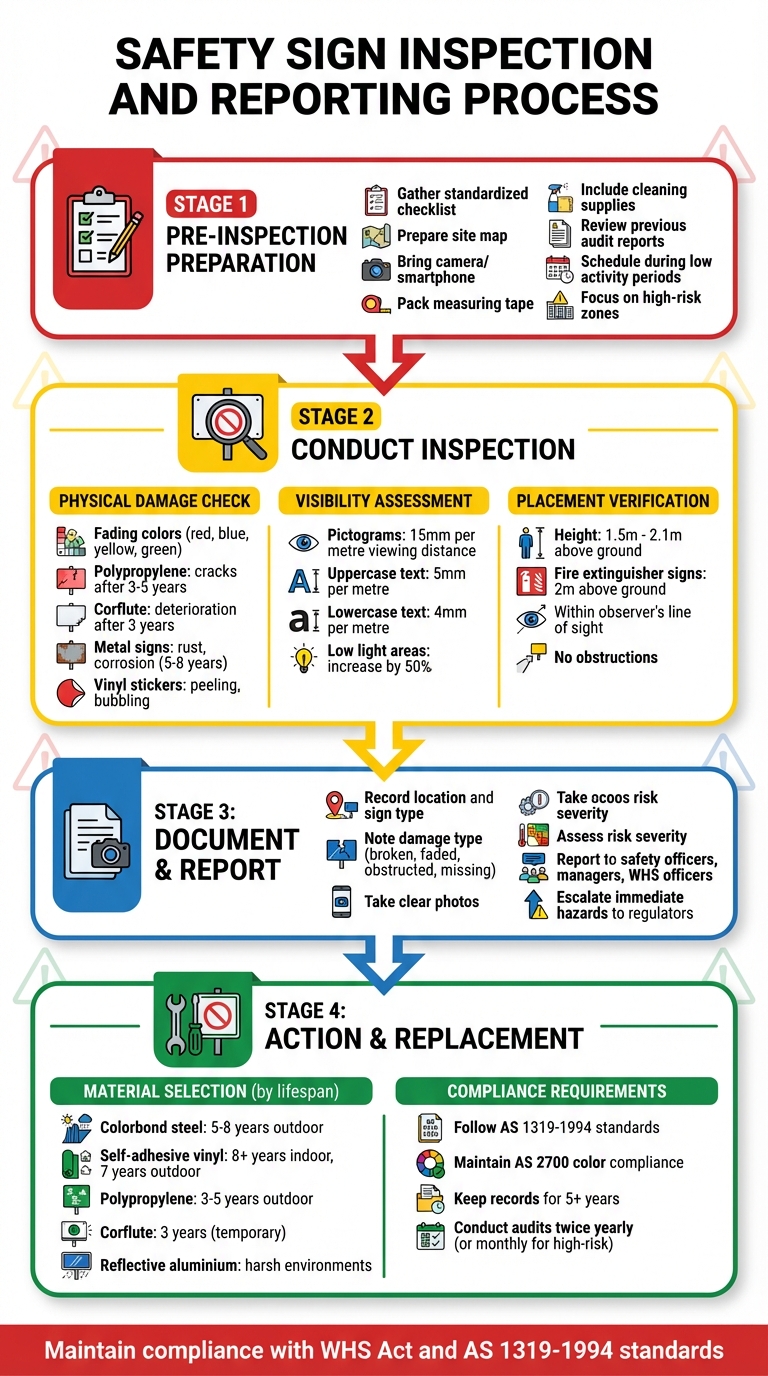
Safety Sign Inspection and Reporting Process Checklist
Safety Inspection Checklist Training Video from SafetyVideos.com
sbb-itb-9950c92
Australian WHS Compliance Requirements for Safety Signs
Workplace safety in Australia is regulated under the Model WHS Act, Model WHS Regulations, and Model Codes of Practice, enforced by state and territory bodies like SafeWork NSW and WorkSafe VIC [2]. A key element of compliance is adhering to AS 1319-1994 (Safety signs for the occupational environment), which governs the design, placement, and use of safety signs in workplaces [5][4].
To meet compliance standards, safety signs must use approved colour codes and pictograms. They should also be constructed from durable materials that can withstand environmental conditions like UV exposure, moisture, and physical wear [5]. Placement is critical – signs should be installed within the observer’s line of sight, typically between 1.5 m and 2.1 m above the ground [6]. For clarity, symbols must measure at least 15 mm per metre of viewing distance, while uppercase text should be a minimum of 5 mm per metre. In poorly lit areas, these dimensions should be increased by at least 50% [4].
Signs are deemed non-compliant if they show faded text, peeling surfaces, incorrect colours or symbols, or if they are obstructed or improperly placed [5][6]. Non-compliance carries serious consequences, including hefty penalties for WHS breaches [5]. Additionally, inadequate signage can jeopardise insurance claims [5].
Safe Work Australia reinforces the importance of adhering to these guidelines:
"Approved codes of practice are not law, but they are admissible in court proceedings. Courts may regard an approved code of practice as evidence of a hazard, risk or control." – Safe Work Australia [2]
Regularly inspecting and reporting damaged signs is not just recommended – it’s legally required under the PCBU’s duty of care. Keeping detailed records of inspections and replacements not only ensures compliance during audits but also serves as proof that your business has taken all reasonable steps to maintain safety standards [2]. These records play a vital role in the inspection process discussed further in the next section.
Pre-Inspection Preparation Checklist
Getting ready for a safety sign inspection is all about being organised and thorough. Before stepping onto the site, make sure you’ve got the right tools, the necessary documentation, and a clear plan. SafeWork NSW highlights the importance of preparation, stating: "Use a checklist to make sure your inspection is thorough and consistent with previous inspections. This will also serve as a record of your inspection" [8]. Proper preparation not only ensures compliance with WHS standards but also reinforces workplace safety.
Gather Required Tools and Documentation
Start by assembling everything you’ll need for the inspection. A standardised checklist is essential for evaluating signs based on their symbols, colours, and wording [6][8]. A site map is equally important to mark the location of safety, warning, and directional signs [6]. Bring along a camera or smartphone to document any issues, such as damage or obstructions, and a measuring tape to check that signs are mounted at the correct height – between 1.5 m and 2.1 m above ground [6][7]. Cleaning supplies should also be included to remove dirt or grime that might obscure a sign’s condition [6]. Lastly, review previous audit reports to identify any recurring problems or unresolved issues from earlier inspections [8].
Identify Key Inspection Areas
Once you’ve got your tools, map out the areas you’ll inspect, focusing on high-risk zones. Start with emergency infrastructure like fire exits, extinguishers, assembly points, and first aid stations – these are critical to life safety [6][10]. Next, move on to hazardous areas such as high-voltage zones, confined spaces, and locations where dangerous goods are stored [6][10]. Don’t forget pedestrian–vehicle interface areas; these should have clear traffic control signage to prevent accidents [6]. To ensure no critical areas are missed, consult workers on the ground – they can often point out overlooked or missing signage [9].
Schedule Inspections During Low Activity Periods
Timing is key to an effective inspection. Plan your walkthroughs during periods of low activity to minimise disruptions and ensure a thorough review. For example, "initial startup" inspections should happen before primary work activities begin [8]. Comprehensive audits should be conducted at least twice a year or whenever there are changes to layouts, machinery, or procedures [6]. In industries like hospitality, monthly inspections are often recommended [11]. Don’t forget to check sign visibility under different lighting conditions, such as daylight and low light [6]. To maintain compliance, consider incorporating signage checks into daily or weekly supervisor reviews [8].
Inspection Checklist: Assessing Safety Sign Condition
After preparing for your inspection, it’s time to evaluate the condition of each safety sign on-site. With your tools and plan ready, focus on three key areas: physical damage, visibility and legibility, and proper placement. This systematic approach ensures all signs comply with Australian standards and continue to safeguard workers effectively.
Check for Physical Damage
Inspect each sign thoroughly for signs of wear and tear. Fading is one of the most common issues, so check if the standard colours – red, blue, yellow, and green – still appear vibrant [6]. The material of the sign will determine the type of damage to look out for:
- Polypropylene signs: Often crack or become brittle after 3–5 years of UV exposure.
- Corflute signs: Show similar deterioration after just 3 years [12].
- Metal signs (colorbond or aluminium): Inspect for rust, corrosion, or peeling of the powder-coated finish, which typically lasts 5–8 years outdoors [12].
- Vinyl stickers: Look for shrinking, peeling edges, or bubbling caused by heat [12].
Ensure mounting holes (4 mm) and radius corners remain intact. Once physical damage is ruled out, move on to assess whether the signs are still readable.
Assess Visibility and Legibility
Confirm that each sign can be easily read from the required distance. Australian Standard AS 1319 specifies the following minimum sizes:
- Pictograms: At least 15 mm per metre of viewing distance.
- Uppercase text: 5 mm per metre.
- Lowercase text: 4 mm per metre [13][4].
For poorly lit areas, increase these dimensions by at least 50%, making pictograms 22.5 mm per metre [4]. Ensure signs are placed against a contrasting background and not blocked by materials, machinery, or other obstructions [6][4]. In dimly lit spaces, check if photoluminescent or reflective materials are used to maintain visibility [6]. Regular cleaning is essential, as accumulated dust and grime can reduce legibility and light reflection [4]. Finally, confirm that all signs meet the required installation standards.
Confirm Correct Placement and Orientation
Proper placement is crucial for safety signs to be effective. Verify that each sign is installed at the correct height – between 1.5 m and 2.1 m above the floor – and positioned near the hazard or equipment it references [6][4]. Fire extinguisher signs have a specific requirement: they must be mounted 2 m above ground level [10]. Signs should also align with the observer’s line of sight as closely as possible [4]. Use your site map to ensure the actual installation matches the planned layout. Remove any redundant or outdated signs that could cause confusion or visual clutter.
Documenting and Reporting Damaged Safety Signs
Keeping accurate records of damaged safety signs is crucial for resolving issues quickly and ensuring compliance with WHS regulations.
Record Damage Details and Severity
Once you spot a damaged safety sign, document everything straight away. Include the sign’s location, its purpose, and the nature of the damage – whether it’s broken, faded, obstructed, or missing entirely. Assess the potential risks, especially if the damage poses a danger to workers. Take clear photos to capture the extent of the damage, and note any immediate steps taken to mitigate risks. If similar hazards exist in other areas, make sure to record those as well.
"Provide as much information as possible about the notifiable incident, such as: sequence of events leading up to the incident… remedial action taken to ensure the immediate health and safety of workers… [and] action taken to prevent a similar incident at those workplaces." – Comcare [15]
Report Findings to Relevant Personnel
Share your findings without delay. Report the damage to safety officers, managers, maintenance teams, or WHS officers. If the issue creates an immediate hazard, like a missing sign for hazardous chemicals, escalate it to the appropriate personnel or regulators straight away. For serious incidents or breaches of safety laws, notify state regulators such as Workplace Health and Safety Queensland or SafeWork NSW promptly.
Develop an Action Plan for Repairs or Replacements
Create a clear plan to address the issue. Assign responsibilities to team members – safety officers might oversee inspections, while maintenance teams handle repairs or replacements. Prioritise tasks based on the severity of the risk, and ensure both the reporter and management sign off on the plan for accountability. Digital checklists can simplify the process, helping to track corrective actions and maintain compliance records. Keep these records for at least five years, as required by Australian WHS/OHS laws [14]. These documents will be invaluable for audits and for improving safety measures over time.
Standards for Replacing or Repairing Safety Signs
When safety signs are damaged, it’s essential to follow strict guidelines for their replacement or repair to maintain compliance and ensure safety. Once deficiencies are reported, prompt action is necessary to address the issue effectively.
Use Durable and Compliant Materials
While Australian Standard AS 1319-1994 doesn’t specify exact materials, it does require that the chosen materials are suitable for the environment and maintain colours that align with AS 2700 [12][4]. Selecting the right material can significantly extend the lifespan of a safety sign.
- Colorbond steel: With a lifespan of 5 to 8 years outdoors, this is a reliable option for permanent installations [12].
- Self-adhesive vinyl: Ideal for indoor use with a lifespan of over 8 years, and it can last up to 7 years outdoors, depending on weather conditions [12].
- Polypropylene: For UV-stable outdoor applications, this material resists fading and cracking for 3 to 5 years [12].
- Corflute (5mm): A temporary solution often used on construction sites, it lasts up to 3 years [12].
- Reflective aluminium: Best for harsh environments, offering corrosion resistance and high durability [12].
Regular inspections, ideally every quarter, help identify early signs of fading or damage. Signs that fail to meet colour or legibility standards should be replaced immediately [16]. In dimly lit areas, consider increasing text and symbol sizes by 50% and using reflective finishes or lamination for better visibility [4][16].
Ensure Proper Installation and Placement
When installing replacement signs, they should be mounted at eye level and positioned according to the planned layout. Use a site map to ensure the sign addresses the intended hazard [6].
AS 1319 specifies clear guidelines for sign legibility: pictograms must be at least 15 mm per metre of viewing distance, uppercase text should measure 5 mm per metre, and lowercase text 4 mm per metre [12]. Test the sign’s visibility by approaching it from its maximum viewing distance and ensure it isn’t obstructed by equipment, doors, or structural elements [6]. Record the installation date, location, and compliance status in a digital logbook to maintain workplace health and safety (WHS) records [6].
Consider Customisation for Site-Specific Needs
Custom safety signs must adhere to AS 1319-1994 standards for layout, classification (e.g., Mandatory, Prohibition, Danger, Warning, Emergency, Fire), and colour requirements [4][12]. Conduct a site audit before ordering custom signs to identify specific hazards, viewing distances, and lighting conditions [1].
For chemical storage areas, ensure the sign includes the chemical name in uppercase, the Hazchem code, and emergency contact numbers on Emergency Information Panels [3]. To enhance visibility, place signs against contrasting backgrounds [4]. Providers like PXP Safety offer custom signs with aluminium bases, UV protective film, and solvent outdoor printing, ensuring compliance with Australian safety standards while meeting site-specific needs.
Adhering to these standards is essential for maintaining a safe and compliant workplace environment.
Conclusion
Keeping workplace safety signage in good condition involves regular checks, timely updates, and consistent upkeep to ensure compliance. According to K2K Signs [6], frequent reviews foster a proactive approach to safety. Performing signage audits – preferably twice a year, or monthly in higher-risk settings – helps meet WHS Act and AS 1319 standards. These audits can uncover issues like faded text, blocked placement, or outdated symbols before they lead to avoidable incidents [6]. As Phoenix Graphics points out, "Faded, misplaced, or missing signs are some of the most common reasons businesses fail safety audits" [17]. A well-structured checklist supports these inspections while promoting a proactive safety mindset.
These audits also set the stage for effective fixes, such as using materials that are built to last and meet compliance standards. Most safety signs have a lifespan of 3–7 years, depending on exposure to environmental conditions [17]. Opting for weather-resistant materials like aluminium or polypropylene for outdoor signage can reduce how often they need replacing and cut down on maintenance expenses. To ensure visibility, install signs at a height between 1.5 and 2.1 metres [6].
It’s also essential to maintain detailed records – whether digital or written – of all inspections, repairs, and replacements. Assigning a dedicated WHS officer to oversee this process helps demonstrate compliance and reduce liability risks [6]. Proper documentation ensures ongoing adherence to safety standards and supports continuous improvement on-site.
For expert advice on sourcing and maintaining compliant safety signage in Australia, visit PXP Safety (https://pxpsafety.com.au) to find tailored solutions that meet your workplace requirements.
FAQs
What happens if damaged safety signs are not replaced?
Neglecting damaged safety signs can have serious repercussions. When safety information is unclear or missing, the risk of accidents and injuries rises sharply. This not only endangers employees but also creates unsafe conditions for visitors, potentially leading to harm.
On top of that, ignoring the upkeep of safety signage according to Australian standards can expose businesses to legal penalties. These may include hefty fines and even liability for workplace incidents. Keeping safety signs visible, easy to read, and compliant isn’t just about following the rules – it’s a critical step in maintaining a safe work environment.
How often should workplace safety signs be inspected?
Workplace safety signs need regular inspections to ensure they stay visible, readable, and meet Australian standards. For most workplaces, a monthly review is a good rule of thumb. However, inspections should also happen after any incidents, changes in work processes, or environmental factors that might impact the condition of the signs.
These routine checks are crucial for spotting issues like damage, fading, or missing signs early on. By staying on top of inspections, businesses can not only meet compliance requirements but also create a safer environment for everyone on-site.
What are the most durable materials for safety signs in Australia?
For safety signs that need to last, materials like high-quality reflective vinyl, corflute, and polypropylene are solid options. These materials are built to handle Australia’s tough climate, standing up to intense heat, UV rays, and unpredictable weather patterns. Plus, they resist fading, chemicals, and general wear, ensuring they stay durable and meet Australian standards.
If your workplace demands something even tougher, aluminium signs with UV-protected outdoor-grade printing are a great choice. They offer both strength and the flexibility to customise for specific safety requirements.
Related Blog Posts
You may also be interested in
FAQs About Workplace Safety Signs in Australia
AS 1319 sign types, placement, materials and maintenance for workplace safety and WHS compliance in Australia.
Restricted Area Signs vs. No Entry Signs
Compare No Entry and Restricted Area signs in Australian workplaces — meanings, design differences and AS 1319 compliance.
How to Spot Workplace Signage Gaps
Audit your workplace for missing, faded or non‑compliant signs under AS 1319 to reduce incidents and avoid WHS fines.
Symbol Design: Global Standards Explained
Explains ISO 7010 and ISO 3864: standard symbols, colours and sizing for clear, language‑free safety signage and AU compliance.
Hazard Sign Visibility Planner
Plan hazard sign placement for max visibility with our free tool. Ensure safety by finding the best spot, height, and angle—try it now!