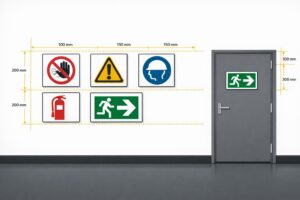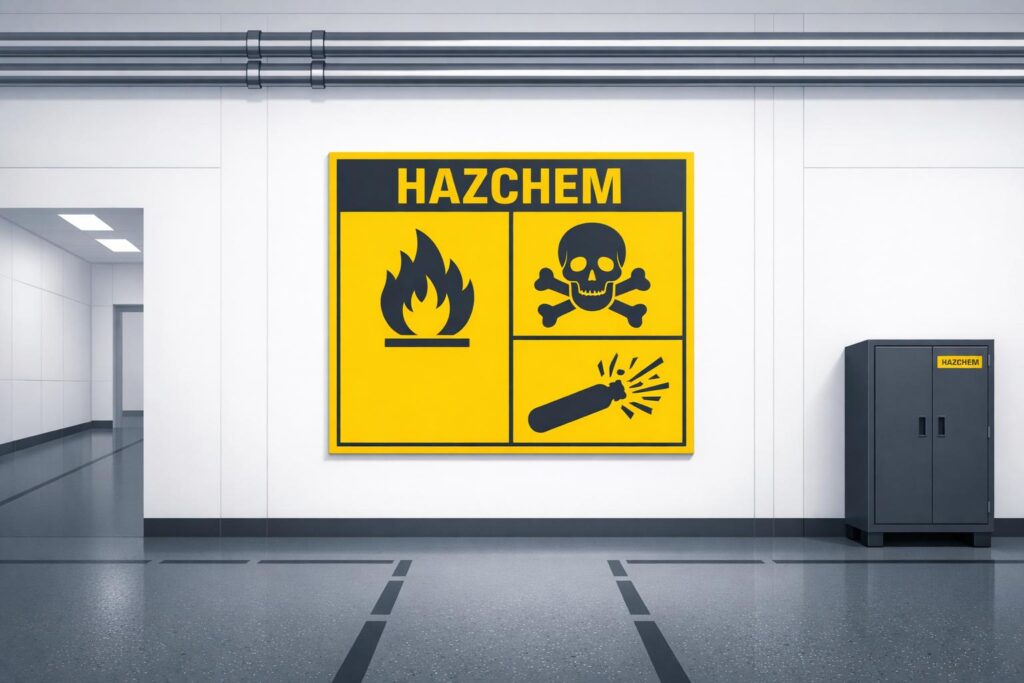
Hazchem Signs for Food Industry Compliance
Hazchem signs are mandatory for many Australian food facilities handling hazardous chemicals. They ensure safety, provide emergency responders with vital details, and help businesses comply with strict Australian regulations like the WHS Regulations and the Australian Dangerous Goods (ADG) Code. These signs display critical information, including Hazchem codes, UN numbers, and hazard class diamonds.
Key points:
- Purpose: Identify chemical hazards, reduce risks, and support emergency actions.
- Regulations: Compliance with WHS Regulations, ADG Code, GHS, and AS1216 is required.
- Common Uses: Cleaning agents (Class 8 corrosives), disinfectants (Class 3 flammables), and sanitisers (Class 5.1 oxidisers).
- Placement: Visible at entry points, storage areas, and on transport vehicles.
- Materials: Durable options like aluminium or vinyl ensure longevity in harsh environments.
Proper hazchem signage isn’t just about following the law – it’s about creating a safe workplace and protecting lives.
What Hazchem Signs Are and How They Work
Definition of Hazchem Signs
Hazchem signs are a specialised type of safety signage designed to communicate critical emergency information. Unlike general safety signs, these are tailored to provide technical details specifically for first responders and trained personnel during emergencies.
Each sign includes three key components:
- Hazchem Code: A code like ‘3YE’ that provides emergency response instructions.
- UN Number: A unique identifier, such as UN 1203 for petrol, used internationally to identify specific chemicals.
- Class Diamond: A visual symbol that highlights the primary hazard of the substance.
These signs are created to comply with standards like AS1216, the Australian Dangerous Goods (ADG) Code, and the Globally Harmonised System of Classification and Labelling of Chemicals (GHS). To ensure visibility, outer warning placards must display the word "HAZCHEM" in bold red uppercase letters, at least 100 mm high, on a white or silver background.
Such precise information is especially crucial in industries like food production, where managing chemicals with care is paramount.
Why the Food Industry Needs Hazchem Signs
Given their detailed design, hazchem signs play an essential role in food facilities. These environments often involve the use of hazardous substances such as corrosive, flammable, and oxidising chemicals. Without proper signage, these materials could cause burns, fires, or contamination. Clear hazchem signs help ensure these chemicals are stored and handled safely, safeguarding workers, maintaining food safety, and enabling swift action during emergencies.
"Hazchem signage is more than just a visual cue – it’s a legal, lifesaving and logistical necessity across Australian industries" [1].
Australian Hazchem Regulations and Standards
Australian Safety Standards for Hazchem Signs
In Australia, workplaces handling hazardous chemicals must follow strict regulations to ensure safety. The Work Health and Safety (WHS) Regulations serve as the legal backbone, requiring businesses to display hazchem placards if chemical quantities exceed specific "placard threshold quantities." This means not every food-related facility needs hazchem signs – only those storing chemicals beyond the set limits.
The Australian Dangerous Goods (ADG) Code provides technical guidance on the appearance of these signs. Standards like AS 1216 specify the design and placement of hazchem signage, while AS 1319 outlines the rules for general workplace safety signs. These standards work alongside the Globally Harmonised System (GHS), which standardises hazard pictograms and labelling for individual chemical containers. Together, these regulations form a robust safety framework, especially critical for facilities managing large chemical inventories.
These standards ensure that regulations are applied effectively in food and beverage workplaces.
How Regulations Apply to Food and Beverage Workplaces
Food and beverage facilities face unique challenges when it comes to complying with placarding requirements. Cleaning acids, flammable disinfectants, and sanitising oxidisers are commonly used in these settings, often in quantities that necessitate placards. Regular audits of chemical inventories against WHS threshold tables are essential to determine whether signage is required. If thresholds are exceeded, outer warning signs must be placed at all vehicle entry points, and bulk storage tanks need Emergency Information Panels displaying the UN number, hazchem code, and proper shipping name.
It’s important to differentiate between labelling and placarding. While GHS pictograms are suitable for individual chemical containers, they are not permitted for bulk storage or vehicle placarding under Australian law. In these cases, only ADG Code class labels are allowed. An exception to these rules applies to products intended for human consumption in domestic settings, such as 700 ml bottles of alcohol, which typically don’t require these specific labels [3]. However, the chemicals used in industrial food processing and cleaning rarely fall under such exemptions, making compliance a critical focus for the sector.
"A label is required for any substance, mixture or article classified as a hazardous chemical under Australian WHS Regulations." – Melissa Hampton, Dangerous Goods Storage Consultant, Storemasta [3]
GHS Container Labels Training for Food Processing and Handling Environments From SafetyVideos.com
Types of Hazchem Signs Used in Food Industry
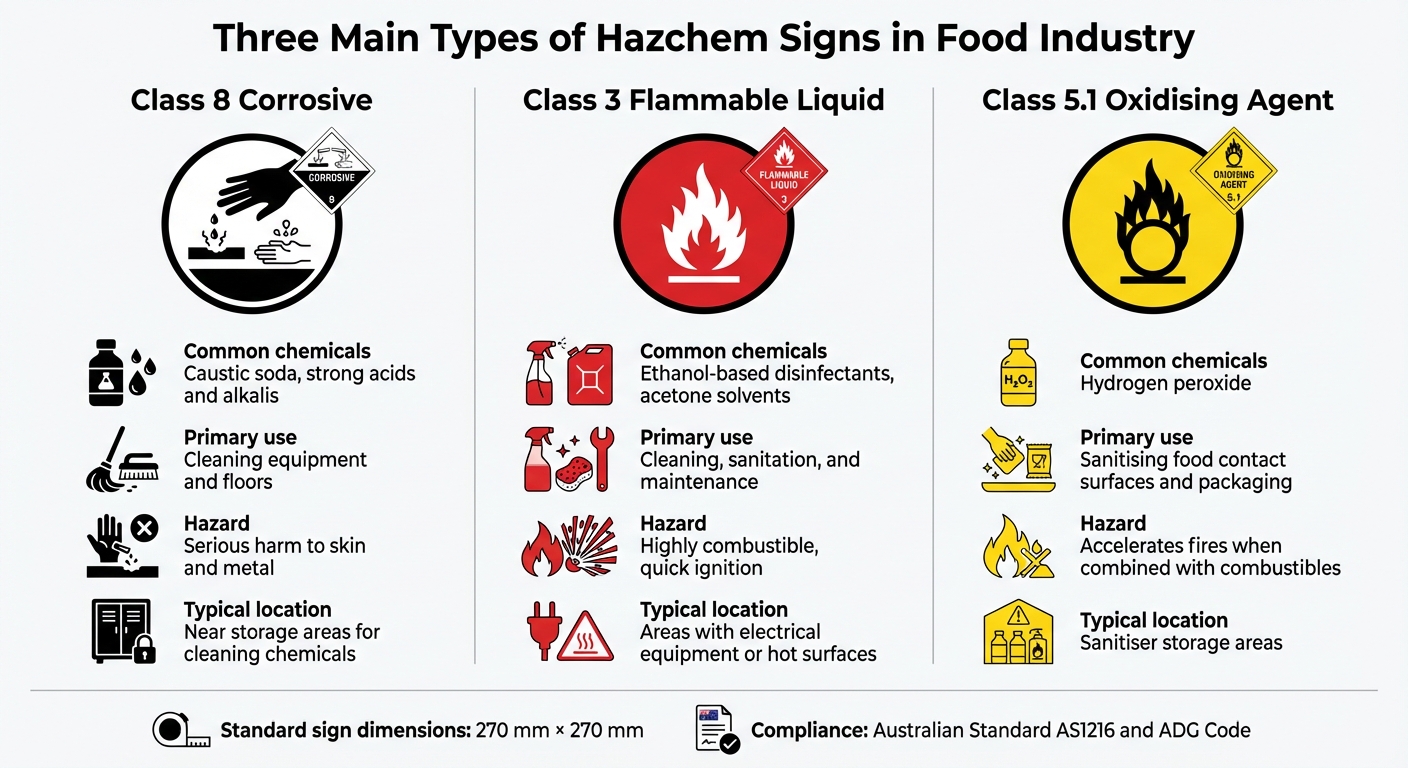
Three Main Types of Hazchem Signs Used in Food Industry Facilities
Food facilities rely on three main types of hazchem signs to manage chemical risks effectively. Each type serves a specific purpose, helping to ensure safety and compliance within food production settings. Here’s a closer look at how these signs are used.
Class 8 Corrosive Signs for Cleaning Chemicals
Class 8 corrosive signs are used to identify strong acids and alkalis that can cause serious harm to skin and metal. In food processing areas, these signs are often placed near storage areas for substances like caustic soda, which is commonly used to clean equipment and floors. The sign includes a graphic showing corrosion on a hand and a metal surface, making its warning clear and easy to understand. These chemicals can pose significant risks if mishandled, so having proper signage in place is essential for maintaining worker safety.
Flammable Liquid Signs for Solvents and Disinfectants
Class 3 flammable liquid signs are marked by a flame symbol on a red background, indicating the presence of flammable substances. In the food industry, ethanol-based disinfectants are frequently used for cleaning and sanitation, while solvents like acetone are utilised in maintenance tasks. These substances are highly combustible and can ignite quickly when exposed to heat or sparks. Proper labelling is especially important in areas with electrical equipment or hot surfaces to minimise fire risks.
Oxidising Agent Signs for Sanitising Products
Class 5.1 oxidising agent signs feature a flame within a circle, signifying chemicals that can intensify combustion. Hydrogen peroxide, a common sanitiser for food contact surfaces and packaging, falls under this category. While not flammable on its own, it can accelerate fires when combined with combustible materials. Clear signage and careful storage practices are key to preventing dangerous reactions.
All these signs must adhere to Australian Standard AS1216 and the ADG Code, with standard dimensions of 270 mm × 270 mm. This consistency in size and design ensures quick recognition of hazards in storage and transport areas, supporting both safety and regulatory compliance.
sbb-itb-9950c92
Where and How to Display Hazchem Signs
Recommended Locations for Sign Placement
Placing hazchem signs in the right spots is essential for meeting safety regulations and ensuring emergency responders can act quickly. Outer warning signs should be installed at every vehicle entrance to facilities storing dangerous goods above the threshold quantity – this includes all gates, not just the main entrance [2][1]. This placement ensures emergency services can identify risks no matter which access point they use.
For bulk storage areas, such as tanks, vats, or silos, signs should be mounted directly on the containers or positioned nearby [2][1]. When it comes to packaged goods and intermediate bulk containers (IBCs), signs should be displayed at the entrances of the specific buildings or rooms where these materials are stored [2]. If your facility operates its own distribution, transport vehicles must have three signs: one on the front, one on the rear, and one on the side [2].
Visibility is critical. Signs must remain unobstructed, meaning they shouldn’t be hidden by parked vehicles, equipment, or open doors [2]. Avoid placing signs on doors that, when opened, block the warning information [2]. Signs should also be installed at a height that ensures they are easy to see and read [2].
Making Signs Visible and Long-Lasting
Once you’ve chosen the right locations, it’s important to focus on durability and maintenance to keep your signs effective over time. The material you choose plays a big role in how well your signs hold up. For permanent facility installations, rigid aluminium panels are ideal, while self-adhesive vinyl works well for direct application on containers [2]. Aluminium composite panels and outdoor laminates are particularly durable, offering resistance to fading and damage for up to five years [2].
Regular maintenance is key. Clean your signs to remove dirt and ensure landscaping, like overgrown bushes, doesn’t block them [2]. If your chemical inventory changes, update the signage immediately to reflect the correct hazchem codes and UN numbers, ensuring emergency services have accurate information [2]. Regular checks are also essential to ensure signs aren’t hidden by vehicles, pallets, or other obstructions [2].
PXP Safety‘s Hazchem Signage Solutions
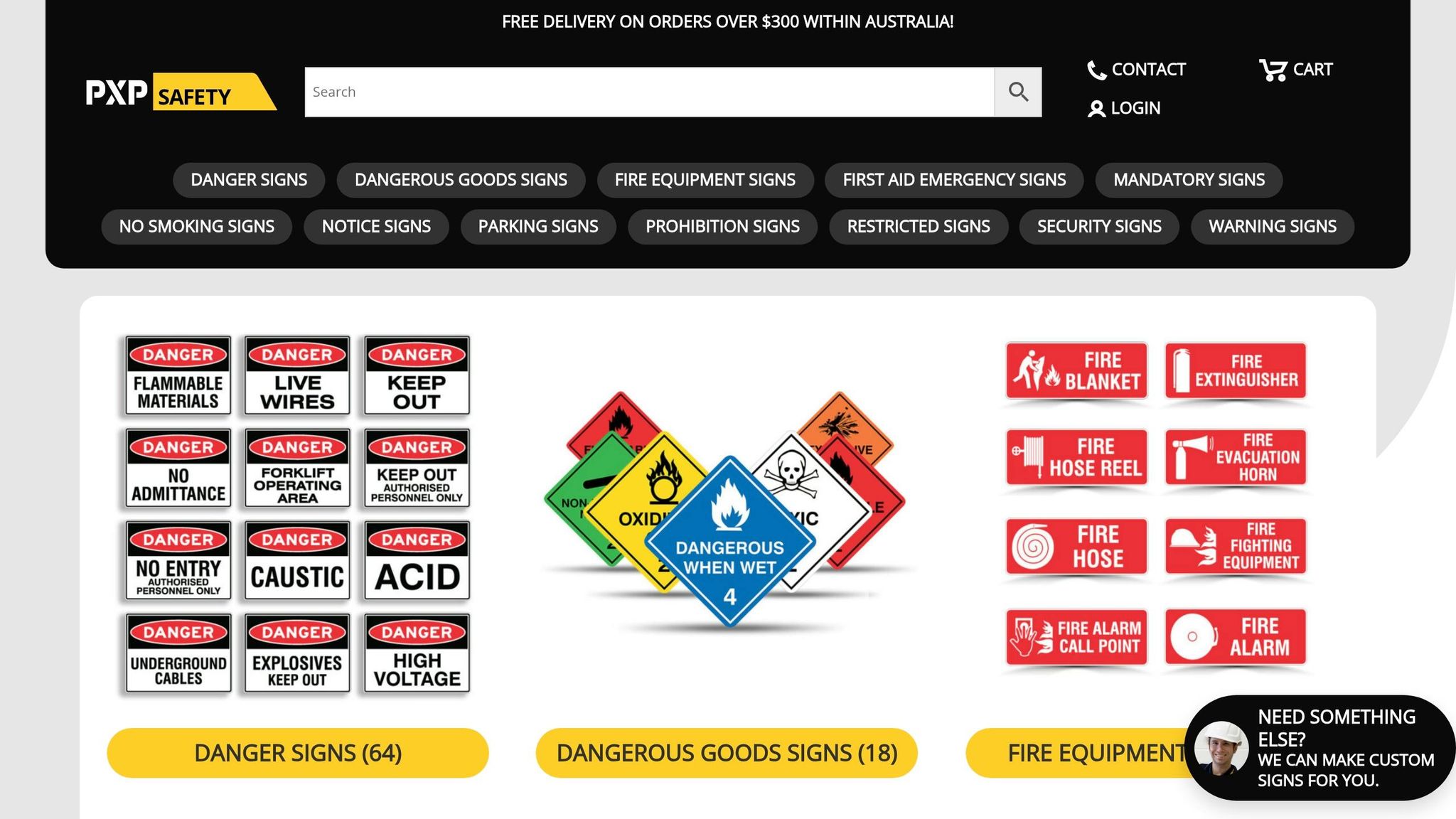
PXP Safety offers signage solutions designed to help food industry facilities meet compliance standards and ensure workplace safety.
Ready-Made Hazchem Signs from PXP Safety
PXP Safety provides a selection of 18 Dangerous Goods signs that adhere to WHS and GHS standards. For food and beverage facilities, this includes signage for:
- Class 8 Corrosive: Suitable for cleaning chemicals.
- Class 3 Flammable Liquids: Ideal for solvents and disinfectants.
- Class 5.1 Oxidising Agents: Designed for sanitising products.
Each sign measures 270 mm × 270 mm and is priced at $53.00.
These signs are built with "Super Shield" construction, featuring three layers: a 1.6 mm aluminium base, a solvent-based outdoor vinyl print, and a gloss overlaminate. This design ensures they are UV-resistant, durable in outdoor conditions, and resistant to chemicals – qualities that make them reliable in environments requiring frequent cleaning. The solvent-based print maintains its clarity in varying weather conditions, and the 17 mm rounded corners provide a neat finish while eliminating sharp edges.
"Clearly mark hazardous materials with the Corrosive Sign. This sign identifies substances that can cause severe damage to living tissue or materials, helping ensure safety and regulatory compliance." – PXP Safety [4]
For facilities that require more specific solutions, PXP Safety also offers customised signage options.
Custom Hazchem Signs for Food Industry Requirements
In addition to their standard range, PXP Safety caters to unique needs with custom signage. Facilities can specify the size, colours, and materials to match their exact requirements while staying compliant with safety standards. These custom signs are made with the same industrial-grade materials as the ready-made options, ensuring they withstand regular cleaning and remain visible over time. This flexibility allows every facility to maintain both safety and compliance effectively.
Conclusion
Hazchem signs play a crucial role in food and beverage facilities, providing essential emergency information and ensuring compliance with the model Work Health and Safety Regulations and the Australian Dangerous Goods Code. For facilities storing hazardous chemicals above set thresholds, these signs are not just a legal requirement – they are a vital safety measure that protects workers, emergency responders, and business operations alike [2]. This legal framework forms a key part of risk management strategies in these environments.
By using hazchem signage, facilities can effectively minimise accidents, reduce liabilities, and enable faster emergency responses in high-risk settings like food production. The standardised symbols on these signs allow for quick hazard identification, which is especially important when dealing with cleaning and sanitising chemicals.
To maintain compliance and safety, ensure outer warning placards are installed at all emergency service entry points, update signs promptly when chemical inventories change, and opt for durable materials such as aluminium composite with outdoor-rated laminates. These materials ensure that the signs remain clear and legible for at least five years [2].
PXP Safety offers hazchem signage solutions tailored to the challenging conditions of food and beverage facilities. Their signs, available in both ready-made and custom formats, are crafted from UV-resistant and chemically resistant materials that meet Australian safety standards. Investing in high-quality hazchem signage not only ensures compliance but also creates a safer workplace where hazards are clearly marked and understood. Reliable, compliant signage is a cornerstone of operational safety, helping to safeguard your facility while supporting efficient emergency responses.
FAQs
How do I know if my site needs hazchem placards?
If your site deals with dangerous goods, you may need hazchem placards to comply with Australian regulations. These placards are crucial in situations where hazardous materials are stored, handled, or transported in quantities exceeding specified thresholds. They are typically required in areas such as bulk storage facilities, transport vehicles, or workplaces managing these materials.
Hazchem placards play a key role in communicating potential risks to both workers and emergency responders. This ensures not only compliance with safety standards but also helps maintain a secure environment. To determine whether placards are necessary for your site, review the quantities of chemicals being stored or transported.
What’s the difference between GHS labels and hazchem signs?
GHS labels and Hazchem signs serve distinct roles in safety management. GHS labels are affixed to individual chemical containers, offering detailed hazard and safety details in line with global regulations. In contrast, Hazchem signs are larger, prominently displayed in workplaces to enable quick hazard recognition, particularly in storage areas, during transport, or within work zones. These signs comply with Australian standards and often feature the HAZCHEM code to assist in emergency response situations.
What info must be on a compliant hazchem sign?
A hazchem sign in Australia needs to meet specific requirements to comply with regulations. It must display:
- UN number: A unique identifier for the chemical.
- HAZCHEM code: Indicates the response required in an emergency.
- Proper shipping name: The official name of the substance being transported.
- Hazard class diamonds: Symbols that represent the type of hazard, such as flammable or toxic.
- Relevant hazard information: Additional details about the risks associated with the substance.
These components play a crucial role in maintaining workplace safety and ensuring compliance with chemical hazard laws.
Related Blog Posts
You may also be interested in
FAQs About Workplace Safety Signs in Australia
AS 1319 sign types, placement, materials and maintenance for workplace safety and WHS compliance in Australia.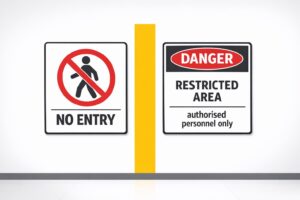
Restricted Area Signs vs. No Entry Signs
Compare No Entry and Restricted Area signs in Australian workplaces — meanings, design differences and AS 1319 compliance.
How to Spot Workplace Signage Gaps
Audit your workplace for missing, faded or non‑compliant signs under AS 1319 to reduce incidents and avoid WHS fines.
Symbol Design: Global Standards Explained
Explains ISO 7010 and ISO 3864: standard symbols, colours and sizing for clear, language‑free safety signage and AU compliance.
Hazard Sign Visibility Planner
Plan hazard sign placement for max visibility with our free tool. Ensure safety by finding the best spot, height, and angle—try it now!