Loading Zone Sign Regulations in Australia
Loading zones in Australia are designated areas for short-term stopping to load or unload goods or passengers. These zones are strictly regulated to ensure efficient traffic flow and prioritise commercial and transport operations. Key rules include:
- Purpose: Reserved for trucks, vans, utes, and in some cases, passenger vehicles with specific signage or permits.
- Time Limits: Default is 30 minutes unless otherwise specified on signs.
- Signage Requirements: Signs must follow Australian Standard AS 1742.11-2016, with clear operational times, directional arrows, and a consistent design.
- State Variations: Rules differ across states. For instance, NSW requires goods vehicles to have a carrying capacity of at least 500 kg, while Victoria mandates permanent business signage for courier vehicles.
- Penalties: Fines range from $80 to $1,875, depending on the state and offence. NSW fines can reach $387 in school zones, with additional demerit points.
Drivers must follow posted signs, ensure their vehicle qualifies, and adhere to time limits to avoid fines and maintain smooth operations.
Parking signs in australia | Meaning of 1P, 2P, T2, Loading zones, Clearway sign, Resident permit, M
sbb-itb-9950c92
What Are Loading Zones and Their Purpose
In Australia, a loading zone is a specific section of road marked by a sign, as defined under the Australian Road Rules [3][4]. These zones play a key role in keeping traffic flowing smoothly by providing designated spaces for loading and unloading goods or passengers without causing disruptions [5].
The main purpose of loading zones is to allow delivery vehicles and buses to operate efficiently without blocking other vehicles. Drivers can stop in these zones briefly, but only for specific activities: trucks and goods vehicles can load or unload goods, while passenger vehicles may pick up or drop off passengers.
Unlike regular parking spots, loading zones are strictly for short stops. They are typically reserved for trucks, vans, and utes designed for transporting goods. However, in some states, passenger vehicles with permanent business signage or those used for public transport may also use these zones [5].
For example, in New South Wales, goods vehicles with a minimum capacity of 500 kg can use loading zones for up to 30 minutes, provided they are actively loading or unloading. If not, fines may apply [5]. The specific rules often vary by state, and outside the hours listed on the loading zone signs, these areas may revert to regular parking spaces.
Loading Zone Sign Design Requirements
In Australia, loading zone signs follow strict design guidelines outlined in the Australian Standard AS 1742.11-2016, part of the Manual of Uniform Traffic Control Devices [6]. These regulations ensure consistency in design, placement, and clarity across all states and territories.
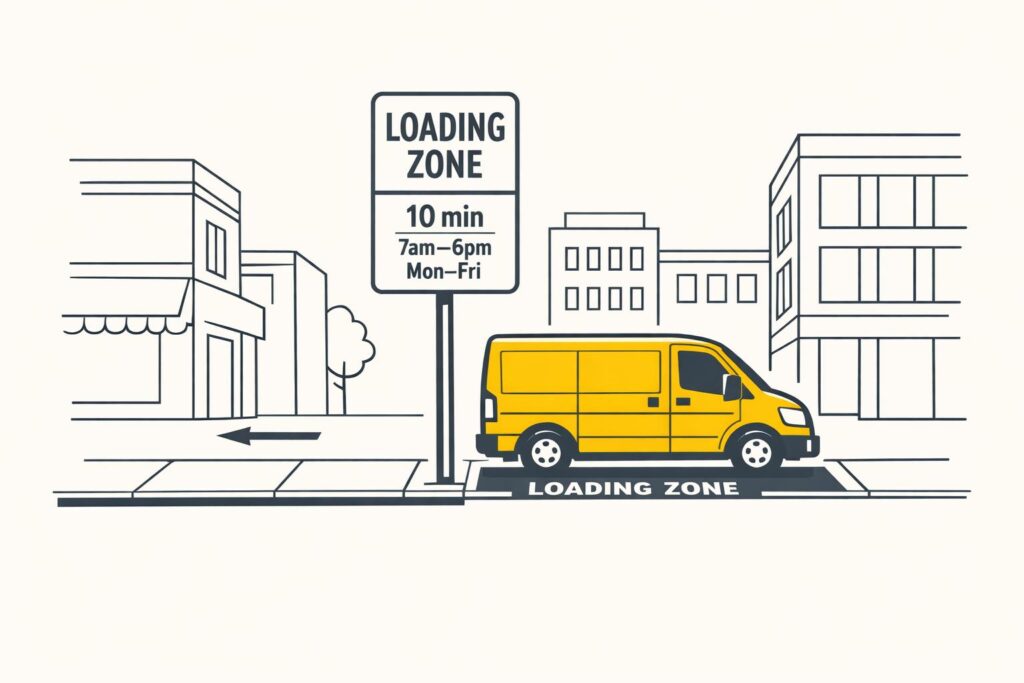
Loading zone signs are rectangular with a white background, red text, and borders [5]. The heading "LOADING ZONE" is prominently displayed at the top of each sign [5]. Beneath this, the maximum permitted parking time – commonly 15 minutes, 30 minutes, or one hour – is typically indicated.
Required Design Elements
In addition to the standard layout, several other elements are required for compliance. These include operational days, times, and directional indicators [2]. Signs often specify the days and hours during which restrictions apply, such as "9am–5pm Mon–Fri." If no times are listed, the restriction generally applies 24/7 [2]. Directional arrows on the signs mark where the loading zone begins and ends along the kerb [2][5].
All text must use the AS 1744:2015 font, known as the Highway Gothic typeface, which ensures uniform readability [7]. This clarity is essential for vehicle-specific signage to meet legal standards.
Sign Placement Requirements
Proper placement of loading zone signs is as critical as their design. These zones are commonly found near business districts, loading docks, and other high-traffic commercial areas [5]. Placement is designed to provide easy access for delivery drivers and couriers while minimising traffic disruptions. Signs must be clearly visible to approaching drivers, with directional arrows clearly marking the boundaries of the restricted area.
Correct placement is vital for compliance and enforcement. Drivers should always check the directional arrows on the nearest sign to confirm their vehicle is within the designated zone [2]. In private car parks or near buildings, loading zones may also be marked with ground stencils or door signs instead of post-mounted street signs [5]. Regardless of the format, all markings must adhere to the same design standards to ensure they are clear and legally enforceable.
Vehicle Types and Time Limits
Loading zones are designated areas for vehicles actively involved in loading goods or transferring passengers. The types of vehicles allowed depend on state regulations, but they generally include trucks, vans, and utes used for transporting goods. Passenger vehicles face stricter rules and are usually not permitted unless they meet specific criteria set by the state.
Unless otherwise stated on a sign (commonly 15 minutes, 30 minutes, or one hour), the standard time limit for loading zones is 30 minutes[1][5]. It’s essential for drivers to check the posted signs to confirm the exact time restrictions.
Each state determines vehicle eligibility based on its own rules. For instance, in New South Wales, goods vehicles must have a carrying capacity of at least 500 kg to use a loading zone[5]. In Victoria, sedans and station wagons used for courier or delivery services can access these zones, but only if they display permanent business signage with letters at least 50 mm high on both sides. Magnetic signs or window stickers are not acceptable[1].
"Loading zones are provided to allow the pick up or delivery of loads or people close to their destination. They are not provided for short term parking." – Transport Victoria[1]
Taxis, buses, and hire cars are allowed to use loading zones, but only for brief passenger transfers[5]. These vehicles must not be left unattended or parked for long periods. In the Australian Capital Territory and Northern Territory, passenger vehicles such as station wagons, 4WDs, and people movers are strictly prohibited unless the driver holds a government-issued permit[5].
Vehicle and Time Limit Comparison Table
| State/Territory | Eligible Vehicles | Default Time Limit | Conditions |
|---|---|---|---|
| New South Wales | Trucks, vans, utes (≥500 kg capacity); Taxis and buses | 30 minutes | Taxis/buses only for brief passenger pick-up/drop-off[5]. |
| Victoria | Goods vehicles; Signed courier sedans/wagons; Taxis, buses, hire cars | 30 minutes | Permanent signage required on both sides of courier vehicles[1]. |
| Australian Capital Territory | Trucks and commercial vans | 30 minutes | Station wagons, 4WDs, and people movers require a permit[5]. |
| Northern Territory | Trucks, utes, and commercial vans | Varies by sign | Passenger vehicles prohibited without a government permit[5]. |
| Tasmania | Trucks, buses, service vehicles; Signed passenger vehicles | 30 minutes | Passenger vehicles must display a permanent business name and address[5]. |
Loading Zone Rules by State
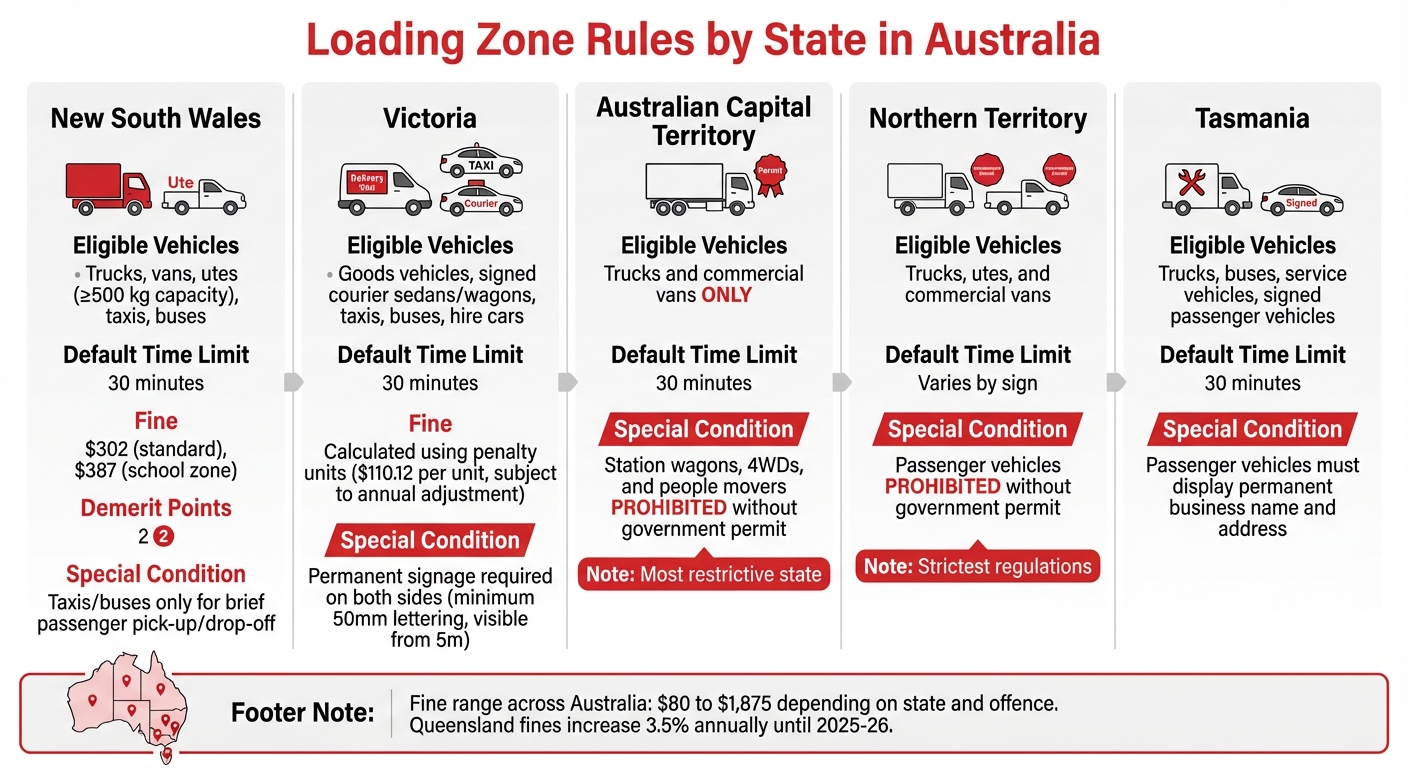
Loading Zone Rules by State in Australia: Vehicle Eligibility and Time Limits
State-specific rules for loading zones are important to follow, as they cater to local traffic and delivery needs. While general guidelines provide a baseline, each state has tailored its regulations to suit its unique requirements.
New South Wales
In NSW, loading zones are designated for goods vehicles such as trucks, delivery vans, and courier station wagons, as well as public buses. Goods vehicles can use these zones briefly for deliveries [8]. Taxis are permitted to stop, but only for immediate passenger pick-up or drop-off [8]. Additionally, other vehicles may stop momentarily to allow someone to enter or exit, but the driver must stay with the vehicle at all times. If disputing a penalty notice, drivers may need to provide proof, such as delivery documentation, to confirm legitimate use of the zone. Violating loading zone rules in NSW can result in a fine of $198 [2].
Victoria, on the other hand, enforces specific safety signs requirements for vehicles.
Victoria
Victoria allows goods vehicles, signed couriers, buses, taxis, and hire cars to use loading zones [1]. A key rule is that passenger vehicles must display permanent business signage (not magnetic), with lettering at least 50 mm high, visible from a distance of 5 metres [1]. Taxis and hire cars are also permitted for passenger pick-up and drop-off [1]. Fines in Victoria are calculated using penalty units, with one penalty unit valued historically at $110.12, subject to annual adjustments by the Treasurer [1].
Meanwhile, the ACT has a permit-based system with stricter access rules.
Australian Capital Territory
The ACT uses a permit-based system to regulate loading zone access, with strict limitations on vehicle types. Only trucks and commercial vans are allowed to use loading zones [5]. Vehicles like station wagons, 4WDs, and people movers are prohibited unless the driver holds a government-issued permit [5]. These rules make the ACT one of the most restrictive states for passenger vehicles accessing loading zones.
The Northern Territory also enforces stringent rules around eligibility.
Northern Territory
The Northern Territory has some of the toughest loading zone regulations in Australia. Only trucks, utes, and commercial vans are allowed to use these zones, with time limits clearly stated on the signage [5]. Passenger vehicles are not permitted unless the driver has a government-issued permit [5]. This permit system ensures that loading zones remain exclusively available for genuine commercial purposes.
Fines and Enforcement
Enforcement measures play a crucial role in ensuring compliance with loading zone rules across Australia. This is part of a broader framework of essential safety signs required in Australian workplaces. Penalties for misusing these zones vary by state and the nature of the offence, with fines ranging from $80 to $1,875 depending on the circumstances [5]. For example, in New South Wales, parking in a loading zone attracts a fine of $302, which increases to $387 if the offence occurs in a school zone [9]. Both offences also carry 2 demerit points [9], adding further consequences beyond the financial penalty.
Local councils and authorised bodies enforce these rules through patrols, digital monitoring, and camera evidence [2][5]. A significant number of fines stem from drivers overlooking details like directional arrows or time restrictions, even when they notice the main "Loading Zone" signage [2]. Common infractions include passenger vehicles stopping in zones meant for goods vehicles, exceeding the time limits, or failing to clearly display required tickets in controlled zones [12][2].
| State/Zone Type | Infringement | Fine Amount | Demerit Points |
|---|---|---|---|
| NSW (Standard) | Parking in a ‘Loading Zone’ | $302 [9] | 2 [9] |
| NSW (School Zone) | Parking in a ‘Loading Zone’ | $387 [9] | 2 [9] |
To avoid fines, drivers must carefully check all zone details before parking. This includes verifying the active times on signs, noting arrow directions, ensuring the vehicle meets the zone’s requirements, and staying within the designated boundaries [2]. If sign conditions seem unclear, it’s safer to park elsewhere [2]. Appeals based on reasons like "convenience" or brief stops are rarely successful [11]. However, if you believe a fine was issued in error, gather evidence such as photos and timestamps to support your claim.
In Queensland, fines are subject to an annual increase of 3.5% (until 2025–26) [10]. This means the cost of non-compliance will continue to rise, making it even more critical for both drivers and businesses to follow the rules.
Conclusion
Loading zone sign regulations in Australia aim to ensure safety, visibility, and fair access to curbside spaces for all road users [2]. This article has explored the key requirements for the design, placement, and use of these zones. Being familiar with these rules is crucial to avoiding fines and keeping traffic flowing smoothly in busy areas.
It’s important to read the entire sign panel before parking. Pay attention to details like directional arrows, specific days, active time periods, and any listed exceptions, rather than relying on the headline alone. Many drivers mistakenly assume a brief stop is allowed or follow the behaviour of other vehicles, which can result in fines. If the signage seems unclear or contradictory, it’s safest to follow the most restrictive instructions or find another parking spot.
Signage clarity is backed by strict enforcement measures, especially during active hours. Patrol officers, digital records, and camera systems are often used to monitor compliance. Taking a few moments to double-check the sign details and ensure your vehicle qualifies for the zone can save you time, money, and hassle.
Whether you’re a delivery driver, business owner, or occasional user of loading zones, staying informed about these regulations helps maintain efficient traffic flow and ensures everyone has fair access to loading facilities. A little extra caution before parking goes a long way in supporting smoother operations across Australia’s road network.
For businesses in need of compliant and durable signage, PXP Safety offers customisable loading zone signs tailored to meet Australian standards.
FAQs
How do I know if my vehicle qualifies for a loading zone in my state?
If you’re wondering whether your vehicle can use a loading zone, the first step is to check the regulations in your state. The rules differ across Australia, but loading zones are usually reserved for vehicles actively involved in loading or unloading goods or passengers. Importantly, your vehicle must be engaged in these activities the entire time it’s parked in the zone. Make sure to double-check the specific requirements for your vehicle type and intended use to avoid fines.
What do the arrows on a loading zone sign mean for where I can stop?
When you see arrows on a loading zone sign, they point to the exact area where stopping for loading or unloading is permitted. These arrows show the direction or side of the zone you can use. It’s essential to stick to the sign’s specified active times and conditions. Make sure your vehicle meets all the requirements before using a loading zone.
Can I contest a loading zone fine, and what evidence should I provide?
Yes, you can challenge a loading zone fine in NSW if you have solid evidence showing that the signage, active times, or conditions were incorrect or unclear. To strengthen your case, refer to NSW parking rules and signage regulations. Make sure your evidence is specific, detailed, and directly related to the circumstances of the fine.
Related Blog Posts
You may also be interested in
FAQs About Workplace Safety Signs in Australia
AS 1319 sign types, placement, materials and maintenance for workplace safety and WHS compliance in Australia.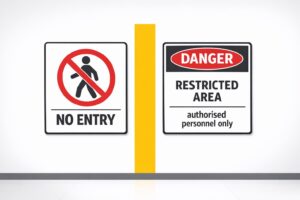
Restricted Area Signs vs. No Entry Signs
Compare No Entry and Restricted Area signs in Australian workplaces — meanings, design differences and AS 1319 compliance.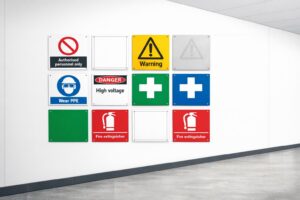
How to Spot Workplace Signage Gaps
Audit your workplace for missing, faded or non‑compliant signs under AS 1319 to reduce incidents and avoid WHS fines.
Symbol Design: Global Standards Explained
Explains ISO 7010 and ISO 3864: standard symbols, colours and sizing for clear, language‑free safety signage and AU compliance.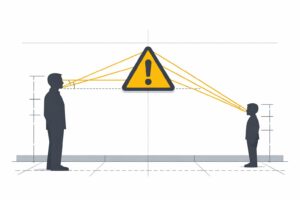
Hazard Sign Visibility Planner
Plan hazard sign placement for max visibility with our free tool. Ensure safety by finding the best spot, height, and angle—try it now!