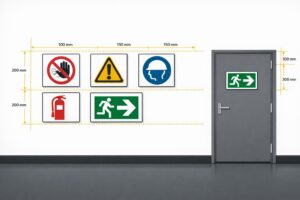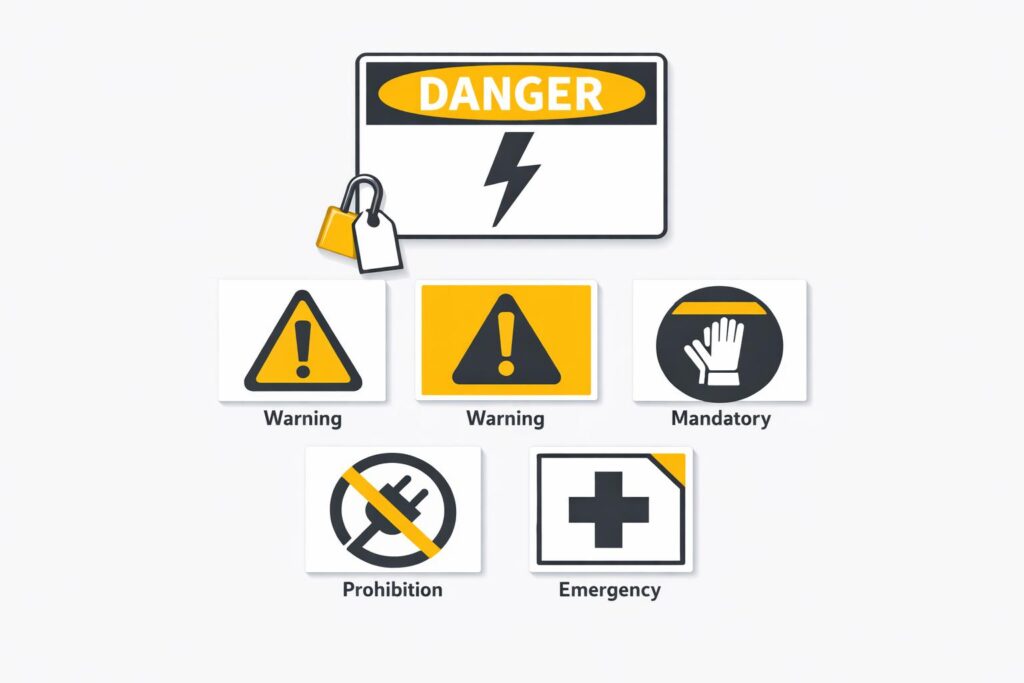
Electrical Safety Signs: Types and Uses
Electrical safety signs are a legal requirement and among the essential safety signs Australian workplaces need to prevent injuries and fatalities caused by hidden electrical hazards. These signs use standardised colours, symbols, and placement rules to communicate risks effectively. The key types include:
- Danger signs: Red signs for life-threatening hazards like high voltage.
- Warning signs: Orange signs for serious injury risks, such as buried cables.
- Mandatory signs: Blue signs for required actions, e.g., wearing insulated gloves.
- Prohibition signs: Red-circle signs to restrict actions, e.g., "DO NOT OPERATE."
- Lock-Out/Tag-Out (LOTO) tags: Red and white tags for maintenance isolation.
Compliance with AS 1319-1994 and state-specific regulations is mandatory. Proper placement (at eye level, visible from all angles) and regular maintenance (monthly inspections and cleaning) ensure these signs remain effective, especially in harsh Australian conditions. Durable materials like UV-coated aluminium are recommended for long-term use.
Key takeaway: Electrical safety signs save lives by clearly marking hazards and guiding safe behaviour. They are essential for meeting legal obligations and maintaining workplace safety.
Electrical Safety Training | Electrical Hazards and Warning Signs
sbb-itb-9950c92
Australian Standards for Electrical Safety Signs
In Australia, electrical safety signs aren’t just a suggestion – they’re a legal requirement supported by national standards. The main standard for workplace safety signs is AS 1319-1994, which works hand in hand with AS/NZS 3000 for electrical installations. Failing to comply can result in hefty fines, legal action under state laws, and even voided insurance claims. These regulations highlight how crucial it is to follow AS 1319-1994 and any additional state-specific rules.
AS 1319: Safety Signs for the Occupational Environment
AS 1319-1994 serves as the foundation for safety signage in Australian workplaces. According to Standards Australia:
"AS 1319-1994 specifies the design and use of safety signs intended to be used in the occupational environment to prevent accidents, and to transmit information on health hazards" [1].
This standard covers everything from colours to symbols. For electrical hazards, the colour coding is particularly important:
- Red indicates immediate, life-threatening danger (like high voltage).
- Yellow signals caution, warning of serious injury risks.
- Blue highlights mandatory actions, such as wearing insulated gloves.
- Green is reserved for emergency equipment locations.
Each type of sign must follow strict visual guidelines to ensure clarity and consistency. Proper placement is also critical – signs need to be easy to see, readable, and well-maintained to remain effective. These national rules set the stage for additional state and territory-specific requirements.
State and Territory Electrical Safety Requirements
While AS 1319 outlines the design standards, state and territory regulations make compliance legally enforceable. Each state incorporates these national standards into their own Work Health and Safety (WHS) or Electrical Safety Acts, creating a system where the signs look consistent nationwide, but the legal requirements for placement and use vary locally.
For instance, Queensland’s Electrical Safety Regulation 2013 includes extra provisions that build on AS 1319-1994. Similarly, AS/NZS 3000 specifies labelling for switchboards, circuit identification, and isolation points, which state electrical inspectors check during required inspections.
This layered approach means businesses must comply with both national standards and local regulations. Organisations like Energy Safe Victoria, WorkSafe QLD, and SafeWork NSW offer additional guidance for high-risk environments. The goal is to use AS 1319-compliant signs with the right colours and symbols, while also adhering to your state’s placement rules. This ensures workers, regardless of where they’re from, can quickly and easily identify hazards.
Types of Electrical Safety Signs
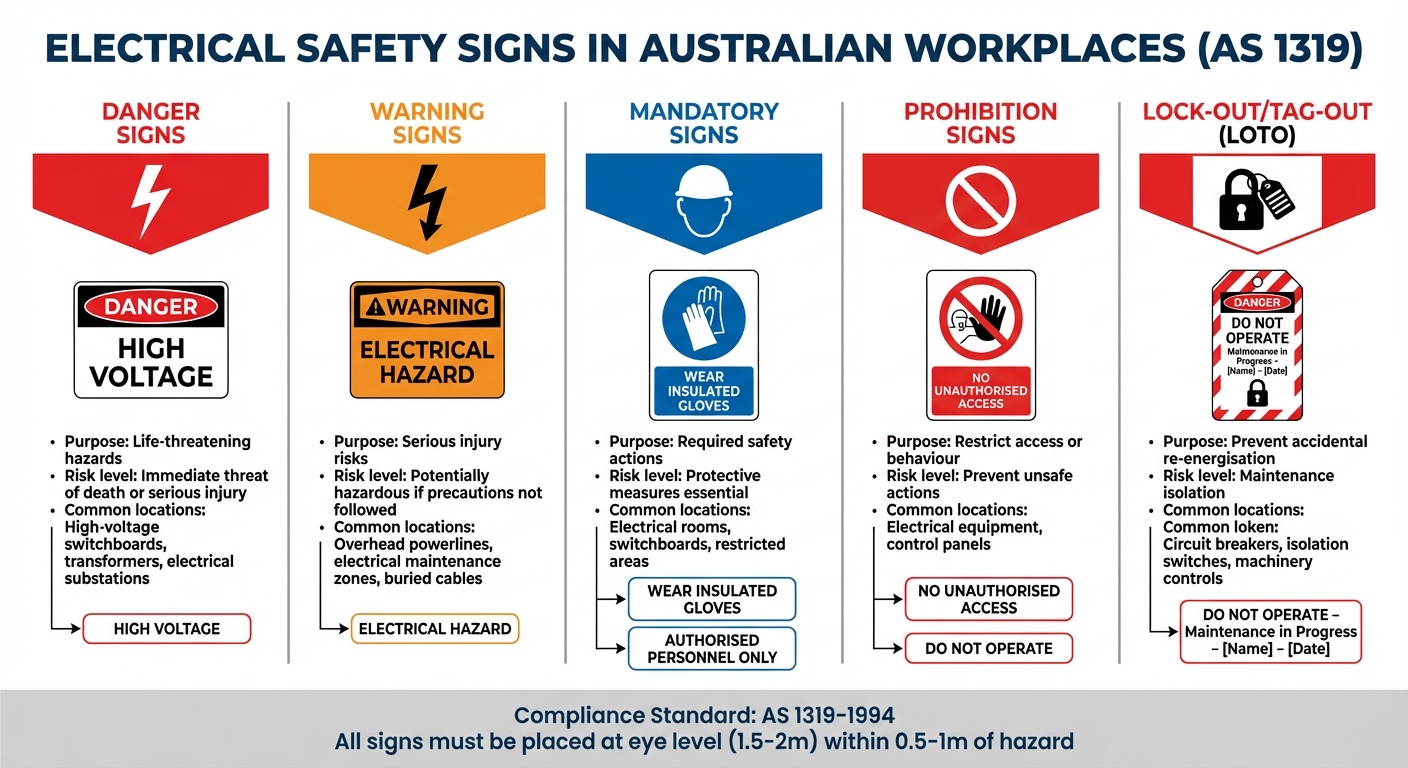
5 Types of Electrical Safety Signs in Australian Workplaces
Recognising the different types of electrical safety signs is crucial for quickly identifying hazards and taking the right precautions. These signs comply with AS 1319 standards, ensuring legal adherence and clear communication of risks. Danger and Warning signs, in particular, use distinct designs like colour coding and symbols to effectively convey their message in Australian workplaces.
Danger Signs for High-Risk Electrical Hazards
Danger signs are reserved for the most severe electrical risks – those that could lead to serious injury or death upon contact. These signs stand out with a bold colour scheme designed to grab attention immediately. As R.W. Hurst, Editor of the Electrical Safety Forum, explains:
"Danger signs are reserved for situations where there is an immediate threat that will result in death or serious injury" [2].
You’ll typically see these signs in areas like high-voltage switchboards, transformers, and electrical substations. They often feature the standard lightning bolt symbol, sometimes paired with an image of a bolt striking a hand to highlight the risk of electric shock. Positioned directly at the hazard, these signs remain visible even in busy industrial settings.
Warning Signs for Electrical Hazards
Warning signs are used to signal potentially hazardous conditions that could cause serious harm if safety measures aren’t followed. These signs are marked with an orange header to alert workers to the danger.
Common examples include signs placed near overhead powerlines, electrical maintenance zones, or areas with buried cables. In these cases, a lightning bolt with a downward arrow warns of underground hazards. Similarly, these signs may appear near electrical panels that, while not high-voltage, still pose a risk of electric shock.
Mandatory and Prohibition Signs for Electrical Areas
Mandatory signs, featuring a blue background, provide instructions for required safety actions. Examples include directives like "WEAR INSULATED GLOVES" or "AUTHORISED PERSONNEL ONLY." These signs are typically found near electrical rooms, switchboards, or other areas where specific protective measures are essential.
On the other hand, prohibition signs use a red circle with a diagonal line to restrict access or behaviour. For instance, "NO UNAUTHORISED ACCESS" or "DO NOT OPERATE" signs are common around electrical equipment. Together, mandatory and prohibition signs help establish clear safety boundaries around electrical hazards. Additionally, Lock-Out/Tag-Out (LOTO) signage plays a key role during maintenance activities.
Lock-Out/Tag-Out (LOTO) Signage
LOTO tags are critical for preventing accidental re-energisation of equipment during maintenance. Designed with a red and white colour scheme, these tags attach directly to circuit breakers, isolation switches, or machinery controls, serving as a clear reminder that the equipment is isolated.
Each LOTO tag should include key details such as the worker’s name, the date of isolation, and the reason for the lock-out. For example, a tag might read: "DO NOT OPERATE – Maintenance in Progress – John Smith – 10/04/2026." Combined with physical locks, these tags provide a dual layer of protection against unintentional power restoration. Keeping records of LOTO checks ensures compliance and safety.
Understanding the various types of electrical safety signs – whether danger, warning, mandatory, prohibition, or LOTO – helps workplaces reduce risks and stay compliant with safety standards. For Australian businesses, providers like PXP Safety offer a wide range of compliant safety signage to meet workplace needs.
Placement and Maintenance of Electrical Safety Signs
Visibility and Placement Guidelines
Once electrical safety signs are classified, their placement becomes critical for ensuring hazards are communicated clearly. Signs should be positioned to provide immediate and clear warnings. Ideally, mount them at eye level – between 1.5 and 2 metres – and within 0.5 to 1 metre of the hazard source, such as switchboards, transformers, or exposed wiring. This ensures workers are alerted before they come into contact with potential dangers.
For optimal readability, signs should be mounted perpendicular to the main line of sight. If equipment has multiple access points, place signs on all sides to ensure visibility from every approach. When signs are installed above eye level, tilt them downward by 10–15° to improve clarity. The recommended minimum viewing distance is 2–3 times the height of the sign, ensuring legibility even from afar.
In low-light conditions, especially in industrial settings, visibility is even more crucial. Use high-contrast colour combinations that remain readable when lighting drops below 50 lux. For critical hazard areas, consider reflective coatings or adding supplementary lighting to ensure the signs remain visible during all operational hours.
While proper placement is essential, keeping these signs in good condition is just as important.
Durability and Maintenance Requirements
Australia’s tough climate demands durable materials that can handle intense UV exposure, unpredictable weather, and challenging industrial conditions. The preferred material is aluminium with UV-protective coatings, as it resists corrosion, fading, and wear over time. Outdoor-grade printing with fade-resistant inks ensures the signs stay legible for 5–10 years, depending on their environmental exposure. Companies like PXP Safety provide high-quality aluminium signs with UV protection and outdoor-grade printing, tailored for Australian conditions.
Regular maintenance is key to ensuring the effectiveness of safety signs. Conduct monthly visual inspections to check for physical damage, fading, or obstructions. Additionally, perform quarterly cleanings using mild soap and water to remove dust and grime. In areas with high corrosion risks, such as coastal or chemical environments, inspections should occur every 4–6 weeks, and fresh water should be used to remove salt deposits. Replace any sign that shows more than 20% fading, physical damage, or illegibility immediately.
All maintenance activities should be documented, including inspection dates, findings, and details of replacements. This documentation not only ensures compliance with Australian workplace safety regulations but also helps maintain accountability. Records should be kept for at least five years and be readily available for safety inspectors when required.
Conclusion
Electrical safety signs play a crucial role in safeguarding workers from unseen dangers. They act as a visual reminder, prompting workers to pause and assess potential risks – a brief moment that can mean the difference between a safe shift and a tragic accident. As a Site Safety Manager at a Sydney manufacturing plant put it:
"These signs aren’t just about ticking compliance boxes. I’ve seen how proper signage creates awareness and hesitation. That moment of pause when someone sees a hazardous voltage sign can be the difference between life and death." [3]
In addition to their practical importance, electrical safety signs are backed by a strong legal framework in Australia. These signs not only protect employees but also help employers meet their legal duty of care. Furthermore, they often serve as a requirement for business insurance policies, demonstrating a company’s commitment to maintaining a safe workplace.
For these signs to remain effective, they must be chosen in compliance with regulations, placed strategically at eye level, and kept in good condition. Regular maintenance, such as monthly inspections and quarterly cleaning, ensures their visibility and reliability over time.
It’s important to recognise that safety signs are just one part of a broader safety strategy. While they may not rank as highly as engineering controls in the hierarchy of risk management, they work hand-in-hand with other measures like administrative controls and Lockout/Tagout (LOTO) procedures. When used correctly and maintained diligently, electrical safety signs help protect workers and businesses by reducing the likelihood of serious electrical incidents.
FAQs
Which electrical safety signs are legally required in my workplace?
In Australian workplaces, a variety of legally required electrical safety signs must be displayed to ensure both compliance with safety regulations and the protection of workers. These include:
- Mandatory signs: Highlighting actions that must be followed, such as wearing protective equipment.
- Danger signs: Indicating life-threatening hazards, such as high-voltage areas.
- Fire equipment signs: Identifying the location of fire extinguishers and related tools.
- First aid emergency signs: Marking the location of first aid kits or stations.
- No smoking signs: Prohibiting smoking in specific areas to reduce fire risks.
- Prohibition signs: Restricting certain actions, like unauthorised entry.
- Warning signs: Alerting workers to potential hazards, such as electrical shocks.
- Dangerous goods signs: Labelling hazardous materials to prevent accidents.
These signs play a crucial role in maintaining a safer workplace and adhering to Australian safety standards.
How do I choose between a Danger sign and a Warning sign?
When dealing with safety hazards, selecting the correct sign is crucial to ensure clear communication and maintain compliance with safety standards.
- Danger signs are reserved for life-threatening hazards that demand immediate attention. Think of situations involving high voltage, toxic chemicals, or extreme risks. These signs are typically red and prominently feature bold danger symbols to grab attention instantly.
- Warning signs, on the other hand, are used for hazards that could cause serious injuries but aren’t immediately life-threatening. Examples include wet floors, hot surfaces, or areas with low head clearance. These signs are usually yellow with black text or symbols, providing a clear but less urgent visual cue.
Choosing the right type of sign helps ensure that everyone understands the level of risk and acts accordingly.
When should I replace an electrical safety sign?
When an electrical safety sign becomes damaged, faded, or falls short of current safety standards, it’s essential to replace it. Clear signage plays a critical role in communicating hazards effectively and maintaining a safe workplace environment.
Related Blog Posts
You may also be interested in
FAQs About Workplace Safety Signs in Australia
AS 1319 sign types, placement, materials and maintenance for workplace safety and WHS compliance in Australia.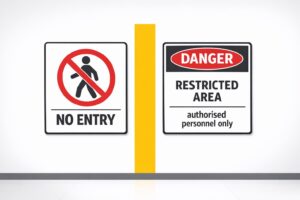
Restricted Area Signs vs. No Entry Signs
Compare No Entry and Restricted Area signs in Australian workplaces — meanings, design differences and AS 1319 compliance.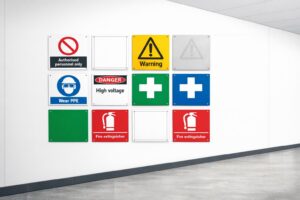
How to Spot Workplace Signage Gaps
Audit your workplace for missing, faded or non‑compliant signs under AS 1319 to reduce incidents and avoid WHS fines.
Symbol Design: Global Standards Explained
Explains ISO 7010 and ISO 3864: standard symbols, colours and sizing for clear, language‑free safety signage and AU compliance.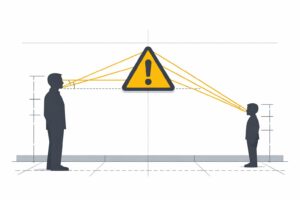
Hazard Sign Visibility Planner
Plan hazard sign placement for max visibility with our free tool. Ensure safety by finding the best spot, height, and angle—try it now!