Best Loading Dock Safety Signs in Australia
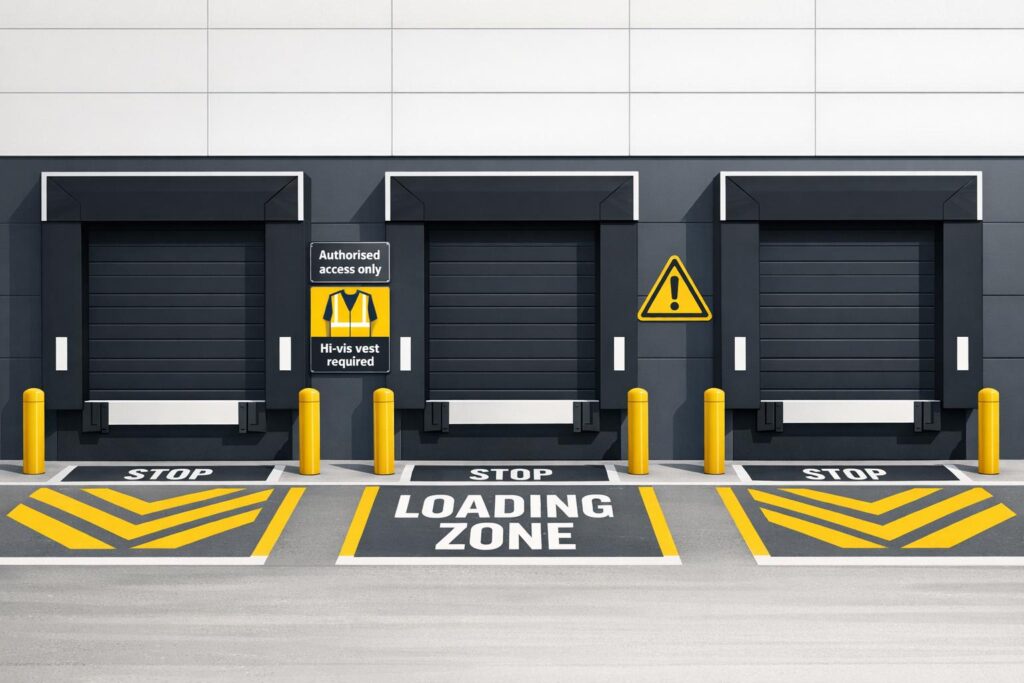
Loading docks in Australia are high-risk areas where accidents involving vehicles, forklifts, and pedestrians frequently occur. Proper essential safety signs are necessary to prevent injuries, comply with regulations, and ensure smooth operations. Australian standards, such as AS 1319-1994 and AS 2359.2, guide the design and use of safety signs to manage risks effectively. These signs must be highly visible, durable, and strategically placed to warn of hazards like vehicle collisions, falls, or slippery surfaces.
Key insights:
- AS 1319-1994 mandates clear, visible signage with specific size and placement requirements.
- Materials like UV-resistant aluminium or ACM ensure durability in outdoor conditions.
- Regular maintenance, including cleaning and replacement, is required for compliance.
- Standard signs are cost-effective for common hazards, while custom signs address site-specific needs.
PXP Safety offers compliant, weatherproof signs starting from $35.00. Options include standard signs for forklifts and pedestrian zones or custom signs with tailored messages. These solutions help businesses meet safety obligations while reducing risks in loading dock areas.
Loading Dock Safety | Warehouse Safety Tips
sbb-itb-9950c92
Australian Standards for Loading Dock Safety Signs
AS 1319:1994, published on 18 April 1994, outlines the requirements for safety signs to guide behaviour, warn about hazards, and provide emergency information [1]. This 35-page standard can be purchased for $160.69 (including GST) and serves as an essential resource for reducing accidents and avoiding legal issues. A key aspect of the standard is its emphasis on visibility.
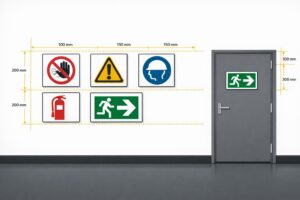
To ensure signs are easily seen and understood, symbols must measure at least 15 mm per metre of viewing distance. Uppercase text should be no smaller than 5 mm, while lowercase text must be at least 4 mm. For areas with poor lighting or restricted viewing angles, these dimensions should be increased by 50% [2][4]. Placement is equally important for effectiveness.
Signs should be mounted at eye level on stationary surfaces, positioned clearly before the hazard, and set against contrasting backgrounds to enhance readability and allow for quick reactions [2][4][5]. Material choice also plays a role in maintaining safety standards.
For outdoor loading docks, use durable and UV-resistant materials to withstand environmental conditions. Additionally, avoid overcrowding areas with excessive signage to maintain clarity [2][5].
Regular maintenance is crucial. Signs should be inspected and cleaned every three months, with damaged or faded signs replaced immediately to ensure compliance [4]. Following these standards helps businesses meet workplace health and safety (WHS) obligations, reduces accident risks, and protects against legal liabilities [4].
PXP Safety Loading Dock Safety Signs
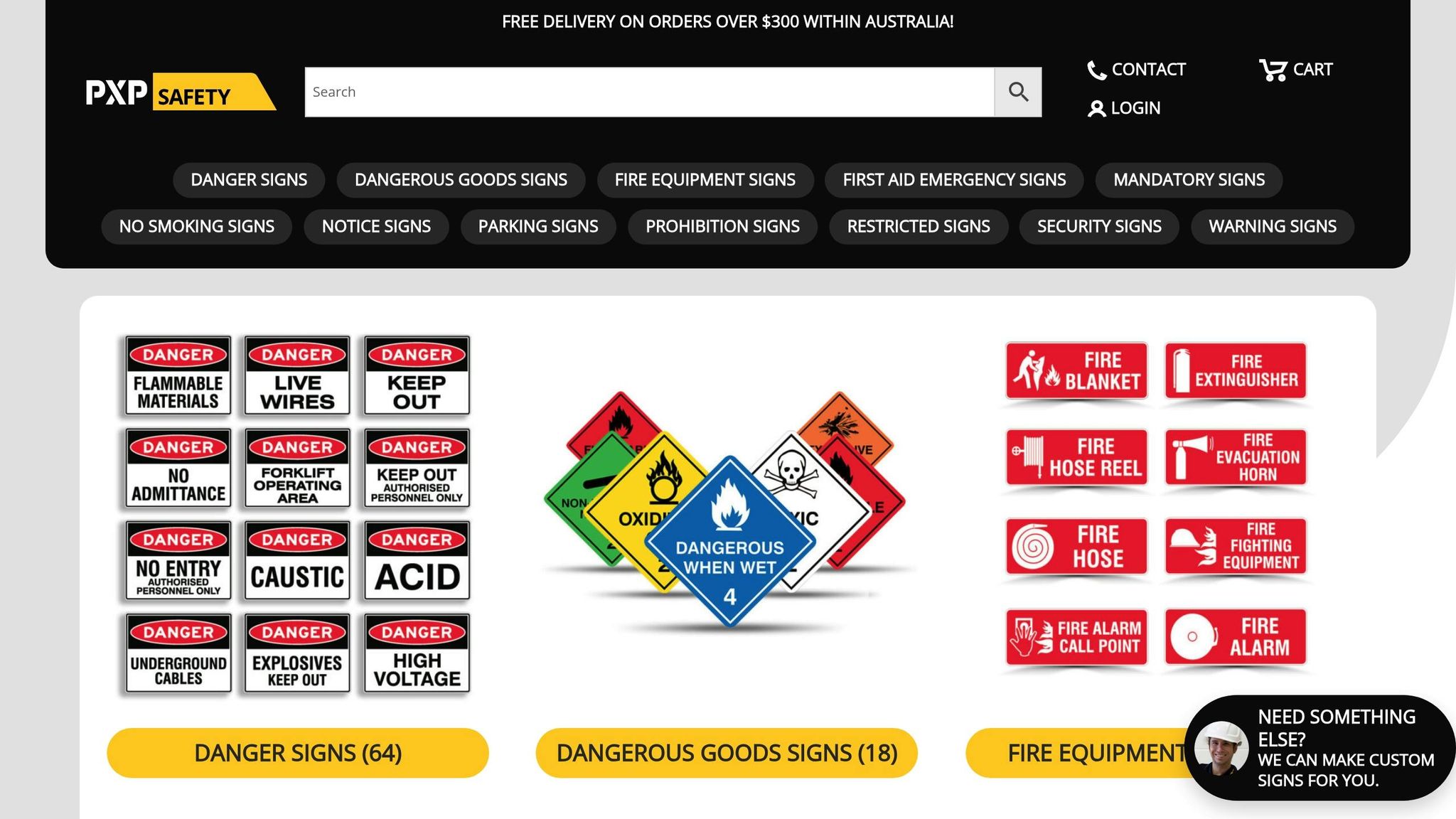
PXP Safety ensures its loading dock signs meet strict Australian safety standards by using 3mm thick SNA Aluminium or ACM in silver brushed or white finishes [6]. These signs are designed with tamper-proof graphics and high-visibility black text on contrasting backgrounds, ensuring they remain easy to read over time [6]. Fully compliant with the Building Code of Australia (BCA) and relevant Australian Standards, these signs help workplaces meet statutory safety requirements [13,16].
For convenience, the signs come with rear double-sided tape, allowing for quick, tool-free installation. This means they can be set up without disrupting daily operations. Additionally, a UV-resistant coating protects the signs from Australia’s harsh weather conditions, ensuring their durability [6].
Pricing starts at $35.00 for statutory aluminium signs, while construction and warning signs are available from $12.40 to $15.40, depending on the type of warning [13,16]. Some construction signs also come with a 2-year warranty, offering extra peace of mind for outdoor use [8]. Below is a closer look at specific sign types.
Danger Loading Dock Sign
These danger signs are essential for marking high-risk areas, alerting people to hazards like low clearance, moving machinery, or confined spaces [5,16]. The UV-resistant coating ensures the signs do not fade, even under direct sunlight [6]. These signs serve two purposes: they help delivery drivers locate loading docks and remind them of their responsibilities while parked [6]. Common danger messages include "Low Headroom", "Keep Clear of Moving Machinery", and "Forklifts Operating Area" [5,16]. Thanks to their high-contrast design, these signs are visible from a distance, enabling workers and visitors to spot potential risks before entering restricted zones.
Pedestrian Exclusion Zone Sign
Pedestrian exclusion signs help separate foot traffic from vehicles by using clear pictograms that instantly communicate their message [7]. These signs are particularly effective in busy areas where forklifts, trucks, and pedestrians interact [5,16]. Floor-mounted versions use aggressive self-adhesive vinyl, ensuring they stay in place despite heavy foot and vehicle traffic [9]. Shared zone signs may also include speed limits of 5km/h alongside warnings like "Forklifts Operating", ensuring pedestrian safety while keeping machinery hazards clearly visible [8].
Forklift Traffic Warning Sign
Forklift warning signs complement pedestrian exclusion signs by defining safe boundaries for heavy machinery operations. They play a key role in traffic management, reducing the risk of vehicle–pedestrian accidents [5,14]. Messages like "Forklifts in Use" and "Forklift Operating Area" clearly identify zones where equipment is in motion [5,14]. Floor signs featuring forklift symbols act as visual reminders for both pedestrians and drivers to respect exclusion zones [9]. These signs should be displayed both inside and outside facilities to alert delivery drivers before entering high-risk areas [10]. Additional instructional signs, such as "Wheels Must Be Chocked" or "Truck Engines Must Turn Off", reinforce critical safety procedures during loading and unloading operations [3].
Custom Loading Dock Signs from PXP Safety
PXP Safety goes beyond standard signage by offering custom solutions tailored to the unique challenges of loading docks. These signs can feature specific details like dock numbers, speed limits, height restrictions (e.g., "Clearance … Metres" or "Low Headroom"), and driver-specific zones such as "Drivers Restricted to Loading Dock Only" [3]. Made with durable materials like 3mm SNA Aluminium, Aluminium Composite Panel (ACP), vinyl stickers/decals, or Class 2 reflective vinyl, these signs are built to last. The reflective vinyl option is particularly useful for docks operating at night or in dim lighting, ensuring visibility that meets Australian standards. All materials comply with the Building Code of Australia (BCA) and relevant Australian Standards, guaranteeing both durability and compliance.
Customisation options include a range of sizes, such as the commonly used 600 x 100 mm for statutory signs, and various finishes like black text on a silver background or custom colours for vinyl decals. Additional features, including lamination, anti-graffiti coating, and tamper-proof graphics, provide extra protection against weather and vandalism, ensuring the signs stay clear and readable even in Australia’s tough outdoor conditions.
"Our Australian-manufactured safety signs are perfect for large sites and multiple locations where consistency and quality are important." – statutorysigns.com.au
PXP Safety also ensures fast service and reliable support for custom orders. With a 48-hour turnaround, businesses can quickly meet safety compliance requirements. Pricing starts at $15.40 for general signs and $35.00 for statutory aluminium signs, with flat-rate shipping across Australia at around $15. For added peace of mind, some custom signs come with a 2-year warranty and a money-back guarantee, ensuring long-term satisfaction.
Standard vs Custom Loading Dock Signs
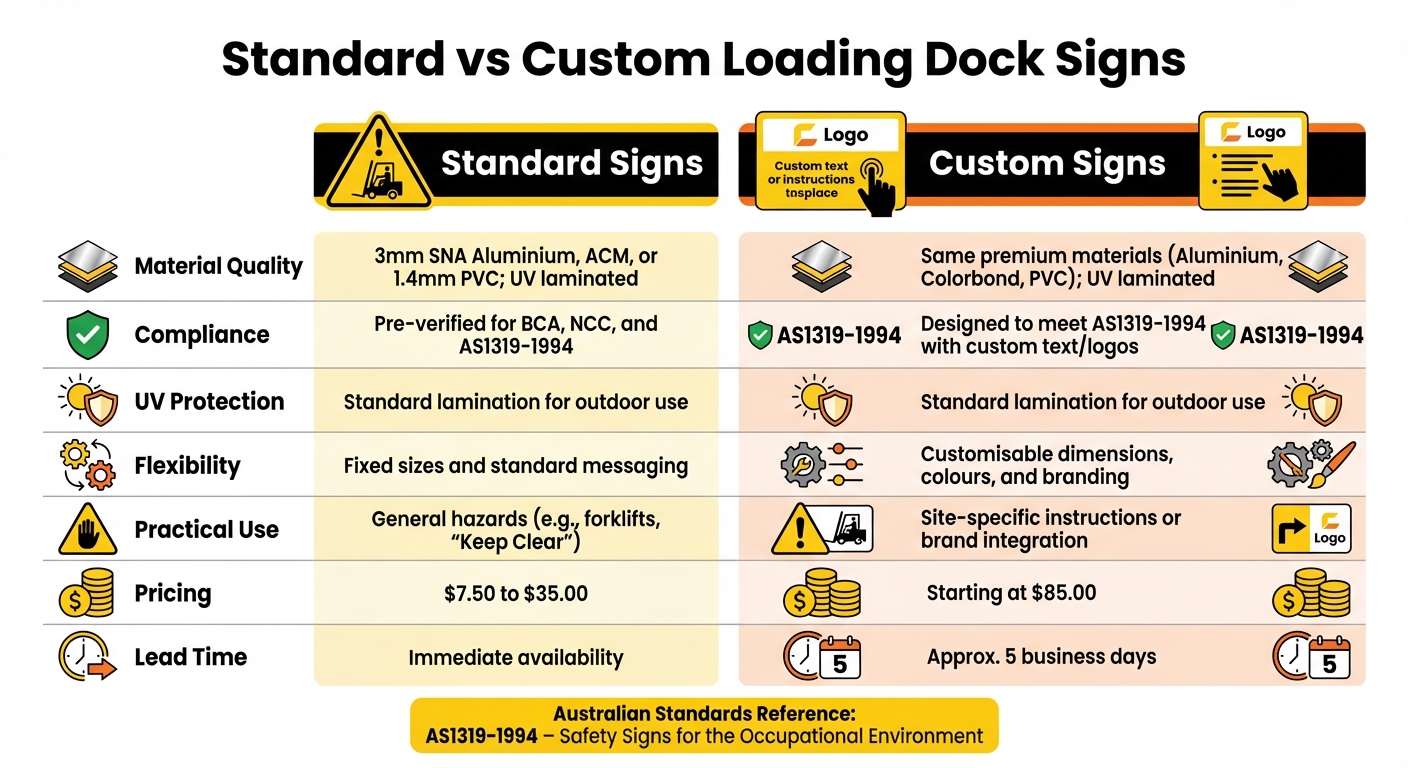
Standard vs Custom Loading Dock Safety Signs Comparison
When deciding between standard and custom loading dock signs, your choice often comes down to the specific needs of your site and your budget. Standard signs are pre-designed with compliance in mind, meeting the requirements of the BCA, NCC, and AS1319-1994. They’re an economical option for addressing common hazards, like forklift zones or PPE requirements, and are available in fixed sizes – such as the popular 600 x 100 mm format. These signs usually feature black text on silver or white backgrounds, ensuring they meet statutory guidelines [12][6].
Custom signs, on the other hand, offer the flexibility to address unique hazards, align with company branding, or provide specific instructions. For example, a custom sign might read, "Drivers Restricted to Loading Dock Only." While these signs still adhere to compliance standards, they allow for tailored messaging and design [13][3]. Both standard and custom options are made from high-quality materials like 3mm SNA Aluminium, Aluminium Composite Material (ACM), white Colorbond steel, and 1.4mm PVC, all of which are UV laminated for durability in outdoor conditions [6][11].
"Safety signs are not just a legal requirement; they are a key component in minimising risks and preventing accidents." – Signportal [13]
For outdoor docks exposed to harsh weather, materials like Aluminium or Colorbond steel provide excellent resistance to UV damage. Meanwhile, PVC or ACM is better suited for indoor or sheltered areas, as these materials are lightweight and tamper-proof [11][6]. When ordering custom signs, it’s essential to prepare your artwork correctly – ensure text is converted to outlines and images are at least 300dpi to maintain professional print quality [11].
Comparison Table
| Feature | Standard Loading Dock Signs | Custom Loading Dock Signs |
|---|---|---|
| Material Quality | 3mm SNA Aluminium, ACM, or 1.4mm PVC; UV laminated [6][11] | Same premium materials (Aluminium, Colorbond, PVC); UV laminated [11] |
| Compliance | Pre-verified for BCA, NCC, and AS1319-1994 [12][6] | Designed to meet AS1319-1994 with custom text/logos [11] |
| UV Protection | Standard lamination for outdoor use [11] | Standard lamination for outdoor use [11] |
| Flexibility | Fixed sizes and standard messaging [6] | Customisable dimensions, colours, and branding [11] |
| Practical Use | General hazards (e.g., forklifts, "Keep Clear") [3] | Site-specific instructions or brand integration [13] |
| Pricing | $7.50 to $35.00 [12][6] | Starting at $85.00 [11] |
| Lead Time | Immediate availability | Approx. 5 business days [11] |
The choice between standard and custom signs can have a direct impact on safety in loading dock operations. While standard signs are quick and cost-effective, custom signs provide tailored solutions for specific challenges, ensuring businesses can implement safety measures that are precisely aligned with their needs.
Why Choose PXP Safety for Loading Dock Signs
PXP Safety designs loading dock signs specifically for Australian conditions. Made from durable 3mm thick SNA Aluminium or Aluminium Composite Material (ACM) in Silver Brushed or White finishes, these signs are built to handle Australia’s harsh UV exposure and unpredictable weather. The tamper-proof graphics ensure the text remains clear and readable over time, meeting the high standards outlined earlier.
Our signs are crafted to create a safer and more compliant loading dock environment. They meet the requirements of the BCA, NCC, and AS 1319-1994, ensuring your site adheres to all necessary safety regulations. Manufactured locally in Australia, these signs deliver reliable quality, making them a great choice for large-scale or multi-site operations. Installation is simple, with each sign designed for quick and secure mounting on a variety of surfaces.
In addition to durability and compliance, PXP Safety offers flexibility with customisation. Whether you need bilingual text, site-specific messages, or branding elements, we can tailor the signs to your needs. Available in various sizes and materials, including Colorbond steel and 1.4mm PVC, our signs can be adapted to suit any site. By strategically placing warning signs, you can significantly reduce the risk of forklift-related incidents.
Pricing begins at $35.00 for standard options and $85.00 for customised configurations. This competitive pricing, combined with the long-lasting performance of our signs, minimises replacement costs while enhancing safety – an essential feature for outdoor loading docks exposed to Australia’s intense weather conditions.
Conclusion
Loading docks are among the riskiest areas in Australian warehouses, where heavy vehicles, forklifts, and pedestrians operate in close quarters. Ensuring proper signage is not just a legal requirement under Australian OH&S laws, but also a practical step towards preventing workplace accidents. As highlighted by the Adaptalift Group, “Safety signs are a critical visual reminder that actively help prevent errors in the daily operations of warehouses” [14]. This makes the case for investing in high-quality loading dock signs even stronger.
PXP Safety offers Australian-made loading dock signs crafted from durable 3mm thick SNA Aluminium and ACM, designed to endure harsh UV exposure and extreme weather conditions. Fully compliant with BCA and AS 1319-1994 standards, these signs meet legal requirements while offering customisation options like bilingual text, site-specific warnings, or integrated branding – ideal for addressing unique safety challenges.
Starting at $35.00, these signs provide long-term value by reducing replacement costs and promoting a safer work environment. Well-placed, durable signage significantly lowers the risk of forklift-related incidents and ensures that delivery drivers are aware of critical safety protocols.
FAQs
What should I consider when choosing loading dock safety signs in Australia?
When choosing loading dock safety signs in Australia, it’s important to ensure they meet Australian standards, including the Building Code of Australia (BCA), to maintain both safety and compliance.
The material quality of the signs matters too. Opt for durable options like aluminium with UV protection, as these can handle Australia’s tough outdoor conditions without fading or wearing out. Visibility is another critical factor – clear, legible text in black on a contrasting background ensures the signs can be easily read, even from a distance. Proper sizing also plays a role in making them effective.
Practical features can enhance usability. Signs with tamper-proof graphics and simple installation methods, such as adhesive backing, are easier to put up and maintain. By selecting the right safety signs, you can help create a safer and more organised environment for workers and drivers, ensuring critical safety messages are communicated effectively.
What are the key differences between custom and standard loading dock safety signs in Australia?
Custom loading dock safety signs are designed to meet the specific needs of your facility while adhering to Australian standards, such as the Building Code of Australia (BCA) and AS 1319. Unlike off-the-shelf options, these signs can include tailored messages, precise hazard warnings, or even incorporate branding, ensuring they align perfectly with your operations.
Beyond meeting compliance requirements, these signs enhance safety and communication by delivering clear, targeted instructions that workers and visitors can easily understand. Typically crafted from durable materials like aluminium with UV protection, they are built to endure Australia’s challenging outdoor conditions. This blend of compliance, resilience, and personalisation makes custom safety signs a smart choice for boosting both safety and efficiency in loading dock areas.
Why is it important to regularly maintain loading dock safety signs?
Regular upkeep of loading dock safety signs is essential to keep them clear, visible, and effective in delivering safety messages. Over time, dirt, debris, or harsh weather conditions can diminish their visibility, increasing the risk of accidents. Well-maintained signs allow workers and drivers to quickly recognise hazards, restricted zones, or safety instructions, helping to prevent injuries and mishaps.
Signs that are damaged or faded may no longer comply with Australian safety standards, potentially leading to legal complications or safety violations. Conducting regular inspections, cleaning, and promptly replacing worn-out signs ensures adherence to workplace safety regulations and keeps everyone on site safe while protecting property.
Related Blog Posts
You may also be interested in
FAQs About Workplace Safety Signs in Australia
AS 1319 sign types, placement, materials and maintenance for workplace safety and WHS compliance in Australia.
Restricted Area Signs vs. No Entry Signs
Compare No Entry and Restricted Area signs in Australian workplaces — meanings, design differences and AS 1319 compliance.
How to Spot Workplace Signage Gaps
Audit your workplace for missing, faded or non‑compliant signs under AS 1319 to reduce incidents and avoid WHS fines.
Symbol Design: Global Standards Explained
Explains ISO 7010 and ISO 3864: standard symbols, colours and sizing for clear, language‑free safety signage and AU compliance.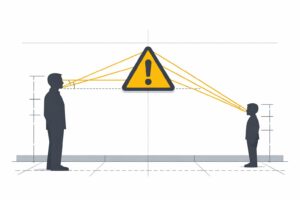
Hazard Sign Visibility Planner
Plan hazard sign placement for max visibility with our free tool. Ensure safety by finding the best spot, height, and angle—try it now!