Checklist for Evaluating Sign Effectiveness
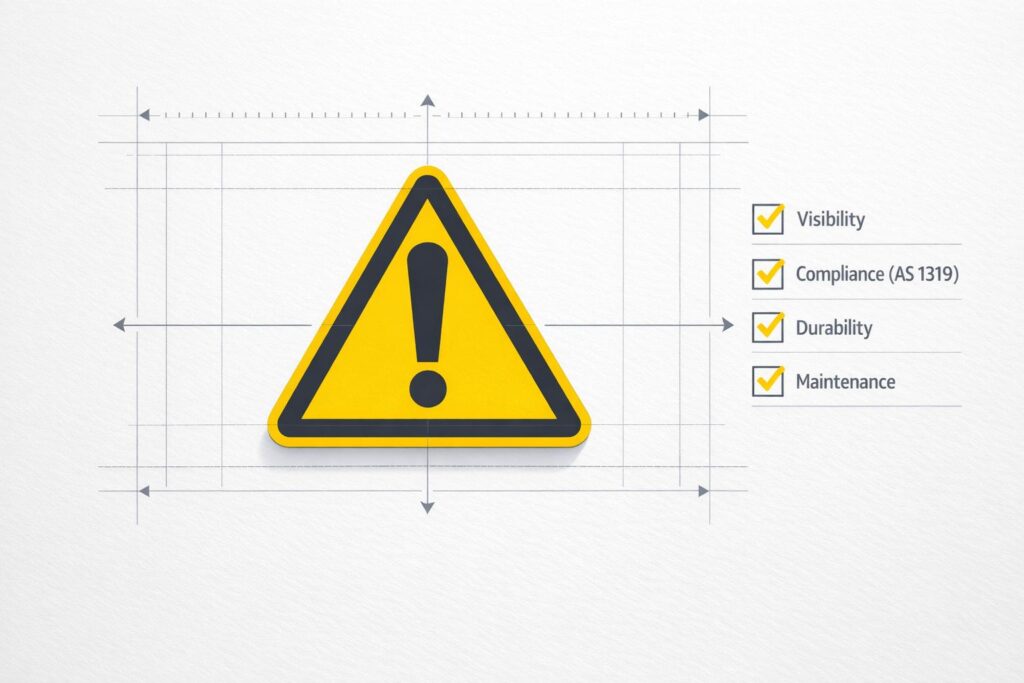
Safety signs save lives. But only if they’re visible, compliant, and maintained. Australian workplaces rely on essential safety signs to prevent injuries, guide workers, and meet legal standards like AS 1319-1994 and WHS regulations. Without regular checks, signs can fade, become obstructed, or fail compliance, putting workers at risk and exposing businesses to fines.
Key Points:
- Visibility matters: Signs must be clear, well-lit, and placed for maximum readability.
- Compliance is non-negotiable: Follow AS 1319-1994 for colours, shapes, and sizes.
- Durability counts: Use materials suited for Australia’s harsh weather.
- Maintenance is critical: Regular inspections and cleaning keep signs effective.
Safety signs aren’t just about compliance – they’re about preventing injuries. A systematic approach to visibility, compliance, durability, and maintenance ensures your workplace remains safe and legally protected.
Visibility Assessment Checklist
Placement and Viewing Distance
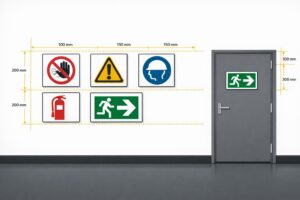
Signs should be installed as close as safely possible to the hazard they warn about, ensuring they are visible from all approaching angles without obstruction [6]. Mount them at a height that suits workers of varying heights [9]. To maximise readability, place signs perpendicular to the path of approaching workers or traffic [8].
When it comes to sizing, precision matters. Pictograms need a minimum height of 15 mm for every metre of viewing distance. Uppercase letters should measure at least 5 mm per metre, while lowercase letters require 4 mm per metre [1]. For viewing distances over 6,000 mm, calculate the letter height using this formula: Height (mm) = Viewing distance (mm) / 200 [9].
For text readability at a distance, use sans-serif fonts like Arial, Helvetica, or Verdana [7][9]. Avoid using all capital letters for messages longer than two words, as it slows reading and reduces comprehension [9].
These recommendations align with Australian safety standards to ensure workplace signage complies with national regulations.
Next, assess lighting and contrast to guarantee visibility in all conditions.
Lighting and Contrast
Safety signs must remain visible in every lighting condition. In dimly lit areas, symbols and text should be enlarged by at least 50% compared to their size in well-lit environments [10][11][12]. For instance, a caution sign requiring 15 mm symbols per metre in bright conditions should use symbols around 22.5 mm per metre in low light.
Maintain at least 70% contrast between the text and its background for clear visibility [7]. Avoid placing signs on backgrounds of a similar colour – for example, a yellow caution sign on a yellow wall can blend in and become hard to notice. In poorly lit areas, consider using Class 2 reflective materials or adding dedicated lighting to ensure the sign remains visible [10][11][6].
For signs that need to be seen at night, opt for High-Intensity Prismatic (Type III) or Diamond-Grade (Type XI) sheeting [8].
Now, think about how much time workers need to react to the sign.
Reaction Time
Signs should be positioned far enough from hazards to allow workers to recognise and respond before reaching the danger [10]. The placement must account for both the distance at which the sign is visible and the distance at which its message becomes legible [10][11][13][14].
To prevent "sign fatigue", eliminate unnecessary or outdated signs that could distract from the most important warnings [6]. Keeping signage clear and focused is critical to reducing workplace injuries in Australian environments. Additionally, failure to comply with signage standards can lead to severe penalties [6].
sbb-itb-9950c92
Compliance Verification Checklist
Colour and Shape Standards
Workplace safety signs in Australia must comply with AS 1319-1994, the standard that dictates their design, colour, and layout. Under WHS regulations, business owners and safety officers are held responsible for ensuring all signage meets these requirements. Failing to comply can lead to hefty penalties [3].
Start by checking that every sign uses the appropriate colour and shape combination. For example:
- Danger signs: Feature "DANGER" in white letters on a red oval, set within a black rectangle, to warn of life-threatening hazards.
- Warning signs: Use a black triangle against a yellow background for non-immediate risks, such as forklift zones.
- Mandatory signs: Display a blue circle with a white pictograph, indicating required actions like wearing safety goggles.
- Prohibition signs: Show a red circle with a diagonal slash over a black pictograph on a white background to signal forbidden actions.
Perform compliance audits at least twice a year or whenever there are changes to the site layout, machinery, or procedures. Also, ensure mandatory signage and hazard-specific warnings are clearly defined and easy to spot.
Mandatory and Hazard-Specific Signs
Start your inspection with a thorough walkthrough of the site, using a map to log the location of all required safety signs [3]. Confirm that mandatory signs are prominently displayed in areas where specific protective measures or actions are necessary. Their visibility is critical to maintaining safety standards.
Check that hazard-specific signs align with the risks they represent. For instance, use danger signs for life-threatening hazards and warning signs for lower-risk situations. Remove any outdated or unnecessary signs to minimise clutter, as visual distractions can reduce the effectiveness of critical warnings.
Keep a detailed record of your findings – either digitally or in writing – for WHS inspections. Assign someone to oversee the six-monthly audit cycle and ensure updates are implemented as needed [3]. Don’t forget to include emergency and exit signage in your review to complete the compliance process.
Emergency and Exit Signage
Emergency signs use white symbols or text on a green rectangular background to indicate locations like exits, first aid stations, and safety equipment. Fire-related signs, on the other hand, feature white text or pictographs on a red background to identify fire alarms and firefighting tools. Both types must be clearly visible and unobstructed.
Mount emergency signage at a height of 1.5 to 2.1 metres to keep them within the average person’s line of sight [3]. Position them against contrasting backgrounds to enhance visibility [10]. For construction sites, WHS regulations mandate additional signage, such as the principal contractor’s name, contact number, and site office location, which must be visible from outside the workplace [15].
Choose materials based on the environment where the signs will be placed. Aluminium composite panels are a durable choice for outdoor settings, while polypropylene works well indoors. Regular maintenance is essential – keep signs clean, well-lit, and replace them immediately if they fade or lose their reflective quality [3]. These practices are vital for ensuring workplace safety remains a top priority.
OSHA Safety Signs: Where Should Safety Signs Be Placed
Durability and Maintenance Checklist
Safety Sign Material Durability Guide for Australian Workplaces
Maintaining the durability and security of signage is just as important as ensuring visibility and compliance. Together, these aspects contribute to the overall effectiveness of safety signs.
Material Quality and Weather Resistance
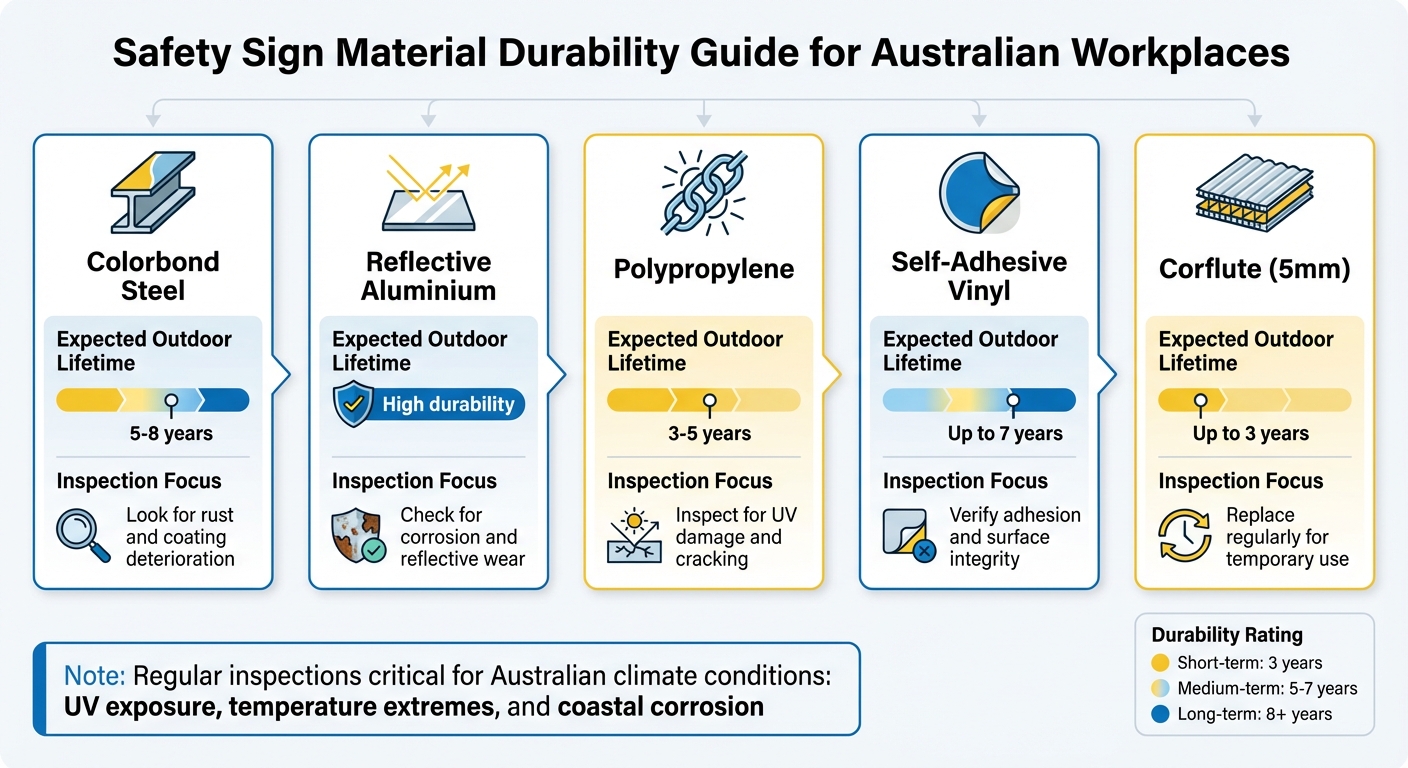
Australia’s tough climate demands materials that can handle UV exposure, temperature extremes, and coastal corrosion. For instance, Colorbond steel with a powder-coated finish typically lasts 5 to 8 years outdoors, while reflective aluminium with Class 2 reflective sheeting offers robust strength and corrosion resistance [4]. If you’re looking for a budget-friendly option, polypropylene is UV-stable, heat-resistant, and performs well for 3 to 5 years in Australia’s varied climates [4][16].
For indoor use, self-adhesive vinyl is a great choice, lasting over 8 years indoors and about 7 years outdoors [4]. Temporary signage, such as for construction sites, can benefit from corflute (5mm), which is lightweight and cost-effective, with a lifespan of up to 3 years [4]. When selecting materials, consider the environment: opt for metal or UV-stabilised polypropylene in industrial or outdoor settings, and vinyl for controlled indoor environments [16].
Regular inspections are critical to catching early signs of wear. Look for faded text or symbols, which may indicate UV damage, or cracks and peeling that suggest the protective coating is failing. In coastal or humid areas, rust on signs or mounting hardware needs immediate attention to maintain safety standards and ensure long-term performance [17][18].
Mounting and Security
Choosing durable materials is only part of the equation – proper installation is equally important. Most rigid safety signs come with rounded corners and pre-drilled 4mm mounting holes for secure attachment [4]. During routine checks, ensure signs are firmly secured, as loose signs can pose hazards and reduce visibility. Inspect mounting hardware for tightness and check for rust or corrosion on bolts, screws, and poles [18].
If rust is present on mounting components, clean it with a wire brush or sandpaper, then apply a rust-inhibiting primer and paint to prevent further damage [18]. For signage near power poles, ensure installers adhere to "no-go zone" guidelines to maintain electrical safety. Replace any corroded hardware immediately to ensure the sign remains functional and safe.
Regular Maintenance Schedule
A consistent maintenance routine is essential for keeping signs effective. Begin with monthly visual inspections to identify any obvious damage, dirt buildup, or obstructions caused by vegetation or equipment [18]. Follow this with quarterly detailed assessments, which should include cleaning, checking hardware, and noting any issues that need attention. Comprehensive audits should be conducted twice a year, or more frequently if there are changes to site layouts, machinery, or operational processes [3].
When cleaning signs, use a soft cloth or sponge with mild detergent to avoid damaging UV coatings or reflective surfaces. Harsh cleaners, bleach, or abrasive materials should be avoided [18]. Keep a digital log of inspection dates, findings, and corrective actions to help with compliance during WHS inspections. This also ensures you can track when signs are nearing the end of their expected lifespans, maintaining safety and effectiveness [3][18].
| Material Type | Expected Outdoor Lifetime | Inspection Focus |
|---|---|---|
| Colorbond Steel | 5–8 years [4] | Look for rust and coating deterioration |
| Reflective Aluminium | High durability [4] | Check for corrosion and reflective wear |
| Polypropylene | 3–5 years [4] | Inspect for UV damage and cracking |
| Self-Adhesive Vinyl | Up to 7 years [4] | Verify adhesion and surface integrity |
| Corflute (5mm) | Up to 3 years [4] | Replace regularly for temporary use |
For safety signage that stands up to Australia’s demanding conditions, PXP Safety (https://pxpsafety.com.au) offers materials designed to last, paired with a focus on regular maintenance to keep your workplace compliant and secure.
Implementation and Audit Checklist
After addressing visibility, compliance, and durability checks, it’s crucial to create a process that ensures these standards are consistently maintained. A structured approach to implementation and regular audits will help keep your workplace safe and aligned with WHS requirements.
Conduct a Risk Assessment
Start by identifying every location that requires signage. Survey the site to pinpoint hazard zones such as confined spaces, high-voltage areas, chemical storage, or areas with heavy machinery [2][19]. For each identified risk, select the correct sign type – Danger, Warning, Prohibition, or Mandatory [20][5].
Develop a detailed site map that highlights all required signage locations [3]. This map acts as a visual guide, ensuring no area is missed. Assess environmental factors at each location, like lighting levels and potential obstructions caused by equipment or stacked materials [3][5]. Keep in mind that workplace conditions evolve – new machinery, layout changes, or updated procedures mean fresh assessments are necessary [3].
Once you’ve mapped hazards, proceed with a comprehensive audit of existing signage to ensure compliance with current standards.
Perform a Signage Audit
Review all existing signs against WHS regulations and AS 1319-1994 standards to identify any gaps or non-compliance issues [3][5]. Conduct these audits at least twice a year or whenever significant operational changes occur [3]. Use a standardised checklist categorised by sign type – Warning, Mandatory, Prohibition, Emergency, and Fire – to ensure all regulatory requirements are covered [3][2].
During the physical inspection, look for common issues such as faded print, outdated symbols that no longer meet AS 1319 standards, or signs obstructed by workplace clutter [3]. Verify that signs are installed at the correct height as per regulations [3][2]. Document all findings digitally, noting the location, type of non-compliance, and any corrective actions required. This record is a key element in demonstrating your WHS compliance during official inspections [3].
The findings from your audit will guide your next steps in replacing and customising signage.
Plan Replacements and Customisations
Focus on replacing any damaged or non-compliant signs first, and remove outdated duplicates [3]. Ensure new signs meet legibility standards – symbols should be at least 15mm per metre of viewing distance, and uppercase letters should be 5mm per metre, with sizes increased by 50% in areas with poor lighting [5].
For hazards or operational needs not addressed by standard AS 1319 signs, consider creating custom signage [3]. Companies like PXP Safety (https://pxpsafety.com.au) offer custom sign solutions tailored to Australia’s specific conditions, ensuring compliance while addressing unique workplace requirements.
Conclusion
Maintaining effective safety signage requires ongoing focus on four key areas: visibility, compliance, durability, and maintenance. Your signs must stay visible under all lighting conditions and free from obstructions. They also need to meet compliance standards as outlined in AS 1319 and WHS regulations to avoid fines or legal issues. Durability is critical, especially given Australia’s harsh conditions, including intense UV exposure, unpredictable weather, and general wear and tear. Finally, regular maintenance, such as twice-yearly audits, ensures your signage keeps up with operational changes and continues to safeguard workers effectively.
Failing to address these aspects can lead to regulatory penalties and, more importantly, workplace injuries. Signs that are faded, damaged, or poorly positioned lose their ability to prevent accidents. As Michael Selinger, Editor-in-Chief of the Health & Safety Handbook, points out:
"a sign on its own cannot be the single safety solution for controlling any particular hazard or risk – it must be used in conjunction with other controls" [21].
To strengthen your compliance and safety culture, maintain thorough audit records, including photographs and details of corrective actions. This not only demonstrates adherence to WHS requirements during inspections but also helps create a safer workplace. Additionally, removing outdated or duplicate signs reduces clutter, ensuring clear and effective communication [3][21].
FAQs
How do I choose the right sign size for the viewing distance?
When choosing the right sign size, it’s essential to align the letter height with the maximum distance it needs to be read from. For instance, letters that are 75 mm tall can be read clearly from up to 30 metres away, whereas 250 mm letters remain legible at distances of up to 140 metres. To make sure your sign is easy to see and read, consult distance-to-letter-height charts tailored to your needs.
What’s the fastest way to check AS 1319-1994 compliance on site?
The fastest way to check for compliance with AS 1319-1994 is by conducting a visual inspection. Make sure safety signs are easy to see, readable, in good condition, and installed in the correct locations as outlined in the standard. Pay attention to their visibility, sturdiness, and proper placement to ensure they meet the requirements.
How often should safety signs be inspected and replaced?
Safety signs need regular inspections to ensure they remain visible and compliant. If signs become faded, cracked, or damaged, they should be replaced immediately. While annual inspections are generally suggested, harsher conditions may call for more frequent checks to maintain their effectiveness.
Related Blog Posts
You may also be interested in
FAQs About Workplace Safety Signs in Australia
AS 1319 sign types, placement, materials and maintenance for workplace safety and WHS compliance in Australia.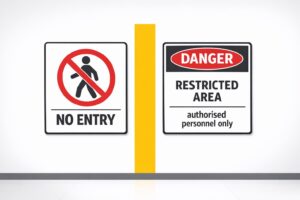
Restricted Area Signs vs. No Entry Signs
Compare No Entry and Restricted Area signs in Australian workplaces — meanings, design differences and AS 1319 compliance.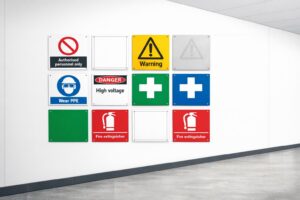
How to Spot Workplace Signage Gaps
Audit your workplace for missing, faded or non‑compliant signs under AS 1319 to reduce incidents and avoid WHS fines.
Symbol Design: Global Standards Explained
Explains ISO 7010 and ISO 3864: standard symbols, colours and sizing for clear, language‑free safety signage and AU compliance.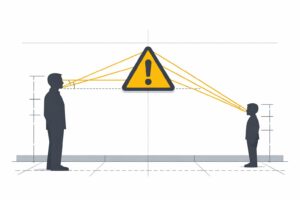
Hazard Sign Visibility Planner
Plan hazard sign placement for max visibility with our free tool. Ensure safety by finding the best spot, height, and angle—try it now!