Customising Safety Signs for Worksites
Custom safety signs are vital for Australian worksites where generic signs fail to address unique hazards. Whether it’s a mining site in WA or a chemical plant in Melbourne, tailored signage ensures compliance with AS 1319 standards and improves workplace safety. Generic safety signs often miss critical risks, leading to miscommunication and legal penalties. Custom signs address site-specific dangers, meet regulations, and withstand harsh Australian conditions like UV exposure and heavy rainfall.
Key points:
- Generic signs often fail to reflect specific hazards, causing safety oversights.
- AS 1319 compliance is crucial to avoid fines up to $3 million.
- Durability matters – UV-protected and weather-resistant materials extend sign life.
- Placement at eye level (1,500 mm) and regular maintenance ensure visibility.
Tailored signage not only meets legal requirements but also helps prevent accidents and injuries on diverse worksites.
Problems with Standard Safety Signs on Different Worksites
Generic Signs Don’t Match Actual Hazards
Off-the-shelf safety signs often fail to address specific risks unique to individual worksites. For example, a warehouse in Adelaide might need clear indicators for Safe Working Load (SWL) limits, while a chemical facility in Newcastle would require detailed Hazchem signage to ensure proper handling of hazardous materials [3].
The physical layout of a site adds another layer of complexity. Blind corners in manufacturing plants, designated forklift pathways, or pedestrian exclusion zones around heavy machinery all demand signage tailored to these specific conditions [3]. When workers are repeatedly exposed to generic warnings, they may start to ignore important safety messages, treating them as background noise [4]. On Australian construction sites, there’s also a legal requirement to display details like the builder’s name, licence number, and contact information at site entrances. Standard signs rarely include these, leaving businesses at risk of non-compliance [4].
These gaps not only compromise worker safety but can also lead to breaches of Australia’s stringent regulatory standards.
Meeting AS 1319 Compliance Standards
Many standard signs fall short of the rigorous compliance requirements outlined in Australian Standard AS 1319-1994. This standard specifies everything from approved colour schemes and symbols to mounting heights. For instance, signs must typically be mounted at around 1,500 mm for optimal visibility. However, many generic signs use unapproved symbols or fail to meet these basic visibility and placement criteria [6].
Failing to comply with AS 1319 can have serious consequences. Companies face fines exceeding $3 million, and individuals can be penalised up to $600,000 [2]. Clearly, non-compliance isn’t just a technical issue – it’s a financial and legal liability.
Poor Visibility and Weather Damage
Environmental factors across Australia further reduce the effectiveness of standard safety signs. The country’s intense UV radiation, especially in Northern Australia and high-altitude regions classified as UV Zone 3, significantly shortens the lifespan of signs. A sign rated for seven years in mild conditions might fade within three years in these harsher zones [7]. Orientation also matters – horizontally mounted signs degrade faster than vertical ones in all UV zones [7].
Other environmental elements like rain, dust, and industrial pollutants create grime layers on signs, reducing their reflectivity. This makes them harder to see, especially in low-light or emergency situations [8]. While a professional safety sign typically costs under $50 [5], the financial fallout from a workplace incident can be enormous. This is particularly concerning given that 40% of workplace fatalities involve workers who were not clearly visible in high-risk zones [2].
These issues highlight the importance of customised, durable safety signage that can withstand Australia’s challenging conditions and meet the specific needs of different worksites.
sbb-itb-9950c92
How Can I Create Custom Safety Signs? | How It Comes Together
Australian Safety Signage Requirements Explained
AS 1319 Safety Sign Types: Colours, Shapes and Uses for Australian Worksites
Understanding the legal framework for safety signage is key to keeping your worksite compliant and your workers safe. In Australia, AS 1319-1994 outlines the standards for how safety signs should look and function. While following this standard is technically voluntary, it is enforced by State and Commonwealth legislation through bodies like Safe Work Australia, WorkSafe Victoria, and SafeWork NSW [9]. These standards provide a consistent approach to addressing specific worksite hazards.
The standard ensures that safety signs are instantly recognisable across Australian worksites. For instance, a red circle with a diagonal slash is universally understood as a prohibition, whether you’re on a construction site or in a factory. Consistent colours, shapes, and layouts minimise confusion, especially in high-pressure situations [9][10]. The rules also cover the visual design and dimensions of safety signs to ensure they are both functional and effective.
Sign Types and Standard Colours
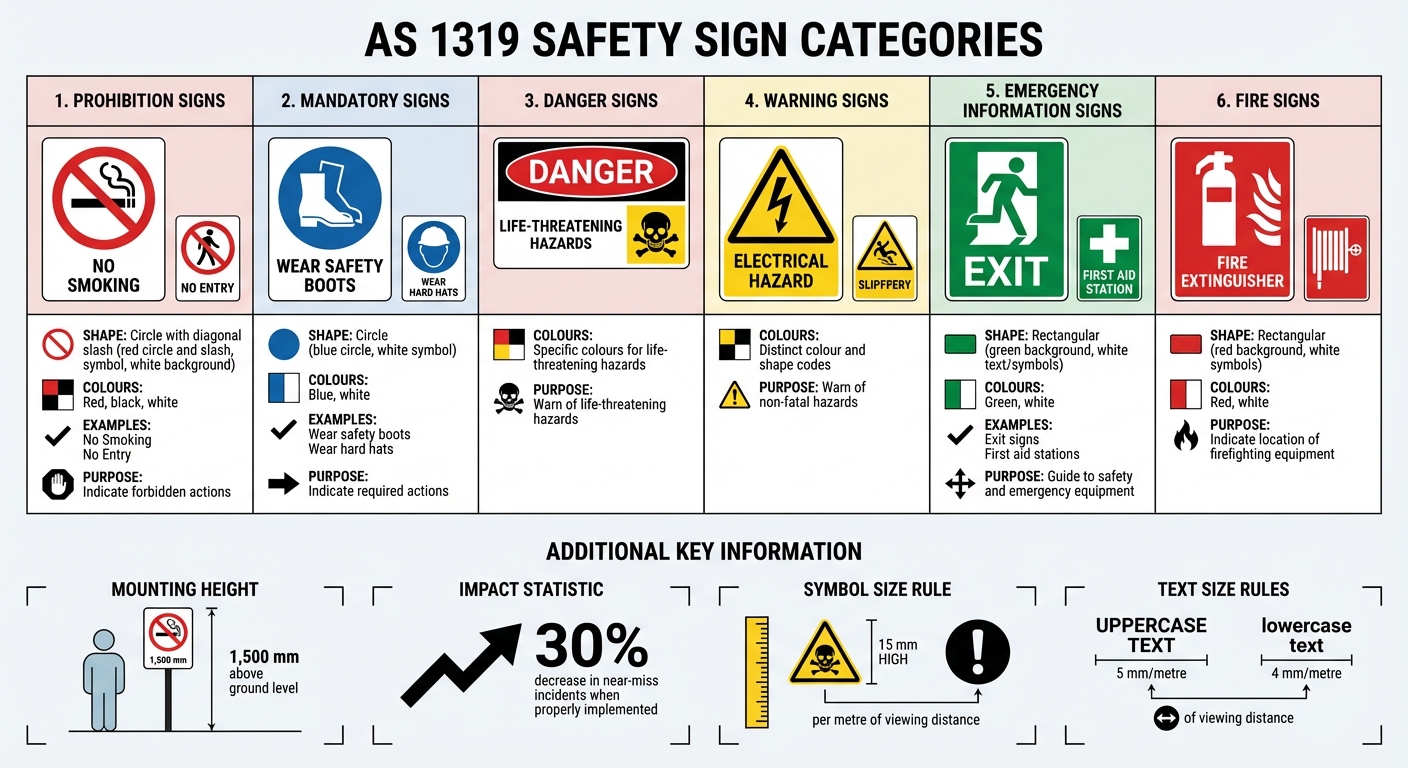
AS 1319 defines six categories of safety signs, each with its own colour scheme and shape. Here’s how they break down:
- Prohibition signs: These feature a red circle with a diagonal slash over a black symbol on a white background, such as "No Smoking" or "No Entry" signs.
- Mandatory signs: These use a blue circle with a white symbol to indicate required actions, like wearing safety boots or hard hats.
- Danger signs: Designed with specific colours and shapes to warn of life-threatening hazards.
- Warning signs: Used for non-fatal hazards, with distinct colour and shape codes.
- Emergency information signs: These have green backgrounds with white text or symbols, guiding people to exits or first aid stations.
- Fire signs: Red rectangular backgrounds with white symbols highlight the location of firefighting equipment [9].
The colour schemes are carefully chosen for quick recognition – red for prohibitions, green for guidance, and so on. Studies show that when these systems are properly implemented, incidents like near-misses in danger zones can decrease by around 30% [10]. Alongside colours and symbols, ensuring the correct size and placement of signs is vital for their effectiveness.
Sign Size and Placement Rules
Getting the size right is crucial. AS 1319 specifies that symbols must be at least 15 mm high for every metre of viewing distance. Uppercase text should measure 5 mm per metre, while lowercase text requires 4 mm per metre [9]. For example, a danger sign meant to be seen from 12 metres away should measure at least 300×225 mm, and for an 18-metre distance, it should increase to 450×300 mm [11].
"AS 1319 does not specify a required material or nominal size for a safety sign but does stress that the type of safety sign used should be suitable for the intended application, and that employees should be informed of their purpose."
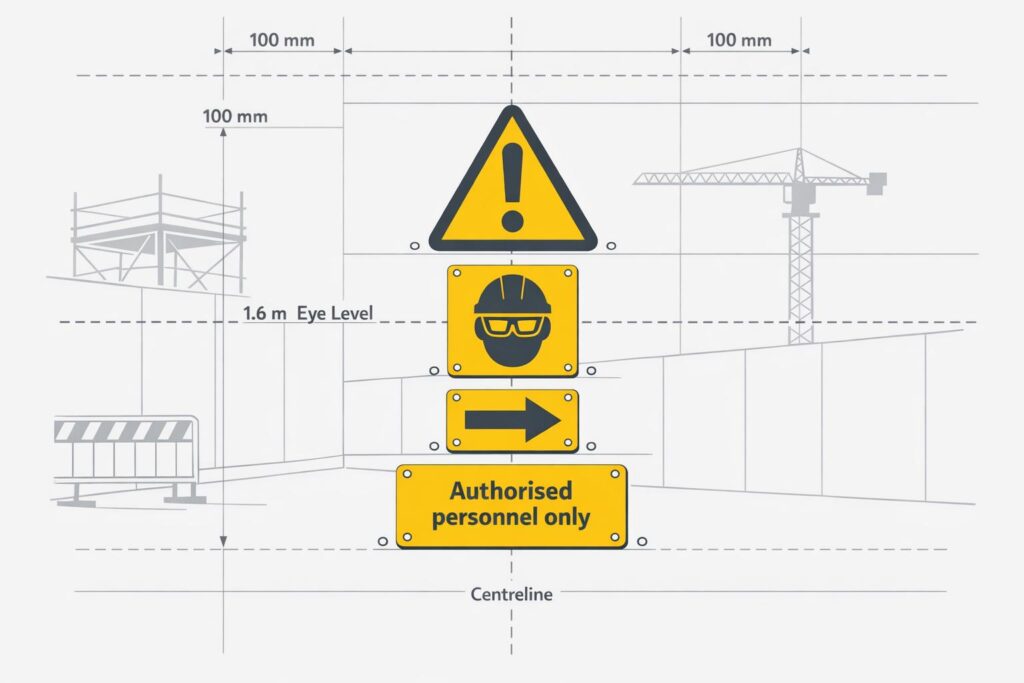
Placement also plays a big role. Signs should be mounted around 1,500 mm above ground level to ensure visibility and avoid obstructions. In challenging environments – like areas with poor lighting, heavy dust, or high vehicular activity (e.g., forklifts) – it’s a good idea to increase sign dimensions by at least 50% above the minimum requirements [12]. Regular inspections, ideally every quarter, can help identify and replace faded, damaged, or missing signs before they lead to compliance issues [9].
How to Create Custom Safety Signs for Your Worksite
Turning compliance requirements into tailored safety signs for your worksite starts with addressing specific hazards. By understanding the unique risks your site faces, you can create signs that not only meet regulations but also provide clear, actionable guidance to workers and visitors.
Identify Hazards at Your Site
Start with a thorough site assessment to identify areas where signs are needed. Different worksites – whether a construction zone, manufacturing plant, or retail space – come with their own set of risks. For instance, heavy machinery, crowded exit routes, chemical storage, and outdoor hazards all call for specific signage. Create a checklist based on your site’s layout, how employees move through the space, and the functions of different zones.
Think about factors like the number of people on-site, traffic flow, and the nature of specific areas, such as warehouses or office spaces. For evacuation plans, make sure your diagrams comply with AS 3745-2010, including the correct "YOU ARE HERE" markers and proper mounting heights (1,200–1,600 mm) [9]. It’s a good idea to consult safety experts or local authorities to ensure your assessment aligns with Safe Work Australia standards. Once you’ve identified hazards, use this information to guide the design and placement of your signs.
Design Clear and Compliant Signs
Using your hazard assessment as a foundation, design signs that are both clear and compliant with AS 1319 standards. This means following specific guidelines for size, colours, shapes, and text. For example, danger signs require a red background with white text, while caution signs use yellow with black text. These details ensure your signs are instantly recognisable.
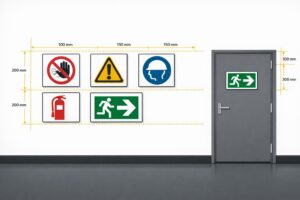
Keep your wording straightforward – avoid technical jargon or overly complex language that could confuse workers, especially in urgent situations. Placement is equally crucial. Install signs at eye level and in a worker’s natural line of sight, ensuring they’re not blocked by equipment or structures [9]. Tools like a "Safety Sign Category Finder" can simplify the process of matching hazards to the correct sign type, whether it’s a Danger, Warning, or Caution sign.
Choose Materials That Last
Australian worksites are exposed to tough conditions – intense UV rays, heavy rain, temperature changes, and dust. Low-quality materials won’t last long in such environments, which can compromise safety. To ensure durability, select materials designed to withstand Australia’s harsh climate. For outdoor or high-risk areas, consider options like UV-protected, laminated, or anti-graffiti coated materials [9].
Aluminium with outdoor-grade printing and a UV protective layer is a reliable choice. It resists fading and weather damage, keeping your signs readable over time. Schedule regular maintenance checks – quarterly is a good rule of thumb – to spot and replace any signs that are faded, dirty, or damaged [9]. Well-maintained signs not only help you stay compliant but also reduce the need for frequent replacements, saving time and money in the long run.
Installing and Maintaining Custom Safety Signs
Once you’ve designed effective custom safety signs, the next step is ensuring they are installed correctly and maintained over time. A well-placed and well-kept sign is key to keeping your workplace safe.
Place Signs Where Workers Will See Them
Visibility is everything when it comes to safety signs. Place them in entryways, decision points, and high-traffic areas – essentially, anywhere workers naturally look as they move through the site. Signs should be mounted at eye level and positioned near relevant equipment, like placing emergency equipment signs right next to the gear they reference [14].
"The ultimate goal of safety signs is to be seen and understood, so always consider visibility and clarity when choosing locations for your safety signs." – Super Spill & Safety Solutions [14]
Make sure nothing blocks the view of your signs – this includes equipment, doors, or even poor lighting. Also, ensure that the placement of signs doesn’t create new hazards, like obstructing walkways or machinery [13]. For clarity, group related signs together, such as Hazchem, GHS, and PPE requirements, to deliver a unified safety message. But be cautious – too many unrelated signs in one area can overwhelm workers and dilute the message you’re trying to deliver [13].
To keep these placements effective, regular inspections are a must.
Review and Update Signs Regularly
Worksites are dynamic, and safety signs need to keep up. Schedule regular inspections to check for faded, damaged, or dirty signs that are no longer clear [1]. Involve workers in these audits – they’re often the first to notice missing or obscured signage.
Whenever there’s a change in equipment, layout, or hazards, update your signs immediately. Outdated signage can confuse workers and compromise safety. Similarly, when standards like AS 1319 are updated or new regulations are introduced, review all your signs to ensure compliance and maintain a safe environment. Removing old or irrelevant signs is just as important as adding new ones to keep the system clear and effective.
Conclusion
Customised safety signage plays a critical role in addressing site-specific hazards, significantly improving worksite safety. Generic signs often fall short when it comes to highlighting the unique risks present in diverse environments – whether it’s managing heavy machinery in a manufacturing plant or ensuring clear emergency exits in retail spaces. Tailoring signage to your site’s specific needs, while adhering to Australian standards like AS 1319 and AS 3745-2010, helps protect workers, property, and your business from preventable accidents and potential regulatory issues.
"By clearly identifying potential risks, safety signs help create a safer environment and can even prevent accidents from happening. Custom signage also helps ensure that employees are as safe as possible from any potential threats by conveying very specific information quickly and accurately." – Signsmart [15]
Investing in high-quality materials, such as UV-protected aluminium, ensures your signage remains visible and effective for years, even under Australia’s tough weather conditions. This not only reduces the need for frequent replacements but also helps avoid fines for non-compliance.
However, it’s not just about the initial investment. Regular maintenance and updates are essential to keep your workplace safe. Conduct periodic risk assessments, and update signage promptly when site conditions or hazards change. Outdated signs can lead to confusion and increase the risk of accidents.
PXP Safety provides durable, custom signage solutions designed to endure Australia’s harsh conditions. Manufactured with strong aluminium bases and outdoor-grade printing, their signs ensure compliance and adapt to your site’s evolving safety needs, offering both reliability and flexibility for your workplace.
FAQs
Do I have to follow AS 1319 on my worksite?
Yes, compliance with AS 1319-1994 is required for safety signage on worksites across Australia. This standard ensures that all safety signs meet specific guidelines, helping to maintain workplace safety by delivering clear, effective messages suited to the environment.
How do I choose the right sign size for viewing distance?
When picking the right sign size, start by measuring or estimating the maximum viewing distance at your worksite. The goal is to ensure that the text and symbols on the sign are clear and easy to read from that distance.
For longer viewing ranges, opt for larger signs to maintain visibility and effectiveness. It’s also important to follow any recommended guidelines to ensure your signs meet both safety standards and readability requirements.
Which sign materials last longest outdoors in Australia?
Polycarbonate panels with UV protection are one of the toughest materials you can use for outdoor signs in Australia. Thanks to their impressive impact resistance and ability to withstand the elements, they can last up to 10 years – even in the challenging Australian climate.
Related Blog Posts
You may also be interested in
FAQs About Workplace Safety Signs in Australia
AS 1319 sign types, placement, materials and maintenance for workplace safety and WHS compliance in Australia.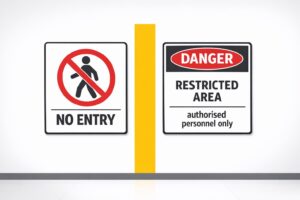
Restricted Area Signs vs. No Entry Signs
Compare No Entry and Restricted Area signs in Australian workplaces — meanings, design differences and AS 1319 compliance.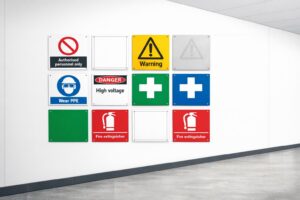
How to Spot Workplace Signage Gaps
Audit your workplace for missing, faded or non‑compliant signs under AS 1319 to reduce incidents and avoid WHS fines.
Symbol Design: Global Standards Explained
Explains ISO 7010 and ISO 3864: standard symbols, colours and sizing for clear, language‑free safety signage and AU compliance.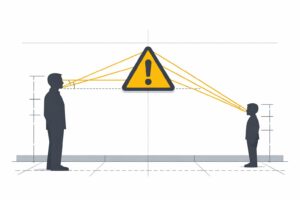
Hazard Sign Visibility Planner
Plan hazard sign placement for max visibility with our free tool. Ensure safety by finding the best spot, height, and angle—try it now!