FAQs About Emergency Contact Signs
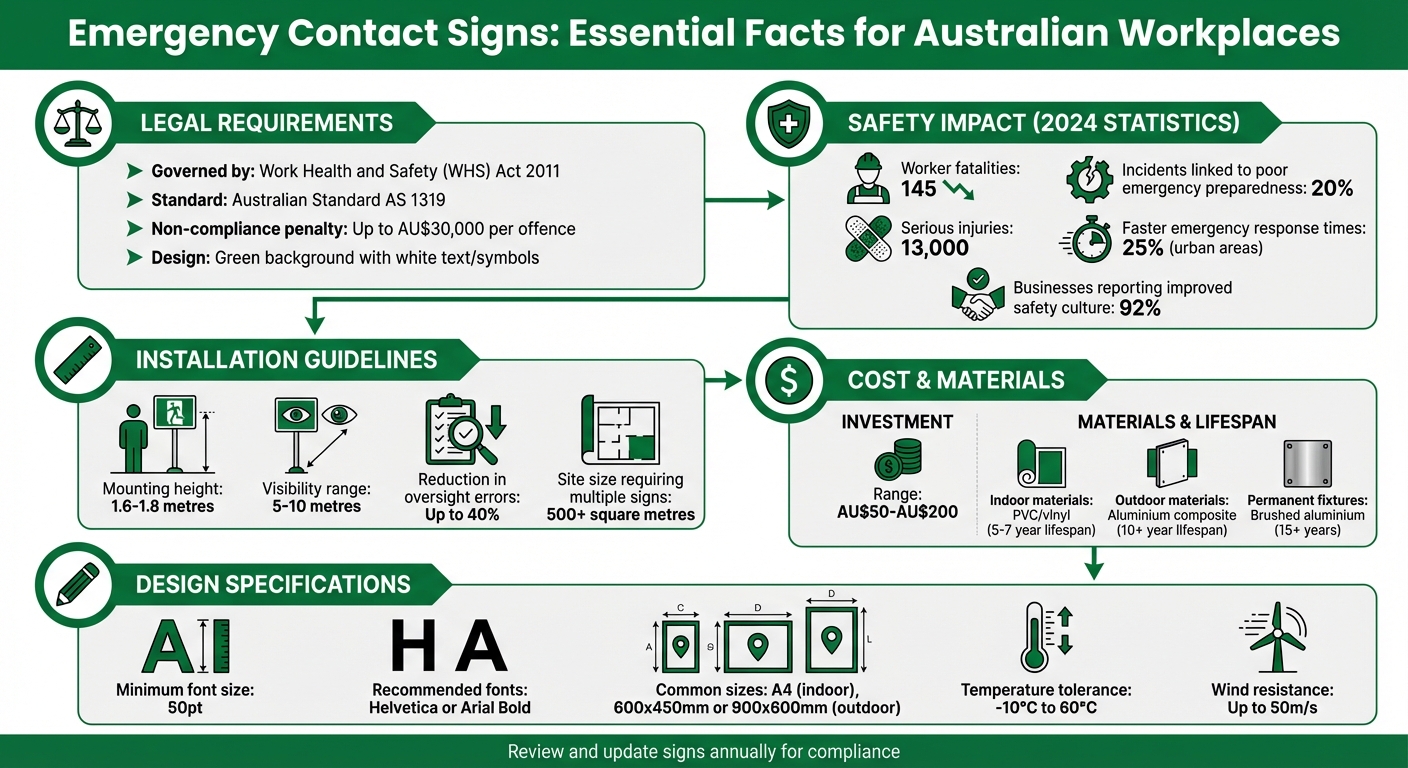
Emergency contact signs are mandatory in Australian workplaces under the Work Health and Safety (WHS) Act 2011. They ensure quick access to critical information during emergencies, such as first aid kits, AEDs, and emergency exits. Designed according to Australian Standard AS 1319, these signs use a green background with white text or symbols for clear visibility. Non-compliance can result in fines up to AU$30,000, making proper signage a legal and practical necessity.
Key Points:
- Legal Requirement: WHS regulations mandate compliance with AS 1319 for emergency signs.
- Purpose: Helps locate emergency resources quickly, reducing confusion in crises.
- Design: Must be readable, with bold text, symbols, and reflective materials for visibility.
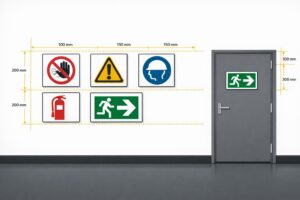
- Placement: Install at high-traffic areas, near emergency equipment, and at 1.6–1.8m height.
- Customisation: Tailor signs for specific workplaces, using durable materials like aluminium for outdoor use or vinyl for indoor areas.
Emergency contact signs are a small investment (AU$50–AU$200) that significantly improve workplace safety and compliance. Regular audits and updates ensure they remain effective and up-to-date.
Emergency Contact Signs: Key Statistics and Compliance Requirements for Australian Workplaces
Why Emergency Contact Signs Are Necessary in Australian Workplaces
Legal and Compliance Requirements
In Australia, the Work Health and Safety Act 2011 requires businesses to display emergency contact signs to maintain a safe environment for employees and visitors. These signs must adhere to Australian Standard AS 1319, which ensures they are designed for maximum clarity and visibility in workplace settings [3][4]. According to AS 1319, factors like text size and lighting conditions must be considered to ensure the signs are legible [3]. Failing to comply with these legal requirements can lead to penalties [1][3].
While meeting these standards is a legal obligation, it also plays a vital role in improving emergency preparedness.
Improving Safety and Response Times
Clear emergency signage does more than just tick a compliance box – it can make all the difference in a crisis. Emergencies are time-sensitive, and having standardised, easily recognisable signs allows people to quickly locate essential resources like first aid kits, AEDs, and emergency exits. Properly placed signs help guide individuals to safety, reducing confusion and panic during evacuations. This is especially crucial for ensuring orderly movement to assembly points, where headcounts and emergency coordination can take place efficiently.
Beyond emergencies, the consistent presence of these signs promotes ongoing safety awareness among staff. To combat "sign blindness" – where employees overlook familiar signs – regular toolbox talks can serve as helpful reminders of their importance and locations [2].
sbb-itb-9950c92
What Information to Include on Emergency Contact Signs
Required Contact Details
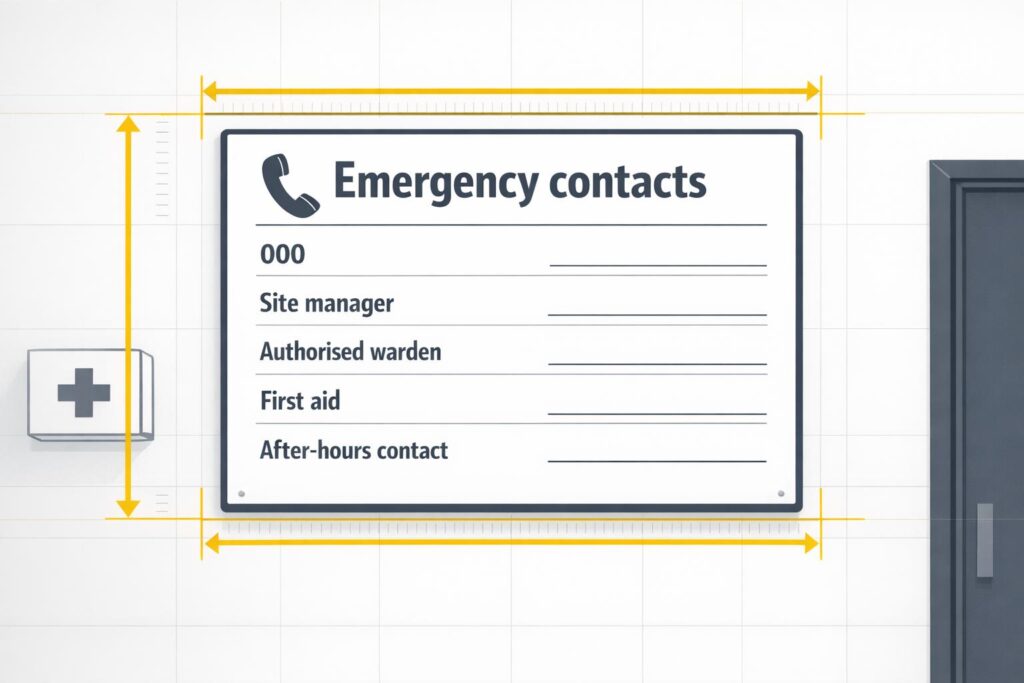
Having clear emergency contact details on a sign can make all the difference in a crisis. Start with the basics: prominently display Triple Zero (000) for police, fire, and ambulance services. If your facility spans multiple buildings or locations, include the specific site address to help emergency responders locate the correct spot without delay. For facilities handling hazardous materials, a dangerous goods ID sign can provide additional vital information for first responders. Where relevant, add other key contacts that may assist in emergencies. Keep it simple – only include the most essential numbers. The layout should make scanning the information quick and easy.
Design for Readability
Once you’ve decided on the details, focus on making the sign as readable as possible. Use bold, high-contrast text to ensure the information stands out, and opt for large fonts so the details can be seen from a distance or in busy environments.
Icons can be a lifesaver – literally. Pairing numbers with symbols like a phone icon for contact numbers or a medical cross for first aid details can make it easier for people to find what they need at a glance. As experts from DuraLabel explain:
Durable, easy-to-read signs and labels bypass language and emotional challenges by offering clear, concise direction in moments of chaos [5].
For areas with poor lighting, reflective or photoluminescent materials are a smart choice. These materials ensure the emergency contact details remain visible even in dim or dark conditions, making them accessible when it matters most.
Where to Place Emergency Contact Signs
High-Traffic and Access Points
Emergency contact signs should be placed where people naturally move, such as entrances, exits, elevators, and stairwells. It’s also a good idea to position them near emergency equipment like first aid kits, fire extinguishers, and defibrillators. This ensures that critical information is easy to find during an emergency.
For best visibility, mount signs at a height of 1.6–1.8 metres so they can be read from 5 to 10 metres away [6]. Research shows that proper height placement can reduce oversight errors during evacuations by up to 40% [7]. In areas with poor lighting, such as car parks or basements, consider using photoluminescent or LED-backlit signs. To keep them secure, use tamper-proof fixings on walls or posts.
While these are general guidelines, always adapt the placement of signs to suit your building’s layout and specific risks.
Site-Specific Placement Considerations
The layout of your facility and the risks of your industry will often dictate where emergency contact signs should go. For example, in multi-storey office buildings, signs should be placed on every floor near lifts and emergency stairwells. In open-plan factories, they are most effective at key intersections. A Sydney warehouse improved visibility by 25% by mapping high-risk paths and removing obstructions [8].
Different industries have their own requirements. On construction sites, signs should be positioned at site offices, tool compounds, and the bases of cranes. Mining operations, following Queensland Mining Safety guidelines, should display signs at refuge chambers and muster points [9].
For larger sites exceeding 500 square metres, multiple signs are necessary to ensure no area is without quick access to emergency contacts. Remote sites across Australia also require weatherproof signs. Companies like PXP Safety offer aluminium signs with UV protection, which stay readable even under extreme heat and harsh outdoor conditions [10].
Customising Emergency Contact Signs for Your Workplace
Design Customisation Options
Emergency contact signs should not only be clear and well-placed but also tailored to the specific needs of your workplace. For instance, the size of the sign matters: A4 signs are ideal for indoor offices, while larger sizes like 600x450mm or 900x600mm are better suited for outdoor areas or construction sites. Ensure the colours align with AS 1319 standards – use high-contrast combinations, such as white text on green for safety notices or black text on yellow for warnings that need to stand out.
The font choice is equally important. Opt for bold sans-serif fonts like Helvetica or Arial Bold, with a minimum size of 50pt, to ensure the text remains legible even from a distance or under Australia’s bright sunlight. Additionally, you can include workplace-specific details, such as multilingual instructions or site-specific emergency contacts. Some businesses even add their logo or branding, provided it doesn’t detract from the critical information.
For workplaces like construction sites, consider adding glow-in-the-dark strips for better visibility during night shifts. In mining operations, dust-resistant materials and contacts for specialised services, like the Royal Flying Doctor Service (RFDS) at 1800 000 000, are essential for remote locations or FIFO (fly-in, fly-out) workers. Companies like PXP Safety offer these customisation options, ensuring your signage meets both compliance and operational needs.
Once the design is finalised, choosing the right material becomes the next crucial step to ensure the sign lasts and performs well in its environment.
Material Selection for Different Environments
The material you select for your emergency contact signs plays a key role in their durability and effectiveness. For indoor spaces, materials like PVC or 2–3mm self-adhesive vinyl are cost-effective options. These materials can handle up to 80% humidity and, with a laminated finish, are easy to clean. Under standard fluorescent lighting, they typically last between 5 and 7 years.
Outdoor environments demand more resilient materials. Aluminium composite panels (3mm thick) are a great choice, featuring UV-protected digital printing that can endure winds up to 50m/s, temperatures ranging from -10°C to 60°C, and salt exposure in coastal areas. These panels offer a lifespan of 10+ years and comply with AS/NZS 1319 standards. Temporary sites might benefit from corrugated plastic, which lasts 2 to 3 years, while permanent fixtures could use brushed aluminium, which has a lifespan of over 15 years. For areas with high humidity, such as Queensland, powder-coated steel is an excellent option to prevent rust.
Safety Signs
Conclusion
Emergency contact signs go beyond ticking a compliance box – they’re a practical step towards enhancing workplace safety and, quite literally, saving lives. According to Safe Work Australia, 2024 saw 145 worker fatalities and 13,000 serious injuries, with 20% of incidents tied to poor emergency preparedness. Clear, strategically placed signs can make a difference, with workplaces reporting 25% faster emergency response times in urban areas. These signs aren’t just about safety – they’re also about meeting legal and financial responsibilities.
Failing to comply with WHS regulations can result in fines of up to AU$30,000 per offence, a significant cost for any business. On the other hand, investing in quality emergency contact signs is relatively inexpensive, ranging from AU$50 to AU$200. Beyond compliance, 92% of Australian businesses have reported that customised signage has improved their overall safety culture, highlighting the broader benefits of this simple yet effective measure.
To get started, conduct a site audit to identify any gaps in your signage. Choose materials that suit your specific needs – durable aluminium composite panels for outdoor use in Australia’s tough climate, or resilient vinyl for indoor areas. Make it a habit to review and update your signs annually to ensure contact details remain accurate and compliance is maintained.
For businesses looking for reliable options, PXP Safety offers customised emergency contact signs starting at AU$99. These signs are designed for Australian conditions, featuring UV protection and outdoor-grade printing. Incorporating these into your safety audits and WHS training not only reinforces emergency preparedness but also fosters a culture of safety. Visible, up-to-date emergency contact signs are a small investment that delivers big returns in safety, compliance, and peace of mind.
FAQs
Do I need emergency contact signs if my staff already know the procedures?
Clear and visible emergency contact signs play a crucial role in ensuring safety. They offer immediate access to essential information during emergencies, enabling staff and others to respond quickly and efficiently. While people may already be familiar with procedures, these signs act as a vital safety net in stressful, high-pressure moments.
How many emergency contact signs does my workplace need?
The quantity of emergency contact signs your workplace needs will vary based on its size and layout. In Australia, regulations require that safety signs, including those with emergency contact details, are positioned in spots that are highly visible and easy to access. To comply with these standards, evaluate your workplace carefully to decide where and how many signs are necessary to ensure they can be quickly seen and used in an emergency.
How often should emergency contact signs be checked and updated?
Emergency contact signs need regular checks and updates to stay visible, easy to read, and compliant with safety standards. How often you inspect them depends on your workplace environment and the rules that apply. Routine inspections are key to ensuring these signs work effectively during emergencies.
Related Blog Posts
You may also be interested in
FAQs About Workplace Safety Signs in Australia
AS 1319 sign types, placement, materials and maintenance for workplace safety and WHS compliance in Australia.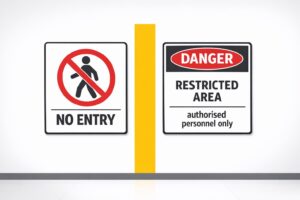
Restricted Area Signs vs. No Entry Signs
Compare No Entry and Restricted Area signs in Australian workplaces — meanings, design differences and AS 1319 compliance.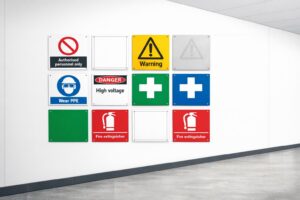
How to Spot Workplace Signage Gaps
Audit your workplace for missing, faded or non‑compliant signs under AS 1319 to reduce incidents and avoid WHS fines.
Symbol Design: Global Standards Explained
Explains ISO 7010 and ISO 3864: standard symbols, colours and sizing for clear, language‑free safety signage and AU compliance.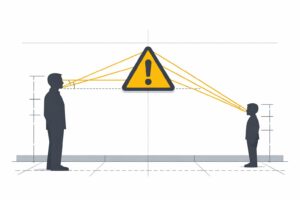
Hazard Sign Visibility Planner
Plan hazard sign placement for max visibility with our free tool. Ensure safety by finding the best spot, height, and angle—try it now!