Fire Extinguisher Signage Standards Australia
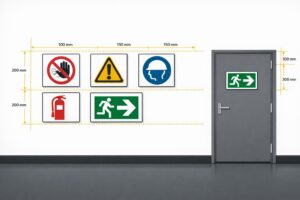
Proper fire extinguisher signage is critical for safety in Australia, ensuring that extinguishers are easy to locate and use during emergencies. Australian standards like AS 1319-1994 and AS 2444-2001, alongside the National Construction Code (NCC), outline clear rules for design, placement, and visibility. Key requirements include:
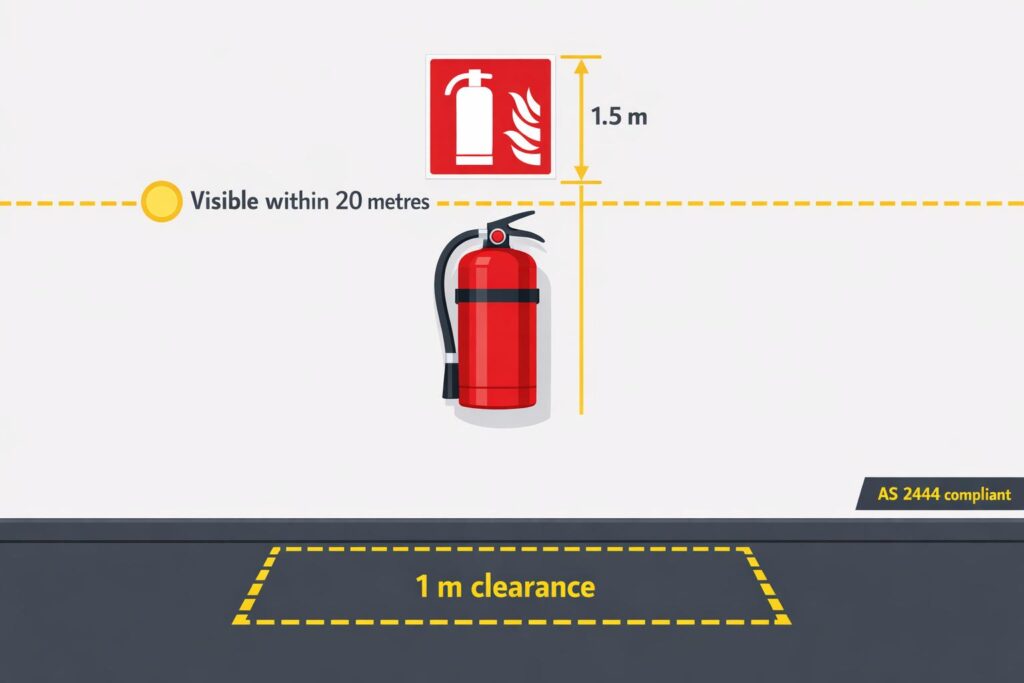
- Signs must be mounted at least 2,000 mm above the floor.
- Extinguishers must be accessible with 1,000 mm clearance and positioned with handles no higher than 1,200 mm.
- Signs must feature white symbols and text on a red background, visible from up to 20 metres.
- Labels for extinguishers in enclosures must use capital letters at least 32 mm high.
Non-compliance risks fines and legal consequences. Regular inspections and adherence to these standards ensure safety and compliance across workplaces and public spaces.
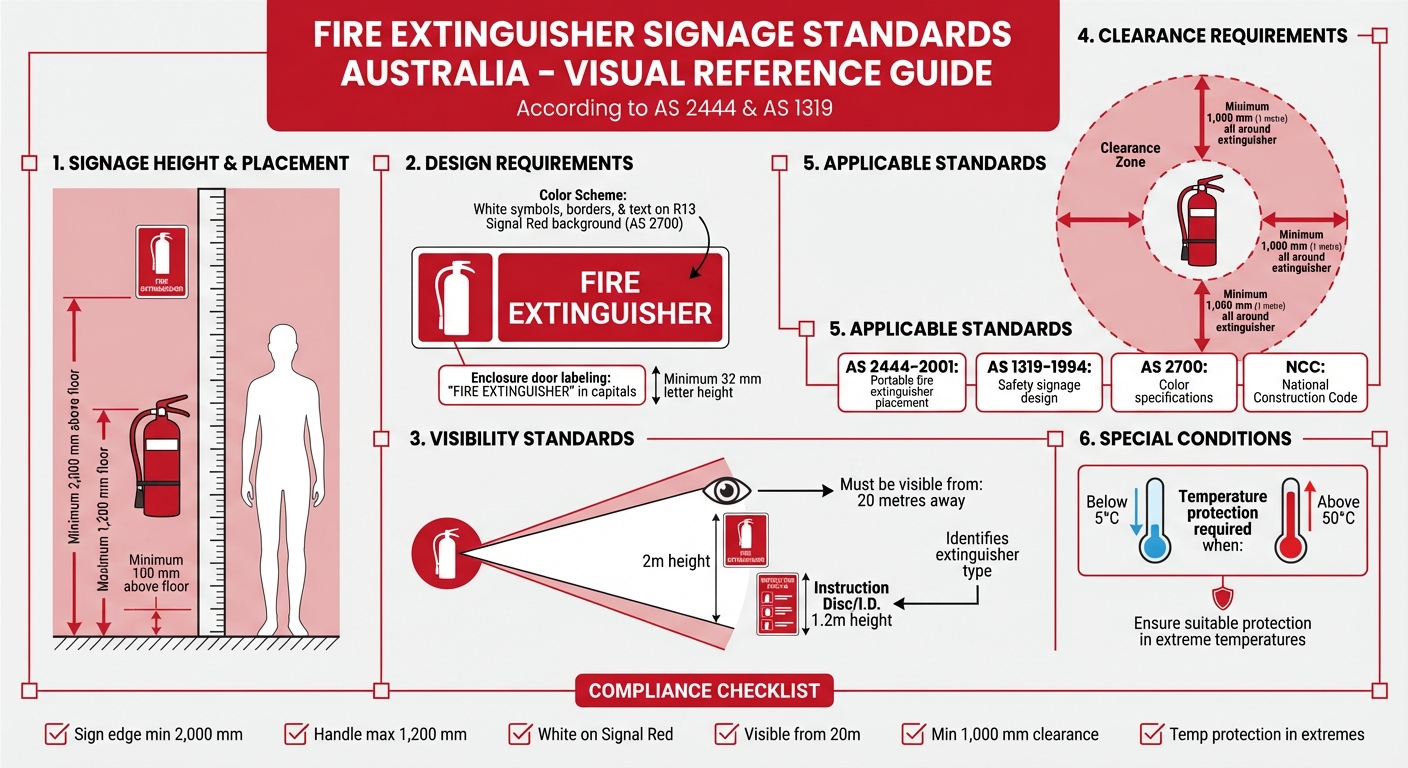
Australian Fire Extinguisher Signage Standards Quick Reference Guide
Australian Standard AS2444 Explained
What AS2444 Covers
AS 2444 is the go-to standard for determining where to place portable fire extinguishers and fire blankets in Australian workplaces [2][3]. While AS 1319 focuses on general signage design, AS 2444 zooms in on the specifics of extinguisher placement and marking.
Each extinguisher must have a location sign either above or next to it, even when marking a group of extinguishers [2]. These signs need to be installed no less than 2,000 mm above the floor, while the extinguishers themselves should have their handles positioned no higher than 1,200 mm and their bases at least 100 mm above ground level [2][3].
"Each extinguisher shall be located in conspicuous, readily accessible location." – Fire and Rescue NSW [2]
The standard also mandates that signs must be visible from 20 metres away and that there should be a 1,000 mm clearance around each extinguisher [2][3]. These requirements ensure that extinguishers are easy to locate and access, integrating seamlessly into a broader fire safety system.
How AS2444 Connects to Other Standards
AS 2444 doesn’t operate in isolation – it works alongside other standards to create a comprehensive fire safety framework. For instance, AS 2700 dictates that safety signs must feature white symbols, borders, and letters on a background of R13 Signal Red [2][4]. Meanwhile, AS 1319 lays out the broader design principles for occupational safety signage [4].
Together, these standards ensure that fire extinguisher signage is not only correctly placed but also consistently designed. This consistency makes the signs instantly recognisable in emergencies, whether you’re in Sydney, Perth, or anywhere else across Australia.
sbb-itb-9950c92
Design and Visibility Requirements
After understanding the placement rules outlined in AS2444, it’s time to delve into the design and visibility standards that ensure fire extinguisher signs can be identified quickly during emergencies. These design principles, rooted in AS2444, play a crucial role in making the signs stand out when every second counts.
Required Design Features
Fire extinguisher signs must adhere to specific design requirements to guarantee they are easily recognisable. They use a standardised colour scheme: white symbols, borders, and text on a red background, compliant with AS 2700[2][5].
"The extinguisher and fire point location signs shall have a symbol, border and letters in white on a red field, complying with Australian Standard (AS) 2700." – Sydney Extinguishers[5]
Each sign must include three key components: symbol, border, and text[2]. If the extinguisher is stored inside an enclosure, the door must be labelled with the words "FIRE EXTINGUISHER" in capital letters, at least 32 mm high, using a colour that strongly contrasts with the door’s background[1]. While there is no universal size for these signs, they must remain legible from the distance they are meant to be viewed[2][5].
With these design details in place, the next priority is making sure the signs are clearly visible to everyone.
Visibility Standards
Fire extinguisher signs must be visible from a distance of up to 20 metres on approach[2][5]. They should be mounted in positions that provide an unobstructed view, with their height aligned to placement guidelines to ensure accessibility for all users.
To enhance visibility, two types of signs are typically used:
- A rectangular location sign, placed at or above 2 m, marks the general location of the extinguisher.
- A square Instruction Disc (I.D.), positioned around 1.2 m high, identifies the specific extinguisher type – such as ABE DCP or CO₂[5].
The I.D. sign is particularly useful for ensuring the correct extinguisher is returned to its designated spot if moved[5]. These visibility standards ensure that fire extinguishers can be quickly located and correctly used during emergencies.
Placement and Mounting Rules
Proper placement and mounting of fire extinguisher signs are crucial for their visibility and effectiveness during emergencies. The guidelines outlined in AS2444 help ensure that signs are easy to locate and extinguishers are accessible when needed.
Height and Location Requirements
Fire extinguisher signs must be installed so that the bottom edge of the sign is at least 2,000 mm (2 metres) above the floor. This height ensures the sign remains visible above people’s heads and any equipment, making it easy to spot from various angles.
Signs should be positioned directly above or beside each extinguisher. If there is a group of extinguishers, at least one sign should be installed for the group. While the sign is placed at 2 metres, the extinguisher itself has different mounting rules: the handle must be no higher than 1,200 mm, and the base must be at least 100 mm above the floor. This ensures both the sign and the extinguisher are positioned for easy access and visibility.
Clearance and Access Requirements
Fire and Rescue NSW emphasises the importance of keeping extinguishers accessible:
"Fire and Rescue NSW recommends that a surrounding clearance of a minimum of 1,000 mm be maintained around each extinguisher."
This one-metre clearance zone ensures that nothing – like furniture, boxes, or temporary storage – blocks access to the extinguisher.
Visibility is equally critical. The extinguisher or its sign must be clearly visible from up to 20 metres away. It’s essential to check that sightlines are unobstructed from all directions, ensuring partitions, equipment, or stock don’t block the view. Extinguishers should be placed in noticeable spots, preferably along common travel paths and near exits, where people instinctively look during evacuations.
Maintaining a clear 1,000 mm zone around extinguishers is vital for quick and unhindered access during emergencies. Regularly inspect and mark this area to prevent it from being encroached upon by everyday workplace activities.
How to Achieve Compliance
Meeting Australian fire extinguisher signage standards becomes manageable when you follow a clear set of checks and guidelines. Here’s a practical checklist to help you ensure compliance.
Compliance Checklist
Use this step-by-step guide to verify that your fire extinguisher signage meets the required standards:
- Signage height: Make sure signs are mounted at least 2,000 mm above the finished floor, as per placement guidelines.
- Location marking: Check that every extinguisher or group of extinguishers has a location sign directly above or beside it.
- Design standards: Confirm that signs follow the AS 2700 design standards, featuring white symbols and text on a red background.
- Visibility test: Stand 20 metres away to ensure the sign or extinguisher is easy to spot and not obscured.
- Enclosure labelling: If extinguishers are stored in cupboards, verify that the door is labelled with "FIRE EXTINGUISHER" in capital letters, with text at least 32 mm high.
- Clearance zone: Maintain at least 1,000 mm of clear space around each extinguisher for easy access.
- Extinguisher positioning: Check that handles are mounted no higher than 1,200 mm and bases are at least 100 mm above the ground, as per mounting rules.
- Thermal protection: In areas where temperatures drop below 5°C or exceed 50°C, ensure extinguishers are equipped with thermal protection.
- Standard verification: Cross-check all signage against AS 2444 to confirm it meets the selection and location requirements.
PXP Safety: Compliant Signage Solutions
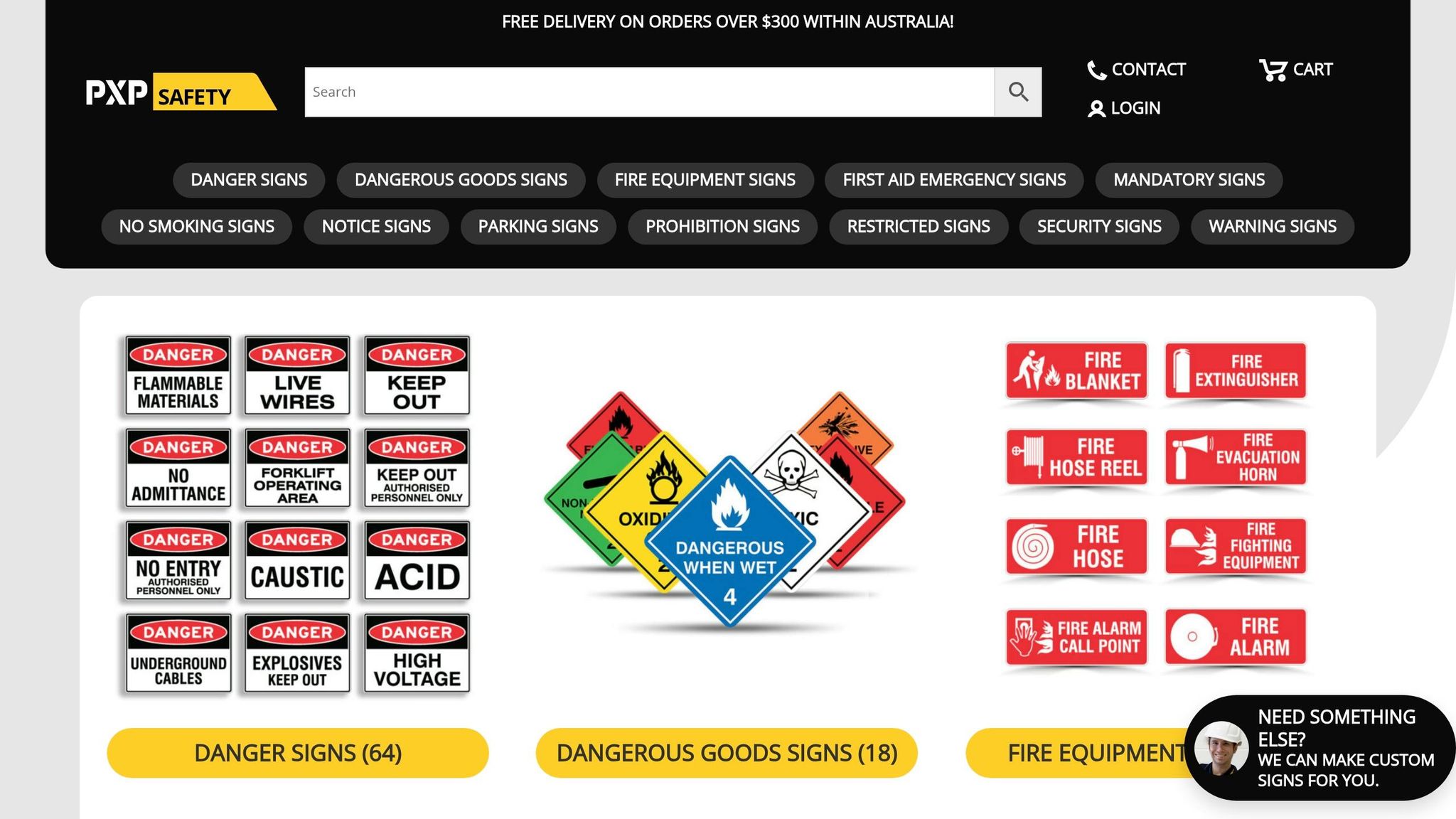
PXP Safety provides long-lasting, aluminium-based fire equipment signs designed to withstand Australia’s demanding conditions. With UV protection and outdoor-grade printing, these signs resist fading and remain clear over time, reducing the need for replacements.
Their range includes standard signs that suit most workplaces, as well as custom options for unique site requirements. All PXP Safety products align with Australian standards, making it easier to meet compliance requirements and maintain a safe environment.
Conclusion
Ensuring your workplace meets Australian fire extinguisher signage standards involves a thorough understanding of AS 2444 and its practical application. Critical requirements include mounting signs at least 2,000 mm above the floor, ensuring visibility from 20 metres away, using white symbols and text on a red background in line with AS 2700, and maintaining a 1,000 mm clearance zone around extinguishers.
In areas where temperatures drop below 5°C or rise above 50°C, extinguishers must have thermal protection. Consistently reviewing your setup against a compliance checklist helps ensure all signage and equipment placement align with the Environmental Planning and Assessment Regulation 2000. Regular inspections are equally important to maintain compliance and avoid potential safety gaps.
PXP Safety offers aluminium-based fire equipment signs designed to endure Australia’s tough conditions. With UV protection and outdoor-grade printing, these signs remain clear and durable over time. Their range, which caters to both standard and custom Australian requirements, simplifies the process of maintaining compliant fire safety measures while reducing the need for frequent replacements or regulatory concerns.
FAQs
Which Australian Standards apply to fire extinguisher signage?
The Australian Standards that apply to fire extinguisher signage are AS 2444-2001 and AS 1319:2010.
- AS 2444-2001 focuses on portable fire extinguishers and fire blankets, detailing their selection and installation.
- AS 1319:2010 provides the requirements for safety signs, including placement, size, and visibility.
These standards are designed to ensure proper compliance and enhance safety.
How do I choose the right sign size for my viewing distance?
When selecting the appropriate sign size, ensure it can be easily seen from the necessary viewing distance and adheres to Australian standards, such as AS 2444. For instance, fire extinguisher signs should be readable from up to 20 metres. It’s also important to factor in the surrounding environment and any specific safety needs to make sure the signage is effective while meeting visibility rules.
What’s the difference between a location sign and an Instruction Disc?
A location sign shows where fire safety equipment, such as fire extinguishers or hoses, can be found, ensuring it can be accessed quickly in an emergency. An Instruction Disc, however, offers clear instructions on how to use the equipment correctly. Simply put, location signs help you find the equipment, while Instruction Discs guide you on how to use it properly.
Related Blog Posts
You may also be interested in
FAQs About Workplace Safety Signs in Australia
AS 1319 sign types, placement, materials and maintenance for workplace safety and WHS compliance in Australia.
Restricted Area Signs vs. No Entry Signs
Compare No Entry and Restricted Area signs in Australian workplaces — meanings, design differences and AS 1319 compliance.
How to Spot Workplace Signage Gaps
Audit your workplace for missing, faded or non‑compliant signs under AS 1319 to reduce incidents and avoid WHS fines.
Symbol Design: Global Standards Explained
Explains ISO 7010 and ISO 3864: standard symbols, colours and sizing for clear, language‑free safety signage and AU compliance.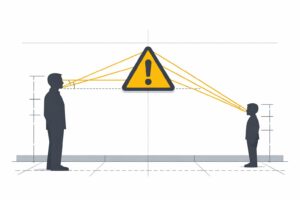
Hazard Sign Visibility Planner
Plan hazard sign placement for max visibility with our free tool. Ensure safety by finding the best spot, height, and angle—try it now!