Study: Impact of Infection Control Signs on Hygiene Compliance
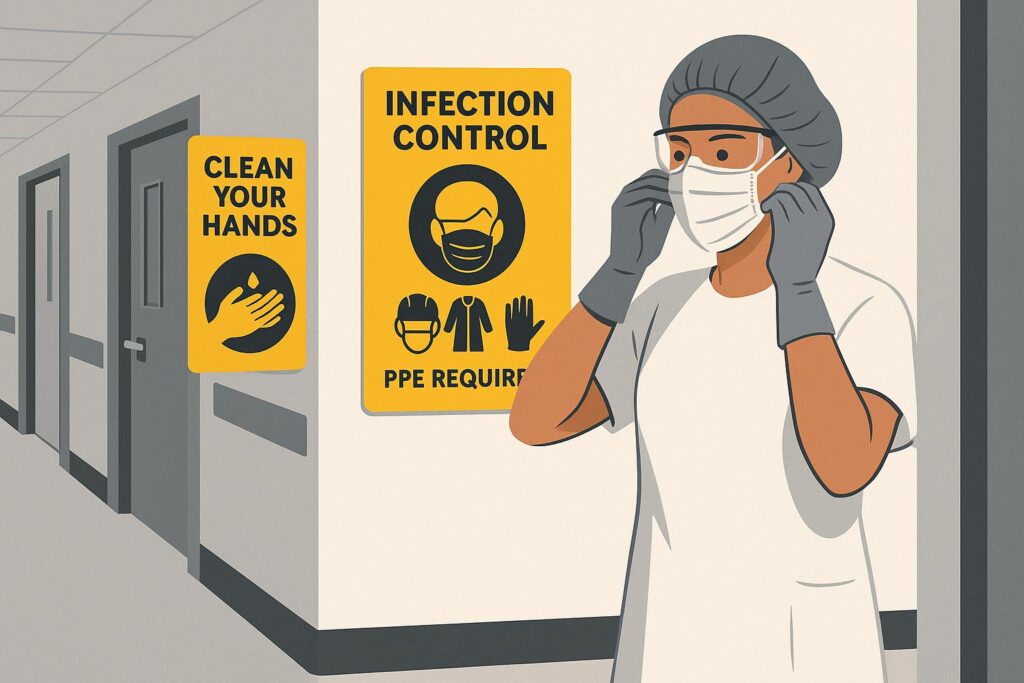
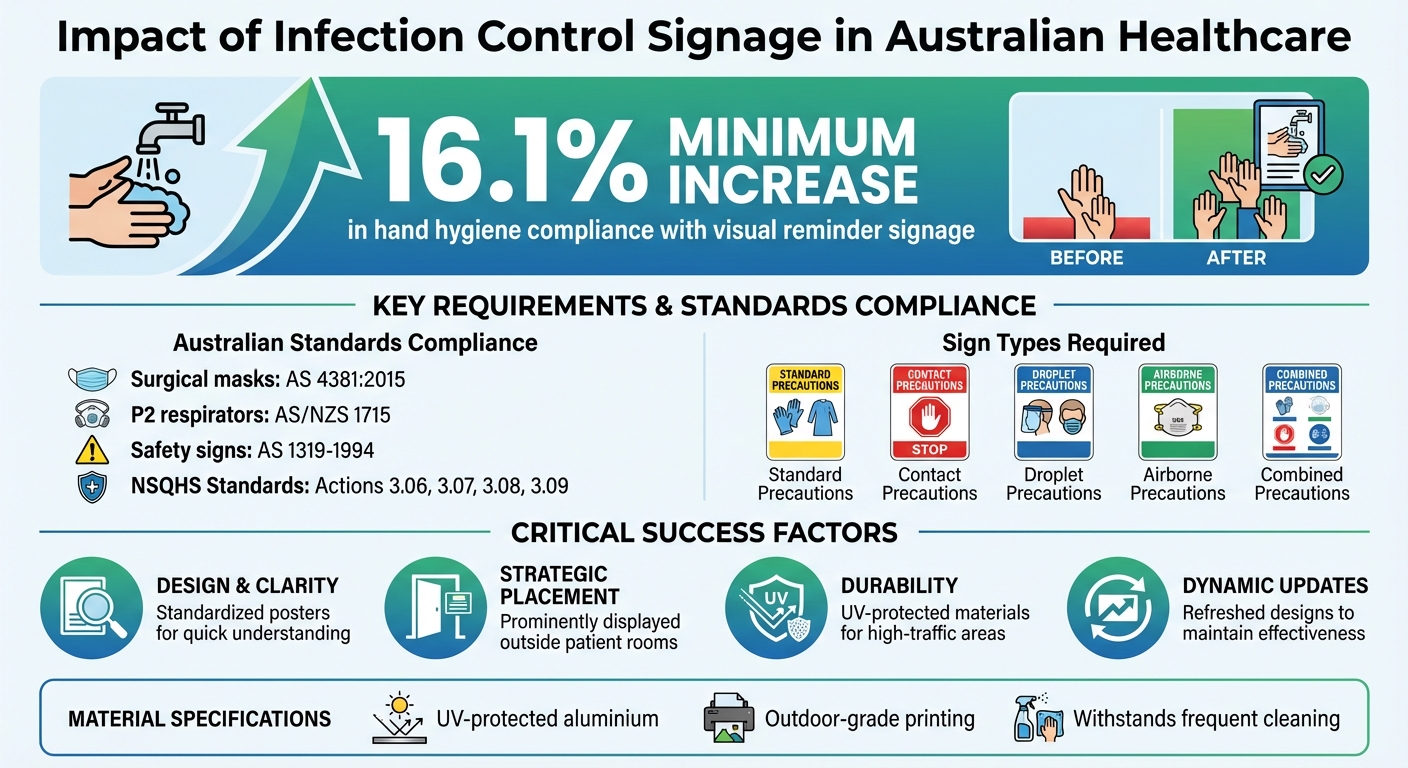
Infection control signs are crucial in Australian hospitals to improve hygiene compliance and reduce healthcare-associated infections (HAIs). These signs provide clear instructions on hand hygiene and personal protective equipment (PPE) use, helping staff and visitors prevent infection spread. Research shows visual reminders like signage can increase hand hygiene compliance by at least 16.1%. However, the effectiveness of these signs depends on their design, placement, and adherence to Australian safety standards.
Key takeaways:
- Infection control signs remind staff and visitors to follow hygiene protocols, especially in high-risk areas.
- Design and clarity are critical for ensuring quick understanding of precautions.
- Australian standards mandate specific requirements for infection control signage, including durability and compliance with PPE regulations.
- Customised signage can address unique facility needs while maintaining compliance.
Properly designed and maintained signage supports infection prevention efforts, ensuring safer environments for patients and healthcare workers.
Infection Control Signage Effectiveness and Compliance Statistics in Australian Healthcare
Compliance and Accountability in Infection Prevention and Control – 2024 IP Boot Camp
Research on Infection Control Signage Effectiveness
Research indicates that infection control signage can improve hygiene compliance, though its impact largely depends on how it’s designed and implemented [4][6]. Studies conducted in healthcare settings reveal both the potential benefits and the limitations of visual reminders. The sections below explore how the frequency of signs and their design play a key role in influencing compliance.
How Sign Frequency Affects Compliance Rates
Infection control signage acts as a timely reminder, particularly at critical moments, to encourage short-term hand hygiene compliance among healthcare workers [4][6].
However, static signs tend to lose their effectiveness over time. To sustain compliance, campaigns that incorporate dynamic visuals, humour, or endorsements from respected figures have proven to be more engaging [6]. While initial improvements in compliance are often noticeable, refreshing the design and approach of signage is essential to maintain its impact.
Designing Signs That People Understand
Clarity in design is crucial for ensuring that infection control signage is easily understood. The Australian Commission on Safety and Quality in Health Care has created standardised posters to help healthcare workers follow infection prevention and control measures [1][2]. These standardised designs are particularly effective in facilitating quick understanding of required precautions [1][2].
"The Commission has developed a suite of standardised posters for acute care facilities, to assist healthcare workers to understand the steps and infection prevention and control precautions that are used for all patients (standard precautions) and for those patients who require transmission-based precautions, due to a known or suspected infection." [2]
Using clear symbols and straightforward instructions ensures that healthcare workers, patients, and visitors can collectively contribute to infection control efforts [5][7]. These insights provide practical guidance for healthcare facilities aiming to maximise the effectiveness of their signage.
Australian Standards for Infection Control Signage
In Australian healthcare settings, infection control signage must adhere to strict regulatory guidelines. These are primarily set out by the Australian Commission on Safety and Quality in Health Care (ACSQHC) and the National Safety and Quality Health Service (NSQHS) Preventing and Controlling Infections Standard. These regulations ensure that signage effectively communicates risks and outlines the necessary precautions. This framework provides the foundation for specific requirements regarding Transmission-Based Precaution (TBP) signage.
Transmission-Based Precaution Sign Requirements
Victorian health guidelines, in line with national standards, mandate that TBP signage be placed prominently outside patient rooms. This ensures that both staff and visitors are aware of the required Personal Protective Equipment (PPE) before entering [1]. Between 2023 and 2024, the ACSQHC introduced standardised posters for Standard, Contact, Droplet, Airborne, and combined precautions to meet NSQHS Standard Actions 3.06–3.09 [2].
As stated by Health Victoria [1]:
"Signage should be positioned prominently outside the room of a patient in TBPs. This is to ensure staff and visitors do not enter without appropriate PPE."
For facilities creating their own signage, it is crucial to clearly specify the type of TBPs in place and the PPE required [1]. These guidelines also tie into broader requirements for safety sign design and durability, ensuring consistency across healthcare environments.
Meeting Australian Safety Standards
Compliance with Australian Guidelines and NSQHS Standards is essential for infection control signage.
The PPE depicted on these signs must meet Australian Standards. For instance, surgical masks should comply with AS 4381:2015, while P2 respirators must adhere to AS/NZS 1715 [1]. Additionally, the AS 1319-1994 standard applies to all safety signs in workplaces, covering essential aspects such as design, classification, layout, visibility, and maintenance to guarantee their effectiveness [8].
Healthcare facilities are encouraged to carry out local risk assessments to determine the most suitable signage for their specific needs. Aligning with these national standards plays a key role in improving hygiene practices and ensuring the safety of both patients and staff [2].
sbb-itb-9950c92
Implementation Guide for Healthcare Facilities
Healthcare facilities need to plan and install infection control signage that not only meets NSQHS standards but is also highly visible and durable. Based on research findings, these practical steps can help in setting up effective signage systems.
Choosing Signs That Last and Meet Standards
To ensure longevity and clarity, facilities should opt for UV-protected aluminium signs with outdoor-grade printing. These materials hold up well against frequent cleaning and exposure to sunlight, making them ideal for high-traffic areas. It’s also essential that all personal protective equipment (PPE) depicted on the signage complies with Australian Standards.
For standardised infection control posters, the Australian Commission on Safety and Quality in Health Care offers resources like the "NSW Standard Precautions – Landscape" poster (2024) and the "NT 2023 Standard Precautions" poster, which is available in both portrait and landscape formats [2][3].
While standard signs meet most regulatory needs, some facilities might require tailored solutions to suit their specific circumstances.
Tailored Signage for Special Needs
Facilities with unique layouts or specialised protocols can benefit from customised signage. Custom signs can clearly communicate specific transmission-based precautions and detail the PPE required in particular areas [1]. This approach is especially useful for facilities managing specific patient groups or employing specialised isolation practices.
Beyond infection control, broader hygiene practices can be encouraged by displaying signs in waiting areas and surgeries. These should remind patients and visitors about proper hand hygiene and respiratory etiquette [9].
For facilities needing tailored solutions, companies like PXP Safety offer custom sign creation services. They ensure compliance with clinical standards while maintaining the durability required for healthcare environments.
Conclusion
Infection control signage is a key element in promoting hygiene compliance across healthcare facilities in Australia. Studies show that standard precautions are essential in reducing the spread of infections [2]. Standardised posters and clear visual cues help healthcare workers and visitors understand critical infection prevention practices. When signage is prominently displayed outside patient rooms requiring transmission-based precautions, it ensures staff are reminded to wear the appropriate PPE before entering [1]. These insights highlight the necessity of incorporating effective signage into infection control strategies.
The success of infection control signs largely depends on their design and durability. Signs must deliver clear messages about essential practices, such as hand hygiene – a proven method to reduce infection transmission [1] – as well as proper PPE usage and environmental cleaning procedures. Durable materials like UV-protected aluminium with outdoor-grade printing ensure signs remain visible and functional in busy healthcare environments.
Australian healthcare facilities are guided by the National Safety and Quality Health Service (NSQHS) Preventing and Controlling Infections Standard, specifically addressing Actions 3.06, 3.07, 3.08, and 3.09 [2]. To meet these requirements, providers such as PXP Safety offer solutions that align with both research and practical needs.
For facilities seeking compliant and long-lasting signage, PXP Safety supplies infection control signs that adhere to Australian safety standards. They also provide customised options to meet specific protocols and the unique demands of individual facilities.
FAQs
How does the design of infection control signs influence hygiene compliance?
Effective infection control signs are crucial in promoting better hygiene practices. They work by delivering straightforward, easy-to-grasp messages that catch the eye and are simple to follow. Using bold visuals alongside clear wording ensures they grab attention quickly and leave no room for confusion.
Placing these signs in key spots, like near handwashing stations or at entry points, maximises their impact. Their visibility in high-traffic areas keeps hygiene protocols front of mind, encouraging immediate action and helping to minimise the spread of infections.
What are the infection control signage requirements in Australia?
In Australia, infection control signage is required to align with the Australian Guidelines for the Prevention and Control of Infection in Healthcare (2019). These guidelines highlight the need for clear and standardised signs to help maintain hygiene practices and reduce infection risks within healthcare environments.
The signage should provide instructions on standard precautions such as hand hygiene and the use of personal protective equipment (PPE). It should also cover transmission-based precautions, including isolation procedures. To ensure effectiveness, signs must be highly visible, long-lasting, and designed to convey essential information clearly to both healthcare workers and visitors.
Why should infection control signage be updated and tailored for healthcare settings?
Keeping infection control signage up-to-date and personalised is crucial for making sure healthcare staff and visitors are aware of the latest safety measures. Signs that align with current guidelines and highlight specific risks play a key role in improving hygiene practices and limiting the spread of infections.
Customised signs also improve communication by addressing the unique requirements of various areas within a healthcare facility, ensuring they effectively encourage safe behaviours.
Related Blog Posts
You may also be interested in

FAQs About Workplace Safety Signs in Australia
AS 1319 sign types, placement, materials and maintenance for workplace safety and WHS compliance in Australia.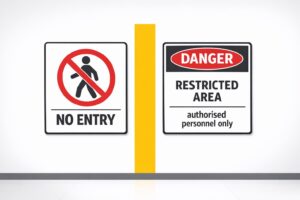
Restricted Area Signs vs. No Entry Signs
Compare No Entry and Restricted Area signs in Australian workplaces — meanings, design differences and AS 1319 compliance.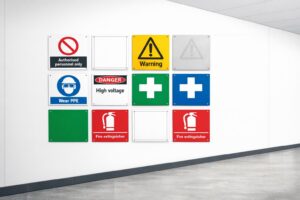
How to Spot Workplace Signage Gaps
Audit your workplace for missing, faded or non‑compliant signs under AS 1319 to reduce incidents and avoid WHS fines.
Symbol Design: Global Standards Explained
Explains ISO 7010 and ISO 3864: standard symbols, colours and sizing for clear, language‑free safety signage and AU compliance.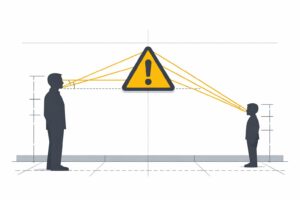
Hazard Sign Visibility Planner
Plan hazard sign placement for max visibility with our free tool. Ensure safety by finding the best spot, height, and angle—try it now!