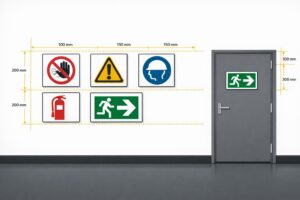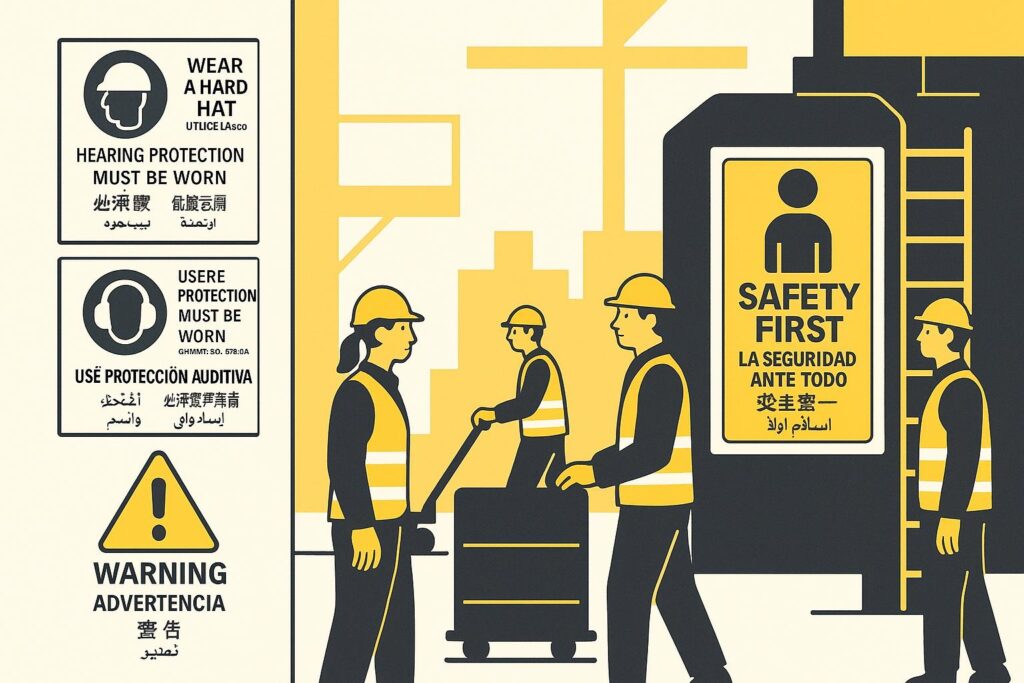
Multilingual Safety Signs for Workplaces
In Australian workplaces, clear communication is key to preventing accidents, especially among diverse teams. Multilingual safety signs combine English with other languages to ensure everyone understands risks and safety protocols. These signs align with AS 1319-1994, the Australian Standard for workplace safety signage, which emphasises clarity, pictograms, and durability. By pairing universal symbols with multilingual text, workplaces can reduce accidents by up to 25%. Durable materials like aluminium with UV protection ensure signs remain effective in Australia’s harsh conditions. Industries such as construction, manufacturing, and healthcare benefit from these signs, which improve safety and compliance by addressing language barriers.
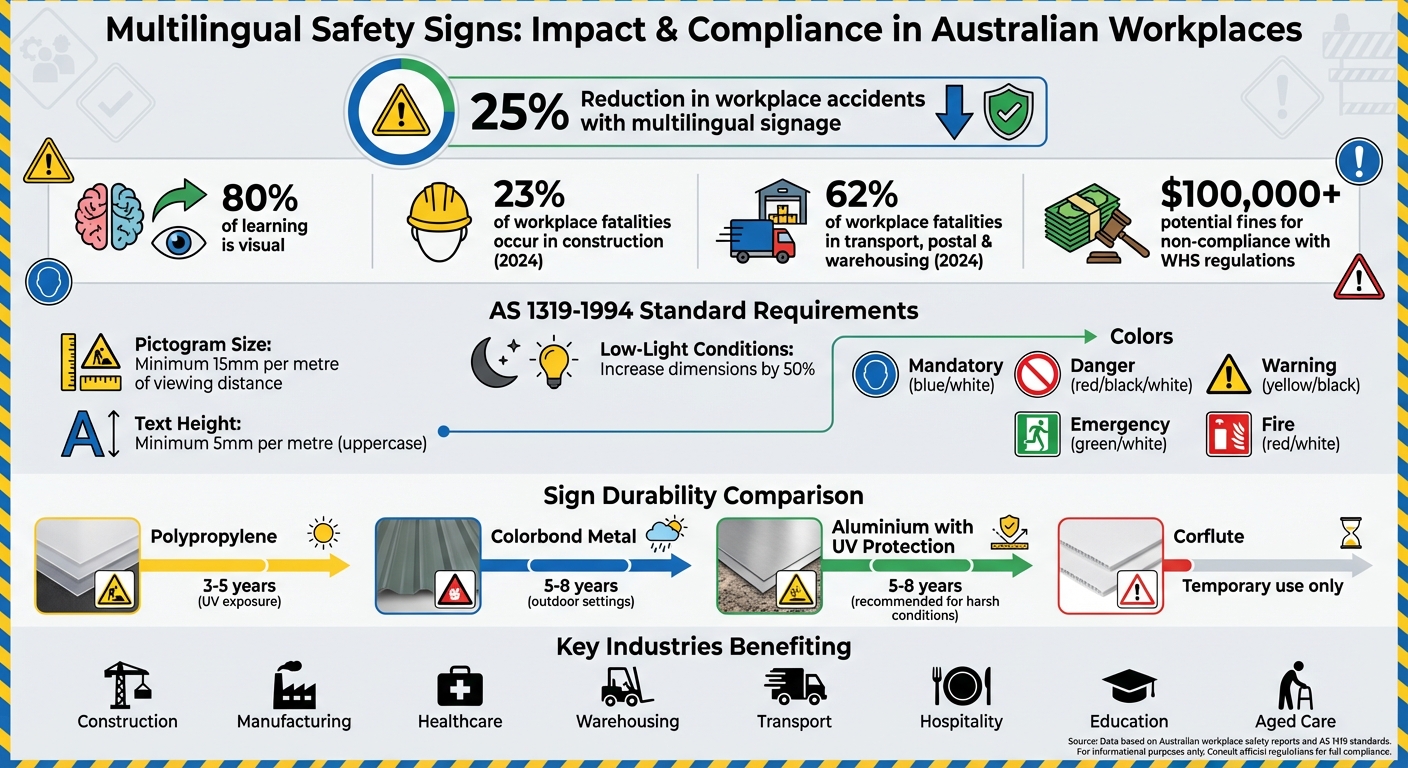
Multilingual Safety Signs: Key Statistics and Compliance Requirements for Australian Workplaces
Workplace Safety Signs for Beginning English Language Learners
Australian Standards and Language Requirements
AS 1319-1994 lays the groundwork for workplace safety signage across Australia. While it doesn’t specify the materials or exact dimensions for signs, it does require them to be clear, fit for purpose, and effective in regulating behaviour or warning of potential hazards.
A standout feature of this standard is its emphasis on pictograms. AS 1319 provides detailed design guidelines for these visual symbols, including their colour schemes, shapes, and placement. For example, mandatory signs use a white symbol on a blue background, while prohibition signs feature a red circle with a diagonal slash. To ensure visibility, pictograms must measure at least 15 mm for every metre of viewing distance [11]. These symbols, recognised globally, help overcome language barriers, enabling workers – whether they speak Mandarin, Vietnamese, Arabic, or English – to quickly understand critical safety information. However, while pictograms provide essential visual cues, they’re most effective when combined with multilingual text.
Relying solely on pictograms isn’t enough in workplaces with diverse languages. Studies indicate that multilingual signage can cut accidents by up to 25%. With 80% of learning being visual, pairing clear pictograms with messages in multiple languages ensures everyone can fully grasp safety instructions [8].
To meet these standards, PXP Safety offers AS 1319-compliant signs crafted from durable aluminium, featuring outdoor-grade printing and UV protection. They also offer customisation options, allowing you to include the specific languages your workforce needs.
1. Hazard and Danger Signs
Compliance with AS 1319 Standards
In Australia, hazard signs must align with the guidelines set out in AS 1319:1994. Signs indicating serious hazards feature the word "DANGER" in bold white text on a red oval, set against a black background. For less severe hazards, a black triangle containing a black pictograph on a yellow background is used [10][6]. When additional languages are incorporated, the core design elements – such as colours, symbols, and the primary English text – must remain intact [1][2]. Beyond aesthetics, these signs must also withstand Australia’s tough environmental conditions to ensure they remain effective.
Integration of Multilingual Text with Standard Symbols
To ensure all workers understand the hazards around them, it’s crucial to combine universal symbols with concise multilingual text. While pictograms offer immediate visual recognition, adding translations in widely spoken languages like Mandarin, Vietnamese, or Arabic enhances comprehension [12]. Keeping the language simple and straightforward is key. This approach not only improves clarity but also aligns with the practical demands of Australian workplaces.
Durability for Australian Conditions
Australia’s extreme climate requires safety signage that can endure intense UV exposure, heavy rainfall, and other environmental challenges. According to Safe Work Australia‘s 2024 data, construction accounted for 23% of workplace fatalities, while transport, postal, and warehousing industries contributed a staggering 62% [15]. Damaged or faded signs can undermine safety, making durability a critical factor.
- Polypropylene signs: Effective for 3–5 years under UV exposure.
- Colorbond metal signs: Last 5–8 years, offering a longer lifespan in outdoor settings [13][14].
Non-compliance with WHS regulations due to inadequate signage can result in hefty fines exceeding $100,000 [4].
"A dirty or faded sign is as good as no sign. Inspect regularly. Replace or clean as soon as they lose impact." – Reflective Fabrications [15]
Use Cases and Target Audience
Multilingual hazard signs play a vital role across a range of industries. From manufacturing facilities and construction sites to warehouses and transport hubs, these signs ensure safety for diverse workforces. Examples include signs like "Caution: Risk of Fire" or "No Pedestrian Access", which are now commonly displayed in multiple languages in Australian workplaces [1]. WorkSafe Victoria’s compliance code stresses the importance of delivering OHS information in languages that suit all employees.
To meet these needs, companies like PXP Safety offer customisable aluminium signs with UV protection and outdoor-grade printing. These signs can include translations tailored to the specific languages spoken by your workforce, ensuring both compliance and safety.
2. Mandatory PPE and Access Control Signs
Compliance with AS 1319 Standards
Mandatory signs in Australia follow the AS 1319:1994 standard, which specifies the use of a blue circle with white symbols. These signs communicate essential requirements such as wearing hard hats, using eye protection, or restricting access to certain areas[1]. If multilingual text is added, it must align with the standard’s design principles. While the standard doesn’t prescribe specific materials or sizes, it does stress that signs should suit their intended purpose[9]. This ensures that integrating multilingual messages into designs remains clear and effective.
Integration of Multilingual Text with Standard Symbols
Combining universally recognised pictograms with multilingual text enhances clarity and accessibility. The pictogram offers immediate visual understanding, while adding text in languages like Mandarin, Vietnamese, or Arabic ensures non-English speakers can quickly grasp the message[1][4]. Placement of the text – either below or beside the symbol – should maintain the sign’s readability and comply with design standards.
Durability for Australian Conditions
Australia’s tough climate demands durable materials for mandatory signs. With intense UV exposure, heavy rains, and varying temperatures, signs must withstand these conditions to remain effective. Although AS 1319:1994 doesn’t specify materials, practical experience highlights options like polypropylene, metal, self-adhesive vinyl, and traffolyte as reliable choices. Corflute, on the other hand, is better suited for temporary signage[5]. Many Australian manufacturers produce signs that meet both durability and regulatory requirements, ensuring they hold up in diverse workplaces across the country.
Use Cases and Target Audience
Multilingual mandatory signs are essential for workplaces with a diverse workforce. Industries such as construction, mining, manufacturing, food production, childcare, aged care, veterinary services, education, public spaces, transport hubs, IT, hospitality, and healthcare benefit from clear PPE and access control messaging. For instance, workplaces adopting multilingual signage have reported a 25% drop in job-related accidents, highlighting the importance of inclusive communication in safety measures[8]. PXP Safety offers customisable aluminium signs with UV protection, allowing businesses to add translations tailored to their workforce’s linguistic needs.
3. Emergency, First Aid and Evacuation Signs
Emergency, first aid, and evacuation signs go beyond standard safety signage – they’re crucial for guiding immediate action during critical situations.
Compliance with AS 1319 Standards
In Australia, emergency and first aid signs must meet the requirements set out in AS 1319:1994. This standard specifies how workplace safety signage should be designed, used, and positioned. For instance, signs related to first aid and evacuation must feature a green background with white text or symbols. On the other hand, fire-related signs, such as those identifying fire alarms or fire-fighting equipment, must display a red background with white text or symbols [4][6].
Visibility is another key aspect. To ensure signs can be easily recognised during an emergency, symbols need to measure 15 mm per metre of viewing distance, while uppercase text should be at least 5 mm per metre. In low-light conditions, these dimensions must increase by 50% [6]. These specifications are designed to make safety signs immediately noticeable and understandable when it matters most.
Combining Multilingual Text with Standard Symbols
Effective communication is essential, especially in workplaces with diverse language groups. Pairing standard emergency symbols with multilingual text enhances clarity. The symbols provide an instant visual reference, while text in languages like Mandarin, Vietnamese, or Arabic allows workers who may not read English to quickly grasp the message [17][18]. To maintain readability, high-contrast colours between the text and background are essential, and text placement should avoid interfering with the clarity of the symbols.
Durability for Australian Conditions
Given Australia’s tough environmental conditions, emergency signs must be built to last. AS 1319:1994 mandates that signs withstand UV exposure, moisture, chemicals, and physical wear [15]. If signs degrade, they may fail to comply with Work Health and Safety regulations. Products like PXP Safety’s aluminium signs, which feature UV-protective coatings and outdoor-grade printing, are specifically designed to stay effective and compliant even in extreme weather. This durability ensures the signs remain a reliable part of workplace safety measures.
Practical Applications and Key Audiences
Emergency signs, like hazard and mandatory signs, are most effective when they include multilingual instructions. These signs are especially important in industries such as construction, manufacturing, healthcare, aged care, hospitality, and education. They ensure that critical procedures are quickly understood, even by those who may not speak English fluently [18].
Visitor-heavy locations, such as shopping centres, public transport hubs, and other public facilities, also benefit greatly from clear emergency signage. In these settings, effective communication can make all the difference during evacuations or medical emergencies. Clear, multilingual emergency signs help ensure safety for everyone, regardless of language or familiarity with the environment.
sbb-itb-9950c92
4. Prohibition, No Smoking and Housekeeping Signs
Prohibition and housekeeping signs play a crucial role in preventing unsafe actions and maintaining order in the workplace. Signs like the well-known "No Smoking" must adhere to the strict guidelines of AS 1319:1994, ensuring they are easily recognisable and effective in any work environment.
Compliance with AS 1319 Standards
Under AS 1319:1994, prohibition signs are designed with a red circle and a diagonal red slash over a black pictogram on a white background. This design ensures instant recognition. The standard also mandates the use of clear, uppercase text, with a minimum letter height of 5 mm per metre of viewing distance, and universally understood pictograms for clarity and simplicity [19]. Housekeeping signs, classified as "Special Signs" in the standard, typically feature blue or green backgrounds and straightforward text for easy comprehension [19].
Multilingual Text and Standard Symbols
While pictograms provide quick visual cues, adding multilingual text alongside English ensures that safety messages are understood by everyone, regardless of their language skills. This approach is especially important in workplaces with diverse staff. By combining universally recognised symbols with translated text, organisations can eliminate misinterpretation and ensure compliance with AS 1319:1994 [19]. This strategy not only improves understanding but also enhances safety across all levels of the workforce.
Durability to Withstand Australian Conditions
Given Australia’s harsh environmental conditions, these signs must be made from durable materials. They need to resist UV exposure, chemicals, physical wear, moisture, and impact [15][4]. For instance:
- UV-stabilised polypropylene: Offers durability for 3–5 years outdoors.
- Colorbond Steel: Lasts 5–8 years and can endure temperatures up to 80°C [2][14].
- Aluminium signs with UV protective film: PXP Safety’s aluminium signs are designed to resist UV rays, chemicals, and physical damage, using outdoor-grade printing for longevity.
To maintain their effectiveness, signs should be inspected every 6–12 months to ensure they remain clean, legible, and compliant [4].
Applications Across Diverse Workplaces
These multilingual prohibition and housekeeping signs are especially useful in industries such as construction, manufacturing, warehousing, hospitality, and healthcare – sectors with a highly diverse workforce. They help prevent unsafe behaviours and promote workplace cleanliness by clearly communicating essential restrictions to employees, contractors, and visitors [3][16]. For environments where not everyone reads English fluently, combining AS 1319-compliant symbols with professionally translated text ensures that critical messages – like smoking bans or waste disposal guidelines – are understood by all.
5. Site Induction, Visitor and Information Signs
Site induction and visitor signs play a crucial role in workplace communication, ensuring that everyone entering a site – whether they’re contractors, delivery drivers, temporary workers, or visitors – receives the necessary information about safety, site rules, and emergency procedures. These signs are often the first point of contact and must deliver clear, concise instructions to those unfamiliar with the environment.
Combining Multilingual Text with Standard Symbols
To make safety messages universally understood, combining internationally recognised symbols with multilingual text is key. Symbols compliant with AS 1319:1994 and ISO 7010 offer immediate visual cues, while translated text provides additional clarity for those with limited English proficiency. In 2025, safety signs were introduced featuring English alongside 11 commonly spoken foreign languages in Australian workplaces, including Arabic, Chinese, Greek, Italian, Spanish, and Vietnamese, among others [16]. This multilingual approach is particularly effective in public spaces, where simple warnings like "DANGER – KEEP OUT" or "EMERGENCY CONTACT: CALL 000" need to be understood by everyone [20]. By addressing language barriers, these signs not only make site entry procedures clearer but also create a foundation for more tailored safety messaging throughout the workplace.
Industries and Audiences That Benefit
Industries with high visitor turnover or diverse workforces – such as construction, manufacturing, warehousing, and logistics – rely heavily on clear induction signage. Employers have a responsibility to ensure all personnel, including those with limited English skills, understand workplace risks and safety protocols. According to Safetysure:
"To ensure that all workers understand the hazards and necessary precautions, signage should use universally recognised pictograms. Additionally, if the workforce includes non-English speakers, bilingual signs should be considered based on the demographics of the workforce." [20]
This ensures that everyone, regardless of their background, can navigate the site safely and efficiently.
Built to Endure Australian Conditions
Given Australia’s tough environmental conditions, site induction and visitor signs must be durable to remain effective and meet regulatory standards set by Roads & Maritime Services and local councils [5]. For long-term installations, PXP Safety’s aluminium signs, featuring UV protection and outdoor-grade printing, provide the resilience needed to withstand harsh weather. Temporary solutions, such as corflute signs, are a lightweight and cost-effective option but are not ideal for extended outdoor use [5]. Regular audits are essential to ensure signs remain legible and compliant, reinforcing their role in maintaining a safe workplace environment.
How to Implement Multilingual Safety Signs in Your Workplace
To align with AS 1319 guidelines, start by evaluating the language diversity among your workforce. This can be done through surveys or safety committee discussions to identify the languages spoken on-site and assess literacy levels in both English and native languages [24][25][23]. This information is key to determining which languages require translation, taking into account workforce demographics, dialects, and any cultural considerations [25]. In workplaces with a mix of languages, this step is crucial – studies show that when safety protocols are clearly understood by non-English speakers, workplace accidents significantly decrease. This initial assessment will shape every decision moving forward, from the wording on signs to the materials used.
Keep messages simple and clear when designing your signs. According to Australian WHS guidelines, the language used should be concise and easy to understand, providing just enough detail for clarity [22][21]. Pair this text with universally recognised symbols that comply with AS 1319:1994 and ISO 7010 standards. As ANSI standards highlight: "The use of symbols is strongly encouraged in order to better communicate the sign’s hazard information across language barriers" [21]. This approach ensures that even workers with limited literacy can quickly grasp the message.
Select materials that can handle Australian conditions to ensure your signs remain effective and compliant over time. For permanent outdoor signs, aluminium with UV protection and outdoor-grade printing is a reliable choice, offering a lifespan of 5–8 years even in harsh weather [2][26]. Polypropylene signs are a budget-friendly alternative, suitable for both indoor and outdoor use, with a durability of 3–5 years [2][26]. For temporary needs, corflute signs are lightweight and easy to install but are not ideal for long-term outdoor exposure [5]. With clear messages and robust materials in place, the next step is to explore customised solutions.
When off-the-shelf options don’t meet your needs, consider working with a custom sign provider like PXP Safety. They specialise in creating AS-compliant signs tailored to your specific language requirements. Their team can deliver accurate translations and durable materials, including aluminium bases with UV protection for extended outdoor use. This level of customisation is particularly useful if your workforce speaks less common languages beyond the typical options of Arabic, Chinese, Greek, Italian, Spanish, and Vietnamese often found in pre-made multilingual signs [1][7][16].
Finally, make it a habit to audit your signs regularly. Check for legibility, proper placement, and compliance to ensure they remain effective and up-to-date.
Conclusion
Multilingual safety signs play a crucial role in Australia’s diverse workplaces, ensuring every worker can understand and follow safety protocols, no matter their primary language. By using clear multilingual signage, workplaces have seen tangible benefits, including a 25% reduction in job-related accidents – proof that effective communication can save lives and promote a more inclusive work environment [8]. This isn’t merely about meeting legal requirements; it’s about fostering a culture where everyone feels informed, valued, and safe.
Adhering to AS 1319 standards ensures your safety signage complies with Australian regulations. These standards set clear guidelines for colours, symbols, and placement, providing a reliable framework to communicate critical safety information. This consistency is vital when the stakes involve protecting lives across a range of industries and settings.
Durability is another key factor. Aluminium signs with UV protection and outdoor-grade printing ensure long-lasting clarity, standing up to harsh Australian conditions. Signs that fade or become unreadable fail to serve their purpose, putting workers at risk and compromising your safety efforts.
For workplaces with multilingual teams, customised AS 1319-compliant signage is an even more effective solution. Companies like PXP Safety offer tailored options, providing accurate translations on durable aluminium signs. This ensures every worker, regardless of their language, can access the information they need to stay safe.
FAQs
How can multilingual safety signs improve workplace safety?
Multilingual safety signs are essential for maintaining workplace safety, especially in environments with a diverse workforce. These signs ensure that critical safety messages are understood by everyone, no matter their language background, helping to close communication gaps.
When instructions are displayed in multiple languages, it becomes easier for employees to follow safety standards, minimise confusion, and stay informed about potential hazards. This approach not only enhances compliance but also fosters a safer, more inclusive environment for all team members.
What materials are best for safety signs to withstand Australia’s harsh climate?
Safety signs in Australia must be crafted from strong, weather-resistant materials to withstand the country’s varied and often harsh climate. Materials like aluminium, polypropylene, and corflute are commonly used because they resist UV exposure, chemicals, and physical damage. These qualities ensure the signs stay visible and functional, even in challenging outdoor conditions.
To ensure they perform well over time, these signs should also include UV protection and outdoor-grade printing, which help preserve their readability and ensure they meet workplace safety regulations.
How can businesses choose the right languages for their workplace safety signs?
When determining the right languages for safety signs, businesses should take a close look at the language preferences of their workforce. It’s important to consider the languages that employees and the surrounding community commonly speak. This way, safety instructions and warnings are clear to everyone, reducing the risk of misunderstandings.
Using local demographic data and adhering to workplace safety regulations can help pinpoint which languages should be prioritised. This isn’t just about meeting compliance requirements – it’s about creating a safer, more inclusive space where everyone feels considered and informed.
Related Blog Posts
You may also be interested in
FAQs About Workplace Safety Signs in Australia
AS 1319 sign types, placement, materials and maintenance for workplace safety and WHS compliance in Australia.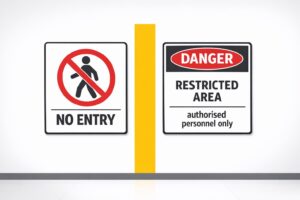
Restricted Area Signs vs. No Entry Signs
Compare No Entry and Restricted Area signs in Australian workplaces — meanings, design differences and AS 1319 compliance.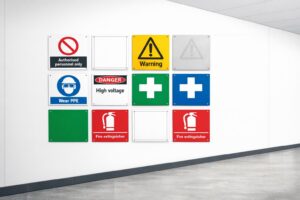
How to Spot Workplace Signage Gaps
Audit your workplace for missing, faded or non‑compliant signs under AS 1319 to reduce incidents and avoid WHS fines.
Symbol Design: Global Standards Explained
Explains ISO 7010 and ISO 3864: standard symbols, colours and sizing for clear, language‑free safety signage and AU compliance.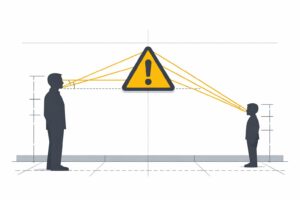
Hazard Sign Visibility Planner
Plan hazard sign placement for max visibility with our free tool. Ensure safety by finding the best spot, height, and angle—try it now!