SafeWork NSW Rules for Farm Chemicals
Farm chemical safety in NSW is strictly regulated under the Work Health and Safety (WHS) Act 2011 and WHS Regulation 2017. These laws ensure proper handling, labelling, storage, and disposal of hazardous chemicals like pesticides, herbicides, and veterinary medicines. Compliance with these rules protects workers, communities, and the environment from health risks and accidents.
Key points you need to know:
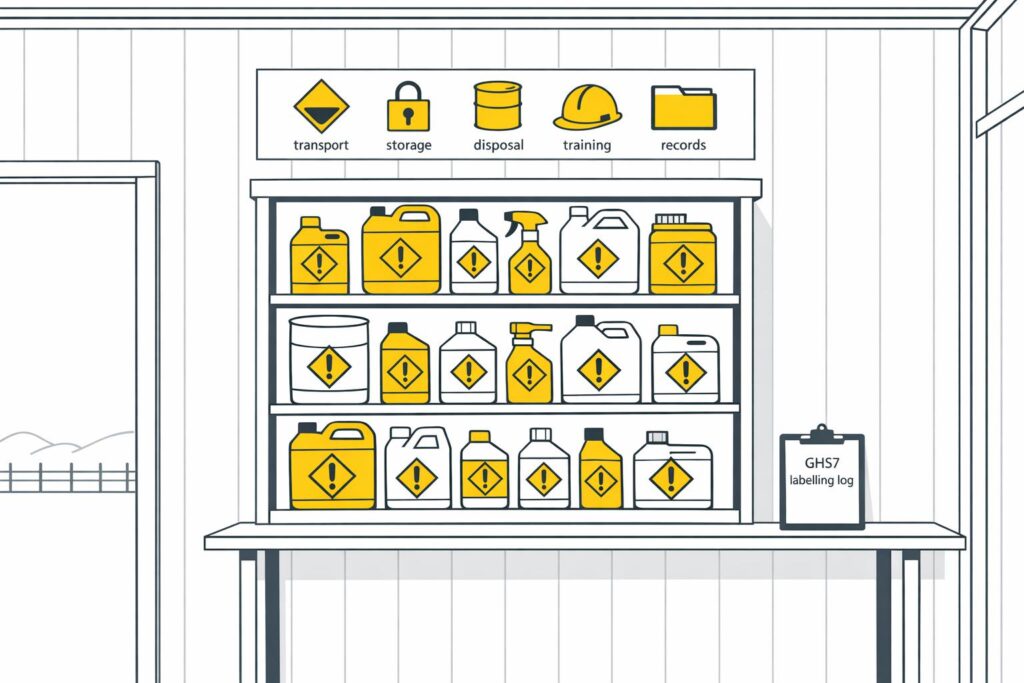
- GHS 7 Compliance: From 1 January 2023, all hazardous chemicals must meet GHS 7 standards, including updated labels and Safety Data Sheets (SDS).
- Labelling Rules: Farm chemicals must feature GHS hazard statements and precautionary information. AgVet chemicals with APVMA-approved labels can omit GHS pictograms and signal words.
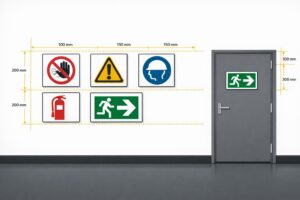
- Storage Requirements: Chemicals must be stored securely, with proper signage for quantities exceeding thresholds. This includes essential safety signs required to meet AS 1319 standards. Placards are mandatory for bulk storage tanks or hazardous quantities.
- Health Monitoring: Workers exposed to hazardous chemicals require regular health checks, with records kept for 30 years.
- Disposal Programs: Use ChemClear for expired chemicals and drumMUSTER for recycling triple-rinsed containers.
- Training: Workers handling pesticides must complete accredited training and renew every five years.
Labelling Requirements for Farm Chemicals
Mandatory Label Elements
When it comes to hazardous chemicals, proper labelling is non-negotiable. The Globally Harmonised System (GHS) has established nine standard safety signs and pictograms to represent various hazards. For most workplace chemicals, labels must also include signal words like "Danger" for severe risks or "Warning" for less critical hazards. Additionally, hazard statements detail the nature of the risk, while precautionary statements provide guidance on safe handling practices [2].
For agricultural and veterinary (AgVet) chemicals, the rules differ slightly. These products follow a modified version of the GHS guidelines. While they must include GHS hazard and precautionary statements, they can omit GHS pictograms and signal words if the product already features an APVMA-approved label. However, any GHS information not covered by the APVMA label must still be added [2]. Some veterinary medicines, such as those listed in Schedule 8 of the Poisons Standard or Schedule 4 medicines in forms like tablets or syringes, are exempt from GHS labelling altogether [2].
Here’s a quick comparison of the labelling requirements:
| Label Element | General Hazardous Chemicals | AgVet Chemicals |
|---|---|---|
| GHS Pictograms | Required (9 standard symbols) | Not Required |
| Signal Words | Required ("Danger" or "Warning") | Not Required |
| Hazard Statements | Required | Required (if not on APVMA label) |
| Precautionary Statements | Required (GHS 7 updated) | Required (if not on APVMA label) |
These guidelines are essential for ensuring that labels provide clear and accurate information, particularly in workplace settings.
Supplier and Farmer Responsibilities
Both suppliers and farmers play a role in maintaining proper labelling. Suppliers are responsible for ensuring that chemicals arrive with accurate labels and up-to-date Safety Data Sheets [3]. Once the chemicals are on your property, the responsibility shifts to you. It’s crucial to keep labels intact and legible because damaged or missing labels can lead to dangerous misidentifications, especially during emergencies.
If chemicals are transferred to secondary containers, they must be re-labelled immediately [3]. Similarly, hazardous chemical pipework must also be labelled [3]. For chemical handling systems that can’t be fully emptied after use, a label must clearly identify any hazardous chemicals that remain in the system [3]. These steps are vital for maintaining safety and compliance on the farm.
sbb-itb-9950c92
Farm Chemical Safety: Storing Chemicals on Farms
Safe Storage Guidelines for Farm Chemicals
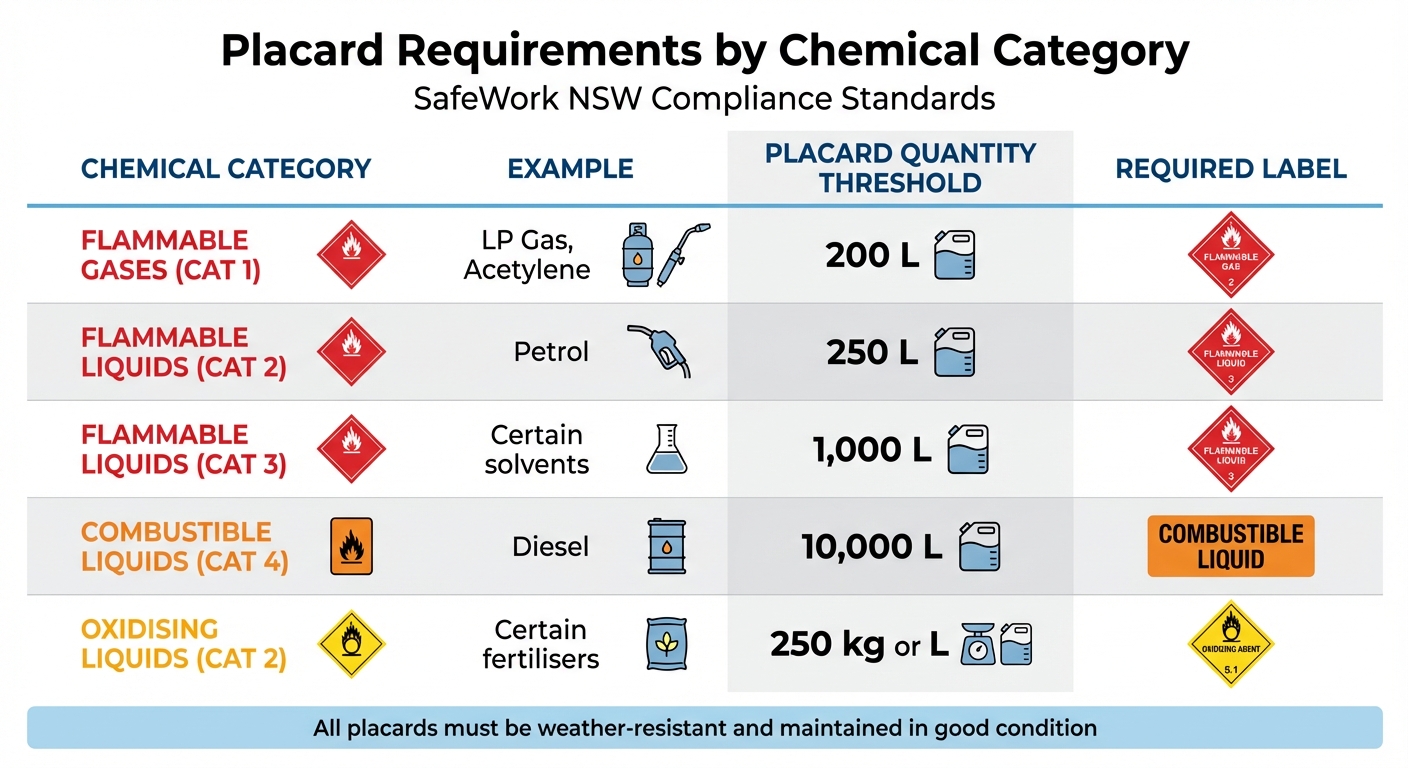
Farm Chemical Placard Requirements by Chemical Category in NSW
Dedicated Chemical Storage Areas
Store chemical containers securely on stable surfaces, following the manufacturer’s guidelines to prevent accidents or damage [3][6]. Keep storage areas at consistent temperatures to minimise the risk of unsafe chemical reactions [3]. If a storage system is no longer in use, ensure it is either emptied of chemicals or clearly labelled if immediate removal isn’t possible. For underground tanks previously used for flammable liquids or gases, notify SafeWork NSW before removal [3][6].
Maintain an up-to-date chemical register, including the current Safety Data Sheets (SDS) for every chemical on-site. If your chemical quantities exceed manifest thresholds, you must submit an updated manifest to SafeWork NSW. This should include site plans, the types and amounts of chemicals stored, and emergency contact details [3].
Clear, durable signage at storage areas is essential for reinforcing safety measures.
Required Signage for Chemical Storage
Proper signage plays a critical role in protecting lives during emergencies. SafeWork NSW highlights:
Placards are a means of alerting the emergency services and other persons to the presence of hazardous chemicals and providing information about them [5].
For hazardous chemical quantities exceeding certain limits, outer warning placards must be displayed at all entry points. These placards should feature the word "HAZCHEM" in red, with letters no smaller than 100 mm high, on a white or silver background [5]. Bulk storage tanks holding more than 500 L or 500 kg must display additional details such as the proper shipping name, UN number, HAZCHEM code, and the Australian Dangerous Goods (ADG) Class label [5]. Similarly, package storage areas should feature placards with ADG Class labels (diamonds) measuring at least 100 mm per side [5].
Table: Placard Requirements by Chemical Category
| Chemical Category | Example | Placard Quantity | Required Label |
|---|---|---|---|
| Flammable Gases (Cat 1) | LP Gas, Acetylene | 200 L | Class 2.1 Label |
| Flammable Liquids (Cat 2) | Petrol | 250 L | Class 3 Label |
| Flammable Liquids (Cat 3) | Certain solvents | 1,000 L | Class 3 Label |
| Combustible Liquids (Cat 4) | Diesel | 10,000 L | "COMBUSTIBLE LIQUID" |
| Oxidising Liquids (Cat 2) | Certain fertilisers | 250 kg or L | Class 5.1 Label |
All placards must be made from durable, weather-resistant materials and kept in good condition to ensure readability. UV-protected signage is particularly important for maintaining visibility over time. Companies like PXP Safety offer compliant signage designed for Australia’s harsh outdoor conditions, using materials like aluminium and UV-resistant coatings. Custom options are also available to meet specific farm safety requirements.
These signage practices not only align with SafeWork NSW regulations but also improve overall safety on-site.
Spill Containment and Emergency Planning
In addition to proper storage and signage, it’s crucial to prepare for potential spills. Place spill management equipment in easily accessible locations where chemicals are stored or handled [3].
Develop a comprehensive emergency plan and ensure it is readily available to all workers. If chemical quantities exceed manifest levels, share the emergency plan with your local emergency services and neighbouring properties to enable a coordinated response [3]. Workers who are regularly exposed to hazardous chemicals must also undergo health monitoring by a registered medical practitioner to ensure their safety [3].
Transport and Handling of Farm Chemicals
Safe Packing and Transport Practices
Transporting and handling hazardous chemicals safely is just as important as proper storage. When moving dangerous goods by road or rail, you must follow the Australian Dangerous Goods (ADG) Code, which outlines how these chemicals should be packed and labelled [7]. To confirm the right transport classification for a chemical, refer to Section 14 of its Safety Data Sheet (SDS) [7].
Before transport, inspect all containers for damage. Containers and pipework should be protected against impacts or punctures to prevent leaks [3]. Securely fasten containers to stable supports to avoid movement during transport [3]. Additionally, only individuals aged 16 years or older are permitted to fill containers with flammable materials [7].
If chemicals are repackaged, ensure they are re-labelled immediately [3]. For empty containers, clean them thoroughly before reuse to eliminate risks of contamination or chemical reactions [3].
These precautions align closely with on-site handling protocols and reinforce compliance with safety standards.
Handling Protocols on Farms
On farms, having valid SDS readily available for all workers and emergency responders is essential [3].
Always use the recommended personal protective equipment (PPE) to avoid skin contact and inhalation [1][3]. Spill response equipment should be easily accessible in areas where chemicals are stored or used [3]. Workers who may come into contact with chemicals must be supervised appropriately, and those managing chemical handling systems need proper training [3]. For areas with chemical emissions, ensure they are isolated and equipped with adequate ventilation to reduce exposure risks [4].
Disposal and Risk Management Standards
Proper Disposal of Chemicals and Containers
Empty pesticide containers are considered hazardous waste and must be triple-rinsed immediately after use to prevent residue build-up. The rinsate should be poured back into your spray tank for reuse [8].
In Australia, two main programs support chemical and container disposal. ChemClear manages unwanted or expired chemicals, while drumMUSTER offers free collection and recycling for empty, triple-rinsed containers that carry the drumMUSTER symbol [8]. A levy of 4c per litre or kilogram is included in the purchase price of participating products to fund this recycling initiative [8]. For smaller containers (under 1L or 1kg), triple-rinsed items may be disposed of in household or commercial bins, but it’s wise to confirm with your local council. Larger containers usually need to be taken to a certified waste facility [8].
If chemical handling systems or underground tanks are no longer in use, they must either be cleared of chemicals or removed. For tanks that previously stored flammable substances, SafeWork NSW must be notified [3].
Training and Record-Keeping Requirements
Proper training and detailed record-keeping are essential for maintaining chemical safety on farms. Under the Pesticides Regulation 2017, all farm workers handling pesticides must complete initial accreditation training [10]. Farmers and unsupervised operators need AQF Level 3 qualifications, which include units AHCCHM307 (Prepare and apply chemicals) and AHCCHM304 (Transport and store chemicals) [10]. Supervised applicators require AQF Level 2, covering Unit AHCCHM201 [10]. Training must be renewed every five years, either through a refresher course or an EPA-approved quality assurance program [10]. Failing to provide proof of current training can lead to a $500 fine [10].
Pesticide application records must be completed within 48 hours and kept for at least three years [9]. For workers exposed to hazardous chemicals, health monitoring reports must be retained for a minimum of 30 years [3]. Penalties for record-keeping violations range from $150 to $750 for individuals and $300 to $1,500 for corporations, with maximum prosecution penalties reaching $22,000 for individuals and $44,000 for corporations [9]. These requirements not only ensure compliance but also protect farm workers, aligning with the SafeWork NSW framework.
Role of Signage in Farm Chemical Compliance
Clear, durable safety signage plays a key role in maintaining chemical hazard communication on farms, complementing proper labelling and secure storage practices.
Importance of Durable, Compliant Safety Signs
Safety signs serve as the first defence when hazardous chemicals are stored on farms. These signs alert workers, contractors, visitors, and emergency responders to the presence of dangerous substances, providing critical information such as HAZCHEM codes for emergency situations. As noted by SafeWork NSW:
Placards are a means of alerting the emergency services and other persons to the presence of hazardous chemicals and providing information about them. They are an important part of an overall safety management strategy [5].
Under the Work Health and Safety Regulation 2025, placards are mandatory when hazardous chemicals are stored in tanks or quantities exceeding the limits outlined in Schedule 11. These signs must be made from weather-resistant materials and maintained in good condition to ensure they remain legible and effective. This durability is essential for withstanding Australia’s tough environmental conditions, including extreme UV exposure, heavy rain, dust, and fluctuating temperatures.
Placards must also meet specific size and placement standards to ensure visibility, whether they are used for emergency entrances, bulk storage areas, or particular chemical categories. To avoid confusion, signs should be positioned separately from other notices. These requirements align with broader safe storage guidelines, ensuring that signage remains a reliable part of on-farm safety.
PXP Safety offers a range of compliant workplace safety signs. Their products are crafted from durable aluminium and printed with outdoor-grade solvent inks protected by a UV film, ensuring long-lasting visibility. Regular inspections to check for fading or damage are crucial for maintaining compliance.
In addition to standard signage, farms can enhance safety with customised solutions tailored to their unique needs.
Custom Signage for Specific Farm Needs
While standard placards address many hazards, some farms require custom solutions to adapt to changing conditions or specific chemical storage challenges. For instance, farms handling frequently updated chemical inventories – such as those for transit or temporary storage – can benefit from adaptable label frames that allow for quick updates without replacing entire signs. Additionally, any pipework or pipelines carrying hazardous chemicals must be clearly labelled to ensure safety.
For chemicals outside standard classifications, such as "Goods Too Dangerous To Be Transported", regulations mandate specialised "Unstable Goods" labels with blank fields for the UN number and HAZCHEM code. These unique requirements highlight the importance of custom signage.
PXP Safety offers tailored sign creation services to meet these specific needs. Their custom options allow farms to specify sizes, colours, and messaging that align with their storage layouts and compliance requirements. This ensures every hazard is clearly marked and communicated, enhancing overall safety on the property.
Conclusion
SafeWork NSW’s regulations for handling farm chemicals are not optional – they are in place to save lives and protect health. As SafeWork NSW highlights:
Exposure to chemicals is 100 per cent preventable. Without the proper controls, they can cause cancer, respiratory illnesses, skin and eye irritations, and fire and explosion-related injuries [11].
From ensuring proper labelling under GHS 7 standards to secure storage, safe transport, and careful disposal, every rule plays a role in reducing risks.
Beyond labelling and storage, a layered approach to safety is key. This includes keeping updated registers and Safety Data Sheets, monitoring the health of workers exposed to chemicals, sharing emergency plans with local services when storing large quantities, conducting regular safety audits, and offering ongoing training. Together, these steps ensure that safety measures remain effective and adaptable.
Signage also plays a vital role in managing chemical risks. Durable placards provide first responders with critical information about the type, quantity, and location of hazardous chemicals during emergencies like fires or spills. These signs must endure Australia’s harsh environmental conditions while staying clear and readable.
PXP Safety offers workplace safety signs specifically designed to meet these standards. Their aluminium signs, featuring outdoor-grade solvent printing and UV protective film, are built for long-term use on farms. With options for both standard and customised signage, farms can meet their unique chemical storage needs while staying compliant with regulations.
Alongside durable signage, regular audits and continuous training help strengthen farm chemical safety. By combining proper labelling, secure storage, clear signage, and detailed documentation, farms can create a robust safety system. This approach not only protects workers and visitors but also safeguards the surrounding community. Together, these measures form a solid compliance framework that addresses the challenges of handling farm chemicals effectively.
FAQs
Do I need to update old chemical labels and SDS to GHS 7?
From 1 January 2023, it became mandatory to update chemical labels and Safety Data Sheets (SDS) to align with GHS 7 standards. This means you need to review and revise all relevant documentation and labelling to meet the updated classification and labelling requirements. Ensure everything is compliant to avoid any regulatory issues.
When do I need HAZCHEM placards at my farm chemical store?
When the amount of hazardous chemicals stored on your farm exceeds the ‘placard quantity’ set by SafeWork NSW, it’s mandatory to display HAZCHEM placards on the exterior of your chemical storage area. These placards play a critical role in notifying emergency services about potential dangers during an emergency.
What records do I legally have to keep for pesticide use and worker exposure?
You need to document pesticide use within 48 hours of application and retain these records for a minimum of 3 years. Make sure to include key details like the date of application, the chemical used, the method of application, and the location. Keeping these records is essential for meeting legal obligations and ensuring proper management of farm chemicals.
Related Blog Posts
You may also be interested in

FAQs About Workplace Safety Signs in Australia
AS 1319 sign types, placement, materials and maintenance for workplace safety and WHS compliance in Australia.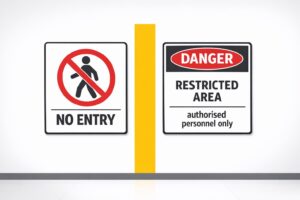
Restricted Area Signs vs. No Entry Signs
Compare No Entry and Restricted Area signs in Australian workplaces — meanings, design differences and AS 1319 compliance.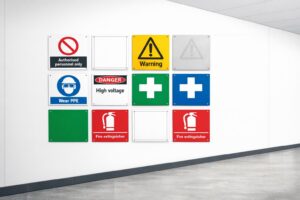
How to Spot Workplace Signage Gaps
Audit your workplace for missing, faded or non‑compliant signs under AS 1319 to reduce incidents and avoid WHS fines.
Symbol Design: Global Standards Explained
Explains ISO 7010 and ISO 3864: standard symbols, colours and sizing for clear, language‑free safety signage and AU compliance.
Hazard Sign Visibility Planner
Plan hazard sign placement for max visibility with our free tool. Ensure safety by finding the best spot, height, and angle—try it now!